

I went to Jingmen (荆门) in October 2025 because I wanted a Hubei that sat quietly between the Wuhan buzz and the tourist trails of the Yangtze gorges. Jingmen is a plain-and-hill city in central Hubei where the old Chu Kingdom once held sway, and where a new high-speed rail line has turned a sleepy transfer point into a genuine stop. This Jingmen travel guide is built from a three-day visit: the trains I rode, the tickets I paid, and the bowls I finished. It is written for travelers who like to break a big Wuhan-to-the-West route with a place that has real history but almost no foreign crowds.
How to get to Jingmen
Jingmen is now an easy rail stop. From Wuhan, high-speed trains reach Jingmen West (荆门西站) in about 1 hour 40 minutes to 2 hours, with second-class fares between RMB 90 and 145 depending on the train. I booked through the 12306 app the night before and paid RMB 118 for a morning departure, then rolled in before lunch. Services run roughly every 30 to 60 minutes through the day, so you are never stranded. If you are coming from Yichang or Chongqing, the same line runs west, and from Beijing or Shanghai you will change once, usually in Wuhan.
For the booking how-to and seat-class notes, our China high-speed train guide for foreigners walks you through the app, the passport ID step, and the difference between a bullet train and a normal one; I leaned on it to avoid a fumbled ticket. When you are weighing the rail against flying, our China train vs flight guide is the honest comparison I used to decide that the train beat the airport hassle for this leg. Inside the city, DiDi is cheap and the old bus station runs coaches to Zhongxiang for the mausoleum trip at RMB 20 to 30. The plain geography of the region is summarized on Jingmen at Wikipedia if you want the lay of the land before you go.
Best time to visit Jingmen
Autumn is the sweet spot. I visited in mid-October and walked in long sleeves with daytime highs around 22 to 26°C and cool, dry evenings near 14°C, which was perfect for the reservoir and the open-air relics. Spring (April to May) is also calm and green before the summer heat builds. Summers here are hot and sticky, often above 34°C, and the humidity sits on the plain; winters are cold and gray, sometimes dipping near freezing with a damp wind off the fields. Our best time to visit China guide places Hubei squarely in the September-to-November window, and it confirmed my instinct that October was right for both the boat ride and the tomb walk.
Zhanghe Reservoir and the city parks
The headline natural sight is Zhanghe Reservoir (漳河水库), about 40 minutes northwest of the center by DiDi (RMB 50 to 70). It is a vast blue reservoir backed by wooded hills, built as a water-control project and now a boating and lakeside-picnic spot. I paid RMB 60 for the basic shoreline entry in 2025 and RMB 40 more for a small electric boat that puttered me out to a quiet cove; the ticket office also sells a combined cruise at RMB 100 if you want the full loop. Weekdays were nearly empty, and I had a whole wooden dock to myself with nothing but cicadas.
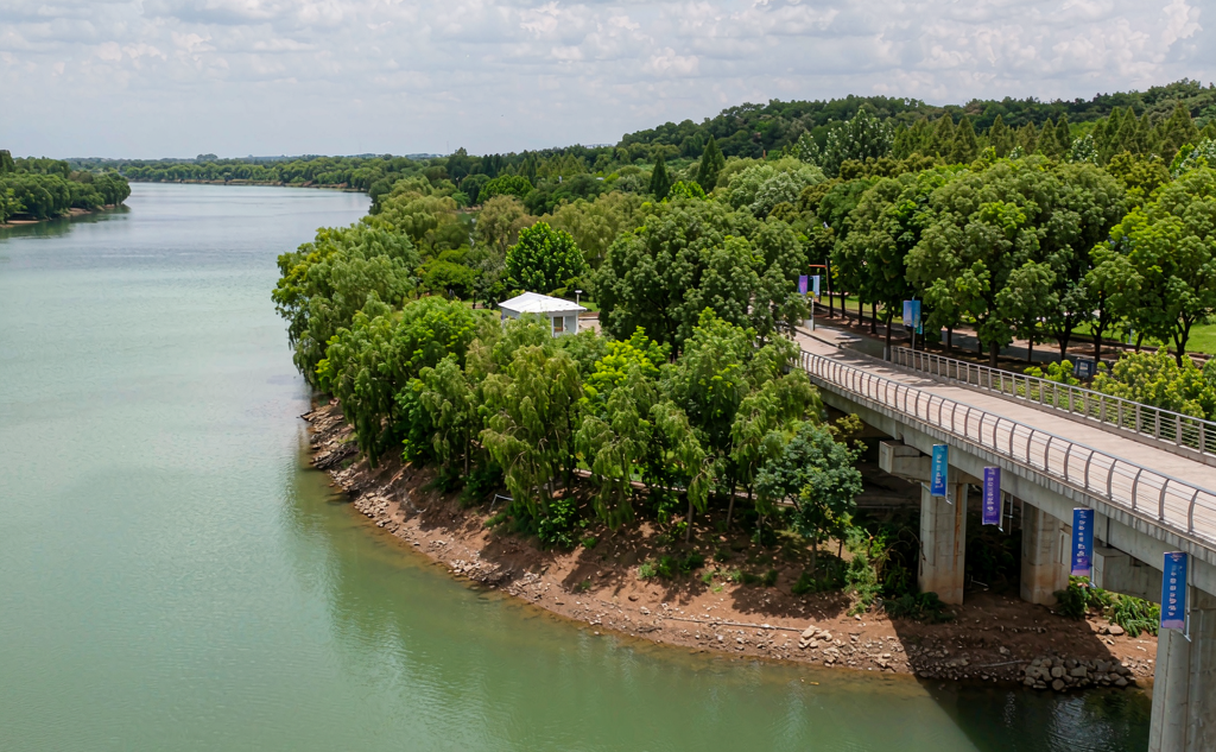
Back in the city, Longquan Park (龙泉公园) is a free, local green space with a small spring, pavilions, and a low-key museum of Chu-era bronzes that costs RMB 10 to enter. I spent an hour there on a misty morning and liked it more than I expected for the price of a snack. The park is walkable from the old town, and it is where I first noticed how Jingmen Hubei China blends plain-city life with a deep archaeological layer you can stumble into without a plan.
Xianling Mausoleum and Chu culture
The one sight that justifies the trip is the Ming Xianling Mausoleum (明显陵) in Zhongxiang, a county under Jingmen about 90 minutes away by coach or DiDi (RMB 120 to 160 one way). It is the only imperial tomb in China built for both an emperor and his natural parents, and it carries UNESCO World Heritage status for its layout and stone spirit-way. I paid RMB 65 for the entry and another RMB 20 for the shuttle from the gate to the inner court. The long avenue of carved beasts and officials, the twin treasure cities, and the still moat made it the most photogenic hour of my week, and I had the outer path almost alone on a Wednesday.
This is where the Chu culture thread really shows. Jingmen sits inside the old Chu heartland, and the museums and tomb art lean into that heritage hard. If you are coming from Wuhan, our Wuhan travel guide covers the Hubei Provincial Museum’s Chu bronzes as context, and our Wuhan food guide sets up the regional table you will keep meeting as you move west. I treated the mausoleum as the history lesson and the city as the everyday payoff.
What to eat in Jingmen
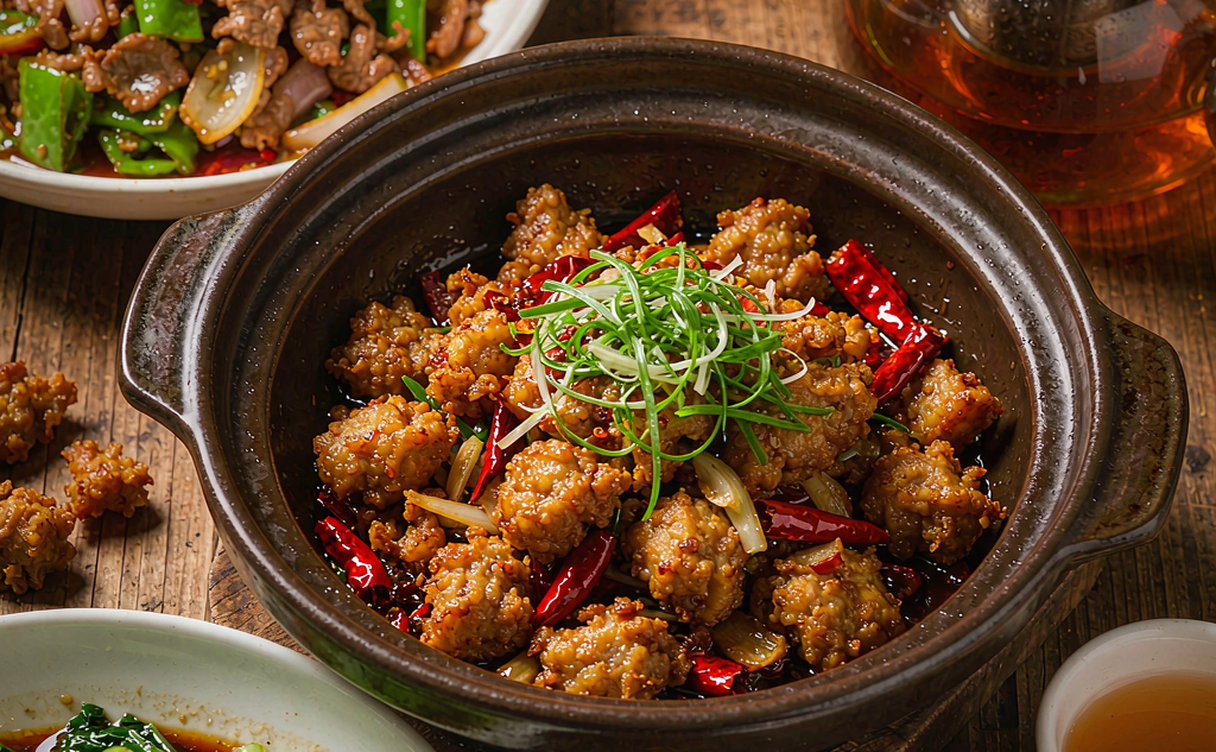
Things to do in Jingmen are half about the monuments and half about the table, and the food is the easy win. Jingmen food leans on the lakes and the plain: I had Chang Lake fish (长湖鱼) braised with chili and broad bean paste for RMB 58, a plate of air-dried chicken (风干鸡) for RMB 45, and a bowl of rice tea (米茶), a nutty cooled rice broth that costs almost nothing and is weirdly addictive in the heat. Breakfast was a sesame cake and soy milk set for RMB 6, and a street noodle with pickled vegetable ran RMB 10.
The flavors are a bridge between Wuhan’s richness and the lighter western-Hubei cooking, so it is a good place to recalibrate your palate before the gorges. I ate a full shared dinner with beer for about RMB 95 for two, which is roughly what a sandwich costs at a Western airport. The night stalls near Longquan Road were where I found the best value and the most smiles, and pointing at what the next table had got me further than any menu translation.
A practical Jingmen itinerary
Here is the three-day plan I used. Day one: train in from Wuhan, walk Longquan Park and the old-town stalls, eat fish for dinner. Day two: early coach to Zhongxiang, half day at Xianling Mausoleum, back for a night-noodle crawl. Day three: morning DiDi to Zhanghe Reservoir, boat ride and lakeside lunch, train on to Yichang by late afternoon. If you have a fourth day, the Zhanghe lakeside has enough picnic and trail space to make a slow morning of it.
My all-in cost was about RMB 750 excluding the intercity train, which is cheap for a UNESCO stop plus a reservoir day. Our China budget travel guide has the hostel and local-bus notes that kept my daily spend near RMB 320, and the single biggest saving was the coach-to-Zhongxiang run instead of a private car.
Where to stay and book
I booked a clean city-center hotel on Ctrip with Alipay for RMB 150 to 240 a night and had no card trouble; the front desk took my passport copy without fuss. Jingmen West station is a 20-minute DiDi from the old town, and most mid-range hotels sit between the two, so location is flexible. Pick the old-town side if you want stalls at your door, the station side if you want a fast exit toward Yichang or Wuhan.
Jingmen is not a headline destination, and it does not try to be. It is a plain-and-rail city where the reward is a quiet reservoir, a UNESCO tomb without the crowds, and a fish dinner that costs less than a taxi across town. If you are the kind of traveler who likes the real middle of a province more than its postcard edge, Jingmen will quietly earn a stop on your Hubei route, and the rice tea will surprise you.