

Guigang is one of those Guangxi cities that sits on the map between bigger names and gets skipped. I stopped there in June 2025 on a river-bound loop and found a relaxed port city famous for lotus, an ancient hillside temple, and easy access to the wooded mountains of Guiping. Guigang, Guangxi, China, lies on the Xunjiang waterway, part of the Pearl River system, and in summer the whole city turns pink with lotus blooms. This Guigang travel guide comes from three days of temples, ferries, and lotus ponds: how to get to Guigang, the things to do in Guigang, what to eat, and a Guigang itinerary.
Why Guigang
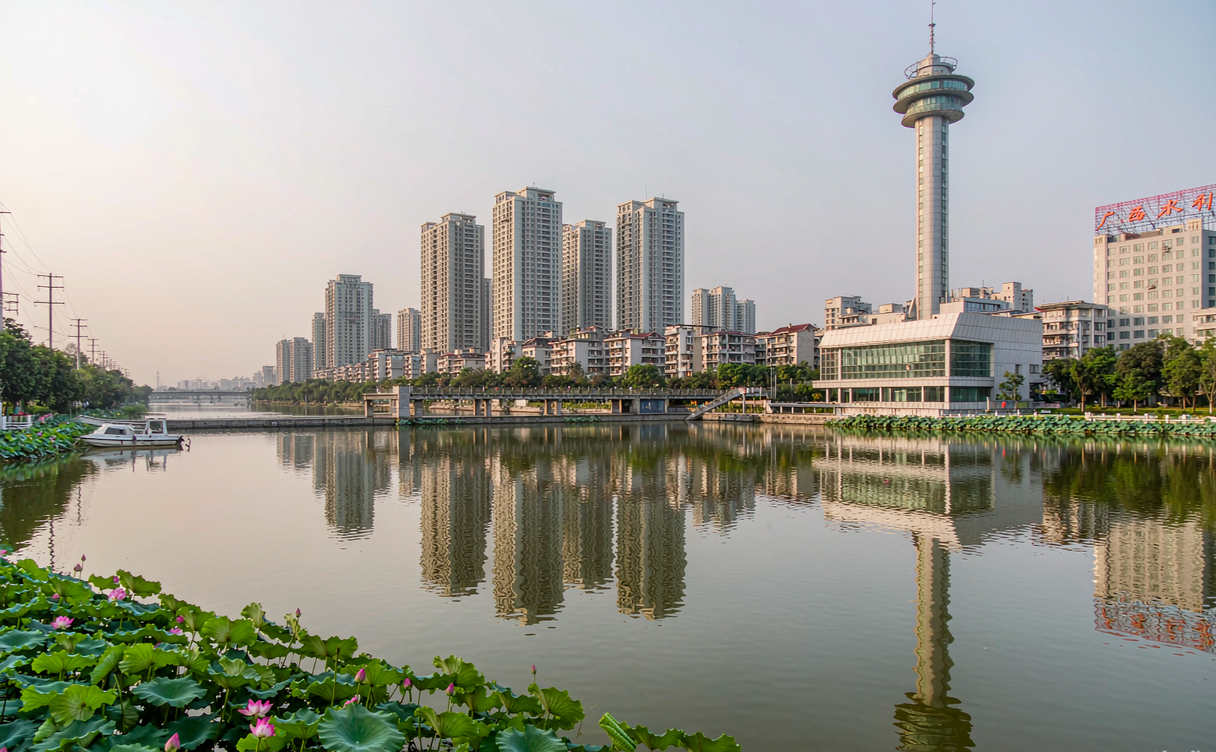
Guigang brands itself the Lotus City, and in June and July the ponds and parks fill with blooms. Beyond the flowers, there is a thousand-year-old Buddhist temple cut into a hillside, and just downstream the county-level city of Guiping offers a famous mountain and a dramatic gorge. I used Guigang as a calm, cheap hub and took day trips out. For the classic Guangxi route, the Guilin Yangshuo travel guide on our site covers the headline scenery to the north.
How to Get to Guigang
Guigang Station is on the Nanning to Guangzhou high-speed line. From Nanning East, trains take about 50 to 75 minutes and cost RMB 55 to 75. From Guilin, allow roughly 2 hours for RMB 110 to 150. From Guangzhou South, budget 2 to 2.5 hours and RMB 130 to 180. The station is a short taxi ride of RMB 15 to 30 from the center. There is no international airport, so fly into Nanning or Guilin and transfer by train. For booking steps, see our China high-speed train guide for foreigners.
Things to Do in Guigang
Nanshan Temple
On the south edge of the city, Nanshan Temple is carved into a hillside with cliff Buddhist statues and cave shrines dating back over a thousand years. Entry is about RMB 20, and the stone paths up the hill are shaded and quiet. I went at opening and had the carved caves to myself for an hour, listening to the bells from the lower hall.
Donghu Lake and the Lotus Ponds
The city’s Donghu Lake is a free public park popular for evening walks. In summer, head to Qintang District where lotus farms open for viewing and you can walk boardwalks among the blooms. Some farms charge RMB 10 to 20 to enter during the June to July peak. This was the most photogenic part of my trip, and the early light on the petals was worth the 7 a.m. start.
Guiping: Xishan Mountain
A 40-minute train or bus from Guigang brings you to Guiping and Xishan, a forested Buddhist mountain with spring-fed streams, tea terraces, and a famous temple. Entry is about RMB 90, and the lower trails are an easy half-day. I drank Xishan tea at a hillside stall for RMB 15 a pot, and the cool shade made the climb painless even in June.
Dateng Gorge
Also near Guiping, the Dateng Gorge on the Qianjiang river is known for its dramatic cliffs and a large modern water-control project. Boat trips run when water levels allow, costing around RMB 60 to 100. I took a short cruise and enjoyed the sheer walls without the crowds of better-known gorges, and the captain pointed out the old ferry crossings.
Guigang Food
The local breakfast is pig-trotter rice noodles, a hearty bowl with braised pork trotter for RMB 12 to 18, and I ate it every morning. Lotus root appears in stir-fries and soups for RMB 22 to 38, and Guiping’s milk spring liquor is a regional curiosity worth a small tasting. For more on the province’s table, our Guangxi cuisine guide explains the sour, savory staples you will meet, from ferment pots to river fish.
A Practical Guigang Itinerary
With two days, do Nanshan Temple and the lotus ponds on day one, and Xishan plus Dateng Gorge on day two via Guiping. With three days, add a slow evening at Donghu Lake and a food crawl. I tracked spending with our China budget travel guide and stayed around RMB 230 to 330 a day including a basic hotel and three meals, which left room for the tea and the boat.
Where to Stay and When to Go
Budget rooms near the station start at RMB 120 to 180; a central mid-range room runs RMB 220 to 350. I paid RMB 260 for a clean place a short walk from Donghu Lake. The best time to visit China applies: summer, June to July, is best for lotus, while spring and autumn are mild for the mountains. If you want a coast later, the China beaches guide on our site lists options down south.
Getting Around
The city is flat and walkable, and buses reach Donghu and Nanshan for a few RMB. For Guiping and the gorge, trains and buses run frequently for RMB 10 to 20 and 40 to 60 minutes; ride-hailing covered the rest. I never needed more than a day pack for the trips out, which kept each morning light.

Final Thoughts
Guigang is an easy, friendly stop that rewards a little curiosity with temples, lotus, and river views. For background, the Wikipedia page on Guigang has facts on its location and history, and it helped me time the lotus season before I booked.
Practical Notes for Visitors
A few things I learned. Card payments worked in hotels and the central restaurants, but the Qintang lotus farms, the Donghu snack stalls, and the Guiping ticket desks preferred cash or a Chinese app, so I kept RMB 100 to 200 in small notes. Foreign-card ATMs sat near the train station, and I used one without trouble. Mobile data was solid in the city and on the Nanning line, but it thinned inside the Nanshan caves and on the Xishan upper paths, so I saved maps offline.
Language was the main gap. Outside the front desk, almost nobody spoke English, and my Mandarin covered ordering noodles and asking bus times but little more. A translation app closed the gap, and drivers waited while I showed hotel names in characters. In June the lotus heat is real, so I did the ponds at dawn and the temple at dusk to stay comfortable.
The Lotus at Dawn
I want to single out the Qintang lotus, because it was the image I took home. I reached the ponds at 7 a.m., paid RMB 15 at the gate, and walked the boardwalks as the light turned the water pink. A local photographer nodded me toward a quiet corner where a single bloom opened above the pad. It cost almost nothing and took two hours I would not trade. If you come in July the blooms are denser, but June was calm and the heat manageable. A keeper lent me a straw hat for the walk back and refused payment, which told me more about Guigang than any brochure. I returned the next morning with rice rolls from the station and watched the pads close as the heat built.
Side Trips from Guigang
Guigang sits on the Nanning to Guangzhou line, so it pairs well with either city. The Guiping side trip, Xishan and the Dateng Gorge, is the strongest add-on and needs only a half day. I also used Guigang as a soft stop between Nanning and Guilin, which broke a long rail run and gave me temples and lotus instead of another terminal. The rhythm suited a slow traveler.
What I’d Tell a Friend
Wear grip shoes for Nanshan’s carved steps and Xishan’s streams. Book the Nanning or Guilin train ahead in holidays. And time your visit to the lotus, because the city without the blooms is pleasant but ordinary, while the city in flower is something I still mention first when friends ask about Guangxi.