

I went to Huangshi (黄石) in October 2025 because I was curious about a Chinese city that admits what it is: a steel-and-mine town on the Yangtze that is now polishing its lakefront and calling travelers back. Huangshi sits in southeastern Hubei, an hour east of Wuhan by rail, built on the Daye iron deposits that fed modern China’s industry. This Huangshi travel guide comes from a two-day visit, with the short train ride, the mine-park ticket, and the lakeside walks I actually did. It is written for travelers who like to see a working city mid-reinvention rather than a postcard that was always pretty.
How to get to Huangshi
Huangshi is the easiest kind of side trip: close to Wuhan and frequent. High-speed trains reach Huangshi North (黄石北站) in about 35 to 55 minutes from Wuhan, with second-class fares between RMB 28 and 58. I booked on the 12306 app the morning of travel and paid RMB 41 for a midday train, then walked out of the station into a DiDi queue within five minutes. Services run nearly every 20 to 40 minutes, so you can treat it as a half-day hop or an overnight. From farther out, you change once in Wuhan whether you come from Beijing, Shanghai, or Chongqing.
For the booking steps and ID details, our China high-speed train guide for foreigners explains the app and passport check I used without trouble, and it is worth a read before any Hubei rail leg. If you are basing in the provincial capital first, our Wuhan travel guide shows how to use the city as your hub and fan out to places like this; Huangshi is the shortest worthwhile leap east. Inside Huangshi, DiDi rides are tiny — RMB 10 to 20 across town — and the lake greenway is flat and walkable. The city’s Yangtze-and-hills setting is outlined on Huangshi at Wikipedia if you want the map before you go.
Best time to visit Huangshi
October was near perfect. I walked the lake in long sleeves with highs around 23 to 27°C and cool evenings near 15°C, and the air was clear enough to see the mine-park hills. Spring (March to May) is also fresh and green before summer builds. Summers are hot and humid, often above 35°C, with the river holding the stickiness; winters are cold, gray, and sometimes near freezing with a Yangtze wind that cuts. Our best time to visit China guide puts Hubei in the September-to-November band, and it matched my experience that autumn is the right call for both the lake and the open-air mine terraces.
Cihu Lake and the reinvented waterfront
The heart of the new Huangshi is Cihu (磁湖), a long, calm lake on the city’s west side, ringed by a paved greenway and a string of small parks. Entry is free, and I spent a slow morning walking the Tuanchengshan Park (团城山公园) stretch, where a causeway divides the water and the willows drop straight into it. A rented paddle boat was RMB 40 for half an hour, and the lakeside cafes do a decent flat-white equivalent for RMB 28. This is the “reinventing its lakefront” part of the story, and it is genuinely pleasant rather than promotional.
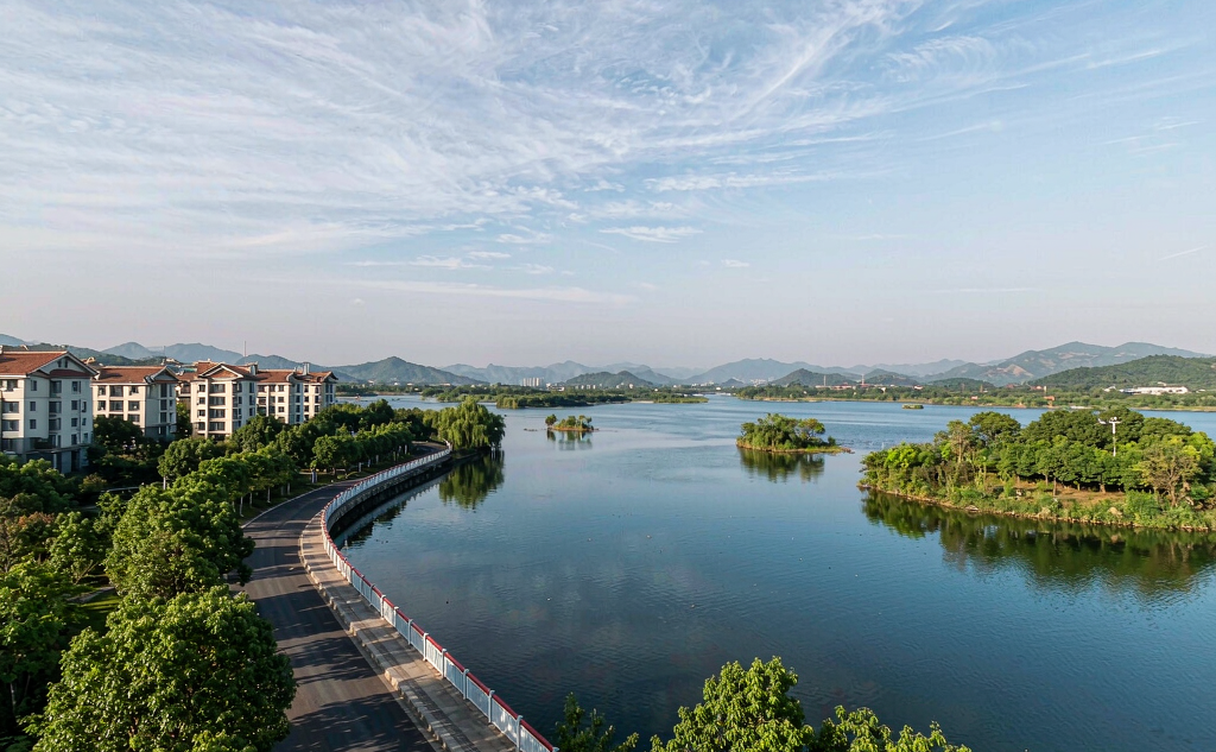
What I liked is that it is a local park first, not a staged attraction. Old men fished off the rocks, kids rode the causeway on bikes, and the only English I heard was my own. If you want a bigger blue space in the region, our Wuhan East Lake guide covers the giant lake next door, and Huangshi’s Cihu feels like its smaller, calmer cousin. The contrast is the point: Huangshi Hubei China is learning to sell its water after a century of selling its ore.
The National Mine Park
The sight that makes Huangshi different is the Huangshi National Mine Park (黄石国家矿山公园), out at the old Daye Iron Mine about 40 minutes from the center by DiDi (RMB 45 to 65). It is a working-history park built on a vast open-pit mine, famous for the terraced red-earth steps that spiral down like a stadium, a scar turned into a strange, photogenic landmark. I paid RMB 60 for entry in 2025, and the mining museum and the giant excavator display are included. A small train ride on old ore tracks cost another RMB 30.
It is not pretty in a soft way, and I would not call it relaxing, but it is honest and unlike anywhere else I went in Hubei. The scale of the pit is the lesson: you stand at the rim and understand why this city exists. Go on a weekday if you can; weekends bring school groups and local families in force. Wear a hat, because the terraces have no shade, and bring water, since the walk down and back up is longer than it looks from the top.
What to eat in Huangshi
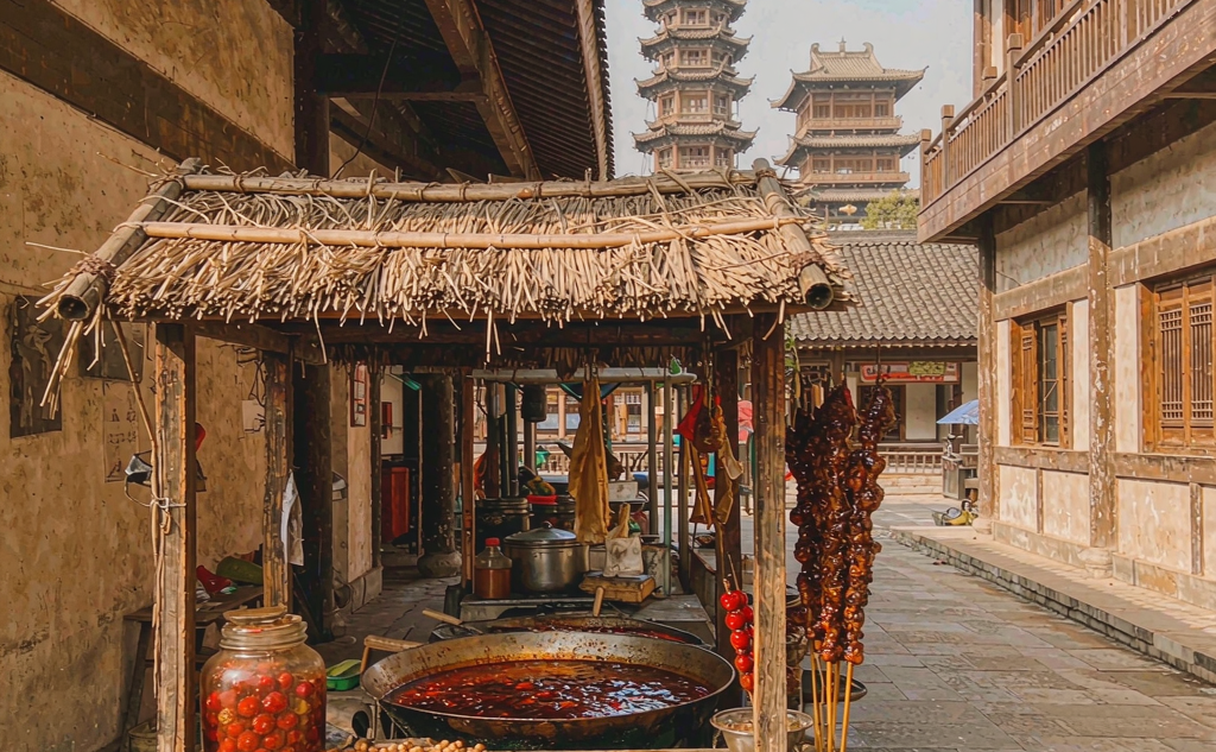
Things to do in Huangshi end, as always, at the table, and the food is its own reason to stop. Huangshi food carries the Yangtze-plain pantry with a mine-town appetite: I had a plate of gang bing (港饼), the local sweet-savory port cake, for RMB 8 a bag; a bowl of Lingxi fermented black beans (灵溪豆豉) over tofu for RMB 16; and a whole lake fish braised with chili for RMB 55. Breakfast was a youtiao and soy-milk set for RMB 6, and a street wonton ran RMB 10.
For the wider regional table, our Wuhan food guide explains the Hubei flavors you will keep meeting as you move east, and it helped me read menus that had zero English. I ate a shared dinner with a local beer for about RMB 90 for two, which is the kind of number that makes a side trip feel free. The night stalls near the old rail quarter were where I found the best gang bing and the friendliest chatter, and pointing at the next table’s plate got me the right thing every time.
A practical Huangshi itinerary
Here is the two-day plan I used. Day one: morning train from Wuhan, drop bags, walk Cihu and Tuanchengshan Park, eat lake fish for dinner. Day two: morning DiDi to the Mine Park, two hours on the terraces and museum, back for a gang bing snack and the late train to Wuhan. If you have a third day, the Yangtze riverfront and the old industrial quarter make a flat, easy wander, and the sunset over the water is worth staying for.
My all-in cost was about RMB 520 excluding the Wuhan–Huangshi train, which is about as cheap as a characterful day gets. Our China budget travel guide has the hostel and local-bus notes that kept my daily spend near RMB 300, and the biggest saving was the DiDi-shared ride out to the mine rather than a private charter.
Where to stay and book
I booked a clean lakefront hotel on Ctrip with Alipay for RMB 160 to 250 a night and had no payment trouble; the desk took my passport copy without question. Huangshi North station is a 25-minute DiDi from the Cihu side, and most mid-range hotels sit between the lake and the old town, so you are never far from either. Pick the lakefront if you want the greenway at dawn, the station side if you want a fast hop back to Wuhan.
Huangshi is not a beauty spot in the usual sense, and it does not pretend to be. It is a steel city learning to show its lake, where the reward is a strange red mine, a free willow shoreline, and a sweet port cake you will not find in the guidebook capitals. If you like seeing a place tell the truth about itself, Huangshi will earn its short train ride, and the terraces will stay with you longer than any postcard.