

I went to Fuyang (阜阳) because I wanted to see the Anhui nobody photographs: the flat, wheat-growing north where the dialect hardens, the noodles get thicker, and the pace is set by markets rather than mountains. Fuyang is a transport hub in the northwest corner of Anhui, a place of plain culture, flood-control lakes, and a noodle called gelatiao that I now crave at odd hours. This Fuyang travel guide comes from a three-day visit in October 2025, with the trains and prices I actually paid, and it is written for travelers who like the unglamorous middle of a country more than its highlight reel.
How to get to Fuyang
Fuyang is a genuine rail crossroads. High-speed trains reach Hefei in about 1 hour 50 minutes (RMB 100 to 140 second class) and Zhengzhou in roughly 2 hours, with frequent services through the day. From Beijing or Shanghai you will change once, usually in Hefei or Xuzhou. For the booking how-to, our China high-speed train guide for foreigners covers apps, IDs, and seat classes, and I used it to grab a Fuyang seat on a pass-through train without a hitch. I never booked more than a day ahead except during the October National Day week, when everything sells out and you should buy a week early.
The Hefei travel guide is the logical anchor if you fly into Anhui’s capital; from there Fuyang is a straight northwest rail run. Inside Fuyang, DiDi rides are cheap, and the bus station runs frequent coaches to the county sights for RMB 15 to 30, so you do not need a car for the Bali River day trip. The city’s plain setting is outlined on Fuyang at Wikipedia if you want the geography before you go.
Best time to visit Fuyang
Autumn (September to early November) is ideal: cool, dry, and good for walking the plain towns, with highs around 20 to 26°C. Spring (April to May) is also pleasant before the summer heat. Summers here are hot and wet, often above 35°C, and the flat land holds the humidity; winters are cold and hazy, sometimes below zero, with a wind off the plain that cuts through a coat. Our best time to visit China guide places Anhui in the national calendar if you are mixing north and south, and it confirmed October as the sweet spot for the noodle crawl I came to do.
Bali River and the plain wetlands
The one sight that pulls visitors is Bali River (八里河) in Yingshang County, about an hour south of the city by bus. It is a constructed wetland park built on reclaimed land, with lakes, pavilions, and a small “mini-Europe” garden section that is gloriously odd. The ticket was RMB 90 in 2025, and a battery-cart loop inside cost another RMB 20. I went on a weekday and had the willow paths almost to myself; weekends and holidays are busier and noisier, with local families out in force.
It is not wilderness, and I would not call it a must-see, but as a flatland escape it is pleasant and very local. Bring sunscreen, because the plain has no shade to speak of by midday, and wear shoes you can rinse, since the paths by the water get muddy after rain. The odd European statues are worth a laugh and a photo, and the kids’ zone makes it an easy half-day if you travel with family.
Plain culture, markets, and the noodle streets
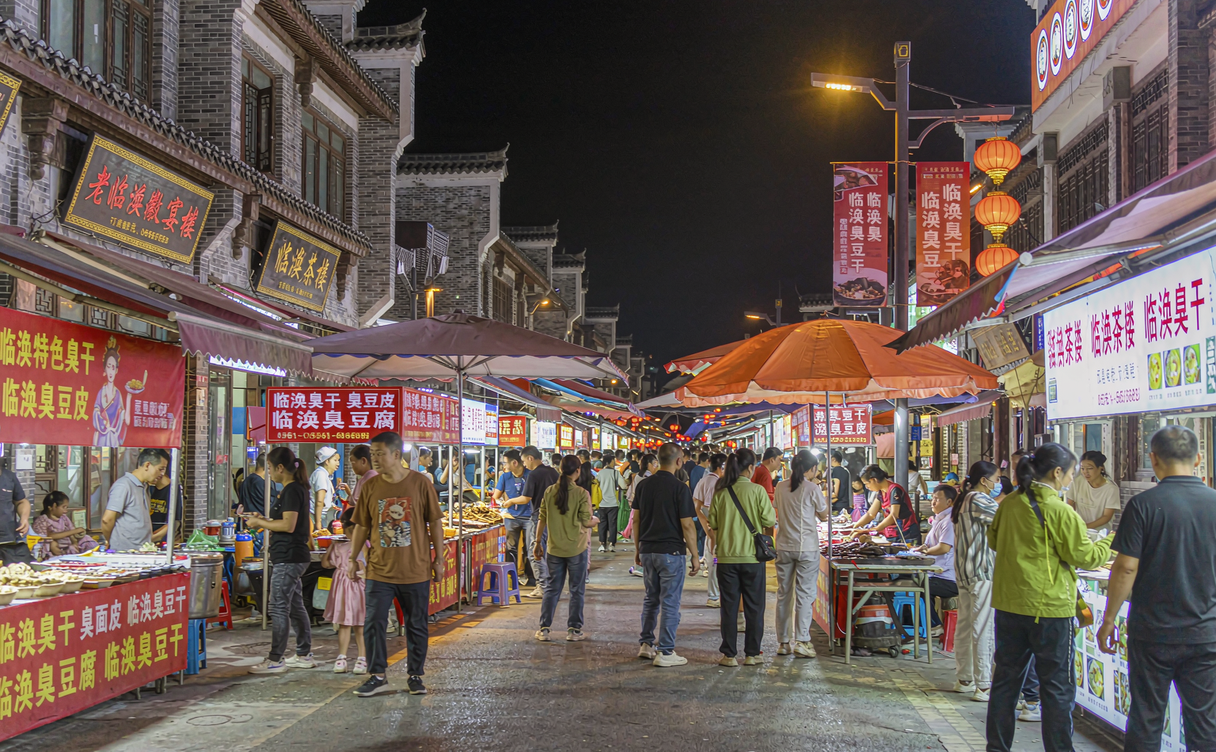
What I liked most about Fuyang was simply the street life. The old city around Yingzhou Road fills with evening stalls selling the regional carb load: gelatiao (格拉条), a thick hand-pulled noodle tossed with sesame paste, chili, and cucumber, for RMB 8 to 14 a bowl; zhentou mantou (枕头馍), a long “pillow” steamed bun you break and dip; and juan mo (卷馍), a thin crepe rolled around cold cuts and herbs for RMB 6 to 10. For the wider regional table, our Anhui Hui cuisine guide explains how northern Anhui’s wheat noodles differ from the mountain braises of the south, and our China food tour guide has ordering tips for all-Chinese menus like the ones I met here, where pointing and smiling got me further than my phrasebook.
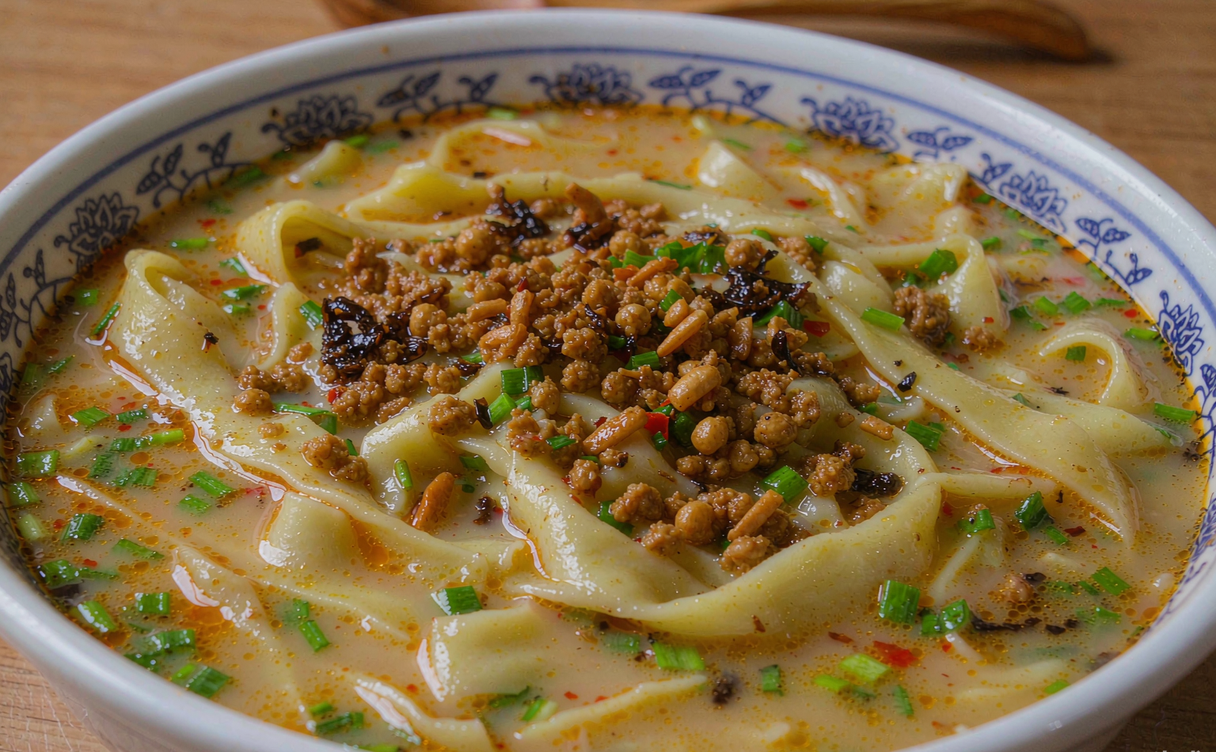
I ate my way down one block for about RMB 40 total and counted it as dinner and a show. The gelatiao stall owner tossed the noodles with a speed that was the best entertainment of the trip, and a regular waved me to the good seat by the steamer. If you want to learn the noodle family before you travel, the northern style here is closer to Henan than to southern Anhui, which is a useful thing to know so you are not surprised by the sesame-heavy, chili-light flavor.
What to eat in Fuyang
Beyond the street noodles, sit-down meals lean plain and hearty. I had a clay-pot of stewed free-range chicken with vermicelli for RMB 48 to 68, and a plate of smashed cucumber with garlic for RMB 12. Breakfast was always gelatiao or a soybean-milk and youtiao set for RMB 6. Portions are big; one meat dish fed two of us with rice left over, and the check was never more than a nice-cafe coffee back home. The local wheat beer is cheap and light, and a bottle at dinner ran RMB 8.
If you are a noodle person, the plain north is the part of Anhui to take seriously, because the mountain south gets the fame while the north gets the everyday bowl.
A practical Fuyang itinerary
Here is the two-night plan I used. Day one: train in, walk the Yingzhou Road evening stalls, eat gelatiao for dinner. Day two: morning bus to Yingshang, half day at Bali River, back for a noodle crawl at night. Day three: a slow market morning, pillow bun and soy milk breakfast, train on to Hefei or Zhengzhou by early afternoon. If you have a fourth day, the Yingzhou West Lake (颍州西湖) inside the city is a calm stroll for RMB 20 and an easy add-on.
My total was about RMB 600 to 850 excluding the intercity train, which is about as cheap as Anhui gets. Our China budget travel guide has the hostel and local-bus notes that kept my daily cost near RMB 280, and the single biggest saving was eating at stalls instead of restaurants aimed at tour buses.
Where to stay and book
I booked a city-center hotel on Ctrip with Alipay (RMB 140 to 230 for a clean double) and had no card trouble; the county guesthouses took cash. Fuyang’s high-speed station is a short DiDi from the center, and the long-distance bus station for Yingshang is walkable from most mid-range hotels, so location barely matters. Pick the old-town side if you want the night stalls at your door, the station side if you want an early train out.
Fuyang is not a beauty spot, and it does not pretend to be. It is a working hub of the Anhui plain, where the reward is a good noodle, a loud market, and the everyday rhythm of a region most travelers skip. If you are the kind of person who measures a trip by what you ate at a street stall rather than what you photographed from a summit, Fuyang will quietly earn its place on your route, and the gelatiao will follow you home.