

Most foreign visitors to Anhui head straight for Huangshan or the villages of Hongcun, and I did the same on my first trip. On my second visit, in March 2025, I broke the pattern and took a short train north to Huainan. Huainan, Anhui, China, sits on the banks of the Huai River and most guidebooks skip it, yet it turned out to be one of the most relaxing stops of my year in the province. It is a place proud of its industrial, coal-mining past yet quietly reinventing itself around lakes, wooded mountains, and a food story that goes back two thousand years. This Huainan travel guide pulls together everything I learned across three days: how to get to Huainan, the things to do in Huainan that are actually worth your time, what to eat, and a Huainan itinerary you can copy without much planning.
Why Huainan Surprised Me
Huainan calls itself the birthplace of tofu. The local legend says Liu An, a Han dynasty prince, accidentally invented tofu on Bagong Mountain more than two millennia ago. As someone who eats tofu several times a week back home, that origin story was enough to pull me off the usual route. The city is also one of China’s oldest coal and power bases, so parts of it feel rough and workaday, with cooling towers and rail yards on the outskirts. But the Huai River and nearby Wabu Lake give the place a calm, lakeside character I did not expect. If your mental picture of Anhui is all yellow peaks and misty villages, Huainan is a useful, grittier counterpoint, and it pairs well with a few days in the capital, where the Hefei travel guide on our site covers that side of the province in detail.
How to Get to Huainan
The simplest way to reach Huainan is by high-speed train. Huainan East Station sits on the Hefei to Bengbu intercity railway, while Huainan South Station serves the newer Shangqiu to Hangzhou line. From Hefei South, trains to Huainan East run roughly every 30 to 40 minutes and take 35 to 50 minutes; a second-class seat costs RMB 32 to 45. From Nanjing you change at Hefei and arrive in about 1.5 to 2 hours for RMB 90 to 130. From Shanghai, budget 4 to 5 hours with a transfer and RMB 250 to 330 for the full trip. There is no international airport in the city, so most travelers fly into Hefei Xinqiao International Airport and then take a shuttle or taxi to Hefei South before boarding. Once you arrive, ride-hailing apps and taxis handle the short hop into town; a taxi from Huainan East to the center runs RMB 25 to 40. For step-by-step booking help, see our China high-speed train guide for foreigners.
Things to Do in Huainan
Bagong Mountain
This is the heart of the Huainan story. Bagongshan National Geopark protects the wooded peaks where tofu was supposedly born, and it has easy walking trails, a small museum, and a few quiet temples. I spent a relaxed morning here hiking the lower loops and tasting fresh tofu made on the mountain. Entry is around RMB 40 to 60, and a cable car is available for an extra RMB 30 to 40 if you want the summit views without the climb. Go early, because by late morning the coach tours arrive and the trails fill up.
Shouxian Ancient City
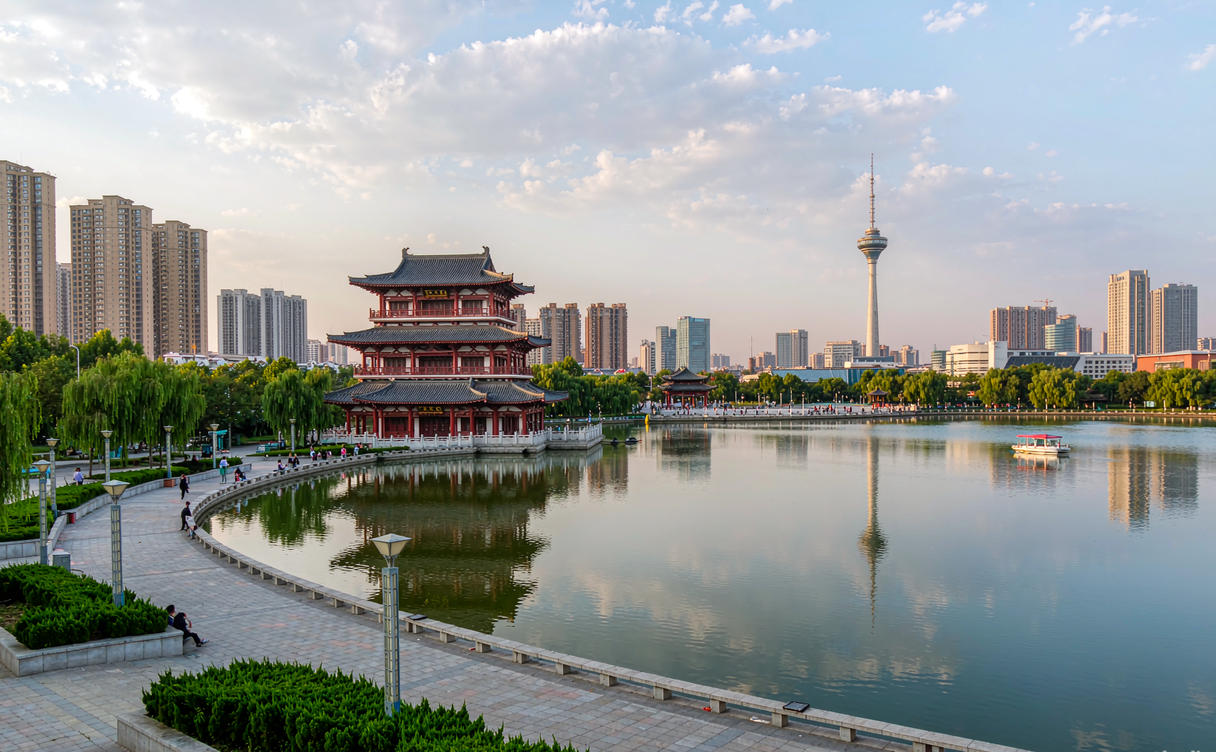
About 30 kilometers southwest of the center, Shouxian is one of the best-preserved ancient county seats in China. Its Ming and Qing era walls, rebuilt on Song dynasty foundations, still enclose a living town with markets and schools inside. You can walk the ramparts for about RMB 10 to 20, and the Bao’en Temple inside holds a striking wooden hall and a giant gilded Buddha. I wandered the lanes for hours, eating street snacks and watching older residents play cards in the shade. It is an easy half-day trip by bus for RMB 8 to 12 or taxi for RMB 60 to 90, and it was the highlight of my visit.
Wabu Lake and the Huai River Front
On my last afternoon I rented a bike near the river and rode the flat paths along Wabu Lake. The water, the fishing boats, and the sunset over the dikes made a calm contrast to the city’s coal-era blocks. Locals come here to walk after dinner, and there are simple lakeside restaurants serving just-caught fish for RMB 48 to 88 a plate.
Huainan Museum
If the weather turns, the city museum has solid exhibits on Huainan’s coal industry, the Chu culture relics from nearby Shouxian, and the history of tofu. Entry is free with ID, and it took me about an hour to see the main halls.
Huainan Food
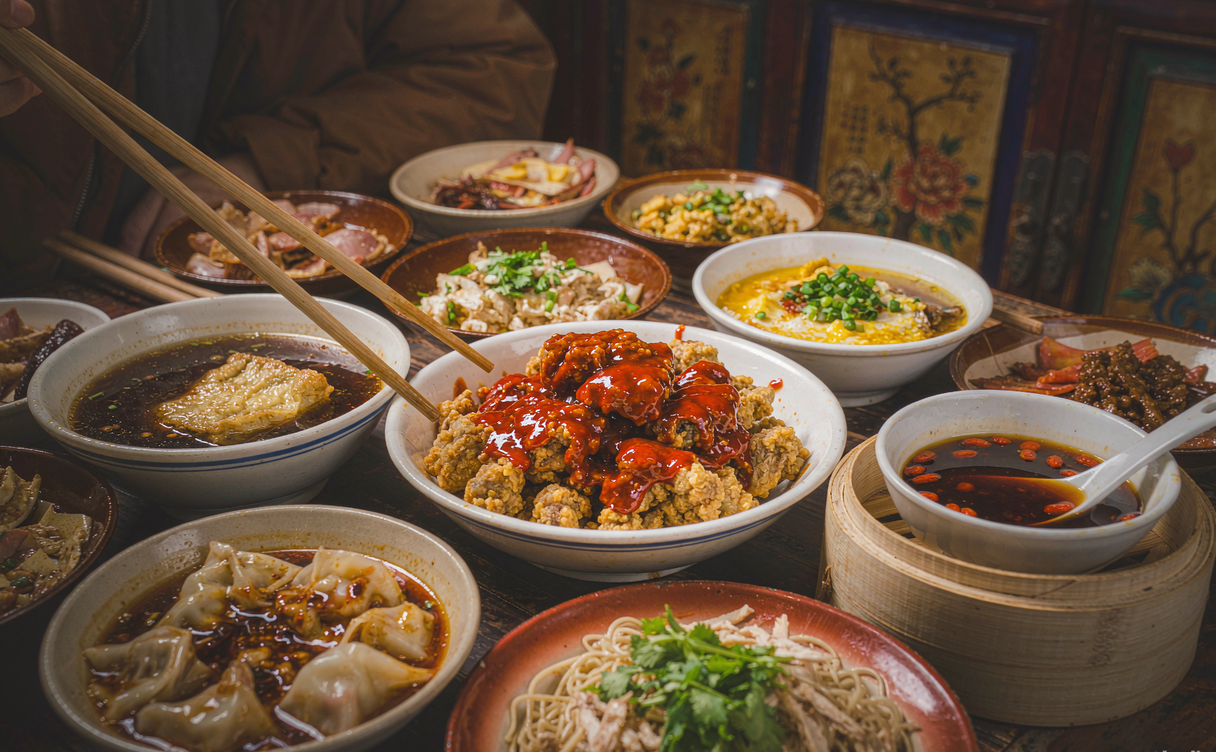
You cannot write a Huainan food section without leading with Huainan beef soup. A bowl of this peppery, bone-rich broth with slices of beef, vermicelli, and herbs costs just RMB 15 to 25 at a morning stall, and it became my breakfast three days running. Then there is Bagongshan tofu in every form, braised, stuffed, dried, or in hotpot, usually RMB 28 to 48 per dish. In Shouxian, try Dajiujiu, a crisp, honeyed pastry that costs around RMB 15 a box and makes a good souvenir. For a wider picture of the region’s cooking, our Anhui Hui cuisine guide explains the sweet-and-savory flavors you will meet across Anhui.
A Practical Huainan Itinerary
If you have two days, spend day one on Bagong Mountain and the city museums, and day two on Shouxian and the lakeside. With three days, add a slow morning on Wabu Lake and a food crawl through the night market near Longwanggou. I built my own plan after reading our China budget travel guide, and I kept daily costs around RMB 250 to 350 all-in, including a simple hotel room and three meals.
Where to Stay and When to Go
Budget hotels near Huainan East Station start at RMB 130 to 200 a night; mid-range options near the river run RMB 260 to 450. I stayed by the lake and paid RMB 320 for a clean, quiet room. The best time to visit China generally holds for Huainan: spring from March to May and autumn from September to November bring mild weather and good light. Summer is hot and humid, and winter is cold but quiet, with fewer crowds at the sites.
Getting Around the City
Buses are cheap but signs are mostly in Chinese, so I relied on ride-hailing for cross-town trips and rented a bike for the lake. Download an offline map before you arrive, because rural signal around Shouxian can drop, and having a pinned route saved me more than once when my data cut out. A day pass on the local bus network costs about RMB 2 to 4 per ride, which keeps walking-distance days nearly free.
Why Huainan Stayed With Me
Huainan will not top anyone’s bucket list, and that is exactly why I liked it. It is a real Chinese city with a deep food heritage and a river to watch the sun go down. For background on the wider region, the Wikipedia page on Huainan has useful context on its history and industry, and it helped me place the coal era in context before I went.
Money, Connectivity, and Small Frustrations
A few practical notes from my stay. Card payments work in hotels and larger restaurants, but the small tofu stalls and the Shouxian snack vendors often preferred cash or a Chinese payment app, so I carried RMB 100 to 200 in small notes. Foreign-card ATMs were easiest to find near the train stations, and I used one at Huainan East without trouble. Mobile data was reliable in the city and along the rail line, but it thinned out inside the Shouxian walls and on the upper Bagong Mountain trails, which is exactly why the offline map mattered.
Language was the biggest gap. Outside the museum, almost nobody spoke English, and my Mandarin got me through ordering beef soup and buying bus tickets but not much more. A translation app handled the rest, and drivers were patient when I showed them the Chinese characters for my hotel. If you arrive during a holiday, expect the Shouxian walls and the lakeside to fill with domestic tourists; a weekday visit kept things calm and gave me the alleys to myself.
One small surprise: the coal heritage is not hidden away. Cooling towers and rail yards sit close to the lake, and at first I found the contrast strange. By the second day I liked it, because it made Huainan feel like a real place rather than a staged scenic zone. The beef soup tasted better for it.