

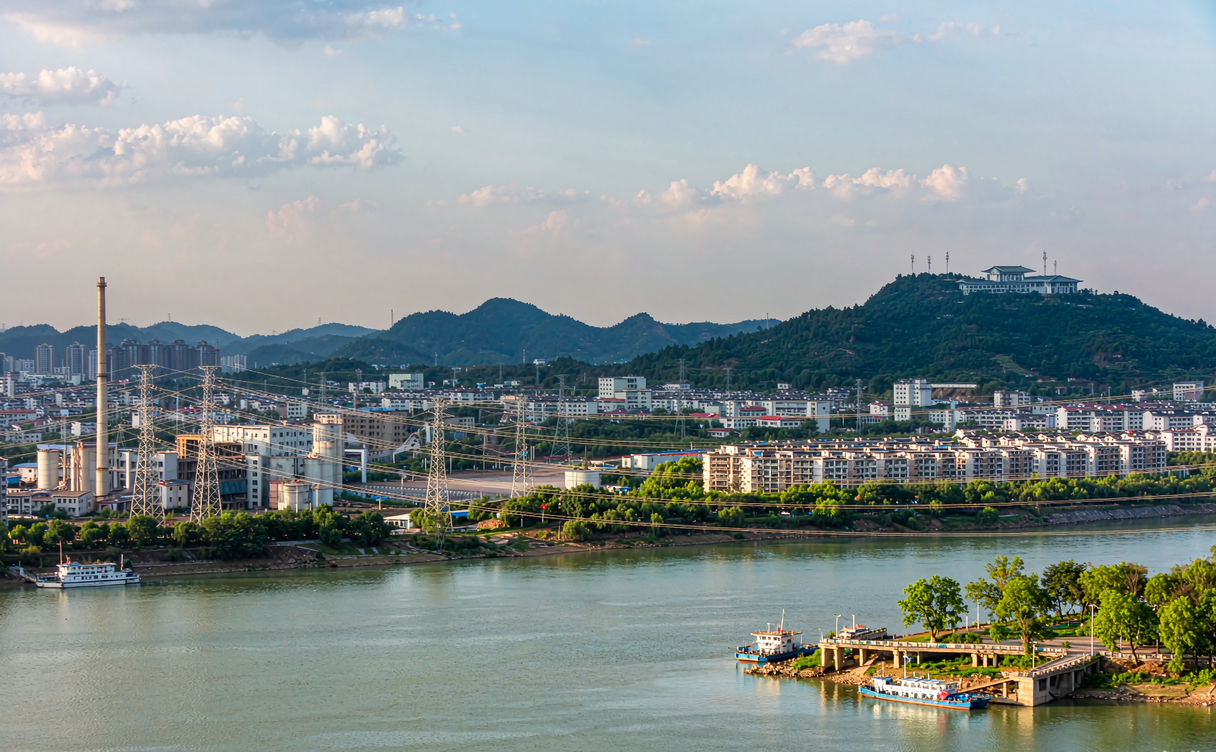
Most travelers rush through Anhui on the way to Huangshan and never stop in Tongling. I made that mistake for years, then spent two days there in April 2025 and wished I had come sooner. Tongling, Anhui, China, sits on the south bank of the Yangtze River and calls itself the copper capital of the country, with a bronze-making tradition that stretches back more than three thousand years. It is also one of the smallest prefecture-level cities in the province, which makes it easy to explore on foot and by bus. This Tongling travel guide is built from my own notes: how to get to Tongling, the things to do in Tongling worth your time, where to eat, and a Tongling itinerary you can follow.
Why Tongling Is Worth a Stop
Tongling’s identity is copper. The area has been mined and smelted for millennia, and today the city still refines a large share of China’s copper. That industrial backbone gives the place a no-nonsense feel, but the Yangtze waterfront, a central lake park, and a well-kept bronze museum make it an easy, low-stress stop. I used Tongling as a calm base between Hefei and Huangshan, and it worked better than I expected. For the big mountain experience afterward, the Huangshan Yellow Mountain guide on our site explains how to plan that climb in detail.
How to Get to Tongling
High-speed rail is the easiest route. Tongling North Station sits on the Hefei to Fuzhou line, with frequent trains from Hefei South taking about 50 to 75 minutes for RMB 60 to 90 in second class. From Nanjing you can reach Tongling in roughly 2 to 2.5 hours with a change, costing RMB 110 to 150. From Shanghai, allow 3.5 to 4.5 hours and RMB 240 to 320. There is also an older Tongling Station on the conventional line for a few slower services. The city has no international airport, so fly into Hefei or Nanjing and transfer by train. Taxis from Tongling North to the center cost RMB 30 to 50. For booking details, see our China high-speed train guide for foreigners.
Things to Do in Tongling
Tianjing Lake
This free lakeside park sits right in the city center and was my go-to for a morning walk. A small island temple, willow-lined paths, and paddle boats make it a relaxed spot, and there are cafes around the rim for a cheap coffee. I came here both mornings and never got bored of the light on the water.
Datong Ancient Town
About 12 kilometers from the center, Datong was once a busy Yangtze river port, and its old streets still hold Ming and Qing style buildings, a riverside promenade, and the Dashi Pavilion temple. Entry to the town is free; a few small museums charge RMB 10 to 20. I took a bus for RMB 4 to 6 and spent a slow afternoon photographing the weathered warehouses and the ferry crossing.
Phoenix Mountain
North of the city, Phoenix Mountain is known for its spring peonies and its bronze-mining relics. In mid-April the hillside peony garden draws local crowds, and the surrounding trails are good for a half-day hike. Entry is around RMB 30 to 50. I went on a weekday and had the upper paths largely to myself, with only the hum of the river below.
Tongling Museum
This is the best single place to understand the city. The bronze galleries show excavated vessels, mining tools, and modern ingots, with clear labels in Chinese and some English. Entry is free with ID, and it took me about 90 minutes to see the main halls and read the panels.
Tongling Food
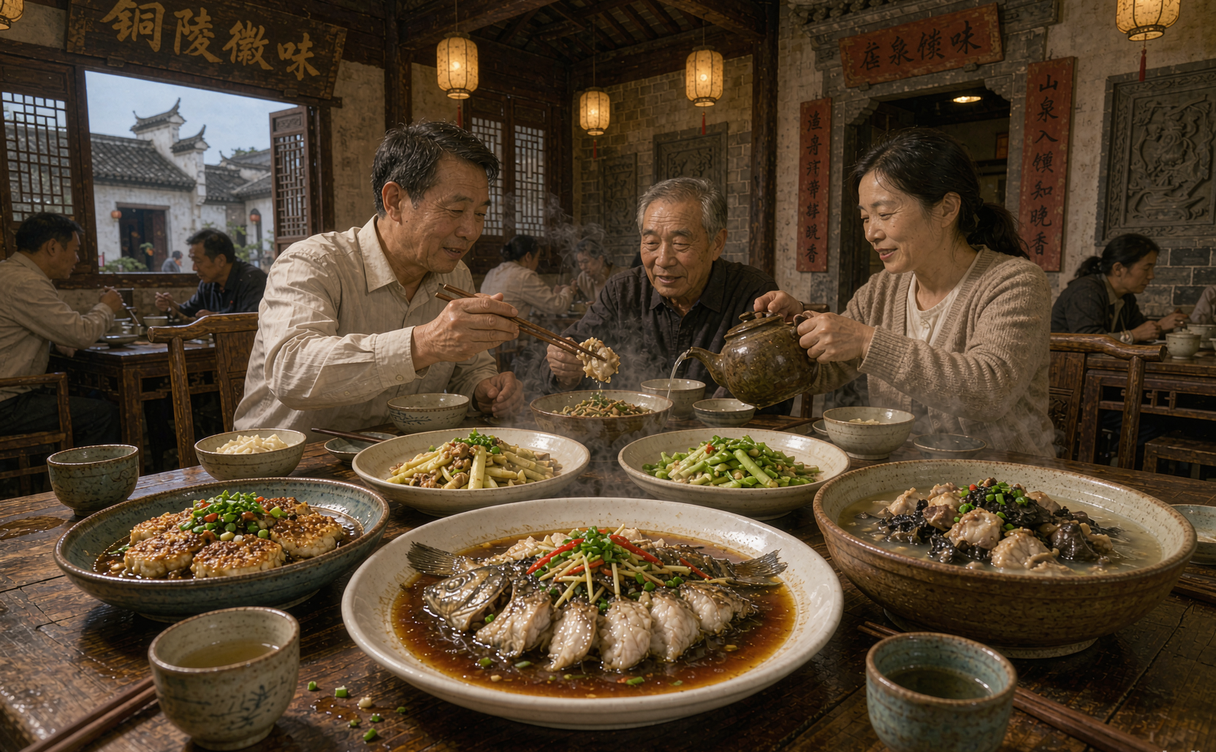
The standout is Tongling white ginger, a local specialty eaten preserved, candied, or as a tangy side with rice; a small packet costs RMB 10 to 25 and travels well as a gift. Datong dried tofu is another classic, sold by the piece for RMB 2 to 4. For sit-down meals, try the river fish and the simple noodle shops near Tianjing Lake, where a bowl runs RMB 12 to 20. For more on the region’s cooking, our Anhui Hui cuisine guide walks through the flavors of the province, from braised hams to river delicacies.
A Practical Tongling Itinerary
With one full day, do Tianjing Lake in the morning, the museum before lunch, and Datong in the afternoon. With two days, add Phoenix Mountain on day two and a slow dinner by the river. I planned my spending using our China budget travel guide and kept daily costs near RMB 230 to 320 including a basic hotel and three meals.
Where to Stay and When to Go
Hotels near the train station start at RMB 140 to 220 a night; lakeside mid-range rooms run RMB 260 to 420. I paid RMB 300 for a quiet room a short walk from Tianjing Lake. The best time to visit China applies here too: spring, especially April for the peonies, and autumn are best, while summer is hot and sticky and winter is grey but quiet.
Getting Around
The city center is walkable, and buses reach Datong and Phoenix Mountain for a few RMB. Ride-hailing filled the gaps for me, and I never needed a car. Keep small cash for the temple donation boxes and the older bus routes, where card readers are not always reliable.
Final Thoughts
Tongling is not a headline destination, but it is a genuine, manageable city with a real story in metal and river trade. For wider context, the Wikipedia page on Tongling covers its history and economy, and it helped me understand why copper still defines the skyline.
Practical Notes for Visitors
A few things I wish I had known before arriving. Card payments worked in hotels and chain restaurants, but the small ginger shops, the noodle stalls near Tianjing Lake, and the Datong ferry vendors preferred cash or a Chinese payment app, so I kept RMB 100 to 200 in small notes. Foreign-card ATMs were easiest at the train station, and I withdrew there without issue. Mobile data was solid in the city and on the line from Hefei, but it weakened on the upper Phoenix Mountain trails, so I downloaded maps beforehand.
Language was the main barrier. Almost nobody outside the museum spoke English, and my Mandarin covered ordering noodles and buying bus tickets but little else. A translation app closed the gap, and drivers were patient when I showed hotel names in Chinese characters. If you come in April for the peonies, reach Phoenix Mountain early, because the gardens crowd by mid-morning on weekends.
Side Trips from Tongling
Tongling works as a hub. To the south, the Yangtze river towns offer slow ferry rides and fish dinners; to the north and west, Hefei gives museums and the airport link; and southward, the rail line runs straight toward Huangshan for the classic mountain climb. I treated Tongling as a two-night pause rather than a destination in itself, and that framing made it feel generous instead of small. With one full day you can cover the lake, the museum, and Datong with room to breathe.
A Slow Morning by Tianjing Lake
I want to single out one experience, because it defined the trip. On both mornings I reached Tianjing Lake before 8 a.m., when the light was soft and the only other people were locals doing tai chi and walking dogs. A coffee at the rim cost RMB 18, and I sat for an hour watching paddle boats idle at the dock. It cost nothing but time, and it was the calmest part of my China travels that month. If your schedule is tight, this is the one free thing I would not skip.
Getting to Nearby Hefei
Most visitors will pass through Hefei anyway, and the 50 to 75 minute train makes a day or two there easy to combine. The capital has the province museum, a good food street, and the airport for international flights. I built my Anhui loop as Hefei, then Tongling, then north to Huainan, which kept train rides short and gave me a mix of city and countryside. The rhythm worked, and I would repeat it.