

Tongren sits in the quiet corner where Qinghai meets Gansu, a small city that most foreign visitors have never heard of and almost none plan to see. That is exactly why it rewards the curious. Tongren is the home of Regong art, a Tibetan Buddhist painting and sculpture tradition rooted in the monasteries of Tibet, China, and carried eastward into the highlands of Qinghai. Here, in walled temple courtyards, monks still grind mineral pigments and paint thangkas that can take a single artist years to finish.
Best Time to Visit Tongren
The best time to visit Tongren is from late June to early October. The town sits at around 2,500 meters, so summers are cool and green, with clear skies that show off the golden monastery roofs. July and August bring the rainy season, but showers are usually brief and the surrounding valleys turn vivid. Winter is severe — cold, snowbound, and with many temple workshops running on reduced hours. If you want to catch the region’s living artistic tradition at full swing, aim for the warm months, and try to time a visit around a monastery festival when the courtyards fill with pilgrims.
How to Get to Tongren
Tongren has no airport of its own. Most travelers reach it via Xining, the capital of Qinghai, then take a bus or private car southwest for about three hours through the Huangshui valley. There is also a small regional airport at nearby Rongwo (Tongren) with limited flights from Xining and Chengdu. Trains do not serve the town directly, so the final leg is road. The drive itself is part of the appeal: terraced fields give way to Tibetan villages with whitewashed stupas and fluttering prayer flags. Once in town, everything is walkable, and the main monastery quarter is compact enough to explore on foot.
Things to Do in Tongren, Qinghai
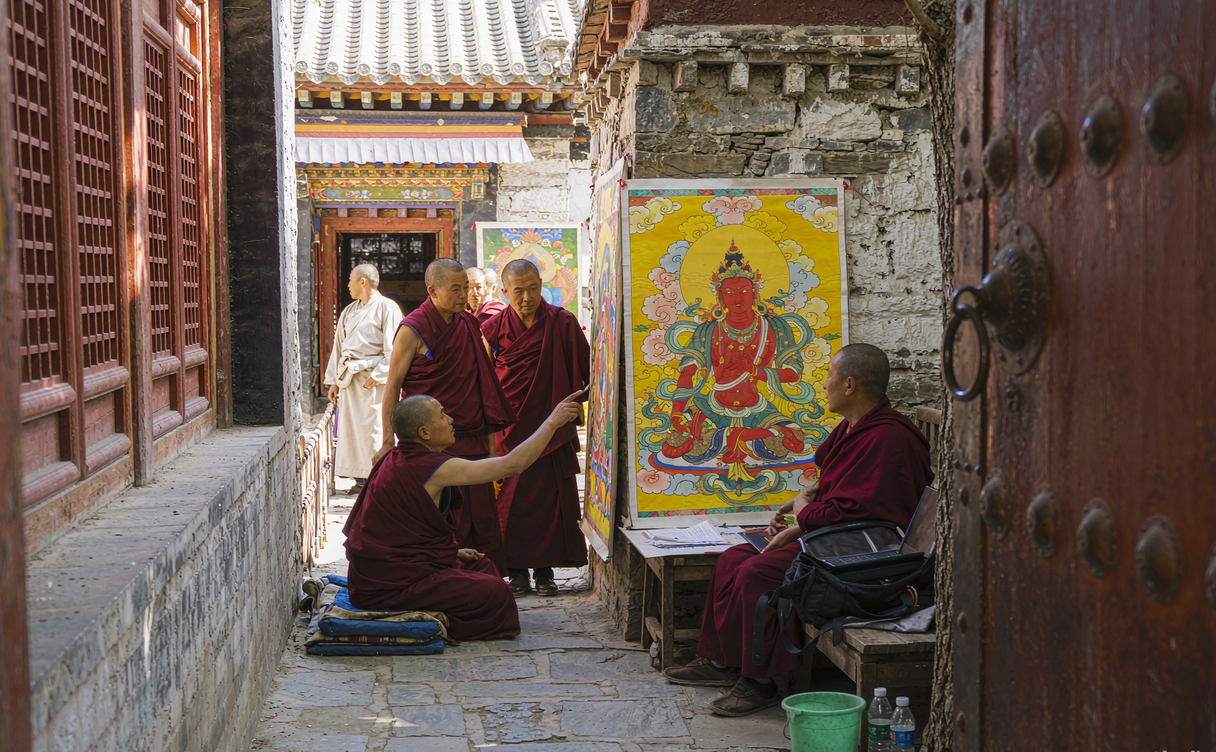
The heart of things to do in Tongren, Qinghai is Rongwo Gompa (Longwu Si), the monastery that anchors the Regong art tradition. Its main hall holds enormous gilded Buddha statues and walls of centuries-old murals. Spend a morning watching the thangka painters in the side courtyards — many workshops welcome quiet observers. Above the town, the Wutun villages are where the most famous Regong artists live and teach; a short walk or taxi ride takes you to family studios where pigments are still made by hand.
Tongren Tibetan Monasteries
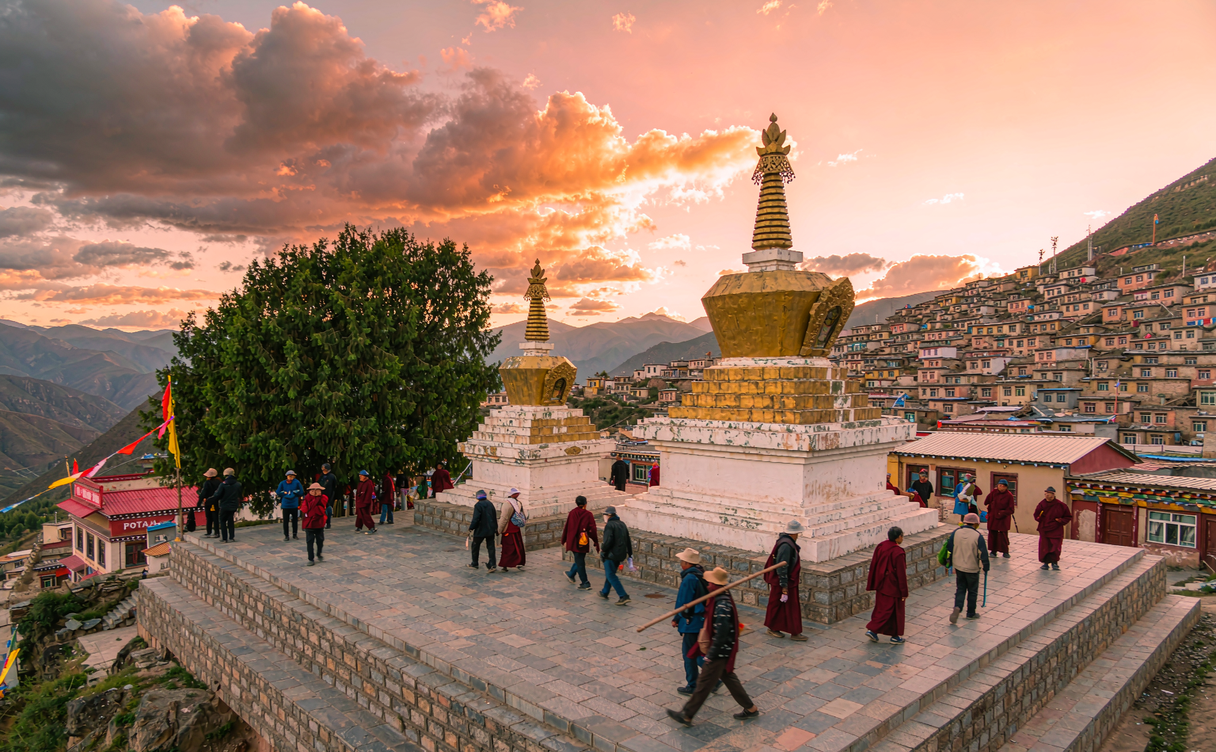
The Tongren Tibetan monasteries are not museum pieces. They are active places of worship where you may see monks debating, chanting, and circumambulating the hillside stupas. The nearby Nianduhu and other small gompas offer a calmer alternative to the busy main temple. Dress modestly, ask before photographing people, and walk clockwise around shrines.
Regong Art in Tongren
Regong art in Tongren is the reason UNESCO and scholars pay attention to this remote valley. The tradition spans thangka scroll paintings, barbola (appliqué thangkas built from silk), and vivid sculpture. What sets it apart is the strict apprenticeship system: boys train under masters from childhood, and the best work is commissioned by monasteries across the Tibetan cultural regions of China. Visiting a studio is the closest you can get to understanding how this heritage stays alive. The annual Regong art festivals, usually in summer, turn the town into an open-air gallery of finished scrolls.
Tongren to Xining
A Tongren to Xining transfer is straightforward and scenic. Buses and private cars make the three-hour run along the Huangshui river, passing hot-spring villages and roadside chortens. Xining makes a logical bookend: it is the gateway to Qinghai Lake and the starting point for most Tibet, China highland journeys. Many travelers pair the two, using Xining as a base and Tongren as a day-or-overnight cultural excursion. Our China ethnic minorities travel guide explains the broader context of the country’s many cultural regions, useful background before you go.
A Tongren Travel Itinerary
A relaxed Tongren travel itinerary runs two to three days. Day one: arrive from Xining, settle in, and explore Rongwo Gompa at dusk when the light hits the gold roofs. Day two: the Wutun painting villages and a studio visit, plus a hillside stupa walk. Day three: a side trip to a smaller monastery or the hot springs before heading back. If your interests run to minority cultures more broadly, our Guizhou Huangguoshu Waterfall and Guizhou Xijiang Miao village pages show how diverse China’s ethnic landscapes are, while the Guizhou Zhaoxing Dong village and Guiyang travel guide offer a southern counterpoint. The Kaili travel guide is another window into Miao and Dong heritage.
Where to Stay
Tongren is small, so lodging is modest. The center has a few clean, comfortable hotels aimed at domestic tourists and pilgrims, within walking distance of the main monastery. For atmosphere, ask about guesthouses attached to or near the temple quarter — simple rooms, early-morning chanting, and easy access to the courtyards. Book ahead if you travel during a festival, when rooms fill with Tibetan families and art buyers.
Local Food
Food here follows the highland Tibetan and Hui mix of Qinghai. Expect hearty barley dishes, beef momos (dumplings), and thenthuk noodle soup, plus sweet milk tea. Hui-run restaurants serve excellent hand-pulled noodles and lamb skewers. At breakfast, try tsampa (roasted barley flour) with yogurt if you want the local staple. Vegetarians will find plenty of noodle and vegetable dishes, though dairy and meat dominate the traditional diet.
Getting around Tongren is simple because the town is small. The monastery quarter, the main hotels, and the painting villages are all within a short taxi or bike ride, and the Wutun studios are an easy walk or quick drive from the center. For a Tongren travel itinerary that includes the hillside stupas and a hot-spring stop, a local driver for a half-day is the most relaxed option. Note that the altitude here is real — take the first day easy, drink plenty of water, and avoid heavy exertion until you adjust. Mornings are the best time at the monasteries, when the light is soft and the chanting carries across the valley before the afternoon clouds build.
Why Tongren Stays With You
Tongren is the kind of place that does not show up on glossy brochures, yet it often becomes a traveler’s favorite stop. There is no spectacle, no queue, no ticketed light show — just working monasteries, patient artists, and a valley that has been doing the same thing for six hundred years. For visitors interested in the living Tibetan Buddhist heritage of China, it is far more intimate than the headline sites.
The Regong art tradition is documented by the China National Commission for UNESCO, which lists it among the country’s intangible cultural heritage — background worth reading before you visit, available through the UNESCO intangible heritage portal. It frames the paintings you will see as part of a living, protected tradition.
Tongren asks for slowness. Give it two days and a quiet morning in a painting courtyard, and you leave with something most Silk Road itineraries never deliver: a sense of how art and faith actually persist on the ground, in one green valley at the edge of the plateau.
When you finally roll back toward Xining, the gold roofs fade into the hills behind you, but the valley’s patience tends to stay.