

Kaili itself will not seduce you. It is a workmanlike prefecture capital of concrete blocks and noodle shops spread across a bowl of green hills, and most travellers who arrive on the fast train from Guiyang are already looking at their phones for the bus out. That is exactly how to use it. Within ninety minutes of Kaili’s bus station lie hundreds of Miao and Dong villages, weekly markets that rotate on the lunar calendar, and terraced valleys where the drum towers still get used. This Kaili travel guide treats the city as what it is — the best-connected base in southeastern Guizhou — and shows you how to spend your days out among the villages while sleeping somewhere with hot water and a decent bowl of sour soup.
What Kaili Is Actually For
Kaili is the capital of Qiandongnan, a prefecture of around 4.7 million people where Miao and Dong communities make up the majority. The city has a good free museum, a lively night market and very little else. Its value is logistical: a high-speed rail station on the Shanghai–Kunming line, a bus station with departures to every village you have read about, and enough hotel supply that you are not hostage to guesthouse availability in the villages themselves.
The cultural traditions you will encounter here are living ones, still practised at weddings and festivals rather than staged for visitors. The Dong choral tradition of the surrounding valleys is inscribed on UNESCO’s Representative List of the Intangible Cultural Heritage of Humanity, and hearing it sung in a village drum tower rather than a theatre is the difference between a good trip and a great one. If you are assembling a route through China’s quieter provinces, this region anchors our off-the-beaten-path China guide.
Best Time to Visit
Kaili sits at about 720 metres, which keeps summers tolerable and winters raw rather than freezing.
April to June is the strongest window. Days run 20–28°C, the rice terraces are flooded and reflective in May, and the spring festival calendar is busy — the Sisters’ Meal Festival in nearby Taijiang usually falls in April on the lunar calendar and is one of the region’s great gatherings. Expect rain most weeks; bring a shell.
July and August hit 26–32°C with the year’s heaviest downpours. Mountain roads to remote villages occasionally wash out. Not ideal, though the terraces are at their greenest.
September to November is my personal pick: 15–26°C, the driest stretch of the year, golden terraces in late September and early October, and Miao New Year celebrations across the villages from late October into November. Skip the 1–7 October national holiday.
December to February falls to 2–9°C, grey and damp with cold fog and occasional ice on the passes. Villages are quiet and cheap, but you will be cold indoors — heating is rare. Cross-check against our best time to visit China guide before locking dates.
How to Get There
Kaili South (凯里南) is the high-speed station, about 12 km southwest of the centre. The older Kaili station handles slower services and is closer in.
| From | Mode | Duration | Approx. fare |
|—|—|—|—|
| Guiyang East | High-speed rail to Kaili South | 35–45 min | ¥54 (US$8) second class |
| Guilin West | High-speed rail to Kaili South | 2 hr 10 min | ¥165 (US$23) |
| Guangzhou South | High-speed rail to Kaili South | 4 hr 30 min | ¥330 (US$46) |
| Changsha South | High-speed rail to Kaili South | 3 hr | ¥280 (US$39) |
| Kaili South station | Shuttle bus / taxi to city centre | 30 min | ¥10 (US$1.40) / ¥45 (US$6) |
| Kaili bus station | Bus to Xijiang Qianhu Miao Village | 1 hr | ¥20 (US$3) |
| Kaili bus station | Bus to Langde Upper Village | 45 min | ¥12 (US$2) |
City buses cost ¥2 and ride-hailing across Kaili rarely exceeds ¥20 (US$3). For village-hopping, hiring a car with driver at ¥400–600 (US$56–85) a day is the single best investment you can make here, because the interesting villages are not on any one bus route.
What to See and Do
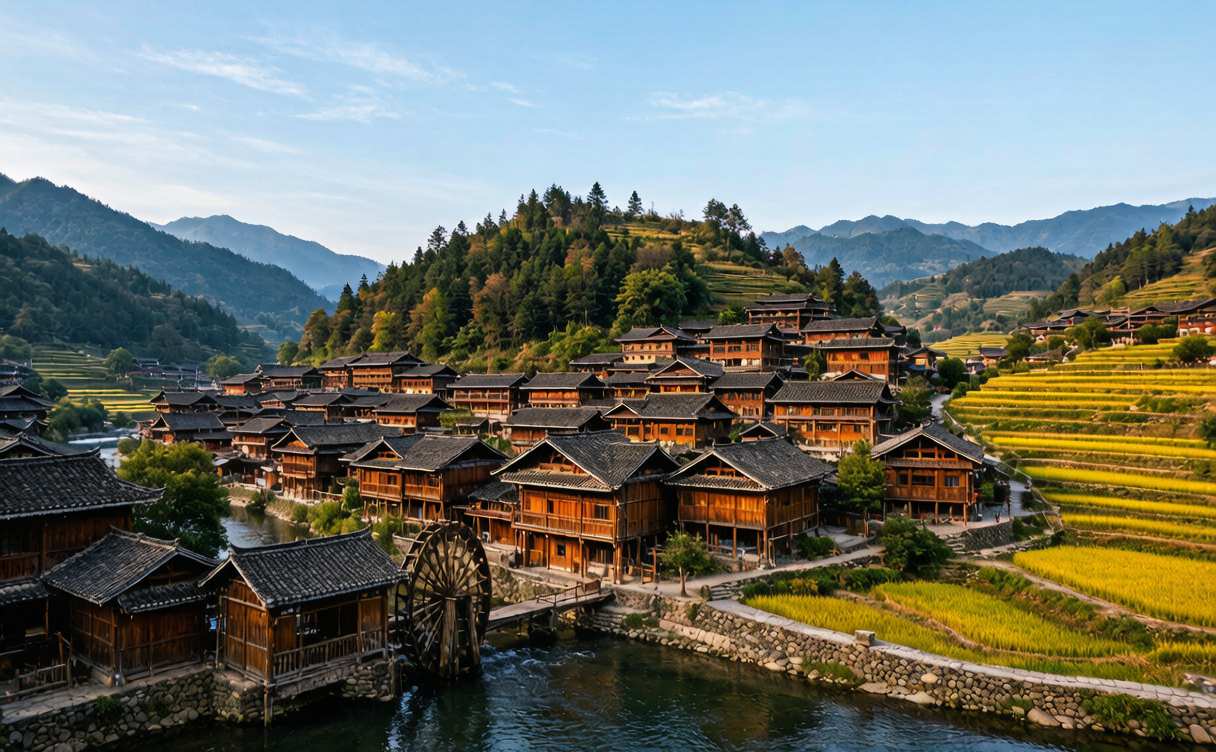
Xijiang Qianhu Miao Village (西江千户苗寨). The famous one, 35 km east: more than a thousand timber houses stacked up two hillsides, spectacular at dusk when the lights come on. Admission is about ¥90 (US$13) plus roughly ¥20 (US$3) for the internal shuttle, and the main street is now solidly commercial — silver shops, bars, costume rental. Go anyway, but stay overnight and walk the upper lanes early, where people are still drying chillies on their balconies.
Langde Upper Village (郎德上寨). Twenty-nine kilometres from Kaili, ticket around ¥30 (US$4), and about a hundredth of Xijiang’s crowd. Flagstone lanes, a central dance ground, and a welcome ceremony with rice wine when a group arrives. This is the one I recommend to people who found Xijiang too polished.
Matang Gejia Village (麻塘革家寨). A small community 20 km northwest known for its batik and distinctive dress. Low-key, sometimes almost empty, around ¥20 (US$3).
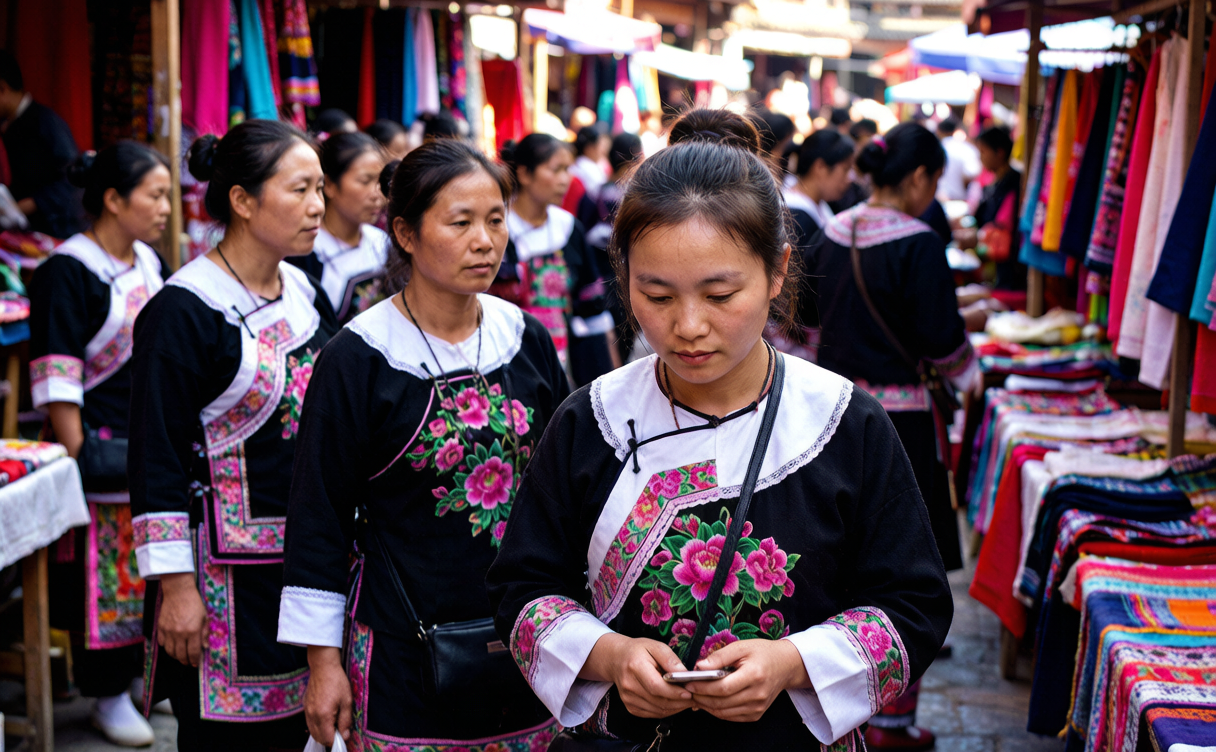
The rotating village markets. The best thing in Qiandongnan and the hardest to plan. Markets cycle through villages on the lunar calendar — Zhouxi, Xinzhou, Chong’anjiang and others each have their day, and they are working markets: buffalo, herbs, silver, embroidery, cauldrons of noodles. Ask your guesthouse which market falls on which day of your stay, then go.
Qiandongnan Ethnic Museum (黔东南民族博物馆). Free, in central Kaili, and genuinely useful on your first afternoon for making sense of the embroidery styles and silverwork you will see all week. Closed Mondays.
Xiasi Ancient Town (下司古镇). Thirty minutes west on the Qingshui River, a restored trading port with old wharves and a pleasant riverside walk. Around ¥50 (US$7).
Where to Stay
Budget — central Kaili. Chain hotels near Beijing East Road and the old bus station run ¥120–200 (US$17–28) for a clean modern double. Unremarkable, well located, and the practical choice for a village-hopping base.
Mid-range — Kaili new district. ¥250–420 (US$35–59) buys a four-star with a proper breakfast and reliable Wi-Fi.
Splurge — village guesthouses. The money is better spent outside the city. Boutique wooden guesthouses in Xijiang with valley-facing balconies cost ¥450–900 (US$63–127), and a night in one watching the hillside light up is the image you will keep. Book ahead for weekends and festivals.
What to Eat
Southeastern Guizhou cooks sour rather than numbing, and it is one of China’s most distinctive regional kitchens.
- Sour soup fish (酸汤鱼, suāntāng yú) — river fish poached in a broth of fermented tomato and rice water, served as a hotpot with greens and rice noodles. The defining local dish; ¥90–140 (US$13–20) for two.
- Siwawa (丝娃娃) — thin rice-flour wrappers you fill yourself with shredded vegetables and douse in sour-spicy liquid. Street food, about ¥15 (US$2).
- Long-table banquet (长桌宴, chángzhuō yàn) — village feasts served along benches, with rice wine offered in horn cups and songs between courses. Usually ¥60–120 (US$8–17) per head, arranged through your guesthouse.
- Grilled rice tofu (米豆腐) and sour-spicy noodles from the Kaili night market on Ximen Street, most dishes under ¥12 (US$2).
Sample Itinerary
Day 1 — Orientation
- Morning train from Guiyang East; drop bags in central Kaili by 11:00.
- 13:00 — Qiandongnan Ethnic Museum for context on dress and silver.
- 15:30 — Walk the local produce market and the riverside.
- 18:30 — Sour soup fish, then the Ximen Street night stalls.
Day 2 — Langde and a market
- 08:00 — Bus or car to Langde Upper Village; two hours in the lanes and at the dance ground.
- 11:30 — Continue to whichever village market falls today.
- 15:00 — Return to Kaili, or push on to Xijiang for the night.
Day 3 — Xijiang
- 09:00 — Arrive Xijiang; walk the upper terraces before the coaches.
- 12:00 — Long-table lunch.
- 15:00 — Viewing platform above the village, then the covered bridges.
- 19:00 — Stay for the lit hillside; this is the whole point of sleeping there.
Practical Kaili Travel Guide Tips
- Ask before you photograph anyone, especially older women in full dress. A gesture and a smile is enough, and take no for an answer.
- Do not decline the welcome wine outright — touching the cup to your lips and thanking the host is a polite middle path.
- Dress modestly in villages, and keep ¥300 cash on you for stalls that prefer notes.
- Buy silver and embroidery in the villages, not on the Xijiang main street, where markups are steep and much of the “silver” is alloy.
- Base yourself in Kaili for logistics, sleep in a village at least once. Doing only one of the two is the common mistake.
FAQ
How many days should I spend based in Kaili?
Three nights is the sweet spot: one for the city and museum, one for Langde plus a rotating market, one in Xijiang. Five if you want to reach Zhaoxing, Basha or the Jiabang terraces as well.
Is Kaili itself worth exploring?
Briefly. The ethnic museum and the night market are worth an evening, and the produce market is fun. Otherwise it is a functional modern city, and that is fine — you are here for what surrounds it.
Should I visit Xijiang or Langde?
Both, in that order of size and opposite order of atmosphere. Xijiang is genuinely spectacular and genuinely commercial; Langde is small, quiet and much closer to ordinary village life.
How do I find out when the village markets are held?
They run on the lunar calendar and rotate through animal-sign days, so the schedule shifts. Your guesthouse or a local driver will know the week’s rota — this is the single best question to ask on arrival.
Do I need a guide?
Not for Xijiang, which is easy independently. For market-hopping and remote villages, a Chinese-speaking driver-guide at ¥400–600 a day saves hours and opens doors a bus timetable will not. Solo travel here is straightforward either way — petty crime is rare and people are hospitable; the real challenges are language and unheated rooms in winter.