

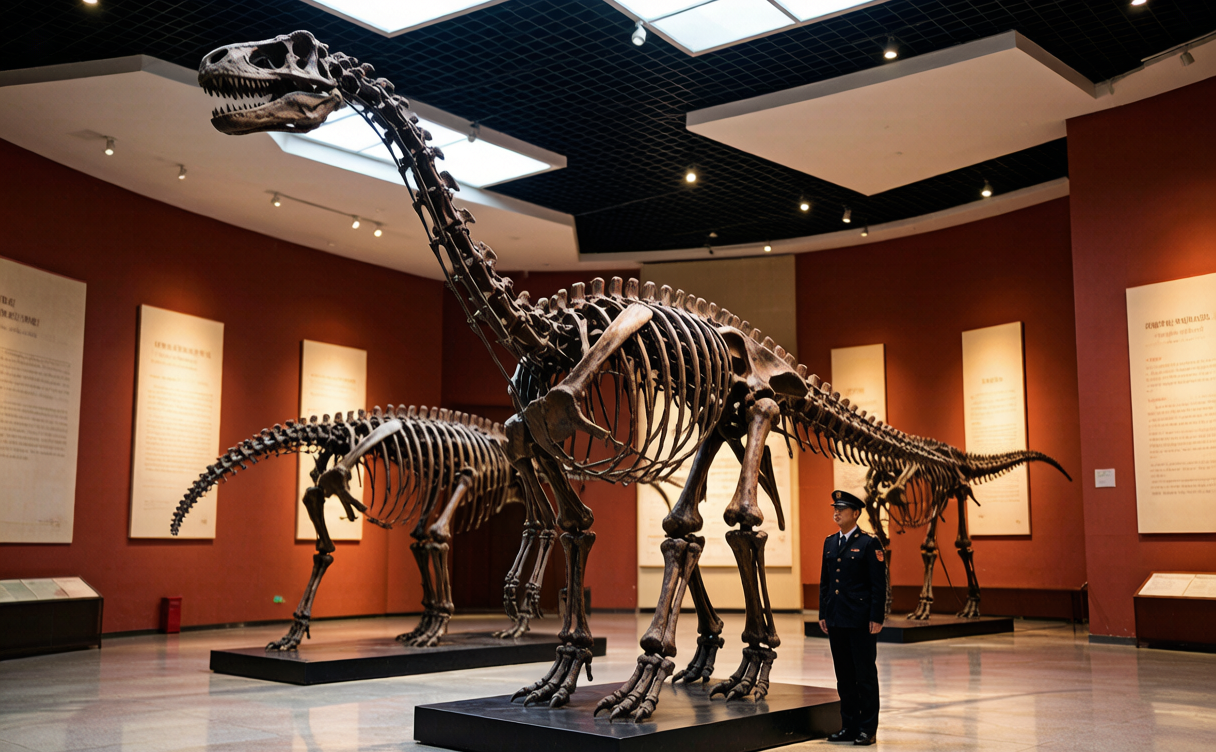
At Dashanpu, on the eastern edge of Zigong, a museum has been built directly on top of a fossil bed and the floor has simply been left open. You walk out onto a gantry and look down at a jumble of Jurassic bone still half-buried in grey rock — ribs, vertebrae, a skull — exactly where the diggers found it in 1972. Two hours later you can be standing under a fifteen-metre dragon made of thousands of medicine bottles wired together and lit from inside. That combination is what this Zigong travel guide is really about: a salt town in southern Sichuan that quietly became one of the world’s great dinosaur sites and the undisputed capital of Chinese lantern craft.
Why Zigong Is a Genuinely Odd City
For a thousand years Zigong made its money from brine. Drillers here worked out how to sink bamboo-cased wells deeper than anyone else on earth, and in 1835 one of them broke through a kilometre of rock — the first well in history to pass 1,000 metres, three decades before oil drilling in Pennsylvania. Salt money built guild halls, funded a rich local cuisine, and paid for the elaborate lantern displays that eventually became a national industry. The dinosaurs were an accident: the same red sandstone that holds the brine also holds one of the densest concentrations of Middle Jurassic fossils anywhere, which is why Zigong is now a UNESCO Global Geopark. Britannica’s entry on Zigong sketches the salt history well.
Nobody comes here on a first trip to China, and that is fine. Zigong belongs on the list of provincial detours in our off-the-beaten-path China guide, best bolted onto a Sichuan loop.
Best Time to Visit
Zigong sits at 300 metres in the humid Sichuan basin, so the weather is mild, grey and damp more often than not.
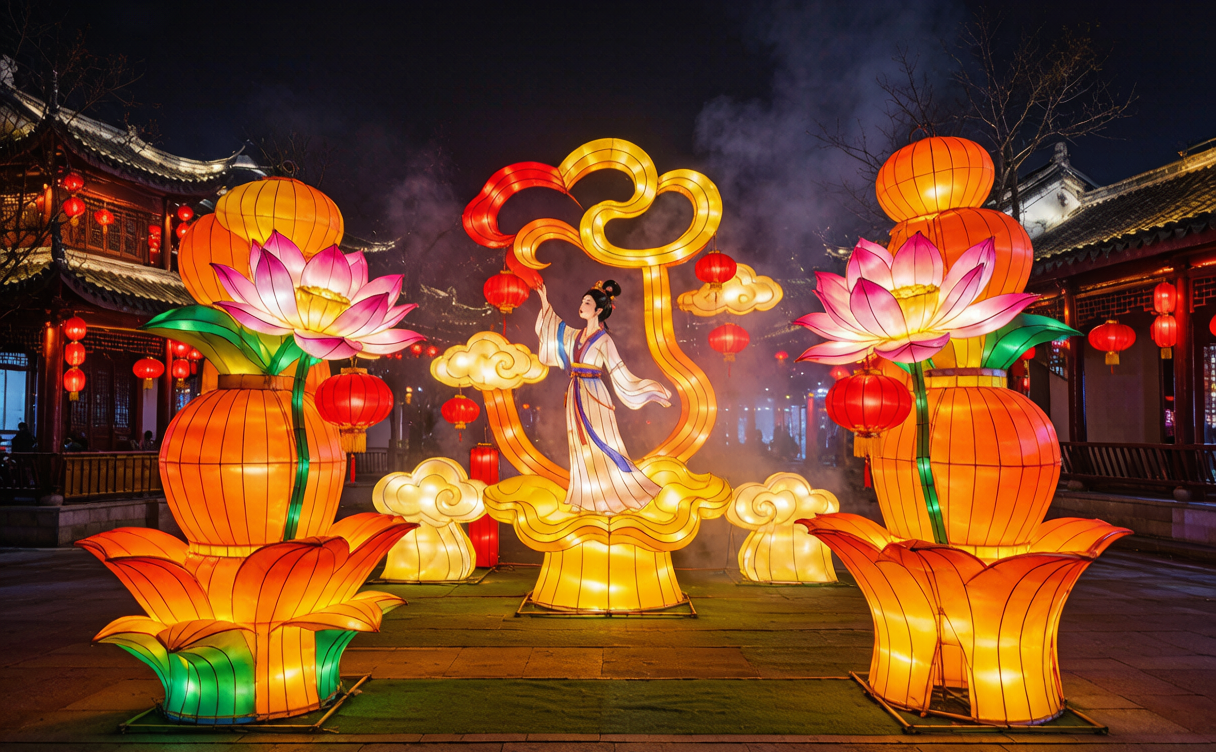
Mid-January to early March is the one period when timing genuinely matters, because the Zigong International Dinosaur Lantern Festival runs across Chinese New Year. Temperatures are cold — 5–12°C, often foggy — but the lantern park after dark is the single most spectacular thing in the city. Bring a proper coat; you will be outdoors for three hours.
March to May brings 16–27°C, the most reliable sunshine of the year and green countryside. My pick if you are not chasing the lanterns.
June to August is 27–36°C with sticky humidity and heavy afternoon rain. The dinosaur museum is air-conditioned, which becomes relevant.
September to November returns to 15–27°C with clearer skies from mid-October. Avoid the 1–7 October holiday week. For how Sichuan fits with the rest of the country, see our best time to visit China guide.
How to Get There
Zigong East (自贡东) sits on the Chengdu–Zigong–Yibin high-speed line, which makes the city an easy hop from either end.
| From | Mode | Duration | Approx. fare |
|—|—|—|—|
| Chengdu East | High-speed rail to Zigong East | 1 hr | ¥78 (US$11) second class |
| Yibin West | High-speed rail to Zigong East | 30 min | ¥40 (US$6) |
| Chongqing West | High-speed rail to Zigong East | 1 hr 40 min | ¥95 (US$13) |
| Leshan | High-speed rail via Chengdu | 2 hr 15 min | ¥110 (US$16) |
| Chengdu (CTU airport) | Airport shuttle bus | 2 hr 30 min | ¥90 (US$13) |
| Zigong East station | City bus 39 / 41 to centre | 35 min | ¥2 (US$0.30) |
| City centre | Bus 35 or 303 to Dinosaur Museum | 40 min | ¥2 (US$0.30) |
There is no metro. City buses cost a flat ¥2 and ride-hailing across town runs ¥15–30 (US$2–4), which is what I use for the museum run — the bus is slow and crowded.
What to See and Do
Zigong Dinosaur Museum (自贡恐龙博物馆). The reason most people come. Built over the Dashanpu quarry, it displays around twenty mounted skeletons — including the long-necked Omeisaurus and the plated Huayangosaurus — alongside the open excavation pit, which is the part that stays with you. Admission is about ¥42 (US$6), open roughly 08:30–17:30 with last entry an hour before closing. Budget two hours. English labelling is patchy but present on the major exhibits.
Shenhai Well (燊海井). A working nineteenth-century salt well with its original wooden derrick still standing, about 20 metres tall and assembled without nails. Inside the shed, brine is still pumped up and boiled down in round iron pans over gas from the same well; you can buy a bag of the salt. Tickets around ¥25 (US$4), open 08:30–17:30. It takes 45 minutes and is far more interesting than it sounds.
Xiqin Guild Hall and the Salt History Museum (西秦会馆). A gloriously over-carved 1730s guild hall built by Shaanxi salt merchants, now housing China’s only salt industry museum. The roof alone justifies the ¥20–30 (US$3–4) ticket. It is in the old centre, walkable from the Ziliujing riverfront.
Zigong Lantern Park and the Lantern Museum. Between mid-January and early March, Zhonghua Colourful Lantern World hosts the main festival — enormous illuminated set pieces, many built from porcelain spoons, silk cocoons or glass bottles, a technique Zigong craftsmen exported worldwide. Evening tickets run roughly ¥60–120 (US$8–17) depending on the date. Outside festival season, the China Lantern Museum (about ¥30 / US$4) explains the craft year-round.
Rongxian Giant Buddha (荣县大佛). Thirty-six metres of Tang-dynasty rock-cut Buddha an hour west by bus, essentially crowd-free. A good half-day if you have a third day and want to see what Leshan feels like without the queues.
Where to Stay
Budget — around Zigong East station and Danguiwan. Chain hotels including Hanting, Home Inn and Ji run ¥120–200 (US$17–28). Fine, clean, characterless, and handy for early trains.
Mid-range — Ziliujing old centre. ¥230–420 (US$32–59) gets a four-star or good independent within walking distance of the guild hall, the river and the night food streets. This is the right base for two nights.
Splurge — Huichuan and the new district. International-standard business hotels sit at ¥500–850 (US$70–120), and even those book out during the lantern festival. If you are visiting between late January and March, reserve at least a month ahead and expect rates to jump 40–60%.
What to Eat
Zigong’s yanbang cai (盐帮菜, “salt merchants’ cuisine”) is spicier and saltier than mainstream Sichuan cooking, and locals will tell you it is the province’s hottest regional style. They are not exaggerating.
- Cold-eaten rabbit (冷吃兔, lěngchī tù) — rabbit cubes fried with dried chillies and Sichuan pepper, eaten at room temperature with beer. The city’s signature snack; vacuum packs make good gifts. Around ¥30 (US$4).
- Fresh-pot rabbit (鲜锅兔, xiānguō tù) — the hot version, in a wok of chilli oil and celery. ¥60–90 (US$8–13) for two.
- Huobianzi beef (火边子牛肉) — beef sliced almost to paper and dried over a fire, a technique that came out of the salt yards where cattle powered the drilling.
- Fushun tofu pudding (富顺豆花, Fùshùn dòuhuā) — silky tofu with a fiercely spicy dipping sauce, eaten with rice. Under ¥15 (US$2) and the best cheap lunch in the city.
Sample Itinerary
Day 1 — Bones and brine
- 08:30 — Ride-hail to the Dinosaur Museum for opening; two hours inside, starting at the excavation pit.
- 11:00 — Continue to Shenhai Well, 20 minutes away, for the derrick and the salt pans.
- 12:30 — Fushun tofu pudding lunch near the old town.
- 14:00 — Xiqin Guild Hall and the Salt History Museum.
- 16:00 — Walk the Ziliujing riverfront and Huanhou Palace.
- 18:30 — Cold-eaten rabbit and beer on a night street.
Day 2 — Lanterns or Buddha
In festival season, spend the day slowly — the China Lantern Museum in the afternoon, then the main lantern park from 18:30 until you run out of energy. Outside festival season, take the bus to Rongxian for the Giant Buddha and be back by mid-afternoon.
Practical Zigong Travel Guide Tips
- Check festival dates before booking. The lantern festival’s opening night is tied to the lunar calendar and shifts by several weeks each year.
- The Dinosaur Museum is out at Dashanpu, about 11 km from the centre — do not plan to walk it.
- Bring your passport for museum ticket counters; several now scan ID for entry.
- Layer up for lantern nights. It is damp, still and colder than the forecast suggests.
- Say “微辣” (wēi là, mildly spicy) when you order, and understand that Zigong’s mild is other people’s hot.
- Two nights is right. One is enough for the dinosaurs, but you will miss the salt story, which is the more unusual half of the city.
FAQ
Is the Zigong Dinosaur Museum worth a special trip?
If you have any interest in palaeontology, yes. It is one of very few museums built directly over its own dig site, and the concentration of Middle Jurassic material is world class. If dinosaurs leave you cold, come for the salt wells instead.
When exactly is the Zigong lantern festival?
It generally opens shortly before Chinese New Year and runs into early March, so the dates move each year. Confirm on the official festival channels before booking flights, and reserve hotels early.
Can I visit Zigong as a day trip from Chengdu?
You can — it is an hour each way by high-speed rail — and it works if you only want the Dinosaur Museum. To see the salt sites as well, stay a night.
How much English is spoken?
Very little outside hotel reception. Major museum exhibits carry English captions, but signage and menus mostly do not. Download offline translation.
Is Zigong good for families?
Unusually so. The dinosaur museum and the lantern displays both work for children, and distances are short. The food may defeat young palates — ask for dishes without chilli and accept that this is an odd request here.