

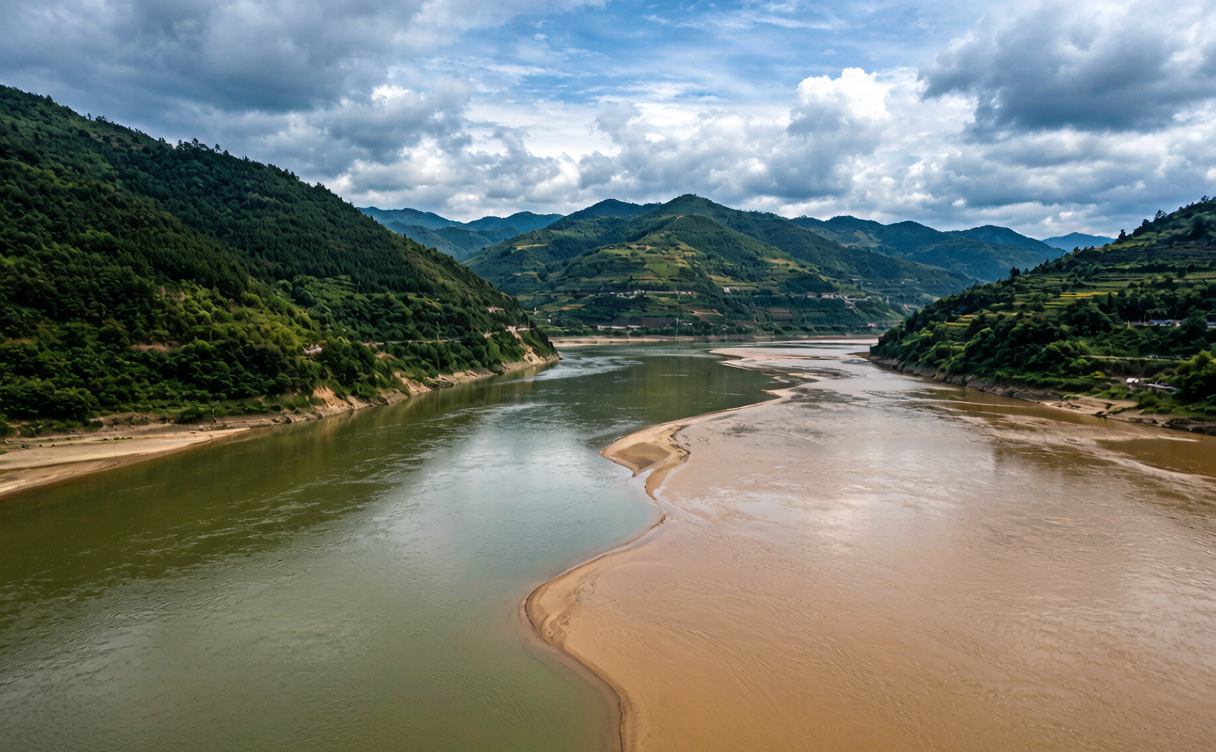
Stand on the embankment at Hejiang Gate at dusk and you can watch two rivers become one: the grey, silt-heavy Jinsha coming down off the Tibetan plateau, the clearer green Min arriving from Chengdu, and below the point where they meet, the Yangtze. Yibin calls itself the First City on the Yangtze, and it has the receipts. It also has 120 square kilometres of bamboo forest an hour up the road, a distillery that produces China’s most famous baijiu, and a riverside town where wartime scholars kept China’s universities alive. This Yibin travel guide is for travellers who have already done Chengdu and want a southern Sichuan detour with almost no foreign visitors in it.
Why Yibin, and Not Just Another Sichuan Stop
Most itineraries jump from Chengdu straight to Chongqing or Leshan. Yibin sits below both and gives you three completely different days: a bamboo forest you can hike for hours, a strange geological landscape at Xingwen, and a food scene built on cheap noodles and river fish. The Yangtze only starts being called the Yangtze here — the Britannica entry on the Yangtze River explains the naming — and standing at the confluence is one of those small geographical satisfactions that justifies a detour. Our guide to off-the-beaten-path China covers how to slot cities like this into a two-week trip.
Best Time to Visit
Yibin sits at only 280 metres in a humid river basin, which makes summer heavy going and winter grey but mild.
March to May is the best stretch. Daytime temperatures climb from 16°C to 26°C, the bamboo puts out new shoots, and rape flowers colour the fields along the Min. Rain comes in short bursts rather than all day.
June to August runs 28–36°C with high humidity and the year’s heaviest rainfall. The Bamboo Sea is the exception — at 600–1,000 metres it stays five to eight degrees cooler than the city, and Sichuanese families flood there in July and August precisely for that. Book accommodation inside the scenic area well ahead in summer, or visit on a weekday.
September to November is my favourite: 15–27°C, thinner crowds after the first week of October, and morning mist pooling in the bamboo valleys. Late October gives you ginkgo yellow against the green.
December to February hovers at 6–13°C, often foggy and drizzly, with occasional light snow on the bamboo ridges that is genuinely beautiful if you are lucky. Avoid Chinese New Year unless you enjoy sold-out trains; check the calendar in our best time to visit China guide.
How to Get There
Yibin has both a high-speed rail station (Yibin West, 宜宾西) and Yibin Wuliangye Airport (YBP), about 20 km from the centre.
| From | Mode | Duration | Approx. fare |
|—|—|—|—|
| Chengdu East | High-speed rail to Yibin West | 1 hr 30 min – 2 hr | ¥117 (US$16) second class |
| Chongqing West | High-speed rail to Yibin West | 1 hr 50 min | ¥104 (US$15) |
| Kunming South | High-speed rail to Yibin West | 3 hr 40 min | ¥298 (US$42) |
| Guiyang North | High-speed rail via Chongqing | 4 hr | ¥260 (US$37) |
| Beijing / Shanghai | Flight to Yibin (YBP) | 2 hr 45 min – 3 hr | ¥700–1,400 (US$99–197) |
| Yibin West station | Smart tram T1 or bus to city centre | 30–40 min | ¥2 (US$0.30) |
| Yibin city | Bus to Shunan Bamboo Sea | 1 hr 45 min | ¥35 (US$5) |
Yibin has no metro, but it does run a rubber-tyred “smart tram” line linking the high-speed station with downtown for a couple of yuan, and city buses cost ¥2 flat. Ride-hailing is cheap: most cross-town trips land between ¥12 and ¥25 (US$2–4).
What to See and Do
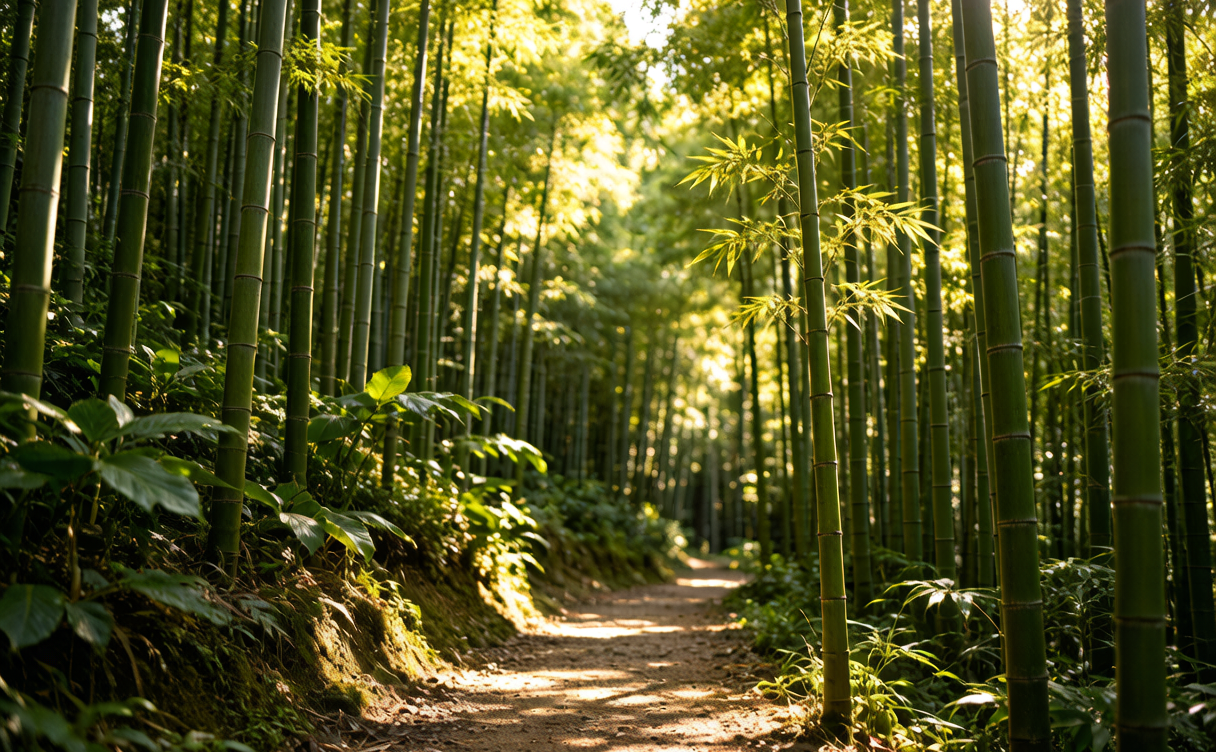
Shunan Bamboo Sea (蜀南竹海). The headline attraction, about 60 km southeast, is 120 square kilometres of moso bamboo across 500 hills — the forest used in Crouching Tiger, Hidden Dragon. Entry is around ¥112 (US$16), plus roughly ¥40 (US$6) for the internal shuttle, which you will want given the distances. Hours run about 08:00–18:00. Prioritise the Rainbow Waterfall walkway, the Forgotten Valley trail and the viewing platform at Guanyun Pavilion. The single best move here is to stay overnight inside the park and walk the trails between 07:00 and 09:00, when the day-trippers are still on the bus from town.
Lizhuang Ancient Town (李庄古镇). Nineteen kilometres downstream, free to enter, and far less commercial than Sichuan’s famous old towns. During the war years Lizhuang sheltered Tongji University and the Academia Sinica; several of the courtyard buildings they occupied are open, and the riverside teahouses charge ¥10 (US$1.40) for a bottomless glass. Bus 3 or a ¥40 (US$6) taxi gets you there in 40 minutes.
Wuliangye distillery park (五粮液). Wuliangye is one of China’s most prestigious baijiu brands, and its industrial-tourism campus north of the city is unexpectedly enjoyable: fermentation pits still in use after centuries, a gate the size of a small airport terminal, and a tasting at the end. Tours cost roughly ¥60–100 (US$8–14) and generally need booking a day ahead.
Xingwen Stone Sea (兴文石海). A UNESCO Global Geopark 90 km south, with a vast doline — a collapsed sinkhole 650 metres across — and a cave system you descend into on staircases. Tickets run about ¥120 (US$17). It needs a full day and a car or a tour, but it is unlike anything else in Sichuan.
The confluence. Free, and worth an hour. Walk the promenade at Hejiang Gate Square (合江门) at sunset, where the colour difference between the two rivers is clearest, then follow the embankment east past the night food stalls.
Where to Stay
Budget — around Nan’an and the university district. Chain hotels such as Hanting and 7 Days run ¥130–200 (US$18–28) for a clean modern double. Good transport links, no atmosphere.
Mid-range — Cuiping district, near Hejiang Gate. ¥250–450 (US$35–63) puts you in a four-star or a smart independent with river views and walking access to the confluence and the night market. This is where I would base myself for a first visit.
Splurge — inside the Bamboo Sea. Resort hotels and upmarket guesthouses within the scenic area charge ¥500–1,100 (US$70–155), rising sharply in July and August. Paying for a room in the forest buys you the empty early-morning trails, which is the whole point.
What to Eat
Yibin’s food is cheaper and less showy than Chengdu’s, and better than it has any right to be.
- Yibin burning noodles (宜宾燃面, Yíbīn ránmiàn) — dry noodles tossed with chilli oil, preserved mustard greens, crushed peanuts and sesame, so oily they were said to catch light. ¥8–12 (US$1–2) a bowl and the reason to get up early.
- Lizhuang white pork (李庄白肉, Lǐzhuāng báiròu) — pork belly sliced to translucency, rolled and dipped in garlic chilli sauce. Order it in Lizhuang itself.
- Bamboo fungus soup (竹荪汤, zhúsūn tāng) — the lacy fungus that grows in the Bamboo Sea, simmered with chicken.
- Zhu’er ba (猪儿粑) — steamed glutinous rice dumplings, savoury or sweet, ¥3 (US$0.40) from breakfast carts.
- Yibin yacai (宜宾芽菜) — the preserved mustard stem behind half of Sichuan’s dry noodles. Buy a vacuum pack.
Sample Itinerary
Day 1 — City and river
- 08:00 — Burning noodles at a neighbourhood shop near Xifu Road.
- 09:30 — Wuliangye distillery park tour (book ahead).
- 13:00 — Bus 3 to Lizhuang; white pork lunch by the water.
- 15:00 — Wander Lizhuang’s lanes and wartime academic buildings.
- 18:30 — Back to the city for sunset at Hejiang Gate, then grilled river fish at the embankment stalls.
Day 2 — Bamboo Sea
- 07:30 — Bus from Nan’an station, or a car for ¥350 (US$49) round trip.
- 09:30 — Enter at the west gate; shuttle to Wanling Aerial Walkway.
- 11:00 — Rainbow Waterfall walkway and Forgotten Valley trail, roughly two hours of easy walking.
- 14:00 — Bamboo fungus lunch at a farmhouse restaurant inside the park.
- 15:30 — Guanyun Pavilion viewpoint and the bamboo museum.
- 18:00 — Return to Yibin, or stay overnight for the morning trails.
Practical Tips for This Yibin Travel Guide
- The Bamboo Sea is huge. Walking between the main sights without the shuttle is not realistic in a day, and the area caps daily numbers in peak summer.
- Mobile payment covers almost everything, including bus fares by QR code, but carry ¥200 in cash for rural stalls.
- Almost no English signage. Offline maps and a translation app are essential.
- Baijiu is 52% alcohol. The tasting pours look small for a reason.
- Summer rain is heavy and brief; a folding umbrella beats a rain jacket in the humidity.
FAQ
How many days do I need in Yibin?
Two full days covers the city, Lizhuang and the Bamboo Sea at a comfortable pace. Add a third if you want Xingwen Stone Sea, which is a long day out on its own.
Is Yibin worth visiting if I have already seen Chengdu?
Yes, if you like landscapes and food more than monuments. Yibin has no famous temple or grand museum. What it has is a bamboo forest you can lose an afternoon in, a river confluence, and noodles worth the train fare.
Can I visit the Bamboo Sea as a day trip from Chengdu?
Technically yes, realistically no. It is four hours each way including transfers, which leaves you three hours in a park that deserves six. Sleep in Yibin.
Do I need to book the Wuliangye tour in advance?
Usually yes, at least a day ahead, and you may need your passport at the gate. Your hotel can call for you if the booking system defeats you.
Is there English spoken in Yibin?
Very little. Mid-range hotel front desks manage basics; elsewhere, expect none. This is a normal Chinese provincial city, not a tourism hub. Getting around is easy regardless — buses cost ¥2, ride-hailing runs ¥12–25 per trip, and the centre around Hejiang Gate is walkable.