

Most foreign travelers racing along the Silk Road skip Jiuquan entirely, treating it as a blur of Gobi desert between Lanzhou and Dunhuang. That is a mistake. Jiuquan is the green heart of the Hexi Corridor, a city where poplar-lined canals cut through rust-red desert and where the echoes of Han dynasty frontier life still linger. If you want to understand how China held its western border for two thousand years, this is the place to slow down.
Best Time to Visit Jiuquan
The single most useful thing to know before planning is the best time to visit Jiuquan. The city sits at around 1,500 meters in the dry northwest, so summers are hot but not oppressive, while winters are long, bitingly cold, and windy. Late May through early October is the sweet spot. September is especially pleasant: the poplars turn gold, the days are warm, and the Gobi light is extraordinary for photography. Avoid the sandstorm season in spring (March to April), when the wind can shut down flights and make the desert roads unpleasant.
How to Get to Jiuquan
Figuring out how to get to Jiuquan is easier than most people expect. The city has its own high-speed rail station, Jiuquan South, on the Lanzhou–Xinjiang, China rail line, with frequent trains from Lanzhou and continuing west toward Dunhuang and the Xinjiang, China border region. From Lanzhou it is roughly a four-hour ride; from Xi’an, plan on a full day by rail with a transfer. There is also a small regional airport, Jiuquan Dunhuang Airport, shared with nearby Dunhuang, with seasonal flights from major hubs. Within the city, ride-hailing apps and buses connect the station to the old town, though distances are short enough that a bike or taxi works fine.
Top Things to Do and Jiuquan Gobi Attractions
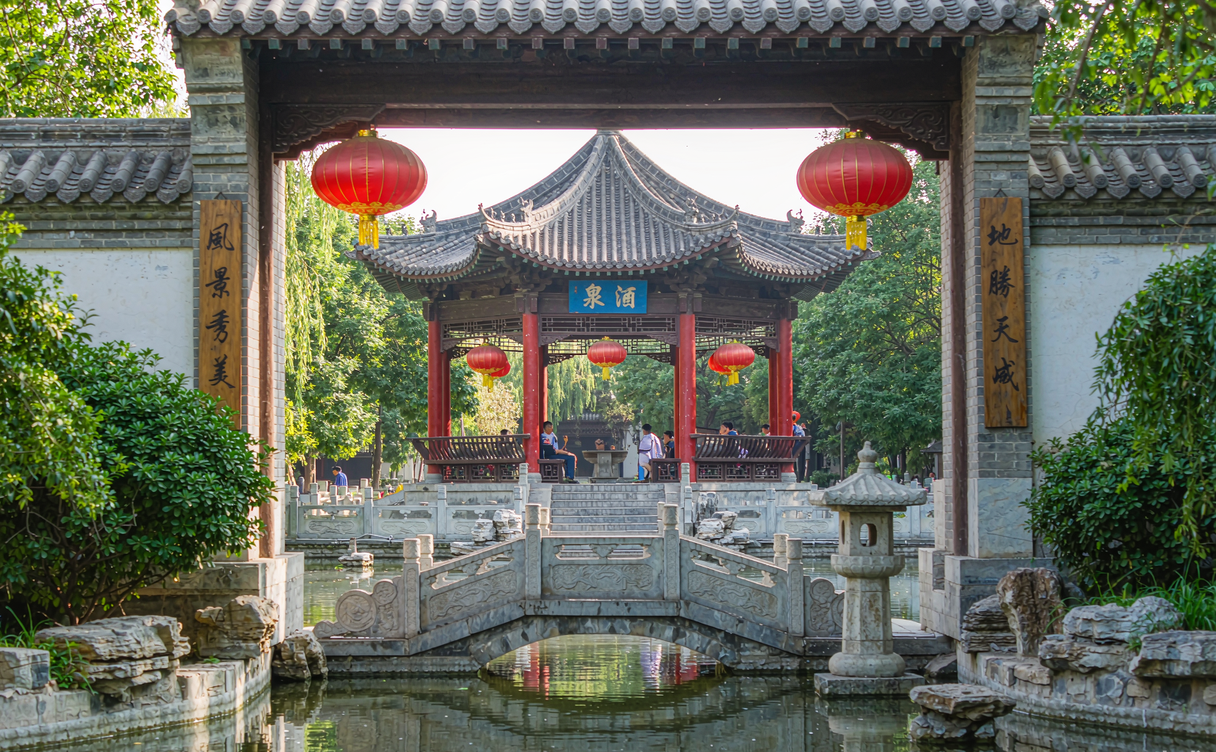
The name Jiuquan means “wine spring,” and the story goes that a Han general poured his celebratory wine into a spring so his soldiers could all share it. That spring, the Jiuquan Park, remains the natural starting point. It is a walled garden of pavilions, willow ponds, and the restored wine-spring pavilion — a calm, local spot that rarely sees foreign faces.
Beyond the park, the Jiuquan Gobi attractions are what make the trip worthwhile. The Jinta Desert Poplar Forest, about an hour north, is a protected stand of ancient Populus trees that blaze gold in autumn. The nearby desert sections of the Han Great Wall and the lesser-known Jiuquan Satellite Launch Center (open to pre-booked tours) give the region its frontier science-meets-history character. For a quieter day, the Bingling or local oasis villages offer wheat-field walks and Buddhist cliff niches.
A Jiuquan to Dunhuang Trip
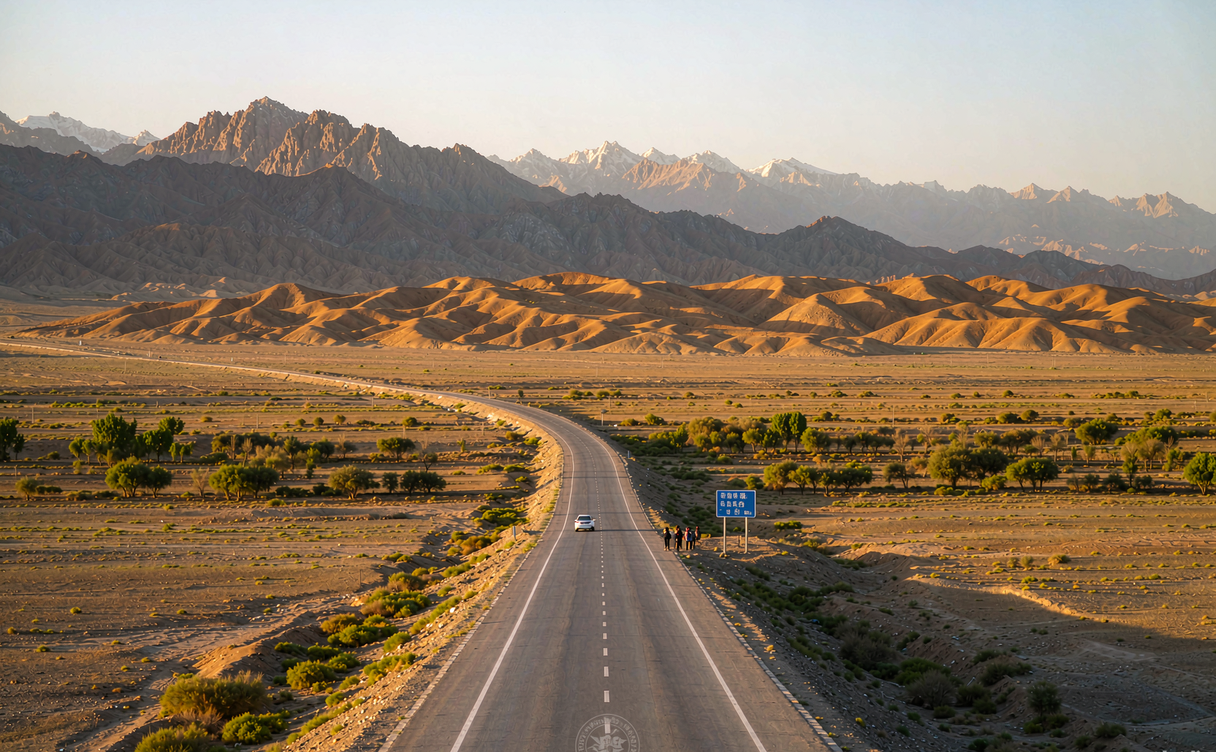
A classic Jiuquan to Dunhuang trip is the reason many visitors pass through at all, and it is one of the great overland drives in China. The 370-kilometer corridor road passes Jiayuguan, the westernmost intact Ming fort, and the singing sands of Dunhuang beyond. Most travelers break the journey with an overnight in Jiayuguan to see the fort and the Overhanging Great Wall, then continue to Dunhuang for the Mogao Caves. If you have a car or join a small group, this stretch is best done slowly, because the desert forts, watchtowers, and oasis towns between them are the real story of the Silk Road.
For context on the caves that anchor this whole route, our Dunhuang Mogao Caves guide covers visiting practicalities, while the Gansu Jiayuguan Fort page explains the fort’s layout. The Zhangye Danxia rainbow mountains make an easy northern detour if your schedule allows a few extra days.
Building a Jiuquan Travel Itinerary
A sensible Jiuquan travel itinerary runs three to four days. Day one: arrive, settle in, and explore Jiuquan Park and the old town in the evening light. Day two: the Jinta poplar forest and a Gobi sunset. Day three: a day trip to Jiayuguan, then push on to Dunhuang or loop back via Zhangye. If you are driving the corridor as part of a bigger journey, our China road trip guide has practical advice on rentals, permits, and desert driving.
Where to Stay
Jiuquan is not a luxury destination, and that is part of its charm. The city center has a handful of dependable mid-range business hotels — clean, central, and a short walk from the park. If you want character, base yourself in Jiayuguan instead and use Jiuquan as a day trip, or stay in a restored courtyard guesthouse near the old town for a taste of northern Chinese domestic architecture. For a broader picture of the region’s hubs, our Lanzhou travel guide and Xining travel guide cover the two gateway cities at either end of the corridor.
Local Food
Jiuquan eats like the frontier it is: hearty, wheat-based, and built to fuel cold desert days. Start with jiaozi (dumplings) and hand-pulled lamian noodles in beef broth, then try the local guoqiao mian, a “crossing-the-bridge” noodle soup. The night market near the park sells roasted lamb skewers, stuffed flatbreads, and sweet melon in season. Cold dishes of wild celery and black fungus round out a meal, and a glass of local goji berry tea is the standard digestif. Portions are generous and prices low.
Getting around Jiuquan itself is uncomplicated. The center is compact enough to cover on foot or by bike, and ride-hailing apps work reliably for trips to the park or the station. For the wider set of Jiuquan Gobi attractions — the poplar forest, the desert forts, and the launch center — you will want a car or a joined day tour, since public buses to the outlying sites are infrequent. Many travelers find that the most rewarding things to do in Jiuquan are exactly these half-day escapes into the desert fringe, where the oasis ends and the Gobi begins within a few kilometers of the city walls. Carry water, a hat, and sunscreen even in spring, because the wind off the desert is dry and the sun is stronger than it looks.
Why Jiuquan Matters
What makes Jiuquan worth the detour is not any single monument but the way the place holds together. The oasis, the fort, the desert, and the slow rail line westward all tell the same story: a civilization that turned impossible geography into a working border. Travelers who only chase the headline sites in Dunhuang miss the everyday texture of the corridor. Spend two nights here and the rest of the Silk Road starts to make sense.
The cultural landscape of the Hexi Corridor, including the Mogao Caves, is recognized by UNESCO on its World Heritage list — you can read the official description at UNESCO World Heritage Centre, which frames the caves and the corridor within China’s documented Silk Road history.
Jiuquan will not be the loudest stop on your China itinerary, and it does not try to be. It is a working city with deep roots, a place to drink tea by a spring that has flowed since the Han, and to watch the Gobi go quiet at dusk. For travelers building a northern or Silk Road route, it is the calm, grounding chapter that makes the rest of the journey land.
When you leave, the road keeps going — west to Dunhuang’s sands, or east back through Lanzhou toward the heart of the country. Either way, you will have seen the corridor the way the caravans did: one green, improbable oasis at a time.