

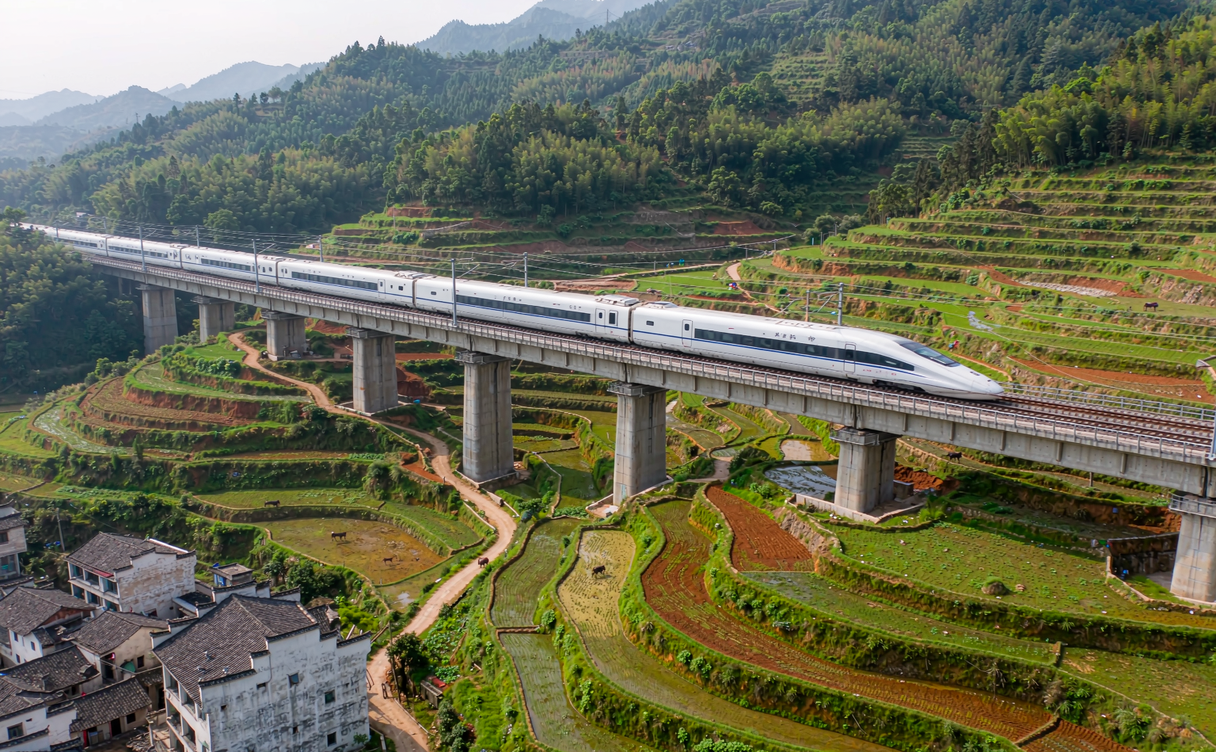
I have flown into China three times and taken the train out every single return. Not because flying is hard, but because China scenic train routes turn travel time into the best part of the day. You sit with a window the size of a poster, and the country unspools past you: rice terraces, gorges, deserts, and rooftops of old towns you never planned to see.
This is a bucket list for the window seat. If you only ride one, ride the right one.
Start With the Network, Not the Route
Before picking a pretty line, understand the system. Our high-speed train guide for foreigners explains how the Fuxing and Hexie trains work, how to read a ticket, and how to board without panic. Our train types guide breaks down the difference between a 350 km/h bullet and a slow local that stops at every village.
Booking is easier than it looks. The official app is 12306, and our 12306 ticket booking walkthrough shows how to register a passport and grab a seat. Do it early for scenic runs, because the good windows sell out.
The Qinghai-Tibet Railway: The Ultimate China Rail Trip
Top of any list of the most beautiful train rides China offers is the line from Xining up to Lhasa in Tibet, China. The Qinghai-Tibet train climbs past snow peaks, frozen lakes, and the roof of the world, with oxygen piped into the cars above 4,000 meters. It is less a journey than an ascent.
Book a daytime seat for the visuals, or a sleeper if you want to wake above the clouds. Either way, the section between Golmud and Lhasa is the part you will remember: vast, empty, and humming with altitude. Note the altitude precautions before you go, and give yourself a day in Xining to adjust.
Guizhou: A Scenic Railway Through Karst and Rice
If Tibet is too high, Guizhou is the gentle alternative. A Guizhou scenic railway threads through limestone peaks, terraced valleys, and villages built on stilts. The high-speed link from Guiyang to cities like Kaili and Tongren shows off the karst landscape that makes southwest China look painted.
What I loved here was the rhythm: a tunnel, a sudden valley, a river the color of jade, then another tunnel. It is a short-haul trip you can fold into a wider southeast-China loop without losing a day to airports.
Other Best Train Journeys in China
Beyond those two, a few runs deserve a mention on any best train journeys China list. The line from Zhangye to Jiayuguan crosses the Gobi with the Rainbow Mountains nearby. The coastal run through Fujian links old trading towns and islands. And the classic Beijing-to-Shanghai daytime bullet is dull scenery-wise but a masterclass in speed and punctuality.
For overnight options, our overnight train guide covers sleeper berths where you trade a view for a morning arrival. And if you are debating whether to fly at all, our train versus flight guide runs the numbers on cost, time, and carbon.
Stations, Seats, and Small Wins
The experience lives or dies at the station. Our railway stations guide explains the security line, the waiting hall, and how to find your platform without missing the train. Arrive thirty minutes early; big hubs are vast.
A few tricks I learned: pick a window seat on the right side for north-to-south runs in the east (more water), bring snacks because dining cars are pricey, and download offline maps because signal drops in tunnels. None of this is hard, and all of it makes the ride smoother.
Choosing Your Class and Your Window
On the bullet trains, second class is comfortable and cheap, first class is roomier with fewer seats per row, and business class is a lie-flat indulgence you rarely need for a day run. For scenery, the class matters less than the seat. Book a window, and on east-west lines pick the side that faces the water or the mountains for your direction; north-south, the right side often catches the better light in the afternoon.
The overnight and the high-altitude lines are different beasts. Sleeper berths come in hard and soft varieties, and soft is worth the small premium for a curtain and a real mattress. On the Qinghai-Tibet train, request a lower berth if you want to sit and stare, or an upper if you prefer to cocoon. Either way, the landscape does the decorating.
Food and Comfort on the Rails
Dining cars and the rolling trolley are part of the fun, but the food is modest and the hot water is free, which makes instant noodles and a thermos the traveler’s staple. I pack dried fruit, a couple of buns from a station bakery, and a vacuum flask I fill before boarding. On long runs, the dining car sometimes serves a simple plate of rice and stir-fry that tastes better than it should at 300 km/h.
Comfort is about pacing. Walk the aisle every hour on long trips to keep your legs happy, and download shows before you lose signal in the tunnels. The best journeys are the ones where you stop checking the time and start watching the window, letting the distance between cities become the point rather than the price.
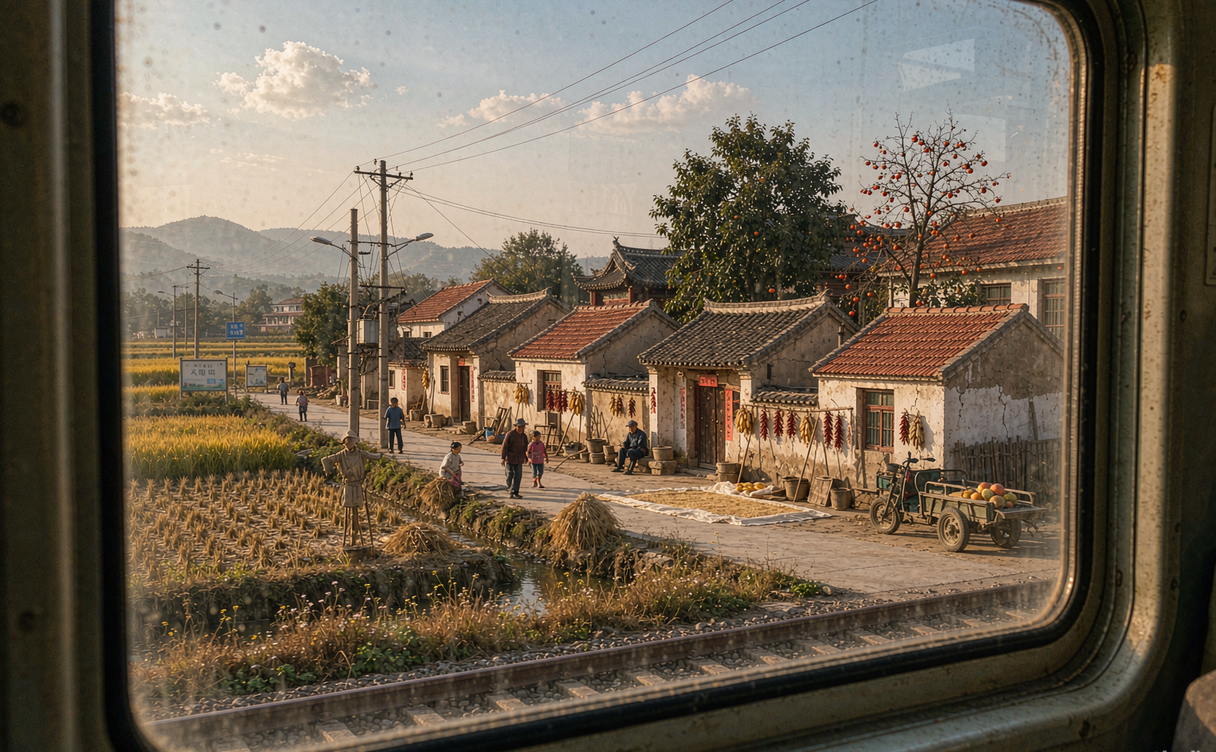
Photography is half the fun. Shoot through the glass at an angle to kill the reflection, and brace your phone on the window ledge. The best frames are the unexpected ones: a herder and a horse on a plain, a pagoda poking from a hill, a freight train meeting yours head-on in a cutting.
Many of these routes pass near protected landscapes, and the UNESCO World Heritage Centre at UNESCO lists several of the cultural and natural sites you can reach by rail, handy for planning a stop where the view is also a world treasure. Pair that list with the regional guides above and you can build a loop that is beautiful and meaningful.
A China rail trip rewards the curious. Skip the flight where a train makes sense, take the window seat, and let the country do the sightseeing for you. You will arrive with photos no airport ever gave you.
The train is the most honest way to see China, because it cannot hide the distance between the headline cities. You watch the farmland thin into desert, the hills rise into mountains, and the languages shift at every stop. Buy the ticket, take the seat, and let the rails write the itinerary.
Best Season for Each Route
Timing shapes the view as much as the route does. The Qinghai-Tibet line is clearest from June to September, when the plateau greens and the passes are snow-free; winter is brutally beautiful but cold enough to test the heating. Guizhou’s karst is lush from April to October, with summer bringing mist that softens the peaks into paintings. The Gobi runs are best in spring and autumn, when the light is long and the sandstorms of mid-summer stay away.
If your trip is fixed to a season, pick the route that peaks then rather than fighting the weather. A flexible traveler can chain two: ride Guizhou in late spring, then fly north and take the Gobi line in early autumn. Either way, the train turns the calendar into part of the scenery, and the window becomes a calendar you can watch change in real time.