

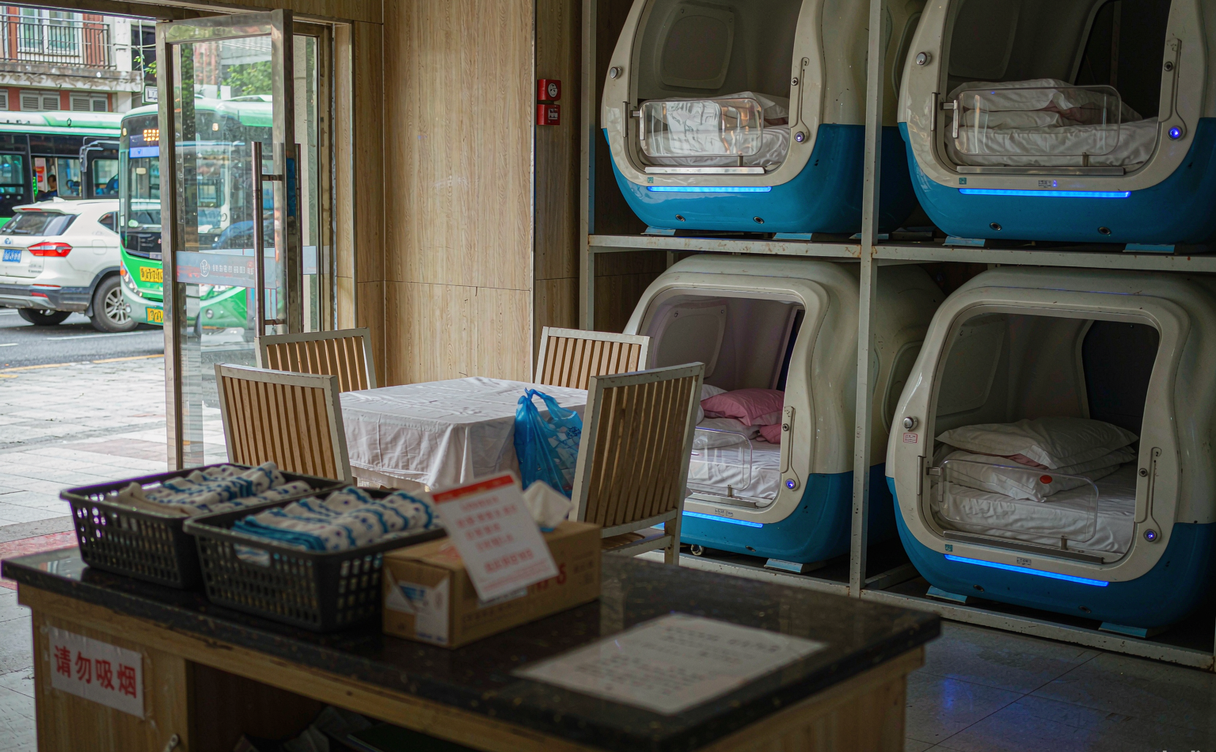
The first time I needed a bed at 1 a.m. in a Chinese city, I was stranded between a cancelled flight and a 6 a.m. train. The airport hotel wanted more than my return ticket. Then a uniformed attendant pointed me down a hallway to a wall of glowing drawers. That was my introduction to the world of pod hotels China travelers now rely on, and I have been a quiet fan ever since.
This China capsule pod hotels guide is for anyone who values a few hours of real sleep over a lobby chair, and a ten-dollar pod over a two-hundred-dollar room they will barely use.
What Is a Capsule Hotel in China?
A capsule hotel China style is a stack of private sleeping units, each about the size of a single mattress with a curved shell, a reading light, a charging port, and sometimes a small screen. You get privacy from the curtain or door, but you share bathrooms, showers, and lounges with the floor. Think of it as a bunk bed that grew up and got a power outlet.
They are not all the same. Older Japanese-style pods are tight and silent. Newer Chinese chains add ventilation, blackout shades, and app-controlled lights. At the top end, “smart pods” scan your face at the door and play white noise on request. The constant is the price: most run from 60 to 180 yuan a night, a fraction of a standard room.
Where Cheap Sleep Pods in China Actually Help
Cheap sleep pods China are built for the in-between moments of travel. The obvious one is the airport. After a long-haul landing or before a dawn departure, a pod beats the terminal floor. Our airport transit hotels guide maps the best options at major hubs, and many of those “hotels” are really pod blocks inside the terminal.
The second use is the late train. China’s high-speed network runs until late, and missing a connection can leave you in a strange city at midnight. A pod near the station is the difference between a miserable night and a short one. If you are curious how the overnight option compares, our overnight train guide explains when a sleeper berth beats a pod entirely.
Transit Hotels in China: Pod or Room?
Transit hotels China offers come in two flavors, and the math is simple. If you need a bed for under six hours and will not use a desk, a gym, or room service, a pod is the rational choice. If you need to shower, work, and meet someone, book a room. I have done both, and the pod has never let me down for pure sleep.
One caveat: pods are quiet by design but not soundproof. Bring earplugs, and pick a unit away from the lounge and the elevator. The best pods I found were on the upper floors of station-adjacent buildings, where the hum of the city fades by the third floor.
How Pod Hotels Compare to Hostels
If you are traveling on a shoestring, you will weigh pods against dorms. Our hostel guide covers the social, shared-room scene, while our hostel versus hotel breakdown lays out the trade-offs in detail. The short version: a hostel dorm is cheaper and chattier; a pod is a touch more expensive but far better for actual rest, since you are not sharing a room with ten snorers.
For solo travelers who want quiet, pods win. For groups or people who want to meet others, hostels win. Both beat a bench.
Booking Budget Accommodation in China as a Foreigner
Booking budget accommodation China as a foreigner has a wrinkle worth knowing: some budget properties are not licensed to accept foreign passports, and check-in kiosks may reject a non-Chinese ID. Pods in major hubs and airports almost always accept foreigners, but small city-center pods can be picky. Our hotel booking guide for foreigners explains how to filter for foreign-friendly properties and what documents to carry.
Book through the major Chinese travel apps or the property’s own mini-program, and screenshot your confirmation. Keep your passport handy, because even a pod will scan it at check-in. Pay with a bound international card or Alipay, and you will rarely need cash.
Safety is a fair question. The reputable pod chains are clean, monitored, and staffed around the clock; I have left a bag in a locker and never worried. Avoid unbranded “hourly” pods near certain entertainment districts, which are a different business entirely. Stick to the names you find in the apps and the stations, and you are fine.
What to Pack for a Pod Night
A pod gives you a mattress and a curtain, not a closet, so pack light and smart. Earplugs and an eye mask are non-negotiable; even the best pod has a neighbor and a light somewhere. A small lock for the in-unit or floor locker protects your bag while you shower. I also carry a microfiber towel, because while most pods lend one, the quality varies, and you will want to wash before sleeping.
Power matters. Bring a short cable and a plug adapter if your devices use non-China pins, and a small power bank so you are not tethered to the pod’s port all night. Slip-on shoes help in the shared bathroom corridor, where flip-flops are the uniform. None of this is heavy, and all of it turns a tight box into a comfortable nest.
Sleep-Floor Etiquette
Pod culture runs on quiet and tidiness. Keep calls in the lounge, not the corridor, and dim your screen before midnight. Charge phones on low brightness. The unspoken rule is that everyone is tired and everyone wants the same thing: a few hours of undisturbance.
Store your luggage in the assigned locker rather than blocking the aisle, and clear the unit by checkout so the next sleeper is not waiting. I once watched a traveler leave a half-eaten noodle cup in his pod; the cleaner’s face said everything. Treat the space like a bunk on a train, and you will be welcome back.
For a wider money-saving plan that includes pods, dorms, and trains, our budget travel guide shows how a week of smart sleeping can fund an extra city. The official China National Tourist Office at China Travel also lists accredited budget and transit accommodations, useful when you want a vetted name in an unfamiliar hub.
A pod will not be romantic. It will not have a view. But after a delayed flight, it is the warmest sight in the building: a little lit drawer with your name on it, a plug for your phone, and a door that shuts out the noise. Sleep first. Explore later.
The next time your itinerary leaves a gap between transport, skip the expensive room you will not use. Find a pod, set the white noise, and let the city rumble past outside. You will wake cheaper, calmer, and ready for whatever the rail board throws at you next.
Pod Chains Worth Knowing
A few brands show up again and again. At major hubs you will see sleep-pod counters inside the terminals themselves, often run by the airport and priced by the hour for true transit naps. In city centers, the larger capsule chains cluster near the main railway stations, which is exactly where you want them after a delayed connection. Station-adjacent pods also tend to accept foreign passports more reliably than random downtown listings, because they are built for travelers in transit rather than local hourly guests.
When choosing, read recent reviews for two things: cleanliness of the shared bathrooms, and whether the ventilation in your specific unit works. A stuffy pod is a bad night regardless of price. The reliable chains invest in both, and their apps let you book a specific floor, which I now always do to stay away from the lounge and the late arrivals.