

A good China railway stations guide is worth more than a phrasebook, because the stations — not the trains — are where foreign travellers actually get into trouble. Chinese railway hubs are enormous, airport-like buildings with security screening, sealed waiting halls, and gates that close several minutes before departure. Beijing alone has five major stations scattered across the city, and turning up at the wrong one is a mistake you cannot fix in twenty minutes. This guide covers how early to arrive, how paperless e-tickets work with a foreign passport, what security will confiscate, how to read the boards, and how to find the metro on the way out.
Why Chinese Stations Feel Like Airports
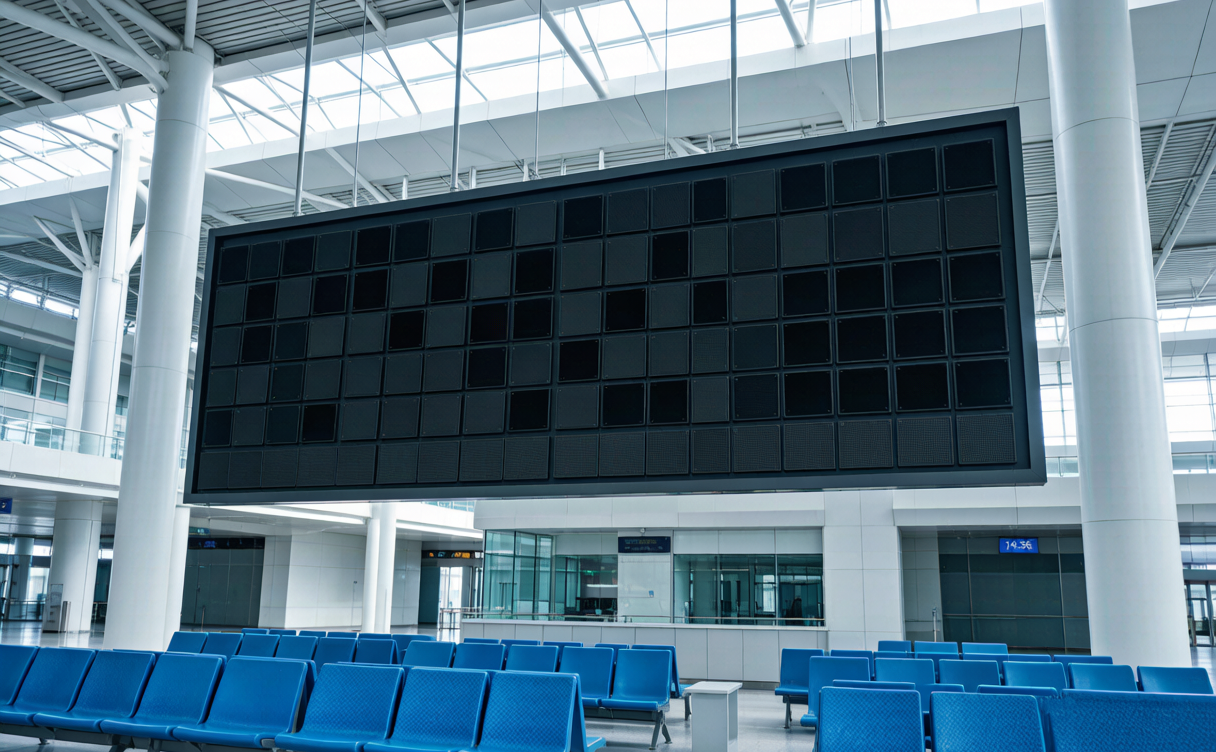
A large Chinese high-speed station handles more passengers per day than most international airports. The layout reflects that: you enter through a security checkpoint, pass into a vast concourse, wait in a hall or seating zone, and are released onto the platform only when your gate opens — usually 15–20 minutes before departure.
The critical difference from an airport is that the gate closes hard. Boarding stops 3–5 minutes before departure and the barrier shuts. Staff will not reopen it. Trains leave to the minute.
Signage at major stations is bilingual, and there are increasingly dedicated foreign-passport lanes. Smaller stations are Chinese-only, so screenshot your ticket details in characters before you travel.
Which Station? The Multi-Station Problem
Most large Chinese cities have several stations, and they are not interchangeable. Your ticket names one specific station; getting this wrong is the single most common foreign-traveller error.
| City | Main stations | Mostly serves | Metro link |
|—|—|—|—|
| Beijing | Beijing (Central), West, South, North, Chaoyang, Fengtai | Central: northeast, conventional Z/T/K. West: Guangzhou, Xi’an, southwest. South: Shanghai and Tianjin high-speed. North: Badaling line. Chaoyang: northeast high-speed | Line 2; 7/9; 4/14; Xizhimen 2/4/13; 3/14; 10/16 |
| Shanghai | Hongqiao, Shanghai Railway Station, Shanghai South | Hongqiao: nearly all high-speed, attached to Hongqiao Airport. Main: mixed. South: regional | Lines 2/10/17; 1/3/4; 1/3 |
| Guangzhou | Guangzhou South, Guangzhou, East, Baiyun | South: high-speed hub for the southeast. Main and East: conventional and regional | Lines 2/7/22; 2/5; 1/3 |
| Shenzhen | Shenzhen North, Futian, Shenzhen (Luohu) | North: high-speed hub. Futian: underground high-speed. Luohu: conventional | Lines 4/5/6; 2/3/4/11; Line 1 |
| Xi’an | Xi’an North, Xi’an, Xi’an South | North: all high-speed. Main: conventional and Terracotta Army access | Lines 2/4; Line 4 |
| Chengdu | Chengdu East, South, North | East: main high-speed hub. South: Chongqing and regional | Lines 2/7; 1/7 |
| Chongqing | Chongqing North, West, Shapingba | North and West: high-speed. Shapingba: central, built under a mall | Lines 3/10; 5; 1/9 |
| Hangzhou | Hangzhou East, Chengzhan, West | East: main high-speed hub. West: newer high-speed. Chengzhan: central, mixed | Lines 1/4; 1/5; 3/19 |
| Nanjing | Nanjing South, Nanjing | South: high-speed hub, one of Asia’s largest. Main: mixed, lakeside | Lines 1/3/S1/S3; 1/3 |
| Wuhan | Wuhan, Hankou, Wuchang | Wuhan Station: high-speed. Hankou and Wuchang: mixed | Line 4; Line 2; 4/7 |
Check the exact station on your ticket, then check the metro time from your hotel. In Beijing, moving between Beijing West and Beijing Chaoyang takes over an hour.
How Early Should You Arrive?
- Small or medium station, off-peak: 30 minutes.
- Major hub (Beijing South, Shanghai Hongqiao, Guangzhou South): 45–60 minutes.
- Holiday periods (Chinese New Year, National Day week): 75–90 minutes; security queues are genuinely long.
Add time if you need a paper ticket, are changing stations, or have large luggage. Arriving early costs nothing — waiting halls have seating, food and toilets.
Tickets: Paperless E-Tickets and Passport Entry
Mainland China’s railway is fully paperless. There is no ticket to collect for most travellers, and this is where foreign passengers need one specific piece of knowledge.
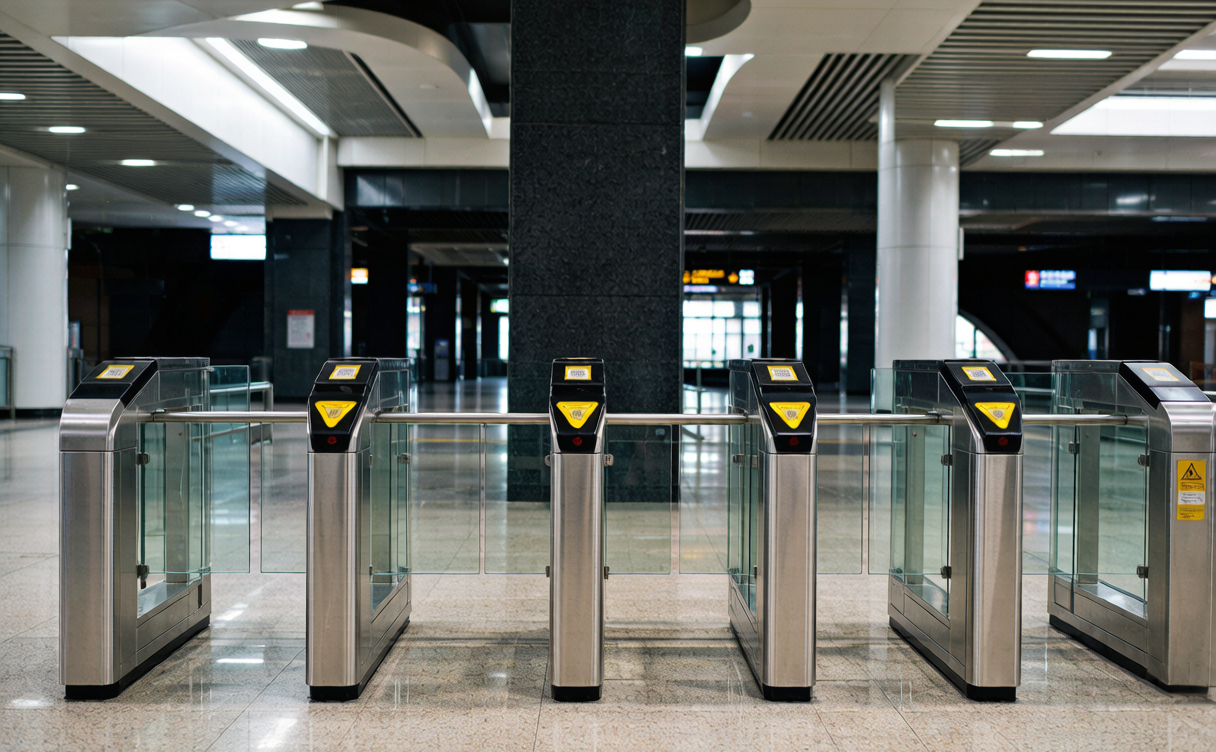
Chinese ID holders tap their ID card at automated gates. Foreign passport holders often cannot use those gates, so you go to the manual lane — usually the widest gate at the end of the row, with a staff position. Hand over your passport, staff scan it, and you walk through. Fifteen seconds.
Some stations now have passport-capable automatic gates; if the scanner accepts your photo page, use it. If it rejects you twice, move to the manual lane.
You still need a paper ticket in three cases: if a third-party agent issued a collection code, if you need a reimbursement receipt, or on a few legacy conventional services. Collect at the ticket window (售票处) with the same passport used for booking, and allow 20–30 minutes for the queue.
Security Screening: What Gets Confiscated
Every passenger and bag passes through X-ray screening at the station entrance. The rules are stricter than most travellers expect:
- Lighters: maximum two per person. Matches: two small boxes.
- Knives: blades over 6 cm are prohibited. Kitchen knives, multi-tools with long blades and scissors over the limit will be taken.
- Alcohol: sealed, factory-packaged spirits only, capped at roughly 3,000 ml total; anything above 70% ABV is banned outright. Loose or decanted alcohol is refused.
- Aerosols: hairspray, mousse and similar limited to about 600 ml total, with each container under 150 ml.
- Liquids: unlike airports, ordinary drinks and water bottles are fine. You may be asked to take a sip from an unlabelled bottle.
- Power banks: permitted — the railway does not apply the airline 20,000 mAh cap — but units with no visible capacity marking, no certification label, or obvious damage may be refused.
- Flammables, fireworks, self-defence sprays and compressed gas: all banned.
Confiscated items are not returned. If you’re carrying something borderline, expect to surrender it.
Finding the Waiting Hall and Boarding Gate
After security you enter the main concourse. Your ticket shows the train number (e.g. G1234), departure time, and — critically — the waiting area (候车室) and later the gate number (检票口).
The gate is often not announced until 20–30 minutes before departure. Find your train on the electronic board, note the gate, and position yourself there. Gates are numbered and usually paired (e.g. 5A and 5B for adjacent trains), so read the small train number above the gate, not just the number.
Reading the Departure Board
Boards list, left to right: train number, destination, scheduled departure, gate/waiting area, and status. Learn four status characters:
- 正在检票 — now boarding, go to the gate.
- 正点 — on time.
- 晚点 — delayed.
- 停止检票 — boarding closed. Too late.
Most big-station boards cycle between Chinese and English. If yours doesn’t, your train number is in Latin characters and is all you strictly need to match.
Transfers and Changing Stations
Some journeys require a transfer. Two scenarios:
Same-station transfer. Large hubs like Zhengzhou East, Wuhan and Nanjing South have designated transfer routes so you never leave the secure area. Look for 中转换乘 (transfer) signs. Allow 30–45 minutes minimum between trains.
Different-station transfer. You exit, take the metro or a taxi across the city, and re-enter through security. Allow at least 2 hours in Beijing or Shanghai, 90 minutes in smaller cities. This is a real risk on tight itineraries — build in slack, especially if you’re heading to a remote region as described in our off-the-beaten-path China guide.
Left Luggage, Food and Onward Metro
Left luggage (行李寄存) exists at all major stations, near the entrance or arrivals area. Expect RMB 15–30 (US$2–4) per item per day. Staffed counters need your passport; automated lockers take mobile payment. Useful if you have a late train and want a final day of sightseeing.
Station food ranges from acceptable to grim. Every hub has convenience stores, noodle chains and fast-food counters, at 30–50% above street prices. Buy before security or bring your own — cup noodles are the national train food for good reason, and every carriage has a boiling water dispenser.
Metro connections are standard at high-speed stations and almost always faster than a taxi at rush hour. Follow the 地铁 signs, usually on the lower level. Taxi ranks can mean 30-minute queues at Beijing South or Guangzhou South; ride-hailing pickup zones are signposted separately and are often quicker.
Practical Tips
- Screenshot your ticket with the station name in Chinese characters — essential for taxi drivers.
- Use the manual gate lane as a foreign passport holder rather than fighting an automatic gate.
- Carry the same passport used for booking. No exceptions, no photocopies.
- Toilets are before the gate, not on the platform. Go before boarding.
- Don’t count on the escalator. Some platforms have stairs only; pack light or use a case you can carry.
- Buy water after security if you’re worried about the sip test, or just carry a sealed bottle.
- Avoid the first and last days of public holidays — station crowds triple. See our best time to visit China guide for holiday dates to dodge.
FAQ
How early do I need to arrive at a Chinese railway station?
Thirty minutes at a small station, 45–60 minutes at a major hub, and 75–90 minutes during Chinese New Year or National Day week. Gates close 3–5 minutes before departure and are never reopened.
Do I need to collect a paper ticket as a foreigner?
Usually not. Mainland China uses paperless e-tickets, and you enter by presenting your passport at the manual gate lane. Collect paper only if a third-party agent issued a collection code or you need a receipt.
What can’t I bring through station security?
More than two lighters, knives with blades over 6 cm, unsealed or high-proof alcohol, aerosols over the volume limits, flammables and self-defence sprays. Water and ordinary drinks are fine, unlike at airports. The official China Railway 12306 site publishes the current prohibited-items list.
How do I know which station in a city my train leaves from?
The station name is printed on your booking — Beijing South and Beijing West are different buildings an hour apart. Always cross-check the full station name, including the compass direction, before travelling.
Is there left luggage storage at Chinese railway stations?
Yes, at all major stations, for roughly RMB 15–30 (US$2–4) per bag per day. Staffed counters require your passport; automated lockers accept Alipay and WeChat Pay.
Written by Karl, last updated August 4, 2026.