

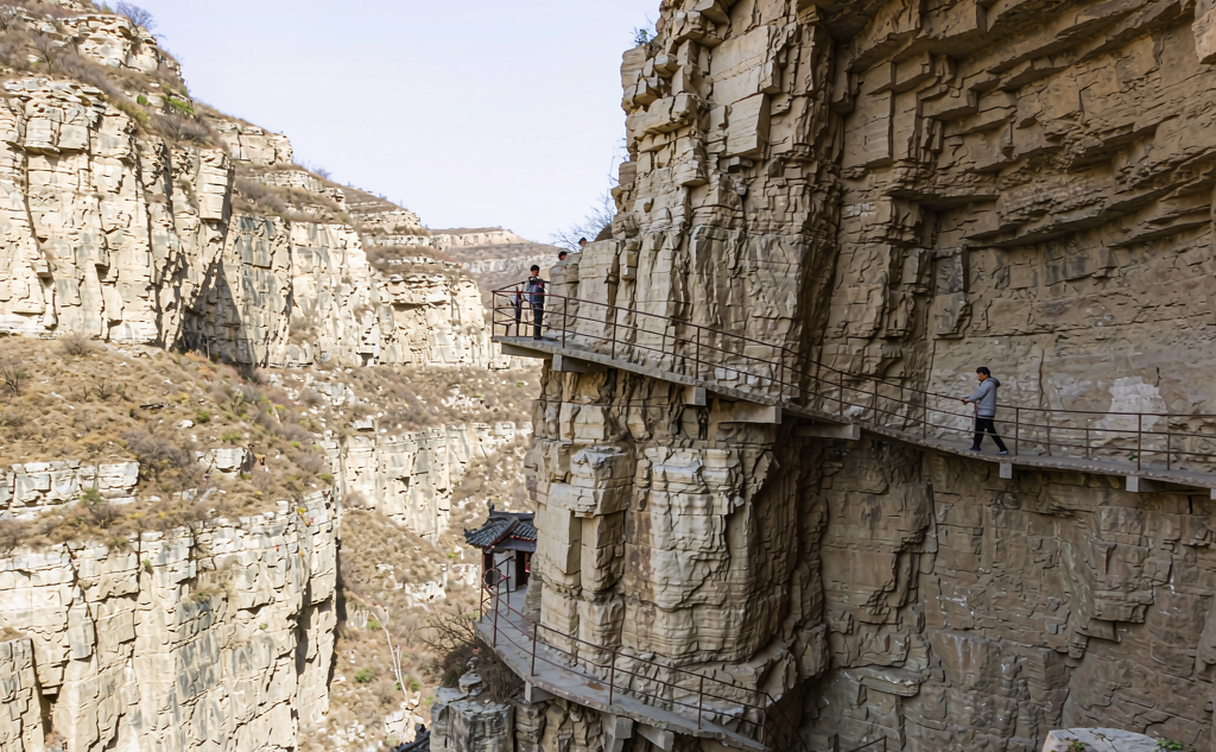
Mianshan is a mountain retreat in central Shanxi, about 40 km southwest of the ancient city of Pingyao. It is best known for temples and walkways built directly into its cliffs, where wooden galleries cling to rock faces above deep gorges and waterfalls. Cool, green, and far less crowded than Shanxi’s headline sites, it is a superb place to slow down for a day or two.
This Mianshan guide covers what to see, when to visit, how to get there, and how to combine the mountain with Pingyao and Taiyuan. It suits travelers who want nature and quiet spirituality rather than big museums.
Why Mianshan Matters
Mianshan has a long Taoist and Buddhist heritage, and it is tied to a famous story of loyalty and retreat from the Spring and Autumn period, more than 2,500 years ago. Over the centuries, devotees carved shrines and monasteries into the mountain itself, and the result is a vertical landscape of faith: prayer halls set in caves, bridges spanning chasms, and stairs cut into stone.
The mountain is also genuinely beautiful. Dense pine forest, seasonal waterfalls, and a cooler microclimate make it a natural escape from the summer heat of the North China plain. For visitors burned out on temples-as-museums, Mianshan feels alive.
Background on the mountain’s history and cultural role is summarized on Wikipedia’s Mianshan page. To frame the wider trip, our Pingyao ancient town guide explains the walled city that makes the best base nearby, and the Taiyuan travel guide covers the provincial capital and its transport links.
Things to Do at Mianshan
Mianshan is large, and the highlights are spread along a scenic road that climbs the mountain. Shuttle buses connect the main stops.
- Cliff monasteries: the signature sights are temples built into the rock, with wooden corridors hanging over the void. The Daluo Palace and the Yunfeng Temple are the most impressive.
- The suspended bridges and walkways: narrow galleries let you traverse the cliffs with the gorge dropping away beneath your feet — thrilling but safe.
- Waterfalls and gorges: in wetter months, streams cascade down the rock faces, and boardwalks lead into cool, shaded ravines.
- Cable car rides: two lines lift you between the lower forests and the high temples, saving tired legs.
For more sacred-mountain context, the Mount Wutai Shanxi guide describes the province’s other great Buddhist peak, and our best ancient towns in China guide places Pingyao among the country’s finest walled settlements you can pair with Mianshan.
Best Time to Visit Mianshan
Mianshan’s wooded slopes make it a year-round destination, but each season differs.
- April to May: fresh greenery, mild weather, and few crowds after the winter closure period ends.
- June to August: the mountain stays cooler than the cities, making it a popular summer retreat; expect more local visitors on weekends.
- September to October: clear air, autumn colors, and the most comfortable hiking conditions.
- Winter: parts of the mountain can be cold and quiet, with some walkways closed after snow.
Because the site is spread out and involves a lot of stairs, spring and autumn are the easiest times to enjoy it without overheating or queuing.
How to Get to Mianshan
Mianshan lies in Jiexiu, a county-level city between Pingyao and Lingshi. The usual approach is by rail plus a short road transfer.
1. Take a high-speed train to Jiexiu East Station (well connected from Taiyuan, Pingyao, and Datong), then a taxi or bus to the Mianshan scenic gate, about 20 km away.
2. From Pingyao, many travelers hire a car for the day, which also allows a stop at the Wang Family Courtyard or the Zhangbi Ancient Fortress along the way.
3. Within the park, buy the through ticket that includes the shuttle buses, since walking the whole mountain on foot is not realistic in one day.
Foreign visitors should review our China high-speed train guide for foreigners before booking, and keep your passport ready for tickets and hotel check-in. If you are coming from the north, the Datong travel guide can help you sequence a longer Shanxi loop.
The Legend Behind Mianshan
Mianshan’s soul is a story of loyalty. During the Spring and Autumn period, more than two and a half millennia ago, a courtier named Jie Zitui is said to have cut flesh from his own leg to feed his starving lord, then quietly withdrawn into these mountains to live as a hermit. When the lord, now a ruler, sought to repay him, he could not find Jie and, in a failed attempt to flush him out, set the hillside alight; Jie died with his mother in the flames. The ruler decreed a day of cold food and no fire in mourning, a custom that fed into the later Qingming festival of tomb-sweeping and spring renewal. Walking Mianshan today, the tale explains why so many shrines honor fidelity and why the mountain feels less like a park than a memorial.
Temples and Trails to Prioritize
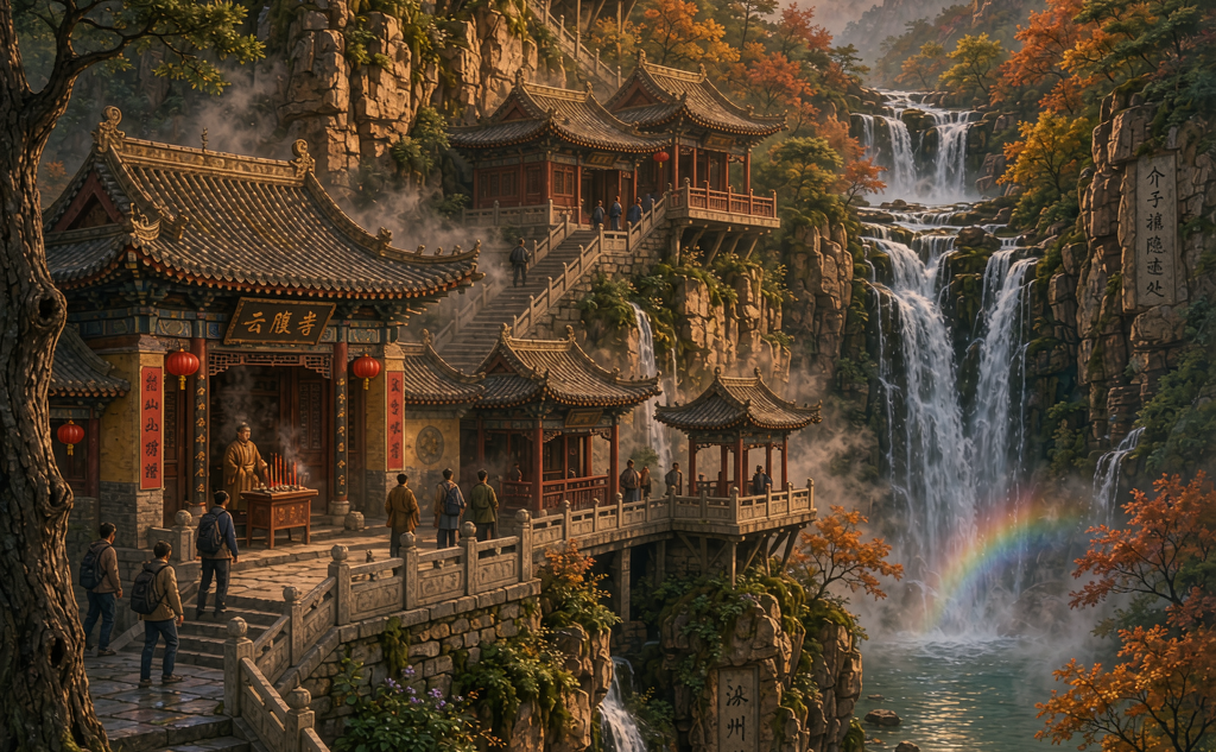
With limited time, focus on two clusters. Daluo Palace sits high on the ridge, a vast cliff-face complex of halls and corridors where the sung liturgy carries down the gorge at dusk; ride the cable car up and walk the upper galleries for the best sense of scale. Yunfeng Temple, lower and more intimate, is built into a cave mouth with a waterfall pouring beside it after rain. Between them, the suspended bridges cross chasms on slender spans, thrilling but well railed. Save the waterfall gorges for the descent, when your legs are tired and the shade is welcome.
What to Eat and Where to Stay
The mountain’s restaurants serve Shanxi staples: knife-shaved noodles, vinegar-bright dumplings, and cold dishes of wild herbs gathered on the slopes. A thermos of hot water and a packed snack go far, because prices climb with altitude and the upper temples have little choice. Most visitors sleep in Pingyao and make Mianshan a day loop, which works well given the evening lantern glow back in the walled town. If you prefer to stay closer, Jiexiu has mid-range hotels and a few hot-spring options, and the Wang Family Courtyard or Zhangbi Ancient Fortress along the road make easy add-ons on the drive in or out.
Photography and Quiet Corners
The cliff corridors photograph best in the soft light of late afternoon, when the wood glows and the gorge falls into shadow. For solitude, skip the first shuttle stop and walk the less-signed side paths around Yunfeng, where the only sounds are water and wind. Mornings after rain leave the boardwalks slick but the air clearest, and the mist that gathers in the ravines is worth the early start.
What to Pack and Expect
Mianshan is more walking than climbing, but the terrain is vertical in places.
- Good shoes: stone stairs and wooden galleries get slick when wet.
- Layers: the gorge is cool and shaded even in summer.
- Water and a snack: prices rise with altitude, and the upper temples have limited food.
- A full day: rushing Mianshan in half a day means missing the best cliff shrines.
Buy your ticket early, ride the shuttle to the top, and walk downward — that way the hardest stairs are behind you by afternoon.
A Suggested Day Plan
Base yourself in Pingyao. Leave after breakfast, reach Mianshan by mid-morning, ride the shuttles and cable cars to the high temples, walk the cliff galleries, and descend through the waterfall gorges. Return to Pingyao for its famous evening lantern glow.
Final Thoughts
Mianshan is one of Shanxi’s most underrated stops: dramatic enough for photos, calm enough to actually relax. It fits neatly between the region’s ancient towns and big cities.
A Note on Visiting Respectfully
The cliff shrines are active places of worship. Speak softly, follow posted routes, and you will find Mianshan as peaceful as the monks who first carved it.