

This Meishan travel guide is for travelers who want a quieter slice of Sichuan — one where a Song-dynasty literary family and a mossy primeval mountain share the same compact region. Meishan, about an hour south of Chengdu, is the birthplace of Su Shi (Su Dongpo), China’s most beloved poet of the Song era, and the gateway to Mount Wawu, a table mountain famous for waterfalls, cloud seas, and old-growth forest. If your Meishan travel research has left you unsure whether the city is worth a detour, the practical breakdown below — best season, access, sights, and pacing — should settle it. Most visitors fold Meishan into a Chengdu–Leshan–Emei loop as a calm, culture-and-nature overnight.
Best Time to Visit Meishan
Spring (March to May) and autumn (September to November) are the clear winners. In spring the Three Su Shrine’s courtyards fill with bamboo shoots and blossom, and Mount Wawu’s lower trails are lush without being buggy. Autumn paints the mountain in red and gold and gives the steadiest chance of a clear cloud-sea sunrise, which is the mountain’s signature view.
Summer is warm and wet, with afternoon storms that can close the cable car, though the forest stays cool and green — good for escaping Chengdu’s heat. Winter brings occasional snow on Wawu and thin crowds, but some upper facilities shut. If you’re building a wider Sichuan plan, our Chengdu travel guide is the usual basecamp, and the region’s temples and irrigation works pair naturally with a Meishan stop.
How to Get to Meishan
Meishan is wonderfully easy to reach. High-speed trains from Chengdu’s South or East stations take about 40–70 minutes to Meishan East, and services also run from Leshan, Emei, and farther afield. From the station, a bus or DiDi covers the short hop to the old town or to the Mount Wawu shuttle hub.
Driving is straightforward on the Chengdu–Leshan expressway, about 1.5–2 hours by car, and many travelers rent a car or hire a driver for the flexibility of combining the shrine and the mountain. Buses from Chengdu’s Xinnanmen station also serve Meishan if you prefer not to train. For those continuing to the giant Buddha, our Chengdu Leshan Giant Buddha guide is the logical next stop, while the sacred peak is detailed in our Emei Mountain guide.
Things to Do in Meishan
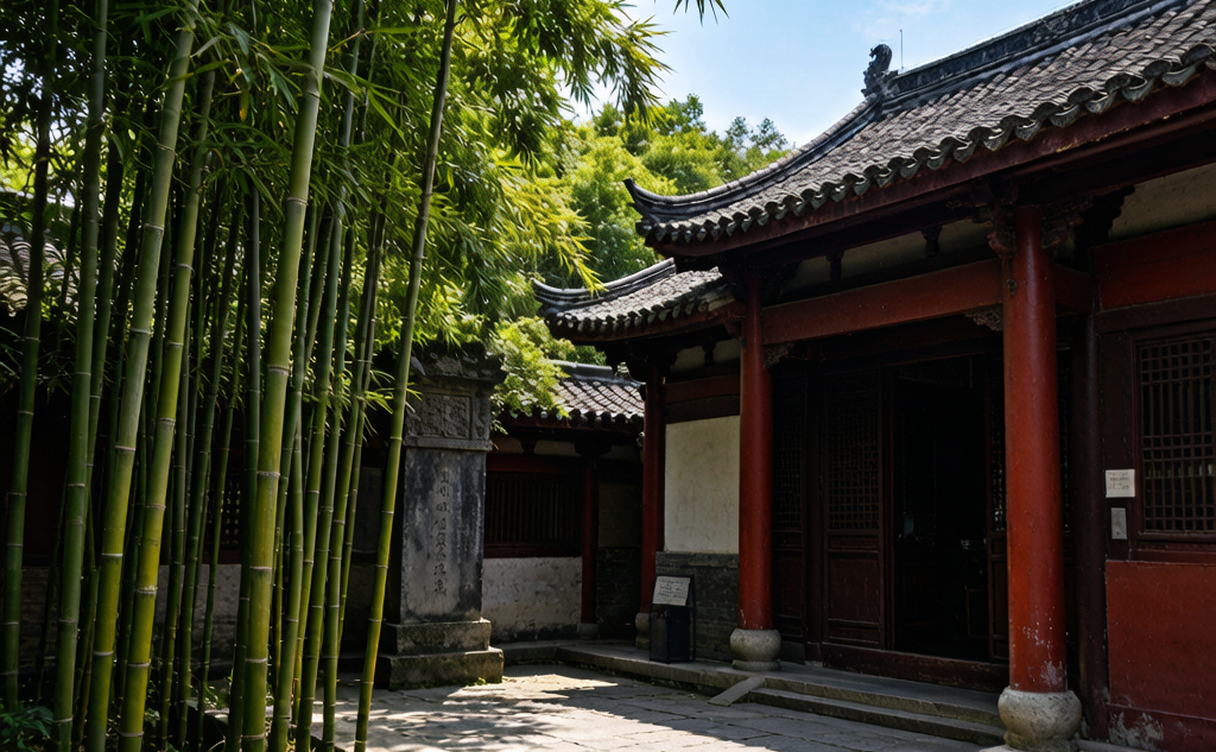
The cultural heart is the Three Su Shrine (San Su Ci), a serene walled complex of ponds, pavilions, and exhibition halls devoted to Su Xun and his sons Su Shi and Su Zhe. Even if you don’t read classical Chinese, the layout — stone tablets, a peaceful garden, and a small museum of Song scholarship — conveys why this family mattered. Give it two unhurried hours; the adjacent old streets have teahouses where you can sit as the Sus once did.
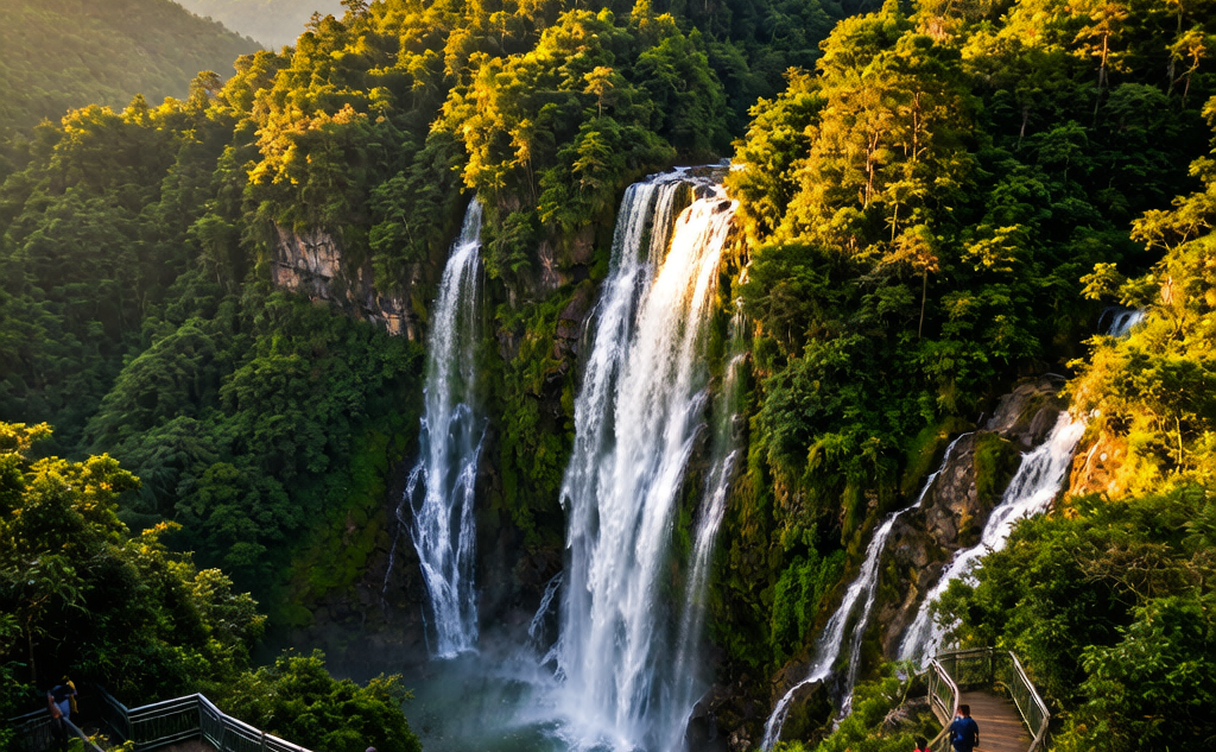
Mount Wawu is the natural counterweight. A cable car lifts you toward a high plateau of boardwalks threading waterfalls, virgin forest, and lookouts where, on lucky mornings, a sea of cloud rolls below the ridge. The full loop is a half-day of easy walking on well-built paths, and the summit meadows are among the greenest in Sichuan. Bring a rain layer even in dry months — the mountain makes its own weather.
Back in the city, the Meishan Museum and the riverside parks are low-key but pleasant, and the local food scene leans into Su Shi’s famous love of cooking (his 东坡肉 braised pork is a regional claim to fame). The museum’s Song-dynasty gallery is small but well labeled in Chinese, with replicas of the family’s letters that show how a provincial Sichuan clan reached the empire’s literary peak. For travelers extending toward the ancient irrigation marvel, our Dujiangyan irrigation system guide and Mount Qingcheng guide make strong additions to the same loop.
A Practical Meishan Itinerary
One day is enough for the shrine plus a taste of the mountain; two days lets you do Wawu properly. Day one: morning train from Chengdu, Three Su Shrine before noon, riverside lunch, then an afternoon Mount Wawu cable-car walk and return. Day two (optional): full Wawu summit loop at sunrise, or a side trip to Leshan’s Buddha, then train back.
Because the mountain and shrine are in different directions, a private driver saves real time if you want both in a day. If you’d rather link the peak with Emei, our Chengdu Mount Emei guide explains how to combine the two sacred mountains efficiently.
Food and Local Flavors
Meishan proudly serves Dongpo-style dishes: 东坡肘子 braised pork knuckle, 东坡鱼 fish in a fragrant broth, and plenty of Sichuan peppercorn heat for those who want it. The city’s snacks — 彭山甜皮鸭 crispy sweet-skin duck from the nearby district, and rice noodles — are easy wins at low prices. Teahouses around the shrine are the right place to try a slow pot of local green tea, and the riverside night stalls grill 鲫鱼 small river carp with a dusting of cumin that pairs well with a cold beer.
If you cook at home, the local wet market near the old street is worth a wander: piles of 折耳根 fish mint, fresh bamboo shoots in spring, and the preserved vegetables that give Dongpo cooking its depth. Prices are low and the vendors cheerful, though you’ll need a translation app to ask about anything beyond pointing.
For authoritative context on the Su family’s place in Chinese literature, Wikipedia’s Meishan page gives a concise overview of the city and its famous sons. Buy 东坡文创 souvenirs at the shrine shop rather than roadside stalls for authenticity.
Meishan Travel Tips
Practical notes help. The Three Su Shrine opens early and is best before tour groups arrive around 10:00. Mount Wawu’s cable car stops in heavy wind or lightning, so start early and watch the forecast. Wear grippy shoes for the misty boardwalks, and carry cash for small shrine offerings and rural stalls.
English is limited, so keep key addresses in Chinese on your phone and download an offline map. Trains sell out on weekends and holidays, so book Chengdu–Meishan seats a few days ahead. A balanced Sichuan loop that includes this stop works best when you treat Meishan as the calm middle day between the capital’s bustle and the sacred peaks.
One more note for photographers: the shrine’s ponds are stillest at opening, and Mount Wawu’s boardwalks catch low side-light in the first hour after the cable car starts, so an early start pays off in both places. Local guesthouses near the shrine often include a simple breakfast, which saves a confusing morning hunt for food before the gates open.
Why Meishan Is Worth the Detour
Meishan rewards travelers who like their history personal and their nature close at hand. You can stand in a poet’s garden in the morning and stand above a cloud sea by afternoon, all without the crowds of Sichuan’s headline sites. It is the kind of place that turns a transit corridor into a real visit.
Used as a gentle hinge between Chengdu and the sacred mountains, Meishan adds depth without adding stress. However you route it, leave the shrine a little extra time — the bamboo has a way of holding you.