

By Karl — I’ve spent four Spring Festivals in China, from a freezing temple fair in Beijing to a neon-soaked countdown in Shanghai. This guide is everything I wish someone had handed me before my first one.
Content Preview
- 2026 dates: Chinese New Year lands on Tuesday, 17 February 2026 (Year of the Horse), with the 15-day festival running to the Lantern Festival on 3 March.
- The travel reality: the world’s largest annual human migration — trains and flights sell out weeks ahead, and prices spike.
- What’s open vs closed: tourist sites and big-city malls stay open; small family shops and some restaurants shutter for up to a week.
- Where to go (and avoid): big cities light up with temple fairs and lantern shows; remote villages empty out as locals travel home.
- Booking & budgeting: lock transport and hotels 2–3 months early, and budget 30–50% more than a normal week.
- Sample itineraries and a practical FAQ for first-time foreign visitors.
When Is Chinese New Year 2026?
Chinese New Year 2026 falls on 17 February 2026 (a Tuesday). The official public holiday in China runs about a week — in 2026 expect roughly 17–23 February off work — but the festival spirit lasts the full 15 days, closing only with the Lantern Festival on 3 March 2026.
Here’s the part most first-timers miss: the travel chaos doesn’t start on the 17th. China’s Chunyun (Spring Festival travel rush) is a 40-day window that begins around late January and swallows an estimated 9 billion trips. I learned this the hard way in 2023 when I tried to book a Beijing–Shanghai train three days before the holiday and found exactly zero seats. If you’re in or near China during late January through early March, assume the transport network is at war with itself.
For the broader holiday picture — including how CNY stacks up against National Day and May Day crowds — see our China public holidays & crowd calendar.
What Is the Festival, Really?
At its core, Chinese New Year (春节, Chūnjié) is the lunar-calendar new year and the single most important holiday in Chinese culture. Unlike the fixed Gregorian New Year, the date moves each year because it follows the lunisolar calendar — it always falls between 21 January and 20 February.
The heartbeat of the festival is family reunion (团圆, tuányuán). Hundreds of millions of people travel back to their hometowns for a reunion dinner (年夜饭, niányèfàn) on New Year’s Eve. Homes get a deep clean, red couplets go up on doorways, and children receive red envelopes (红包, hóngbāo) stuffed with cash.
Each year is also tied to the zodiac animal. 2025 was the Year of the Snake; 2026 is the Year of the Horse (马, mǎ) — a year associated with energy, freedom, and movement. If you collect zodiac trinkets, the horse motifs will be everywhere from airport souvenir stalls to high-end department stores.
For the deeper history and calendrical mechanics, Britannica’s overview is a solid reference: Chinese New Year — Britannica.
How Chinese New Year Impacts Travel
Let me be blunt: this is the hardest time of year to move around China, but also one of the most rewarding if you plan for it.
- Transport sells out. High-speed trains between major hubs book within minutes of release (typically 15 days ahead). Domestic flights double or triple in price. I now set phone alarms for ticket-release day.
- Accommodation gets pricey and tight. Hotels near transport hubs and in popular cities can sell out or lift rates 30–50%. Booking late usually means paying more for less.
- Many small businesses close. Family-run noodle shops, corner convenience stores, and neighborhood barbers often shut for 3–7 days as owners travel home. Tourist districts are the exception.
- Big cities stay alive. Beijing, Shanghai, and Guangzhou keep major malls, metro lines, and attractions running — and they throw some of the best public celebrations of the year.
- Some attractions limit hours. Even open sites may run reduced winter/CNY schedules, so always reconfirm the morning you go.
If crowds and logistics stress you out, our best time to visit China guide breaks down the calmer shoulder seasons.
The Pros and Cons of Visiting During CNY
I won’t sugarcoat it — this is a double-edged trip.
The pros:
– Lantern festivals and temple fairs. Beijing’s Temple of Heaven and Ditan Park fairs, Shanghai’s Yuyuan Garden lantern show, and citywide light displays are genuinely unforgettable. I’ve stood in a crowd of 10,000 watching a dragon dance and felt something I never get at home.
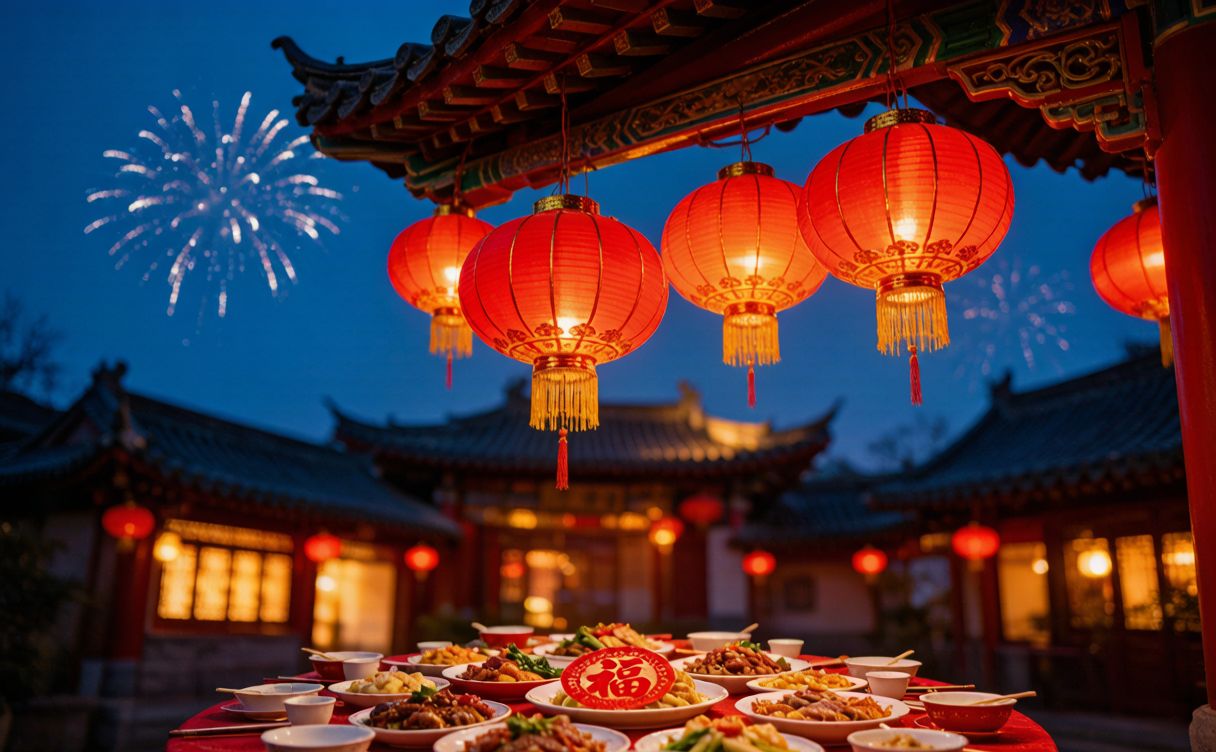
– Atmosphere everywhere. Red lanterns, street performances, and fireworks (where still permitted) turn ordinary streets into spectacles.
– Fewer foreign tourists. While domestic travel peaks, many international visitors avoid CNY — so you’ll often have famous sites relatively uncrowded compared to the summer crush.
– Warm hospitality. If you’re invited to a reunion dinner (it happened to me through a local friend), it’s a once-in-a-lifetime cultural window.
The cons:
– Crowded transport. The trains and stations are packed; build in buffer time.
– Closures in non-tourist areas. Venture off the beaten path and you may find ghost-town streets and shuttered eateries.
– Higher costs. Flights, hotels, and even some tour packages cost more.
– Family-focused, not tourist-focused. Many locals are busy with relatives, so some services slow down.
Where to Go (and Where to Avoid) During CNY
Great choices:
– Beijing — temple fairs, hutong decorations, and ice festivals. Our things to do in Beijing and Beijing first-time guide cover the festive highlights.
– Shanghai — the Yuyuan lantern show and Bund light displays are world-class. See things to do in Shanghai and the Shanghai first-time guide.
– Hong Kong, China and Macau, China — both run spectacular Lunar New Year parades, flower markets, and fireworks, and they stay open for business throughout.
– Harbin — its Ice and Snow Festival overlaps CNY perfectly if you want a winter wonderland.
Places to think twice about:
– Remote villages and far-west regions like parts of Xinjiang, China or Tibet, China — gorgeous, but many local services close and winter access is harsh. Save those for spring.
– Anywhere you need to rely on small, family-run businesses unless it’s a major tourist zone.
Booking and Budgeting Tips
After four CNYs, here’s my non-negotiable advice:
- Book transport 2–3 months ahead. For high-speed trains, be online the minute tickets release (15 days before departure). Flights: watch prices from two months out and pounce.
- Reserve hotels early and flexible. Free-cancellation rates let you adjust if plans shift.
- Budget 30–50% more than a typical week for flights and hotels; street food stays cheap.
- Avoid the exact peak days (the two days before and after the 17th) for any long-distance move if you can. Arrive before the 15th or travel locally during the holiday instead.
- Use trusted booking channels and keep digital + paper confirmations. Our China travel guide for first-timers has the booking toolkit I actually use.
What’s Open, What’s Closed, and Tips for Foreigners
Generally OPEN during CNY:
– Major tourist attractions (Forbidden City, Bund, West Lake) — but check winter/CNY hours.
– Big shopping malls, supermarkets, and metro systems in tier-1 cities.
– International hotel chains and airport services.
– Tourist-area restaurants and the big apps (Meituan, Didi) still work.
Generally CLOSED or limited:
– Small, family-run shops and neighborhood eateries (3–7 days).
– Some government offices and banks (holiday hours).
– Certain local museums on specific days.
Karl’s practical tips for foreigners:
– Carry cash. Even in 2026, small shops in non-tourist areas may be cash-only when their Alipay/WeChat Pay owner is away. Our cash-in-China guide explains how much to keep.
– Set up mobile pay before you arrive — see Alipay & WeChat Pay for foreigners.
– Expect restaurant closures off the tourist trail. In Beijing’s hutongs I’ve wandered hungry on day two — now I stock snacks and map open spots in advance.
– Pack for cold. Late February is deep winter in the north; layer up for those evening lantern walks.
Sample CNY Itinerary Ideas
Option A — Beijing Festival Focus (5 days)
– Day 1: Arrive, hutong lantern walk, dinner near Nanluoguxiang.
– Day 2: Forbidden City by morning, Temple of Heaven fair by afternoon.
– Day 3: Ditan Park temple fair, hutong hotpot night.
– Day 4: Great Wall day trip (Mutianyu — quieter in winter).
– Day 5: 798 Art District, fly out.
Option B — Shanghai + Hong Kong, China (7 days)
– Days 1–3: Shanghai Yuyuan lanterns, Bund lights, Zhujiajiao water town.
– Days 4–7: Fly to Hong Kong, China for the parade, flower market, and Victoria Harbour fireworks.
Option C — Chill City Stay (avoid the rush entirely)
– Base yourself in one big city (Guangzhou or Shanghai), book a centrally located hotel, and enjoy decorations, malls, and local fairs without long-distance trains.
FAQ: Chinese New Year Travel in China
1. Is it a bad time to visit China?
Not necessarily. It’s the most atmospheric time and foreign-tourist sites are often calmer, but transport is crowded and some shops close. Plan ahead and you’ll have a great trip.
2. Are tourist attractions open during Chinese New Year?
Yes — major sites in big cities stay open, often with special CNY displays. Hours may be reduced, so confirm online before you go.
3. Will restaurants be open?
In tourist districts and big cities, yes. In residential neighborhoods, many small restaurants close for several days. Keep cash and snacks handy.
4. How far ahead should I book trains and hotels?
Aim for 2–3 months for hotels and be ready the moment train tickets release (15 days prior). The peak days around 17 February sell out fastest.
5. What should I wear?
Warm winter clothing for the north (Beijing, Harbin) in February — it’s cold. The south (Hong Kong, China; Guangzhou) is milder but still cool in the evening.
6. Can I see fireworks?
Many cities restrict private fireworks, but organized displays — especially in Hong Kong, China and Macau, China — are common around New Year’s Eve and Lantern Festival.
7. Is everything more expensive?
Transport and hotels rise 30–50%; street food and local attractions usually don’t. Budget accordingly.
8. Should I avoid China entirely that week?
Only if you hate crowds and can’t book early. If you want unique cultural experiences and don’t mind planning, it’s a trip you’ll never forget.