

The first time I walked through the vermilion gates of the Beijing Confucius Temple, I was alone at 8:40 in the morning, before the tour buses rolled in. The courtyard was still, the cypress trees dripped the last of an overnight rain, and a caretaker was sweeping fallen leaves into neat piles with a bamboo broom. That quiet half-hour is the single best thing I can tell you about this place: come early, and the most important Confucian site in northern China belongs to you alone.
Most foreign visitors to Beijing funnel straight from the Forbidden City to the Great Wall and call it a trip. They miss the Confucius Temple (Kong Miao) and the Guozijian — the Imperial College — sitting side by side on Guozijian Street, a short walk from the Lama Temple. I’ve sent dozens of readers there over the years, and almost every email back says the same thing: “Why didn’t anyone tell me about this sooner?” This guide is me telling you.
What You’re Actually Looking At
The two complexes share one ticketed precinct but were built for very different purposes, and understanding the difference is what turns a 20-minute photo stop into a genuinely interesting hour.
The Confucius Temple was founded in 1302, during the Yuan dynasty, and expanded under the Ming and Qing. For nearly 700 years it was where the emperor himself came to pay respects to Confucius, especially around the imperial examinations. The Guozijian next door was the highest institute of learning in imperial China — the national university, where the brightest candidates from across the realm were trained for government service. In other words: one building complex is where you worshipped the sage, the other is where you became a scholar-official. Together they explain more about how China actually ran for six centuries than any textbook.
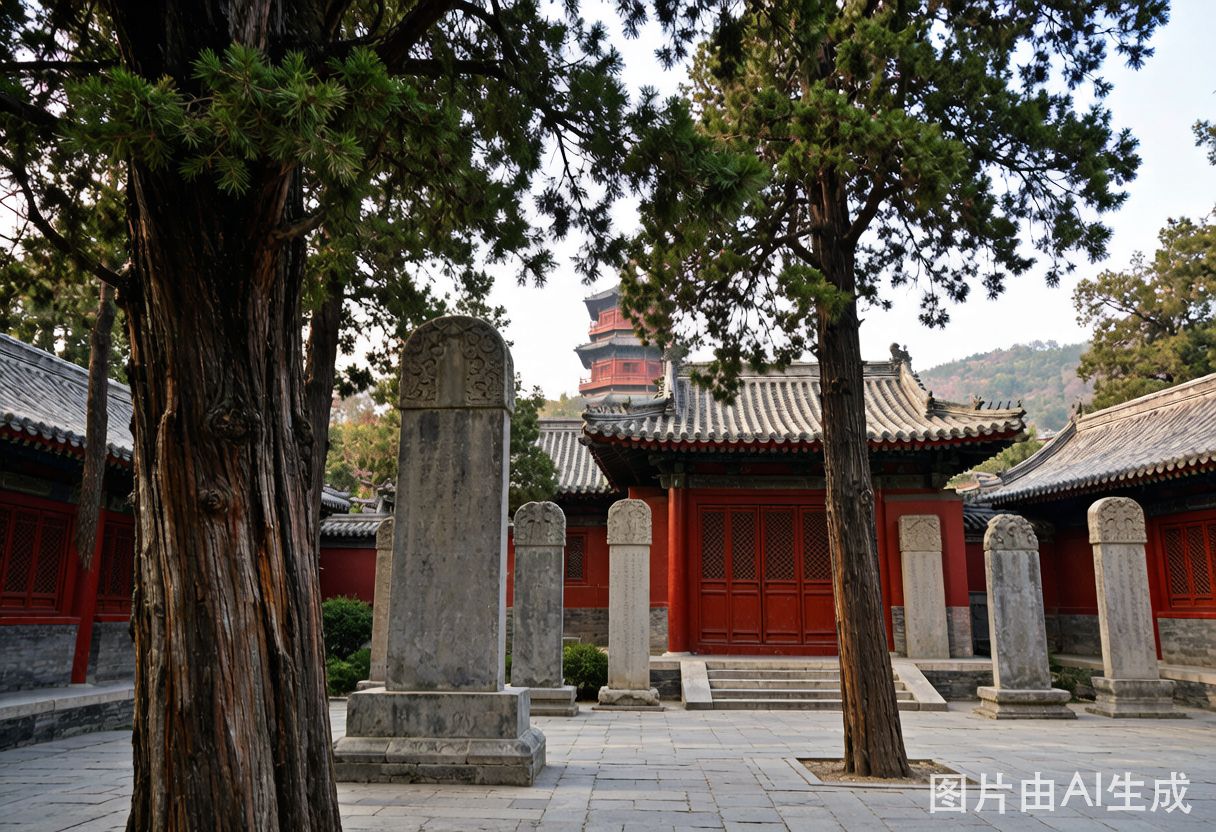
The layout is classic: a south-facing axis of three courtyards, each grander than the last, culminating in the Dacheng Hall (Hall of Great Achievement), where the main rites to Confucius were held. What I find most moving isn’t the hall — it’s the forest of 198 stone stelae in the side courtyards, engraved with the names of more than 51,000 successful examination candidates from the Yuan, Ming, and Qing dynasties. Run your finger (gently, don’t touch) along the lists and you realize these weren’t footnotes; they were the civil-service elite who governed the empire. As a foreigner who’s spent years navigating Chinese bureaucracy, there’s something humbling about that continuity.
A Bit of History That Matters for Your Visit
The imperial examination system (keju) ran from roughly 605 AD until 1905. The Guozijian was its nerve center in the capital. When the last emperor’s court collapsed, the college closed, but the buildings survived remarkably intact because they kept being used — as schools, then as a museum. That’s why, unlike some reconstructed sites in China, this one feels real. The wood, the stone drums, the inscribed tablets: most of it is original.
One detail I always point out to friends: the giant stone stelae outside the temple’s main gate list the classics of Confucian learning, carved in the 18th century under Emperor Qianlong. Each was an act of state propaganda and scholarship at once. Stand facing them and you’re looking at the curriculum that defined Chinese elite education for generations.
The Guozijian’s centerpiece is the Piyong Hall, a rare circular, watersurrounded lecture hall where the emperor occasionally delivered lectures to assembled scholars. I’ve been in a lot of Chinese imperial buildings; few have the intimacy of this one. Sit on the steps for a minute and imagine a thousand candidates hanging on the monarch’s words. It’s the kind of scene that sticks.
Getting There from Anywhere in Beijing
The temple and college sit in the Guozijian Hutong area, in the Dongcheng district, just northwest of the Lama Temple. Here’s how I get there:
- Subway (easiest): Take Line 2 or Line 5 to Yonghegong Lama Temple Station (Yonghegong). Use Exit F. Walk west along Guozijian Street (Guozijian Jie) for about 8–10 minutes. The Confucius Temple gate is on your right; the Guozijian entrance is a little further, on the same street. Total walk: flat, well-signposted, impossible to get lost.
- From the Forbidden City: A 15-minute taxi or a 40-minute walk north through the hutongs. If you’ve got the energy, walking is the better call — you pass straight through the most atmospheric old-city lanes in Beijing. See my Beijing hutongs walking guide for the exact route I use.
- Taxi/Didi: Punch in “Kong Miao” or “Guozijian.” Drivers know it. From central Beijing expect 20–40 RMB and 20–30 minutes depending on traffic.
- Bike: Beijing’s shared bikes are perfect for this neighborhood. Dongcheng’s hutong grid is flat and bike-friendly, and you’ll see more on two wheels than in any car.
I normally pair the Confucius Temple with the nearby Lama Temple (Yonghegong) — they’re a 10-minute walk apart and make a brilliant contrast: Buddhist imperial lamasery versus Confucian state academy. Do the Lama Temple first (it opens earlier and draws bigger crowds), then drift west to the quieter Confucius site.
Tickets, Hours, and Money-Saving Tips
As of my last visit, a combined ticket for both the Confucius Temple and Guozijian runs around 30 RMB (roughly $4–5 USD). Children and certain categories get discounts, and it’s cheap enough that I’d never bother chasing a free day. Note this is NOT covered by the Forbidden City ticket — it’s a separate, independently run site, so buy your ticket at the gate kiosk or scan the on-site QR code with Alipay/WeChat.
Practical pointers I’ve learned the hard way:
- Arrive at opening (around 8:30–9:00). By 10:30 the school groups arrive and the courtyards fill. The difference between 9 AM and 11 AM is the difference between a meditation and a school trip.
- Bring nothing you can’t carry easily. There’s minimal bag check, and you’ll want your hands free for photos.
- Cash is rarely needed here, but keep a little for the occasional hutong snack stall. Full details in my guide to using cash in China — though honestly, for a site this modernized, your phone pays for everything.
- No English signage is perfect. Plaques exist but are hit-or-miss. Download a translation app before you go; I cover the best options in how to use the internet in China.
The Hutongs Around the Temple
Half the joy of this visit is the neighborhood. Guozijian Street itself is one of the last hutongs in Beijing preserved as a traditional, tree-shaded thoroughfare — no high-rises, no through-traffic, just gray-brick walls and the occasional painted gate. Wander east and you hit Wudaoying Hutong, my favorite café-and-boutique lane in the city, full of third-wave coffee shops, dumpling counters, and quiet courtyards.
If you want a proper hutong wander, the Beijing hutongs walking guide maps a loop that starts near here and threads through some of the oldest residential lanes in the capital. I’ve done it in every season; in late autumn the avenue’s scholar trees turn gold and the whole street glows.
South of the temple, you can also cut down to Nanluoguxiang — livelier, more commercial, good for a snack but mobbed on weekends. I prefer the lanes immediately around Guozijian for atmosphere.
A Combined Half-Day Itinerary
Here’s the loop I give first-time visitors, and it fits comfortably into a relaxed morning:
- 8:30 — Arrive at the Lama Temple as it opens. Spend 60–75 minutes.
- 10:00 — Walk west along Guozijian Street. Stop for coffee in Wudaoying Hutong.
- 10:30 — Confucius Temple & Guozijian. Slow wander, 75–90 minutes.
- 12:00 — Lunch in the hutongs (a noodle shop or a courtyard restaurant).
- 13:30 — Either more hutong wandering, or a short taxi north to the Forbidden City if you’ve got tickets booked.
This dovetails neatly with a broader plan. If you’re building a Beijing stay, my 3-day Beijing itinerary slots this exact loop into Day 2, and the fuller things to do in Beijing list has the surrounding options ranked.
When to Go
Beijing’s weather drives everything. Spring (April–May) and autumn (September–October) are ideal — mild, clear, and the hutongs look their best. Summer is hot and crowded; winter is brutally cold but miraculously empty, and I’ll confess the temple dusted with snow is one of my favorite sights in the city. Timing your whole trip? My best time to visit Beijing breakdown covers crowds, air quality, and festival dates month by month.
Avoid Chinese public holidays — especially National Day (early October) and the Spring Festival travel period — when every heritage site in the capital swells. The China public holidays crowd calendar shows exactly which weeks to skip.
Why It’s Worth Your Morning
I’ll be blunt: the Confucius Temple & Guozijian will never top a visitor’s “wow” list the way the Great Wall does. What it gives you instead is context — the intellectual and bureaucratic backbone of imperial China, preserved in wood and stone a short walk from the emperor’s own palace. After years of showing friends around Beijing, I’ve come to think of it as the quiet key that unlocks everything else you’ll see. Stand in the stelae forest, read a few names, and the Forbidden City, the exams, the whole Confucian order suddenly click into place.
For an authoritative overview of the site’s history and layout, the Temple of Confucius, Beijing entry on Wikipedia is a solid, well-sourced starting point — I cross-check my own notes against it before each update.