

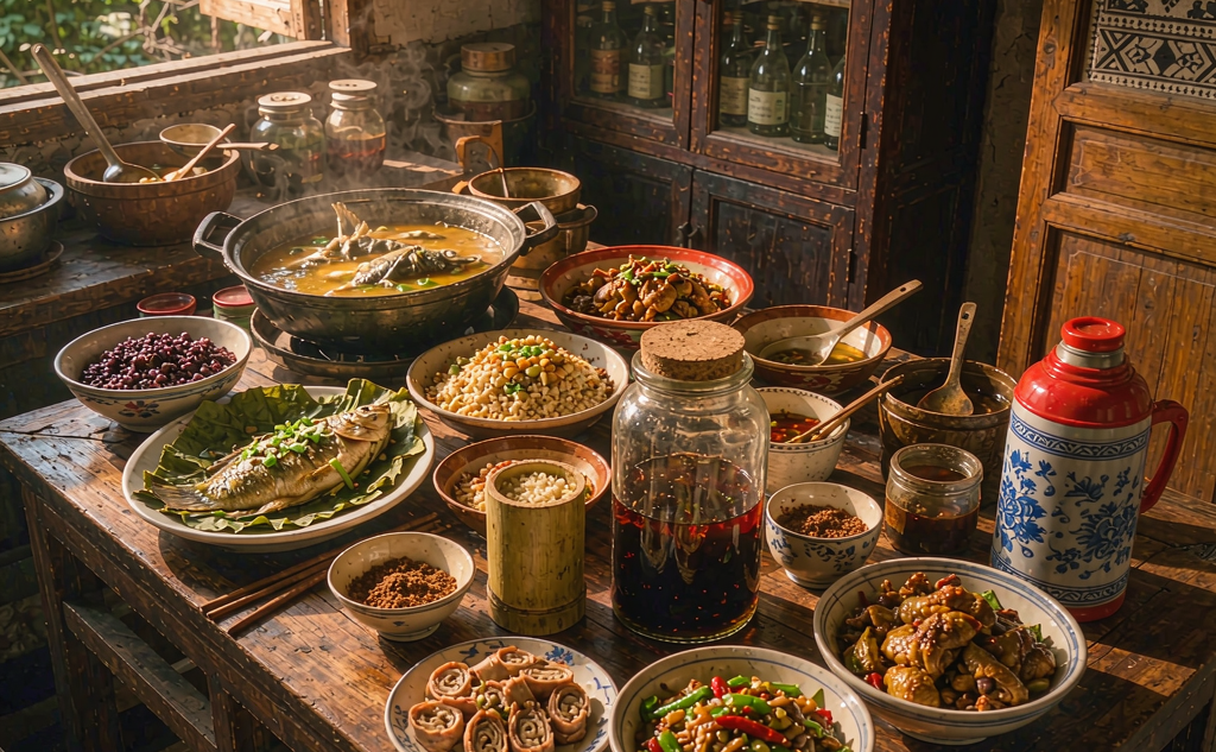
Deep in the mountains of western Hunan, far from the neon and noise of the province’s capital, the Tujia people have built a kitchen that reflects the land around them. This is a region of steep valleys, damp winters, and short growing seasons, and the cooking that emerged here is practical, preservative-minded, and deeply comforting. Tujia food leans on smoked pork, fermented vegetables, sour fish, and dense grains: the kind of hearty cooking that sustains a family through a long, cold year and tastes even better when shared at a crowded table.
Travelers often arrive for the sandstone peaks and leave remembering the meals. This Tujia food guide is written for anyone who wants to understand what is on the plate, why it tastes the way it does, and where to find the real thing. We will explore the ingredients that define Tujia cuisine Hunan style, the traditional Tujia dishes worth seeking out, how this cooking compares with that of neighboring ethnic groups, and the practical details of eating well on the road.
Who Are the Tujia People?
The Tujia are one of the largest ethnic minority groups in mainland China, with a population concentrated in western Hunan, parts of neighboring Hubei, and the mountains around Chongqing. Their language belongs to the Tibeto-Burman family, and their culture has been shaped by centuries of mountain farming, timber trading, and a measured openness to the Han Chinese world around them. If you would like broader cultural background before you go, the overview on China.org.cn is a useful starting point.
Food sits at the center of that culture. Feasts mark weddings, new houses, and the turning of the seasons, and the same dishes appear on ordinary weeknight tables. To understand Tujia food is to understand a people who turned the limits of the mountains into a cuisine with a strong personality of its own.
The homeland stretches beyond a single city. Western Hunan is the heartland, but communities in neighboring provinces keep the same traditions. The Tujia areas around Enshi are easy to reach and covered in our Enshi travel guide, handy if your route passes through Hubei.
What Makes Tujia Cuisine Distinct?
Three ideas explain most of what you will taste: preservation, fermentation, and heat. Mountain life demanded food that could be stored, and the Tujia became expert at curing, smoking, and pickling. Those techniques are not merely practical now; they are the source of the cuisine’s most distinctive flavors.
Preservation and Smoke
Smoking is the signature move. Pork is hung over slow-burning wood fires until the exterior turns dark and the meat takes on a deep, resinous aroma. That smoked pork appears in stir-fries, in soups, and sliced thin as a cold appetizer. It is salty, firm, and unmistakable, and it gives many traditional Tujia dishes their backbone. Visitors used to fresh meat sometimes need a few bites to adjust, but the flavor grows on you quickly.
Fermentation and Sourness
If smoke provides the depth, fermentation provides the lift. Pickled greens, sour beans, and fermented soybean pastes appear across the menu, cutting through rich meat and waking up the palate. Sour fish, preserved in rice flour and sealed in jars, is the most famous expression of this instinct. Sourness is not an accident here; it is a deliberate counterpoint to the heavy, cured ingredients that dominate the mountain diet.
Chilies, Garlic, and Wok Heat
Hunan cooking is not shy about chilies, and the Tujia version is no exception. Fresh and dried chilies, garlic, and scallions build a fragrant base for quick stir-fries. Heat is used to sharpen rather than to overwhelm, though portions can be generous by any standard. If you want to place this style in a wider national context, our Hunan cuisine guide traces the province’s broader love of chili and smoke, while the eight great cuisines of China shows where Tujia food sits on the national map.
Traditional Tujia Dishes to Try
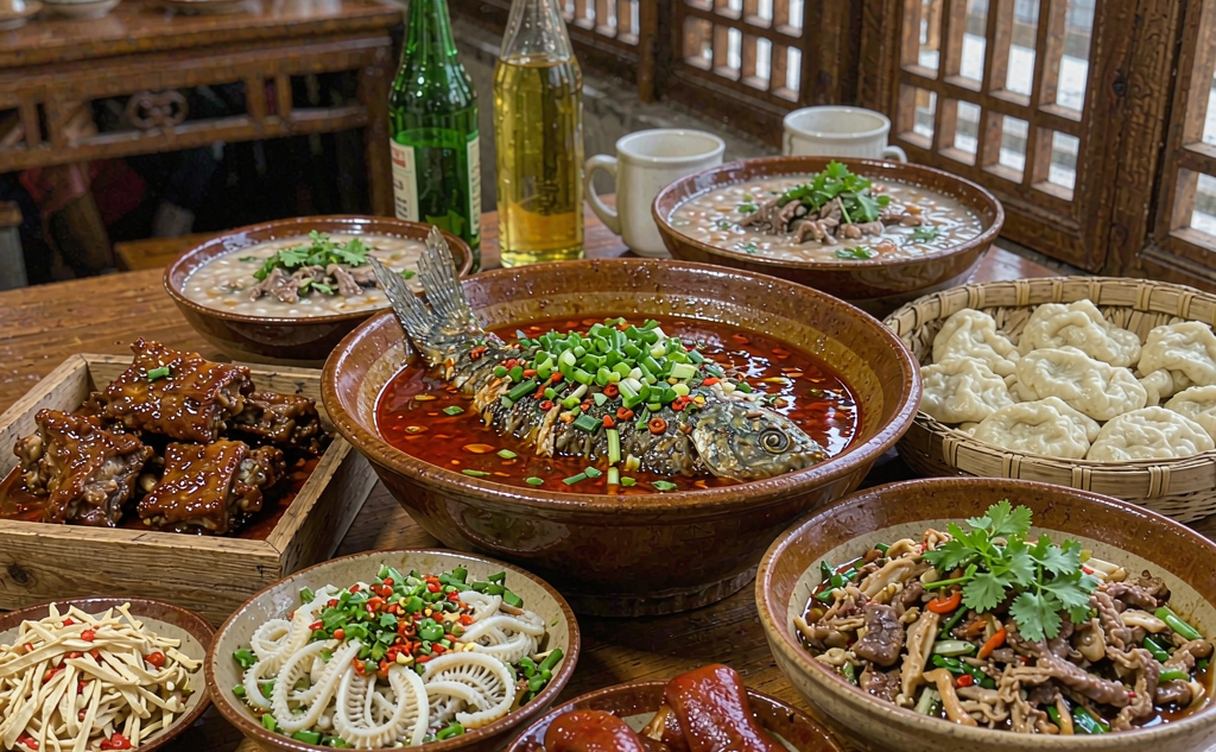
The best approach is to order several plates and share. Here are the traditional Tujia dishes that locals are most likely to recommend.
Hezha
Often translated as Tujia mixed bean curd or “he zha,” this is a humble soy-based porridge made from ground soybeans and fresh mustard greens. It is soft, gently savory, and served in a bowl with a chili dip on the side. It sounds plain, but hezha is the comfort food of the region and a fixture on home tables. Ordering it signals that you are eating the way the Tujia actually eat.
Tujia Smoked Pork
Cured over wood smoke, this pork is the backbone of the cuisine. It is typically sliced and stir-fried with dried chilies, garlic, and pickled vegetables, or simmered in a clay pot with greens. The flavor is intense, salty, and smoky, with a firm texture that holds up to aggressive seasoning. It is the dish most travelers remember long after they leave.
Sour Fish and Sour Meat
Fermentation reaches its most adventurous expression here. Fish or meat is packed with rice flour and salt, sealed in earthenware jars, and left to sour. Tangy and deeply savory, it is unlike standard Han Chinese cooking and is usually steamed or pan-fried. It can be an acquired taste, but for anyone interested in traditional Tujia dishes, it is essential.
Tujia Ciba and Oil Tea
Glutinous rice cakes, or ciba, are pounded until sticky, then pan-fried or served in a sweet broth. They appear at festivals and as a filling breakfast. You may also meet oil tea, a savory infusion whisked with fried rice, nuts, and herbs. It is warming and unusual, and shows how Tujia cooking turns simple grains into something memorable.
Tujia vs Miao Food: How Do They Differ?
Western Hunan is also home to the Miao people, and travelers often sample both cuisines on the same trip. Understanding Tujia vs Miao food is a rewarding way to sharpen your palate.
The differences come down to technique. Tujia food is built on smoking, dry-curing, and fermentation, with heavy use of preserved pork and sour jars. Miao cooking leans on fresh ingredients, river fish, and a sour-and-spicy profile driven by pickled peppers. Miao dishes feel brighter, while Tujia plates are denser, smokier, and more filling. Both use chilies generously, but the Tujia version tastes earthier and the Miao version sharper.
You can taste the Miao side of the story in the old streets and restaurants of Fenghuang Ancient Town, a short journey from the Tujia heartland. Trying both traditions back to back makes the contrast obvious in a way no description can fully capture.
Where to Eat Tujia Food
This is the question every serious visitor asks: where to eat Tujia food? The honest answer is that the best meals are rarely found on the main tourist strip. Look for small family restaurants with a short seasonal menu, a smoke-stained kitchen, and a crowd of local diners.
Tujia Food in Zhangjiajie
Zhangjiajie is the gateway for most travelers, and Tujia food Zhangjiajie style is easy to find once you step away from the park entrances. The city and the villages around Wulingyuan both have excellent options; our Wulingyuan guide covers the area beyond the famous viewpoints. If you are still shaping your itinerary, the Zhangjiajie travel guide and the Tianmen Mountain Zhangjiajie guide are useful companions. Ask for hezha, smoked pork, and whatever sour jar the kitchen has open that day.
Beyond the Tourist Corridor
For a deeper experience, eat in towns and villages where Tujia families live year-round. Meals are slower and more generous, and hosts often bring out several dishes at once. Do not be surprised if strong local liquor appears; a small sip is a friendly gesture. The further you move from the busiest sites, the more the food tastes like home cooking.
On the Way Through Changsha
Many routes pass through Changsha, where Hunan’s capital offers a huge range of regional cooking. The Changsha food guide explains how to find Tujia restaurants in the city and how they sit alongside the bolder, chili-forward dishes the capital is famous for. It is a good place to make a comparison before heading west.
Practical Tips for Travelers
A few small habits will make your meals smoother.
- Order to share. Three or four plates give you a far better sense of the cuisine than one large main.
- Ask about the sour jars. Fermented fish and meat vary from kitchen to kitchen, and the staff can point you to the house specialty.
- Expect smoke and chili. Both are central to the flavor profile, so say so early if you need a milder plate.
- Eat at local hours. Lunch is usually earlier than visitors expect, and popular family restaurants may close once the food runs out.
- Carry some cash. Small village restaurants do not always accept foreign cards.
Frequently Asked Questions
Is Tujia food very spicy? Often, but the defining notes are smoke and sourness rather than raw heat. Chilies build aroma and warmth, and you can usually ask for a milder version.
What is the most famous Tujia dish? Smoked pork and hezha are the two best-known, followed closely by sour fish and sour meat.
Is Tujia food the same as Hunan food? Not exactly. Tujia cuisine Hunan style is one important thread within the province’s cooking, but it is distinct from the chili-heavy urban style most visitors meet first. If you are comparing Tujia vs Miao food as well, the differences are even sharper.
Where can I find the most authentic meals? In family-run restaurants in the mountain towns and villages, away from the main park entrances. That is where Tujia food Zhangjiajie region cooking is at its most honest.
Can vegetarians eat well here? Reasonably, though less easily than in some other Chinese cuisines. Vegetable stir-fries, hezha, rice cakes, and pickled dishes are widely available, but check whether a broth or sauce contains meat.
Final Thoughts
Tujia food is hearty, smoky, and unapologetically local. It is a cuisine shaped by mountains and by the need to make ingredients last, yet it rewards the traveler with flavors that are warm, direct, and hard to forget. The surest way to understand it is to pull up a chair at a small restaurant, order a few traditional Tujia dishes, and let the meal unfold slowly. Come for the peaks if you like, but leave room at the table for the food.