

Beneath the busy streets of eastern Changsha lies one of the most extraordinary archaeological discoveries of the twentieth century. The Mawangdui Han Tombs, sealed more than two thousand years ago, preserved a noble family, their possessions, and even the food they ate in astonishing condition. For travelers fascinated by early imperial China, this site offers something that grand monuments elsewhere cannot: an intimate, almost personal window into daily life during the Han dynasty. This Mawangdui Han Tombs guide covers the history, the must-see artifacts, practical transport details, and how the site compares with other famous burial complexes. Whether you are planning a dedicated history trip or adding a half-day stop to a wider Hunan itinerary, the Mawangdui museum Changsha experience rewards a little advance planning.
What Are the Mawangdui Han Tombs?
The Mawangdui Han Tombs are the burial ground of a high-ranking Western Han family. The three main tombs belong to Li Cang, the Marquis of Dai and a former chancellor of the Changsha kingdom; his wife Xin Zhui, better known as Lady Dai Mawangdui; and one of their sons. They date roughly from the second century BCE, a period when the Han dynasty was consolidating its rule over a vast and newly unified empire.
What makes the site legendary is not its scale but its state of preservation. The cemetery sat deep beneath layers of compacted clay and charcoal, and the wooden burial chambers were sealed with remarkable care. That combination kept out water, oxygen, and bacteria for two millennia. Organic materials that normally vanish — silk, lacquer, wood, food, and even human tissue — survived here in forms that archaeologists elsewhere could only dream of. Any serious Mawangdui Han Tombs guide begins with this simple fact: the value of the site lies in the everyday objects it preserved, not in towering architecture.
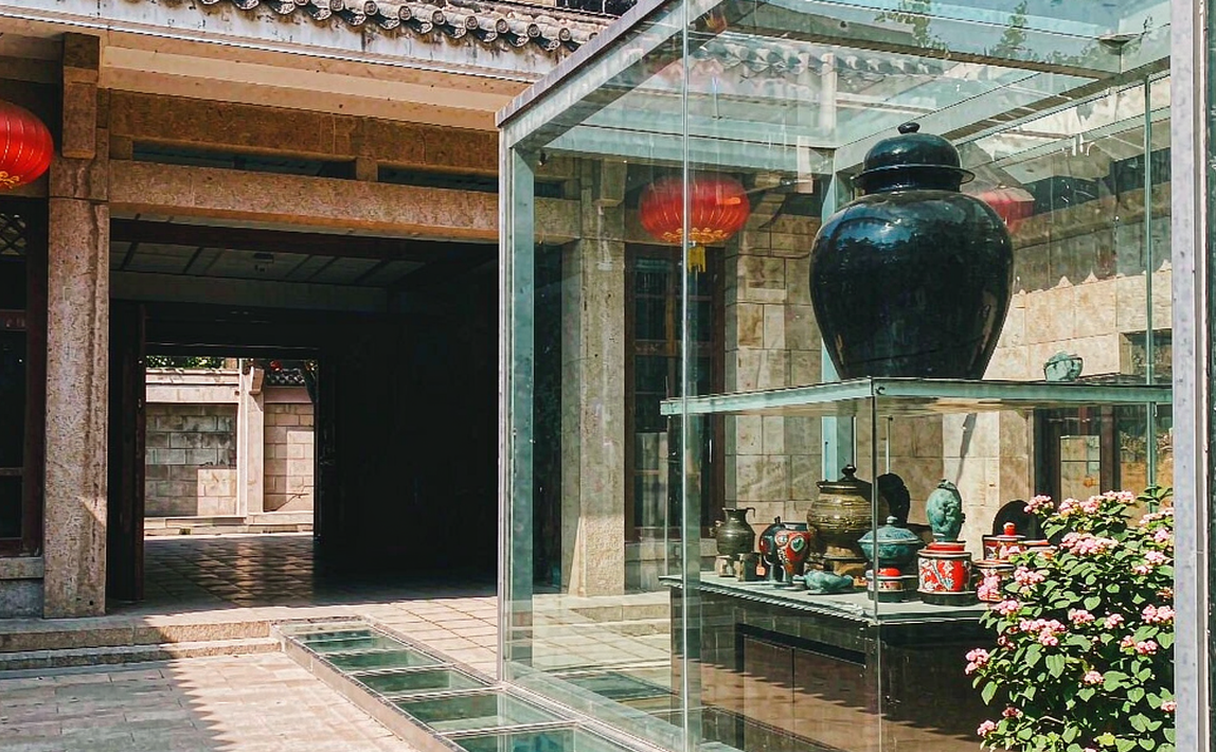
Today the tombs are protected within a purpose-built museum complex in the Xiangzi district of eastern Changsha, only a few kilometres from the city centre. Visitors descend into reconstructed burial chambers and then move into exhibition halls holding the finds. The result is compact, manageable, and unusually vivid.
The Discovery and History
The site came to light in 1971, when workers preparing a construction project uncovered unusual soil and timber near Mawangdui. Formal excavations followed in 1972 and 1973, and the discoveries quickly drew attention far beyond Hunan. More than three thousand objects were eventually catalogued, ranging from bronze vessels and lacquerware to silk manuscripts and medicinal herbs.
For historians, the timing could hardly have been more significant. The Han dynasty shaped much of what later Chinese culture became, yet surviving written and material evidence from ordinary elite life was limited. The Mawangdui finds filled gaps in understanding of medicine, astronomy, dress, music, and belief. The Lady Dai Mawangdui burial in particular became a reference point for discussions of ancient health and longevity.
Lady Dai Mawangdui: A Life Preserved
Of all the people associated with the site, none captures the imagination like Xin Zhui. Known to visitors as Lady Dai Mawangdui, she was the wife of Li Cang and died in her fifties around 163 BCE. When researchers examined her remains, they found skin that was still soft, hair still attached, and internal organs largely intact — an almost unprecedented level of preservation for a body of that age.
Medical studies added a human dimension to the story. Examinations suggested that Lady Dai Mawangdui suffered from coronary artery disease, high blood pressure, and gallstones, and traces of mercury and lead in her tissues hint at the mineral-based medicines she may have taken in the hope of prolonging life. Her death was likely sudden, possibly a heart attack. These findings turned an ancient burial into a genuine case study in the history of medicine, discussed in scholarly work far outside archaeology.
Her tomb also held the richest collection of textiles and the famous painted funerary banner that has become the visual symbol of the whole site. Note that the remains are not always on public display, as preservation needs take priority; the museum’s policy can change, so check on arrival. The artifacts, however, are consistently the highlight of any Mawangdui museum Changsha visit.
Highlights of the Mawangdui Museum Changsha
The museum on site presents the finds in a series of calm, well-lit galleries. A Mawangdui museum Changsha visit usually takes between ninety minutes and two hours, and a few pieces consistently stop visitors in their tracks.
The T-Shaped Silk Painting
The most famous single object is a painted silk banner in the shape of a T. It was placed over the inner coffin and depicts three realms: the world of the living below, a heavenly scene above, and the underworld in between. Dense with symbolic creatures, dancers, and rituals, it is one of the earliest surviving narrative paintings on silk from China and a key to understanding Han ideas about the afterlife.
Silk Robes and Textiles
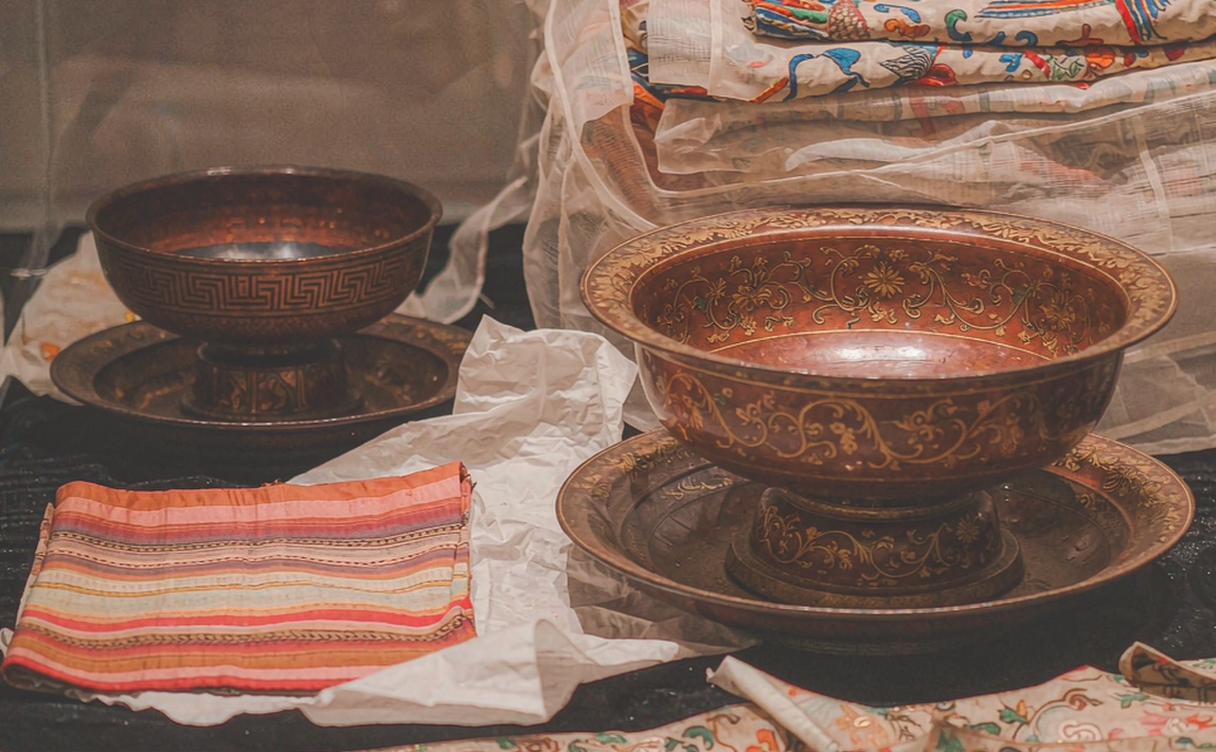
The tombs yielded an extraordinary wardrobe. One fine gauze robe weighs only about 49 grams, light enough to fold into a matchbox, yet it is embroidered with intricate cloud and floral motifs. The range of weaving and dyeing techniques on display shows a level of craft that challenges any assumption that sophisticated textiles are a modern invention. If you enjoy museum collecting across China, the Xian Shaanxi History Museum offers a useful comparison of how early dynastic collections are presented.
The Nested Painted Coffins
Lady Dai was laid inside four coffins fitted one within another. Each is painted with a different programme of imagery — the outermost dark and protective, the innermost a vivid red and black vision of a spiritual journey. The lacquerwork survives with a gloss that is startling given its age.
Manuscripts, Maps, and Medical Texts
Perhaps the most scholarly treasures are the silk manuscripts, including texts on medicine, astronomy, and geography, as well as one of the earliest known maps of the region. They reveal a society observing the stars, recording prescriptions, and mapping its world with care. Visitors who want to trace a broader thread of Chinese museum culture can continue with the Beijing National Museum or follow a dedicated China museum route across several cities.
How to Get to Mawangdui
The site sits in eastern Changsha, roughly four to six kilometres from the central business district, and reaching it is straightforward. If you are wondering how to get to Mawangdui by public transport, the answer is the metro: Line 2 stops at Mawangdui station, within walking distance of the museum entrance. From Changsha South Railway Station, Line 2 runs directly, so the trip is simple and inexpensive.
From Changsha Huanghua International Airport, you can combine the airport express or maglev link with the metro, or take a taxi for a door-to-door ride. Ride-hailing apps work well in Changsha, and a taxi from the city centre usually takes around twenty to thirty minutes depending on traffic. For first-time visitors, the metro is the most predictable option because there is no fare negotiation and no language barrier at the ticket machine. Allow extra time if you arrive during a public holiday, when roads near the museum can slow down.
Best Time to Visit Mawangdui
Changsha has a humid subtropical climate, with hot summers, cool winters, and short, pleasant spring and autumn seasons. The best time to visit Mawangdui is during spring (roughly March to May) or autumn (September to November), when temperatures are mild and the walk from the metro station is comfortable. Because most of the visit is indoors, light rain is not a serious problem.
Crowds matter more than weather. National holiday weeks, especially the early October break and the May Day period, bring heavy visitor numbers and long queues at popular galleries. Weekday mornings, shortly after opening, are usually the calmest. Summer can be sweaty, but the air-conditioned halls provide relief. If your schedule is fixed, any season works — the artifacts do not change — but a quiet weekday makes the experience far more reflective.
Mawangdui vs Other Han Tombs
China has several celebrated Han dynasty burial sites, and comparisons are natural. When weighing Mawangdui vs other Han tombs, the key distinction is preservation rather than grandeur. The Han tombs at Mancheng in Hebei are famous for jade burial suits, while the tombs near Xuzhou in Jiangsu also produced spectacular jade attire. The Tomb of the Nanyue King in Guangzhou preserves a southern kingdom’s elite culture. Each is impressive, but most were found looted or degraded.
Mawangdui stands apart because its organic finds survived almost intact. Instead of only stone, bronze, and jade, you see silk, lacquer, food, and documents — the texture of real life. That is why Mawangdui vs other Han tombs is less a contest of size than a question of what you want to learn. For a broader imperial timeline, the Shanghai Museum provides excellent context for how these dynasties fit together.
Making the Most of Your Visit
A few practical habits will improve your trip. English labelling exists but is not exhaustive, so an audio guide or a short guided tour adds real value, especially in the manuscripts gallery. Photography rules can vary by hall, so follow the signs. Plan for ninety minutes inside, then use the remaining half-day to explore the city.
Changsha is a rewarding base. For a classic city landmark with views and literary history, pair your visit with Yuelu Mountain in Changsha. Food is another major draw: start with a Changsha food guide to understand the local specialties, or go deeper with a Hunan cuisine guide that explains the province’s bold flavours. If you have more days in Hunan, an overnight trip to Fenghuang Ancient Town combines beautifully with a history-focused Changsha stay.
FAQ
How long does a visit take?
Most travelers spend between ninety minutes and two hours in the museum, including the reconstructed tomb chambers and the main galleries. Add time if you take a guided tour.
Is the Mawangdui museum Changsha good for non-Chinese speakers?
Yes, though with a caveat. Key displays have English text, but the deepest details are in Chinese. An audio guide or a knowledgeable guide makes the manuscripts and paintings far more accessible.
Can visitors see Lady Dai’s body?
The remains of Lady Dai Mawangdui are not consistently on public display because conservation needs come first. Check the museum’s current policy on arrival; the coffins and artifacts are always viewable.
What should I combine with a Mawangdui Han Tombs guide?
Yuelu Mountain, a good local meal, and — if time allows — a trip to Fenghuang make natural companions. Readers interested in heritage protection can also explore the work of the UNESCO World Heritage Centre for wider context.
The Mawangdui Han Tombs are a reminder that history is not only built in stone. In a quiet corner of Changsha, silk, lacquer, and a preserved life tell a story as vivid as any palace. With the right timing and a little preparation, a Mawangdui Han Tombs guide becomes less a checklist than a genuine encounter with the ancient world.