

If you think you know Chinese food after a few plates of sweet and sour pork, the Chaoshan region of eastern Guangdong will rewrite your menu. Straddling the cities of Shantou, Chaozhou, and Jieyang, this coastal pocket has quietly built one of China’s most refined and seafood-forward dining cultures. A proper chaoshan guide does not start with spice or smoke — it starts with the briny freshness of the sea, the gentle sweetness of good stock, and a near-obsessive respect for a single ingredient. Whether you are planning a dedicated food trip or folding a few meals into a wider Guangdong plan, this article maps the dishes, the etiquette, and the streets that make teochew food worth crossing the world for.
Discover more regional food and travel ideas in our complete collection of China guides and city breakdowns.
What Makes Chaoshan Cuisine Different
The easiest comparison travelers reach for is Cantonese food, and the two do share a love of freshness. But chaoshan cuisine takes restraint further. Where Cantonese cooking leans on roasting and dim sum theater, Teochew kitchens prize clarity: clear broths, quick blanches, and light marinades that let shrimp taste like shrimp. Umami here is built slowly, often from dried scallops, preserved radish, and fermented bean paste rather than heavy sauces.
Another dividing line is the pantry of the sea. The region sits on the Han River delta and the South China Sea, so the daily catch drives the menu. You will see live seafood tanks in almost every mid-range restaurant, and the default question from a server is often “what would you like from the tank?” rather than “what dish number?”
Texture matters as much as flavor. Chewy rice rolls, silky congee, and bouncy hand-pulled beef balls are not accidents — they are the point. This is food engineered around mouthfeel, which is why a simple bowl can feel so satisfying.
Signature Dishes You Should Not Miss
Beef Hotpot (Chaoshan Beef)
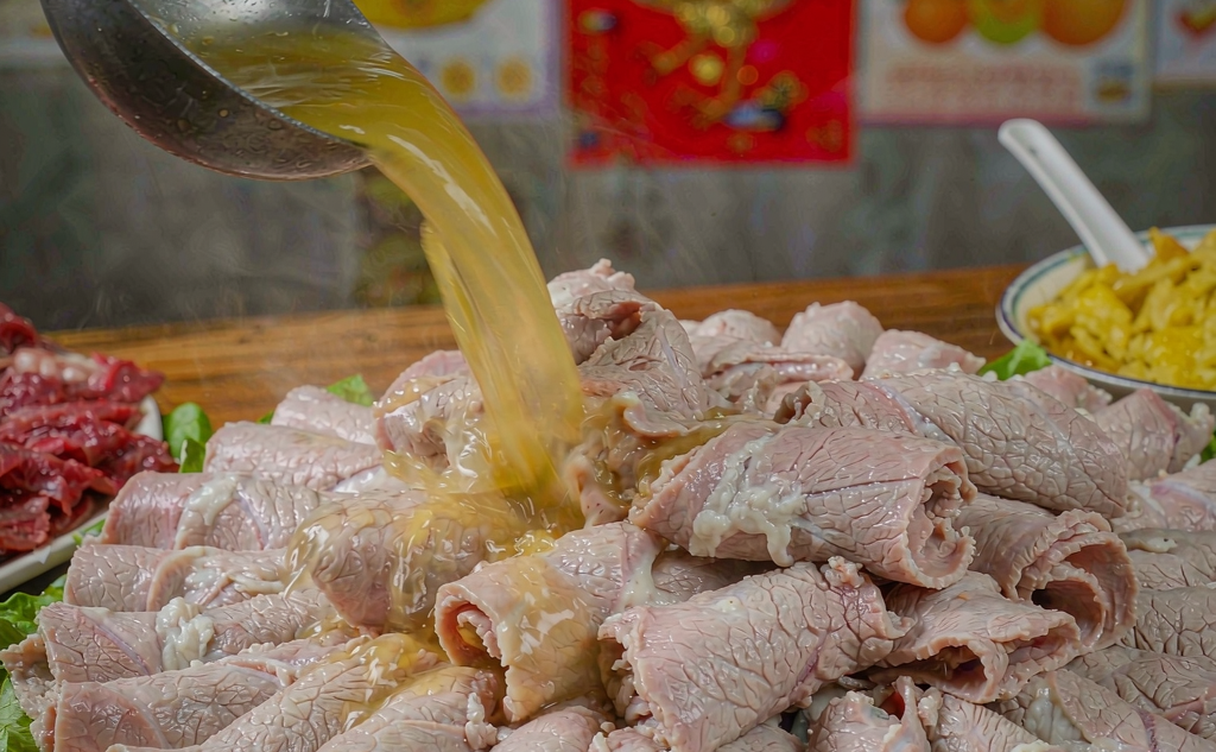
If there is one meal to book ahead, it is chaoshan beef hotpot. The local style is distinct from the fiery Sichuan version. You get a pale, clean beef bone broth, a platter of paper-thin sliced beef separated by cut (brisket, tenderloin, oyster blade), and a side of satay-ish dipping sauce cut with crisp shallot oil. The beef balls are made to order, pounded until elastic, and they snap back when you bite. Cooking takes seconds, not minutes — overcook and you lose the whole point.
Rice Noodle Rolls (Fung Chao)
Fung chao are wide, slippery rice sheets rolled around fillings like pork, egg, beef, or preserved vegetables, then doused in a sweet soy and peanut sauce. In Chaozhou they are often made fresh on a cart and served rolled, not cut, so you tear them with your chopsticks. The texture is the draw: cool, tender, and faintly chewy, a refreshing counterpoint to hotpot richness.
Marinated Cold Dishes (Lou Mei)
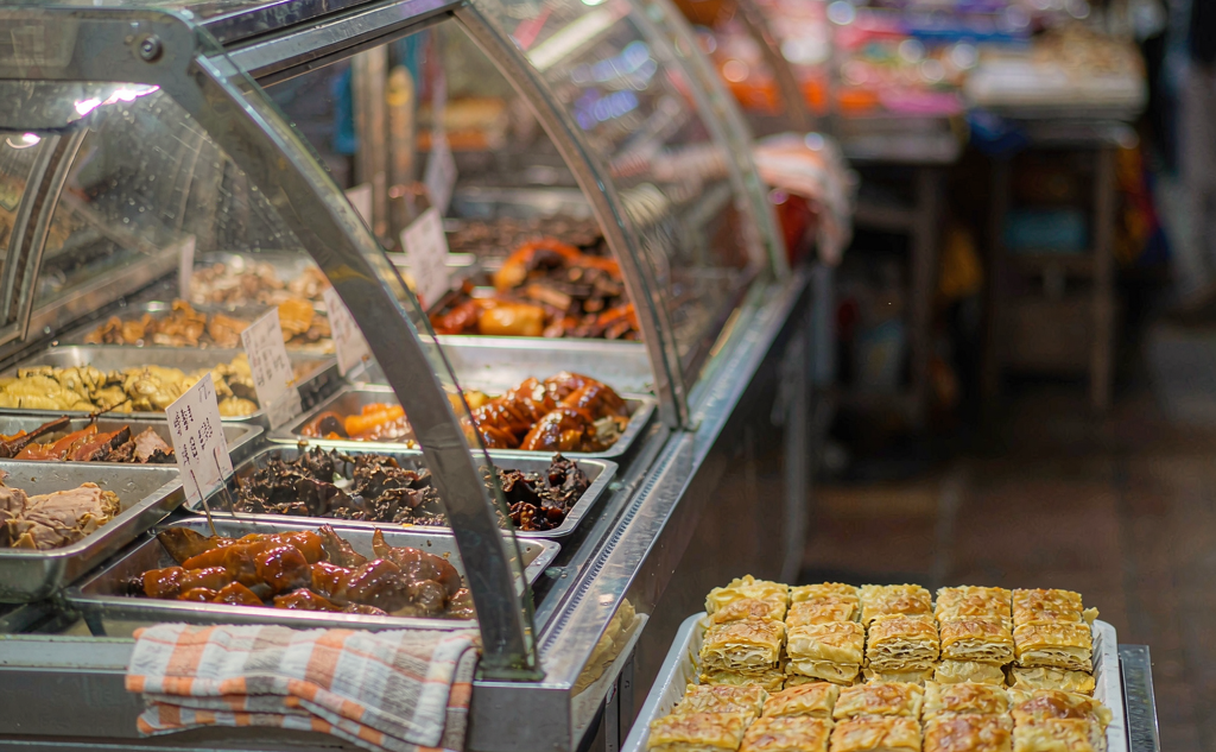
Lou mei is the late-night hero of the region. Various cuts — goose, duck, offal, tofu, eggs — are simmered in a dark, aromatic master broth of soy, spices, and rock sugar, then chilled and chopped to order. The Chaozhou braised goose, with its glossy skin and fragrant fat, is the dish locals argue about most. Order a mixed platter, a bowl of plain rice, and you have a perfect casual dinner.
Teochew Porridge (Muay)
Do not confuse muay with the watery congee of other regions. Teochew porridge is a thicker, grain-forward rice gruel served with an array of small savory sides: fermented black beans, salted duck egg, fried silverfish, pickled vegetables, and braised pork. It is humble, deeply comforting, and the kind of meal eaten late, after everything else has closed.
Savory Pastries and Sweets
The region’s pastry game is its quiet flex. Look for crispy spring onion pancakes, taro pastries, and the famous Teochew mooncakes with a dual-yolk-and-red-bean center. For sweets, the steamed tapioca cake and the clear, jiggly fen guo (translucent dumplings) show off the local obsession with clean, barely-sweet finishes.
Where to Eat: Shantou and Chaozhou
Shantou is the modern hub and the better base for a first trip. The old town (Xiaogongyuan area) is walkable, photogenic, and dense with snack stalls. Head there in the evening when the smell of grilled oysters and braised goose fills the lanes. For a more local, less polished experience, the riverside night markets and the areas around the university are reliable.
Chaozhou, by contrast, feels older and quieter, built around its famous bridge and ancient city walls. It is the place for fung chao carts, muay shops, and teahouse culture. If your schedule is tight, treat Chaozhou as a day trip from Shantou — the cities are close enough that a dedicated chaoshan guide will usually route both in a single loop.
A practical note: many of the best spots are cash-friendly, small, and unilingual in signage. Arrive early for popular shops (queues form before opening), and do not be shy about pointing at what another table is eating.
How Chaoshan Food Differs from Cantonese Food
Travelers often lump the two together, but the contrasts are worth knowing before you order. Cantonese cuisine loves roasting — siu mei, crispy pork, roasted goose — and a vast dim sum repertoire. Chaoshan cuisine is lighter, more broth- and seafood-centric, and far more invested in marination and cold cuts. The dipping sauces differ too: Cantonese meals often rely on plain soy or chili, while Teochew tables lean on complex satay blends, fried shallot oil, and vinegar-cilantro mixes.
The tea culture diverges as well. The region invented the gongfu tea ritual — a small-pot, many-cup style of brewing oolong that turns every meal into a slow, social ceremony. If you enjoy that side of things, our china tea house guide covers the broader tradition you will taste here in its purest form.
Plan your wider trip with our other Guangdong and China food guides covering yum cha, itineraries, and regional cuisines.
Etiquette and Ordering Tips
A few habits will make you look like a regular. First, the tea ritual is not optional — when someone fills your cup, tap two fingers lightly on the table in thanks; it is a centuries-old local courtesy. Second, hotpot beef cooks fast: watch the pot, and pull slices the moment they change color. Third, lou mei is meant to be shared family-style, so order a spread rather than one big plate.
Tipping is not expected. Service is often minimal by Western standards — you flag a server, you point, you eat. Prices are reasonable, and the best meals are rarely the most expensive. For a broader read on the province’s dining scene, our Guangdong yum cha guide pairs well with this one.
A One-Day Food Crawl Itinerary
Morning: Start with fung chao from a street cart in Chaozhou, then walk the old city and the river bridge. Mid-morning, sit for gongfu tea and a few sweet pastries.
Afternoon: Travel to Shantou and check into your hotel — for base options our best hotels in Guangzhou guide has useful booking logic even if your stay is in Shantou. Snack your way through the old town: oysters, fried tofu, and sugar-water desserts.
Evening: Book chaoshan beef hotpot for dinner (arrive before the rush). Late night, close with a lou mei platter and a bowl of muay. If you want the full region mapped out, our Guangdong itinerary guide extends this crawl into a week-long route.
Pairing Chaoshan With Other Chinese Cuisines
One of the joys of eating across China is contrast, and teochew food makes a brilliant counterpoint to heavier regional styles. After the clean broths of the coast, a trip inward toward Anhui shows how different Chinese cooking can be — our Anhui Hui cuisine guide explores that smoky, preserved, mountain-derived tradition. For something lighter between meals, the China bubble tea and milk tea guide explains the drinks you will find on every corner.
For background reading, the encyclopedia entry on Teochew cuisine is a solid external reference that confirms the regional history and dish names referenced above.
Final Thoughts
A chaoshan food trip rewards the curious and the patient in equal measure. The dishes are not loud, but they are precise — built on the understanding that the best flavor is often the one already inside the ingredient. Spend a few days moving between Shantou’s energy and Chaozhou’s calm, eat slowly, drink the tea, and you will leave with a far richer picture of what Chinese food can be. This chaoshan cuisine overview is only a starting point; the region’s real menu reveals itself one stall at a time.
Keep exploring with our full set of China travel and food guides for your next destination and itinerary ideas.