

Most first-time visitors to China stop in Beijing and Shanghai and call it a trip. That is a mistake. The real texture of the country, its food, its dialects, its restless energy, lives in the south. A well-built Guangdong itinerary lets you taste three completely different cultures in a single week without ever feeling rushed. This is a province where the train stations are cleaner than airports in other countries, where breakfast can mean rice noodle rolls at six in the morning, and where every city argues, lovingly, that its food is the best.
This route moves from the old trading port of Guangzhou, threads through the factory towns and garden cities of the Pearl River Delta, climbs into the Hakka fort-villages of the north, then drops down the coast to the slow, literary streets of Chaoshan. Eight days is enough to do it properly. Ten is better, but eight works.
Why this route works
The trick to southern China is letting the high-speed rail do the driving. Distances that took travelers days a generation ago now take an hour or two. You sleep in one city and eat lunch in the next. The planning below assumes you arrive in Guangzhou and leave from there too, which keeps your flights simple and your luggage light.
If you only have time for one region, make it the delta plus Chaoshan. The Hakka villages are the wildcard. They are harder to reach and quieter, but they are also the part of the trip people remember most.
Day 1 and 2: Guangzhou, the old Canton
Start in Guangzhou. Spend your first afternoon walking the Shamian Island waterfront and the narrow lanes of the old town, where the smell of slow-braised pork hangs in the air. Day two should be for the Chen Clan Ancestral Hall, the Canton Tower at dusk, and a dim sum breakfast that turns into a three-hour sitting without anyone noticing.
This city rewards wandering. The Metro is cheap and fast, but the best discoveries are on foot, in the wet markets and the tea houses where old men play cards until midnight. Our full Guangzhou travel guide breaks down neighborhoods, transport passes, and the dim sum houses worth the queue.

Day 3: Foshan and Zhaoqing in the delta
On day three, take a short train west. Foshan is where southern kung fu was born, and the Ancestral Temple there still hosts lion dance practice most mornings. It is an easy half-day, and the food stalls outside the temple sell the kind of fried milk and clay-pot rice you will not find up north.
From Foshan, push on to Zhaoqing. Most tourists skip it, which is exactly why you should go. The Seven Star Crags rise out of a calm lake just outside the city, and the old town keeps a pace that feels like Guangdong did thirty years ago. Our Zhaoqing travel guide covers the boat routes and the hiking trails above the limestone hills.
For a deeper look at the delta’s smaller cities, the Foshan travel guide maps the martial arts sites and the ceramics districts that have fired porcelain here since the Ming.
Day 4: The Hakka fort-villages
Day four is the long one. You are heading north into the Hakka heartland, where rural clans built round and square earthen towers called diaolou and weilongwu to protect whole families behind thick walls. These are not museums. People still live in them, hang laundry on the balconies, and grow vegetables in the courtyards.
The Kaiping diaolou, a cluster of these fortified towers, carry UNESCO recognition as a World Heritage landscape, and the blend of Chinese layout with borrowed Western detail tells you more about modern Guangdong than any textbook. You can read the official listing and history on the UNESCO Kaiping Diaolou page. Sleep nearby that night, in a guesthouse run by a family who will feed you more than you can eat.
Day 5: Back to the coast, toward Chaoshan
Return to Guangzhou and catch the train east. This leg is the answer to anyone asking how to get around Guangdong by train: the network is dense, on time, and cheap, and the Guangzhou to Chaozhou and Shantou itinerary leg takes most of a day but runs hourly, so you are never locked into one departure. Book a window seat. The countryside between the delta and the eastern coast changes from factory sprawl to fish ponds to low green hills.
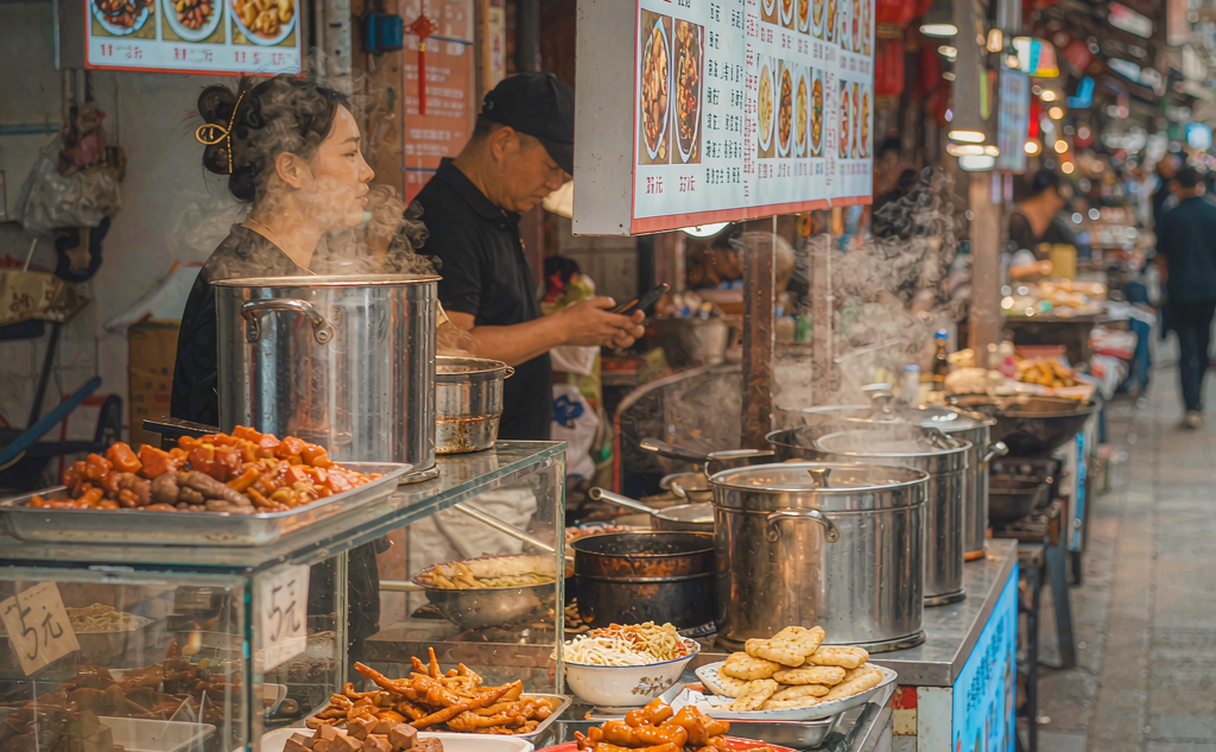
Arrive in Chaozhou in the evening. The old city walls glow under yellow lamps, and the night market sells beef hotpot by the slice and glutinous rice cakes folded around sweet fillings.
Day 6: Chaozhou and Shantou
Spend day six split between two cities that share a culture and a dialect but not a temperament. Chaozhou is the older sibling, all carved wood bridges and quiet teahouses where gongfu tea is poured in thimble-sized cups. Shantou, thirty minutes away by car, is louder, coastal, and built around a vanished international port, with crumbling colonial facades and the best breakfast noodles in the province.
The Chaozhou travel guide lays out the teahouse etiquette and the exactly-right order to eat a Chaozhou feast, which matters more than you would think.
Day 7: Shenzhen, the delta’s future
Loop back west to Shenzhen for day seven. If Guangzhou is the past and Chaoshan is the memory, Shenzhen is the sheer velocity of the present. Forty years ago it was a fishing village. Today it is a skyline of LED and glass, with a boardwalk, a strong craft-coffee scene, and museums that are genuinely worth your afternoon.
Our Shenzhen travel guide points you to the coastal districts where the city loosens up, and to the border crossings if you want a half-day in Hong Kong.
Day 8: Wrap up and fly out
Use the final morning for one last bowl of noodles and a slow walk, then head to the airport. You have now eaten across three cuisines, ridden five trains, and stood inside buildings older than the United States. That is a full week.
If you want the full route mapped, hotel picks, and train times in one place, grab our downloadable Guangdong 8 day travel route planner and stop guessing connections.
Planning the practical side
Timing shapes everything. The best time to travel Guangdong is late autumn, from October through early December, when the humidity drops and the skies clear. Spring is lovely but wet. Summer is brutally hot and typhoon-prone, and you will spend your trip dodging rain. Chinese New Year is unforgettable and completely impractical, since the whole province travels at once and trains sell out weeks ahead.
Budget sits lower than most of China’s headline cities. A realistic Guangdong food and village route cost runs roughly forty to seventy dollars a day per person once trains and guesthouses are included, and that already assumes you are eating well, not surviving. The Hakka villages are the one splurge, since rural transport adds up, but a guesthouse there rarely breaks twenty dollars a night.
This 8 day Guangdong itinerary is flexible by design. Swap Shenzhen for an extra day in Chaoshan if you care more about food than futurism. Add a day in Zhaoqing if you like slow lakes. The province is forgiving that way.
For ideas that go beyond one region, our best things to do in China list connects this route to the rest of the country, from the karst of Guilin to the walls of Xi’an.
Thinking of extending the trip into a second week? Tell us your travel style and we will send a custom Guangdong itinerary that adds the delta’s islands and the northern mountains.
A few honest warnings
Guangdong moves fast and speaks in dialects you will not parse, and that is part of the charm. English signage thins out the moment you leave the big cities, so download offline maps before the Hakka leg. Cash is nearly useless; a phone payment app or an international card at the bigger stations covers almost everything. And do not try to see it all. The travelers who love this province are the ones who sat still long enough to finish a pot of tea.
Ready to book the trains and guesthouses? Reach out and we will lock in an eight-day plan, with every transfer timed so you never miss a connection.
This trip will leave you full, a little tired, and already planning the return. That is Guangdong working exactly as it should.