

Most maps of Zhejiang give you the same three dots: Hangzhou with its lake, the water towns north of it, and the seafront cities to the south. Panan is the dot in between that almost nobody marks, and that is exactly the point. Sitting at the geographic heart of the province, in the high hills where the borders of Jinhua, Taizhou and Lishui meet, Panan is a county of around 1,200 square kilometres of forest, spring water and rock that has spent twenty years quietly building a reputation as a summer cool-house rather than a sightseeing stop. This Panan travel guide is the briefing I give travelers who ask me what to do with an extra day between Jinhua and the coast: how to reach the county, what the waterfalls actually look like, how hard the walks are, and where to sleep when the valley fog comes down at dusk.
The county is small. Its seat, Anwen, holds only a fraction of the roughly 180,000 residents spread across the whole county, and land above 600 metres is protected as the Dapan Mountain Nature Reserve, closed off since the early 1990s to shield some of the last stands of native wild tea tree in the province. The range’s highest summit reaches close to 1,240 metres, the tallest peak in Jinhua, though from most viewpoints here you see only forest. Nothing about a Panan canyon walk and waterfall is monumental or polished: cold water, wet stone, pine shade and almost no crowd.
Getting There: The Practical Panan day trip from Jinhua
The realistic way to see Panan is a Panan day trip from Jinhua, and the driving numbers matter more than anything else in this section. Jinhua sits roughly 100–110 km northwest of the county seat by road, which works out at about 1.5 to 2 hours each way depending on how much of it you do on mountain roads. Panan has no high-speed rail station, so the train leg ends in Jinhua and the last hour is on a road that climbs steadily into the hills. From Hangzhou plan a 3–3.5 hour door-to-door run; from Shanghai, budget 4.5–5 hours, and honestly it is worth an overnight rather than a very long morning.
In practice you have four options. First, high-speed rail to Jinhua South or Jinhua station, then a long-distance coach from Jinhua’s main bus terminal to Panan: frequent departures through the day, roughly 1.5–2 hours for around ¥25–40. Second, and what I usually recommend if you are two or more people, a rental car or ride-hail straight from Jinhua: about ¥250–400 for a day of driving plus fuel. Third, the Hengdian high-speed stop south of Jinhua is roughly 40 km from Panan and can shave time off a trip that already takes you past Dongyang’s film studios. Fourth, the local bus from within Panan up to the Dapan Mountain gate adds a further 30–45 minutes for a few yuan, but departures are thin in the afternoon.
Dapan Mountain waterfall Panan: What You Are Actually Seeing
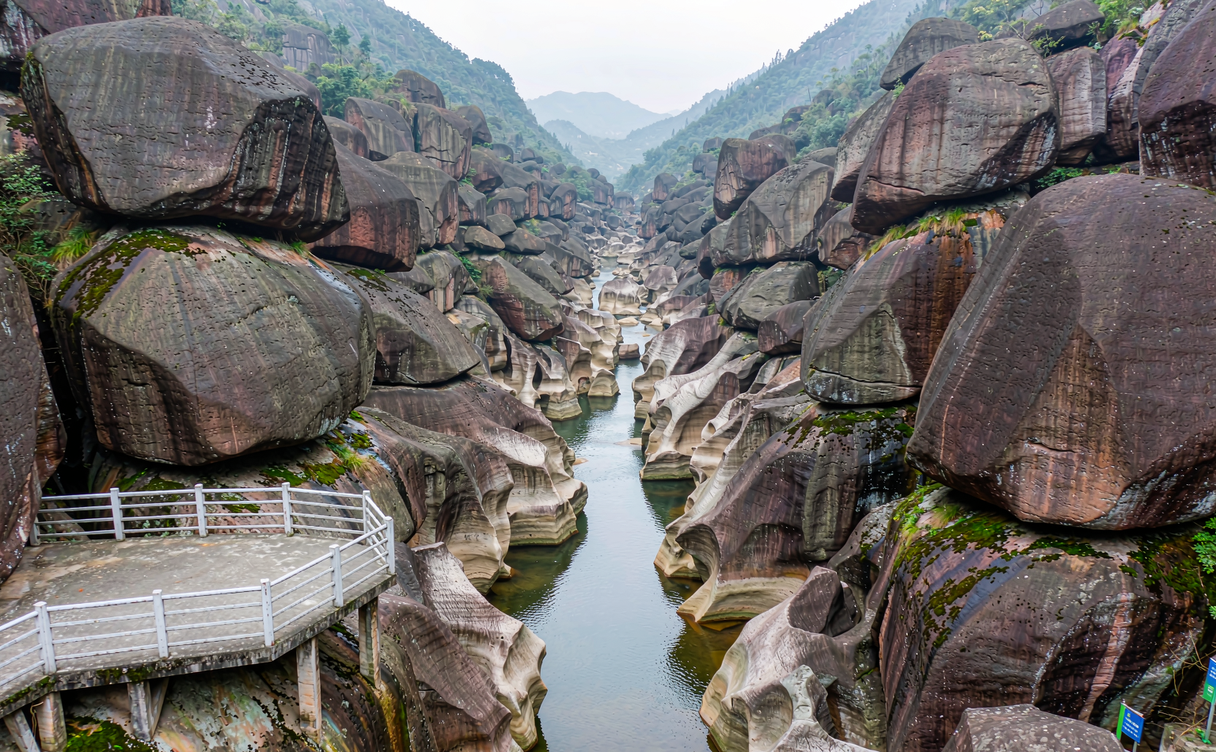
The Dapan Mountain waterfall Panan region draws its name from a chain of falls that step down the northeastern flank of the range rather than from one single curtain of water. The developed area, often marketed as the Sixteen Waterfalls, is where almost every visit happens, and it is a proper gorge: the trail enters between two rock walls, the stream drops from pool to pool through a series of stone terraces, and each return passes close enough to the spray that you will want a shell jacket even in July. The tallest single drop is substantial but not a famous curtain — expect something in the order of tens of metres rather than a hundred — and the whole walk is strung with small cascades, deep cold pools and the sort of damp moral-light-green moss that makes photography look better than reality until you are standing in it.
Practically, the gate opens around 8:00 and closes admission late afternoon, roughly 16:00–16:30 in peak season and an hour earlier in winter. Entrance is around ¥65–90, with a separate fee for the shuttle bus that saves you the first climb. Bring cash as a backstop, although WeChat Pay and Alipay work nearly everywhere the ticket office and tea sheds do. Weekend arrivals from Jinhua fill the car park by 10:00 in July and August, and the boardwalk is narrow enough that latecomers queue at the viewpoints.
The Panan canyon walk and waterfall: Route and Difficulty
The main route is a single well-kept loop. From the entrance you climb stone steps beside the stream for the first 20–30 minutes, pass a short flight of iron ladders bolted into the rock, and reach the upper pools after roughly 1.5–2 hours of steady walking. The full circuit is about 5–7 km depending on which side-connections you take, and the return leg is gentler but wetter underfoot. I rate it moderate rather than hard: there is no technical scrambling and no altitude to speak of, but it is continuous steps, it is humid, and in summer the shade comes and goes. Allow three to four hours including swim stops, and do not attempt it in the middle of a storm — the drainage basin above the gorge is steep and flash-flooding is a real risk.
Every Panan travel guide says the same three things: start early, wear grip, do not swim alone. Shoes matter more than anything else you pack: rubber soles, not white-soled trail runners, and a pole helps on descents where the stone slickens. Swimming in the upper pools is possible and genuinely refreshing, but the water comes straight off granite and stays cold even in August, and the currents under the smaller falls are stronger than they look. If you are travelling with older parents or young children, the lower 1.5 km gives you most of the atmosphere with half the climbing, and you can ride back up on the shuttle.
Planning a Zhejiang hill loop rather than a single day? Tell us your dates and walking tolerance, and we will send back a Panan itinerary with timings, bus connections and a realistic headcount for the gorge.
Things to do in Panan Beyond the Waterfalls
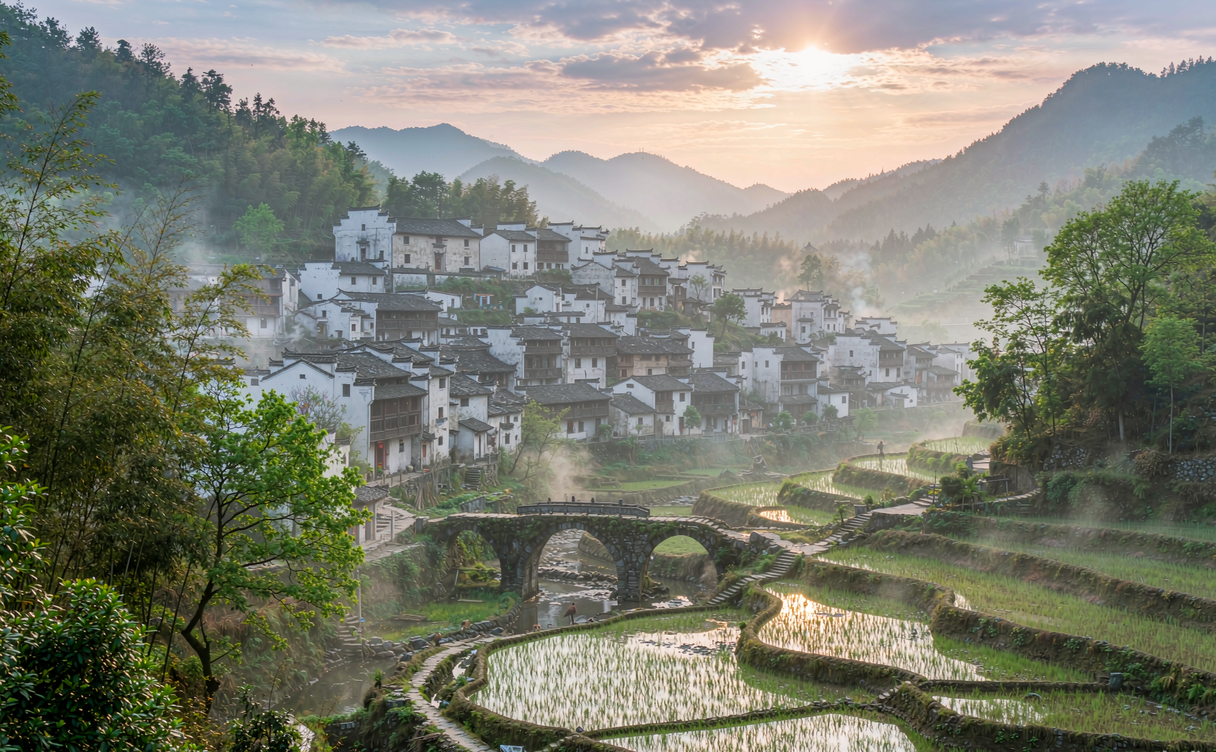
The best things to do in Panan go well past one gorge. North of the range, the Eighteen Whirlpools cut a shorter, narrower canyon where the stream has bored kettle-shaped basins into the bedrock; the walk is roughly 2–3 km and an easy 1.5–2 hours, a better pick than Dapan if you want water views with less climbing. It pairs naturally with the old village of Wushi, a hamlet of houses built from dark volcanic rock that has become the county’s main cluster of guesthouses — part of a wider Zhejiang rural-stay story described in our Taizhou Zhejiang travel guide, since the same villages keep reappearing along the coastal range.
The other half of Panan’s identity is plants. The county has been a national base for medicinal herbs for decades, and zhebeimu — the local fritillaria bulb — plus wild mountain tea from the reserve are sold at roadside sheds for a fraction of city prices. In spring the tea terraces on the lower slopes turn green and you can buy fresh leaves for a few tens of yuan. For a different kind of cool, the Shenxianju guide is the natural follow-up read: it sits on the same ridge system to the southeast. If you have a car, the drive out to Yandang Mountain along the coast gives you the classic Zhejiang granite waterfalls three hours away, covered in our Yandang Mountain guide.
Best time to visit Panan
The best time to visit Panan is May, June, September and October. May and June bring-green hills, full water in the streams and comfortable walking temperatures, though the plum-rain fortnight in mid-June brings flat grey light and slick stone. September to October is my own favourite: the summer humidity breaks, the canopy still holds some green, and the falls run strong off the autumn storms. Summer, July and August, is the reason many people come — elevation takes the valley floor to a comfortable mid-20s Celsius while Jinhua and Hangzhou bake, and the resort guesthouses up on the ridge are fully booked by weekend. Winter is quiet and cheap, the upper pools freeze into thick rime, and the boardwalks clear of crowds, but the shuttle may run a shortened schedule and the higher viewpoints are often in cloud.
Where to Stay and Eat
Base yourself in one of two places. Anwen, the county seat, has the best selection of mid-range hotels at roughly ¥220–420 a night and the only reliable supermarket and pharmacy; it is also the boarding point for buses up to the mountain. The Wushi village guesthouses and the small hotels in Dapan Town run ¥180–400, put you ten minutes from a trailhead, and are where I stay — the evening silence after the last coach leaves is the best part of the trip. Rural rooms climb to ¥500–800 in August for anything with a view terrace.
Food is simple and herbs-forward. Look for the local herb-cuisine, where a braised pork or free-range chicken dish arrives with goji, astragalus or fern shoots, and for the mountain greens and wild bamboo shoots on every menu between April and October. A dinner for two at a county restaurant costs ¥120–200; a village homestay dinner with the family is ¥60–120 a head. Specialty shops near the tea sheds are the best place to buy loose green tea, and prices drop sharply outside the August weekend rush. Still open on dates? The best time to visit Panan is late May or September.
Practical Notes for Foreign Visitors
Signage in the county is in Chinese, so screenshot your destinations in characters and keep them available offline — mobile data in the gorge is unreliable. English is rarely spoken outside the smarter guesthouses. Carry a light rain shell, a first-aid kit and more water than you think you need; shops near the gate are basic. The climb from Jinhua is winding and local buses drive it fast, so take the motion seriously.
Building a longer China route? Start from the best things to do in China list, then narrow it down — Panan fits neatly between the Jinhua city break and the coastal waterfall loop.
If you are weighing the whole province, Lonely Planet’s China destination overview is a good reference. For most travelers the cleanest plan is: arrive in Jinhua, take the coach or drive up for two days and one night, walk the gorge on the first morning, then use the second day for the Eighteen Whirlpools and Wushi village before dropping south to Taizhou. Jinhua deserves more than a transfer, and our Jinhua travel guide covers the markets, the lakes and the rail links that make it a useful hinge.
Should we put together your Panan day trip from Jinhua with the bus timings, the gorge route and one overnight in a village guesthouse? Send your dates and party size and we will draft the plan for you.