

Gongyi is not on the list most first-time visitors to China write for themselves, which is precisely why this Gongyi travel guide is worth reading before you book anything. This county-level city in western Henan files three very different attractions into one compact area: one of the best-preserved merchant mansions of northern China, the burial ground of seven Northern Song emperors, and a stretch of the Yellow River where the water finally looks the way the folk songs describe it. You can cover all three in two unhurried days, and it works equally well as a long day trip from Zhengzhou or Luoyang. It also stays well under the radar, so you will rarely fight crowds at a monument that matters this much.
Getting to Gongyi
Gongyi sits roughly 80 kilometres west of Zhengzhou and about 90 kilometres east of Luoyang, joined by the G30 expressway and by the Zhengzhou–Xi’an high-speed railway line. That geography is your entire logistics plan.
By high-speed rail, take a train to Gongyi South station. Trains from Zhengzhou East run roughly every half hour and take between 25 and 40 minutes; from Luoyang Longmen the ride is closer to 20 to 30 minutes, though services are slightly less frequent. Gongyi South stands out in the countryside, around 15 to 20 kilometres from the county town, so budget 30 to 45 minutes by taxi into the centre, more if you are heading straight out to the Kang family mansion at Kangdian village.
By long-distance bus, departures from Zhengzhou’s western coach terminal to Gongyi run frequently through the day and take about 1.5 hours. From Luoyang’s main bus station expect 1.5 to 2 hours. Coach arrivals drop you in the county town, which is convenient because most of the sights sit within 20 kilometres of it. For small groups a hired car with a driver for the day is often cheaper than it looks and spares you waiting on connections between the scattered tomb sites.
Most people base themselves in Zhengzhou or Luoyang and day trip in, and both work well. The Zhengzhou travel guide is the natural base if you also want the city museums and night markets; the Luoyang travel guide makes more sense if the Longmen grottoes are already on your list.
The Kang family mansion Gongyi
The Kang family mansion Gongyi, known to locals as Kang Baiwan Manor, is the reason most visitors come. The Kang family traded grain and oil along the Luo River and the Yellow River from the late Ming dynasty onward, grew into the wealthiest merchant house in western Henan, and backed the imperial cause during the early Qing; the nickname Baiwan, meaning ten million, stayed attached to them as a mark of their fortune. The estate grew across generations into a hillside compound of courtyards, ramparts, workshops, gardens and cave rooms cut into the loess cliff, still looking down on the Luo River from the walled quarter at Kangdian village.
Walk in through the brick gatehouse and climb the rampart path, because the defensive outlook is the point. Inside, follow the main axis through the reception halls, the family quarters, the ancestral shrine and the tall treasure tower where the archives and valuables were kept. Look up at the beam brackets, the brick carvings over the doorways and the carved stone screens. The carvings are the real collection here, and the contrast between the severe outer wall and the delicate interior courtyards is what deserves your camera time. Allow two hours here.
Planning a longer loop through the province? Our Zhengzhou travel guide covers the city museums, night markets and the fastest rail links out to surrounding counties.
Gongyi Song dynasty tombs
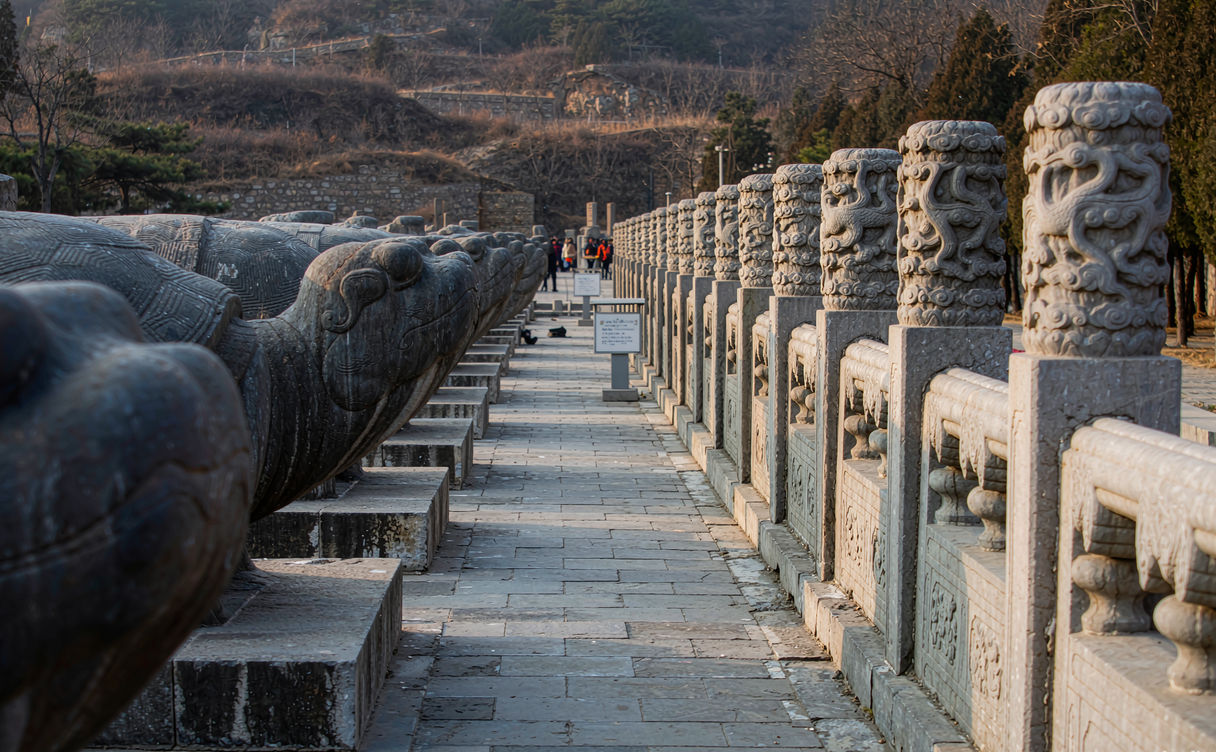
The Gongyi Song dynasty tombs make up one of the largest imperial burial grounds in China: seven Northern Song emperors, from Zhao Kuangyin onward, were buried in the fields west and south of the county town, collectively known as the Seven Tombs. The grounds are spread across several villages rather than fenced into one park, so treat this as a driving loop rather than a single ticket.
The most visited and most readable site is the Yongzhao Mausoleum, the tomb of Emperor Renzong, where the approach avenue is the attraction. A long sacred path runs between paired stone figures — standing court officials, foreign envoys, lions, tigers, horses and curved bedrock pillars — all carved in the stern, rectangular idiom of Song memorial sculpture. Stand at the southern end and walk north; the pairs close in on you and the scale of the avenue becomes obvious in a way photographs rarely convey. A small museum on site introduces the burial system and the excavation of the underground chambers.
The neighbouring mausolea, including the Yongchang and Yongxi tombs, sit within a few kilometres but are far less developed, often with only part of the stone avenue standing and little shade. A half-day charter from town, or a full-day hire, is the practical way to see three of them. Entrance fees are modest, vary from site to site and generally land in the range of about 40 to 60 yuan per mausoleum, with combination tickets sometimes offered at the gate. Bring water and a hat, since much of the ground is open field with no shelter.
The Gongyi Yellow River sightseeing area
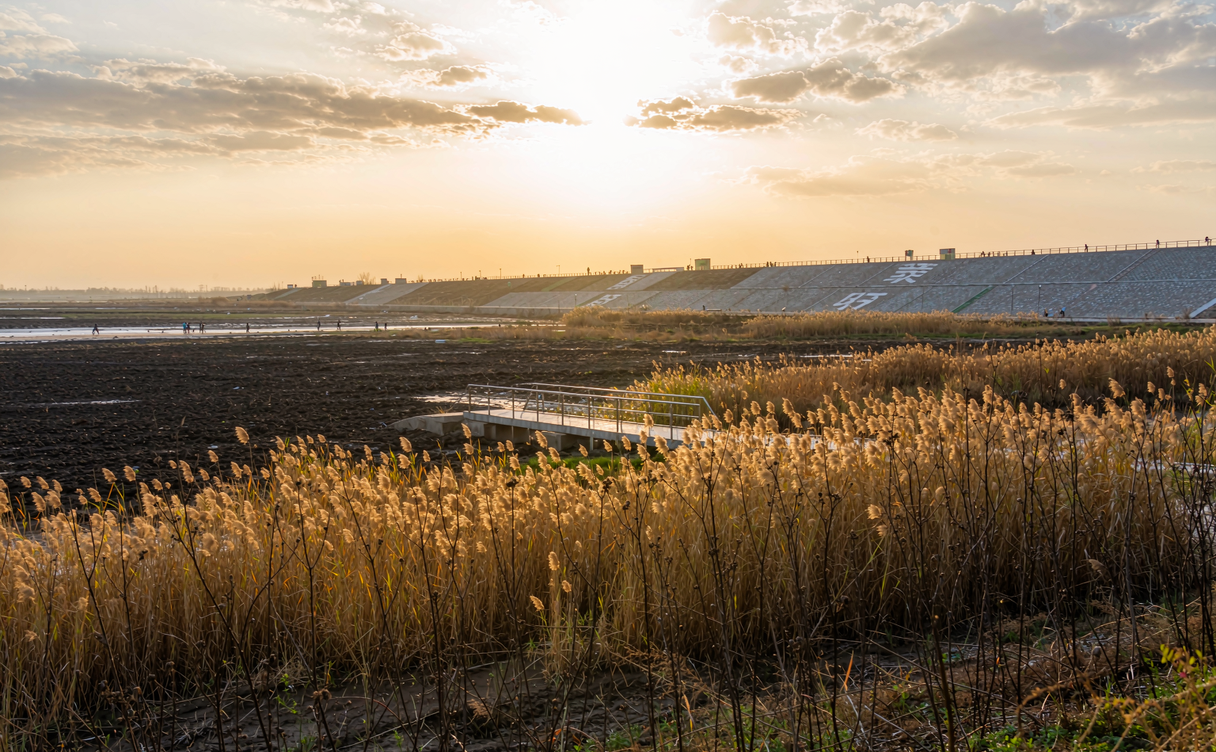
North of the county town the ground flattens and the Yellow River arrives, wide and low-slung, bordered by the Gongyi Yellow River sightseeing area: a riverbank belt of reed beds, floodplain wetland, old fish ponds and a raised embankment promenade. It is not a dramatic gorge and it is not a theme park. It is the place where you can stand on a proper viewing platform and watch the second longest river in China move past the very fields its silt built.
Go in the late afternoon. The wetland fills with waterbirds through autumn and winter, the reed heads turn rusty gold, and the light on the water at sunset gives you the strongest image you will leave Gongyi with. Local operators run short boat trips and riverside farm stays in the warmer months, and the embankment walk itself is free. Pair it with a drive out to the mouth of the Luo River, where the clearer water of the Luo meets the Yellow, a short detour and one of the few spots in Henan where both rivers fit in a single frame.
Things to do in Gongyi beyond the big three
Between the manor, the tombs and the river, things to do in Gongyi also include a slow morning at the county market, where produce, sesame oil and roasted chestnuts are sold from open stalls, and a short climb onto the old town loess terraces at the western edge for the view back over the Luo valley. The county museum holds Song pottery shards recovered from the tomb precincts and a compact display of Yellow River silt history, useful context if the symbolic objects at the mausolea left you curious.
If you are travelling with kids, the manor’s cave rooms and the riverbank reed paths are the two easiest places to let them run. Photography is welcome almost everywhere; a tripod is impractical on the tomb avenue at midday.
Chasing more Henan highlights after the tombs and the river? Read our Luoyang travel guide for the Longmen grottoes, the imperial tombs elsewhere in the province and the easiest onward train connections.
Eating Henan food in Gongyi
Henan cuisine is the most underrated branch of Chinese cooking, and Gongyi is an easy place to sample it. Start with a bowl of hui mian, the thick noodle soup braised with mutton in a clear broth and finished with herb leaves, which anchors almost every street corner here. Order the Luoyang water banquet if your table can handle it, a sequence of cold plates, braised dishes and a steamed vegetable soup, and look for yellow river carp, usually braised or fried in a flour crust, which is what the river is chiefly famous for.
Small restaurants near the coach station and around the old market serve jiang mian, sour soup noodles, fried flatbreads and tofu rolls for a few yuan a plate. Stay out by the river and farmhouse kitchens will cook whatever the season offers. For the wider picture of provincial dishes, see our Henan Yu cuisine guide.
Best time to visit Gongyi
The best time to visit Gongyi is mid spring and early autumn, roughly April to May and September to October, when days sit in the low twenties, the reed beds are either green or turning gold, and the light over the Yellow River is clear. Autumn is the stronger of the two: the harvest fields around the Song tombs go golden and the air usually runs clean.
Summer is hot and humid, with afternoon thunderstorms crossing the plain, though the riverbank stays breezier than the town. Winter brings cold dry winds and, on still days, haze that flattens the view across the water. That is not a dealbreaker, but check conditions before you commit to an evening on the embankment, and avoid the National Day holiday in early October if you dislike crowds, because even here the famous sites fill up.
Get itineraries, season-by-season advice and nearby routes delivered by email — join the free China travel newsletter, and start with a two day plan for Gongyi.
A two to three day itinerary
Day one: arrive by mid-morning coach or train, drop your bag and go straight to the Kang family mansion at Kangdian for two hours among the courtyards, then eat in the village. Finish with the late afternoon at the Yellow River sightseeing area for sunset and a bowl of hui mian back in town.
Day two: hire a car for the tombs. Start at Yongzhao Mausoleum for the stone avenue, continue to two neighbouring mausolea, and stop at a roadside village for lunch, then take the Luo River mouth at dusk.
Day three: sleep in, browse the county market, and catch a midday train to Luoyang for an afternoon at the Longmen grottoes, or back east to Zhengzhou for a day at the Shaolin Temple. Both sit comfortably within reach of Gongyi South, which makes this one of the easiest side trips in Henan.
For a broader plan of the country beyond Henan, browse our roundup of the best things to do in China, and check the official China National Tourism Administration travel portal for entry rules and nationwide transport passes.