

Shanxi is the province that quietly holds the oldest buildings in China. Before any other place on this list, it gave the country the Hanging Temple bolted to a cliff, the world’s tallest wooden pagoda, a Buddhist cave complex older than most of Xi’an’s, and the best-preserved Ming city wall you can walk end to end. Yet the routings that foreign visitors normally use skip all of it, because they land in Beijing and never leave the capital’s orbit.
We have now run this Shanxi historic route four times, for historians, for architects, and for families who just wanted a trip with more concrete age per square kilometre than a theme park. The loop below is the one we keep handing out: eight days, Taiyuan in, Datong out, with the two great ancient towns stitched into the middle.
The provincial entry on Shanxi makes the case in one line — it is the cradle of Chinese civilisation, home to some 4,700 officially protected cultural sites. That number is higher per area than anywhere else in the country.
How to plan a Shanxi trip without backtracking
The single most common error we correct is people flying into Taiyuan and trying to reach Datong on the same day as Pingyao. Do not. Pingyao is 30 minutes from Taiyuan by high-speed rail; Datong is two hours north. Treat them as separate legs with an overnight in each.
For our China high-speed train guide for foreigners, the relevant facts are simple: Taiyuan South and Datong South both take passports at the gate, second class costs ¥60–¥110 for the Taiyuan–Datong leg, and the Datong line is being joined up so check which station your train uses the night before.
If you are combining this with Xi’an or Beijing, the rail link from Taiyuan East to Xi’an North is about 3 hours. We would sequence Shanxi first, then south — the province improves as you go.
Days 1–2: Taiyuan, Jinci and the merchant courtyards
Taiyuan is a gritty industrial capital of over five million people and we like it, precisely because it is not polished. Day one: Jinci Temple (晋祠), 25 kilometres southwest, the oldest temple complex in Shanxi and the place where the closure of the Jin state is memorialised. The 43-metre 鱼沼飞梁 bridge is the only cross-ramp stone bridge of its type surviving in China. Entry ¥80, allow three hours, go at opening.
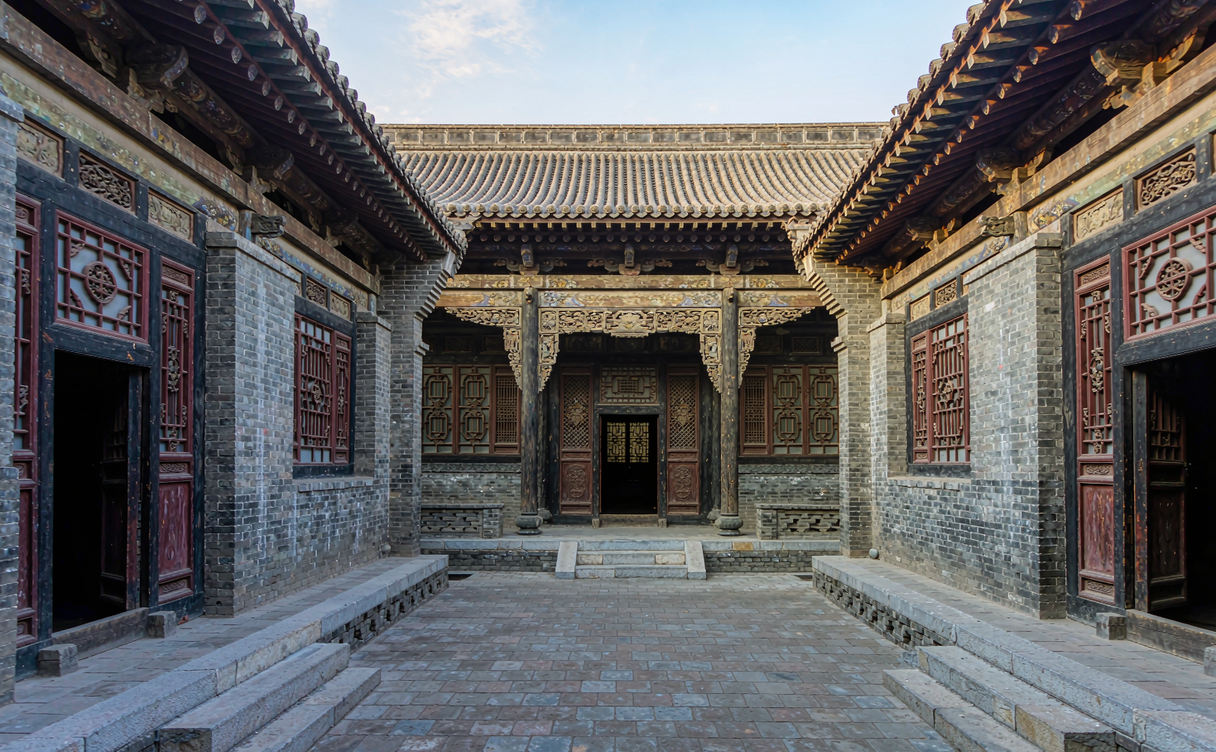
Day two is the Wang Family Courtyard (王家大院) in Lingchuan, 45 minutes south of the city. It is the largest residential compound in the province — 111 courtyards, 1,238 rooms, built over 300 years by a merchant family — and it is the single best argument for visiting Shanxi at all. Entry ¥66 and it takes a full morning. Return to Taiyuan for the Shanxi Museum and the 永祚寺 brick pagodas in the afternoon.
Stay in Taiyuan near 柳巷 for budget (¥180–¥300) or in the 长风商务区 for ¥400–¥700. Eat 刀削面 (dao xiao mian, sliced noodles, ¥12–¥20) and 过油肉 (Guo you rou, ¥35–¥55) — the province’s two signature dishes, both unremarkable in the city and both worth ordering.
Book Jinci and the Wang Family Courtyard for consecutive mornings and stay in Taiyuan three nights — the city is your launch point for both Pingyao and Datong, and trying to do it as a day trip backtracks all day.
Days 3–4: Pingyao, the walled town that still works
The train to Pingyao takes about 35 minutes. Get off at the ancient town station, not the high-speed one, or take the ¥10 shuttle.
Pingyao is a 2,800-year-old walled city that was China’s financial capital in the Qing dynasty — the 日升昌 (Rishengchang) draft bank there is the first bank in the country, and the town’s handful of 票号 banks financed much of the empire. The wall is 6.2 kilometres around, 12 metres high, and completely walkable; we do the whole circuit on the second evening when the gates are shut and the lanterns are lit.
Day 3: the ancient city wall, the County Yamen, the rise of Chinese banking museum, and the 市楼 in the middle. Day 4: Shuanglin Temple (双林寺), 6 kilometres outside the south gate, whose 2,000 painted clay figures are, we think, the finest ★ sculpture in China and far quieter than anything in the province’s bigger names. Entry ¥50 for the temple, ¥125 for the combined wall ticket. Rooms inside the wall run ¥220–¥500 in a converted courtyard; outside it, you get air conditioning and parking.
Day 5: The Qiao courtyard and the road north
Northwest of Taiyuan, in Qi County, sits the Qiao Family Courtyard (乔家大院) — the compound that a beam of Hong Kong film cinema made famous. It is narrow, deep, and meticulously built, with 6 courtyards and 313 rooms. We rate it second to the Wang Family Courtyard, but it is 40 minutes from Taiyuan and pairs well with an early train north.
If you would rather spend Day 5 in the hills, Xuanzhong Temple on Mianshan (绵山) has a cliff-string of temples 1,000 metres above the valley and requires a full day plus a cable car. Take it in autumn, when the slopes turn orange.
Either way, catch the afternoon train to Datong.
Days 6–7: Datong and the two wonders outside it
Datong is the high point of the route and most people realise this late. It was the capital of the Northern Wei, and it keeps that inheritance in two places of immense power.
Day 6: the Yungang Grottoes (云冈石窟), 16 kilometres west. Fifty-three caves cut into a sandstone cliff over 1,000 metres, begun in 460 CE. Entry ¥120 including the shuttle. Go at opening — it is the one site on this itinerary where arriving at 7:30 changes the visit completely. Spend the afternoon walking the reconstructed Datong city wall, 7.2 kilometres of Ming rampart with a ticket office and a bicycle path on top that locals use as a running track.
Day 7 is the best day in Shanxi. Two sites, both north: the Hanging Temple (悬空寺) on Mount Hengshan, a temple glued to a limestone overhang with pine roots growing out of the cliff and wooden supports that look decorative but are not — it is a genuine 1,500-year-old engineering feat, ¥15 entry plus ¥100 if you want to cross the planks to the inner sanctum. Then the Yingxian Wooden Pagoda (应县木塔), an 11th-century, 67-metre, all-timber mast in the town of Yingxian, an hour further north. It is the oldest and tallest wooden pagoda on earth, it leans about 1.5 degrees, and it is empty inside. Entry ¥50.
We send almost everyone here on a charter car from Datong rather than the bus, because the two sites sit 60 kilometres apart along a road with infrequent departures. Budget ¥700–¥900 for the day with a driver.
Start Day 7 at 6:30 — the Hanging Temple opens at 8 and the car parks fill by 9, while the Yingxian pagoda stays uncrowded all morning and is at its best in flat northern light.
Where to stay on this route
We are picky here, because the wrong base ruins two of the days. In Taiyuan, stay central; in Pingyao, stay inside the wall if the price is £35 or under, because the courtyards are the point and the taxi rank is at the south gate. In Datong, the new Binhe riverside district has the best hotels (¥350–¥600) but adds 20 minutes to the Yungang grottoes; the old quarter is ¥200–¥400 and puts you next to the wall.
Food is the best value of the trip. A bowl of 大同刀削面 is ¥10–¥15, a pigeon roast is ¥45–¥60, and a table of 莜面 (you mian, oat noodles) for two comes to ¥90. In Pingyao, 平遥牛肉 and 碗托 (wanthuo, a wheat-starch jelly, ¥8) are the local pair.
For the wider list of walled towns worth using as bases, our best ancient towns in China roundup ranks Pingyao against the likes of Lijiang and Hongcun, and it is the piece we send readers who ask how the province compares.
Best time to drive this Shanxi route
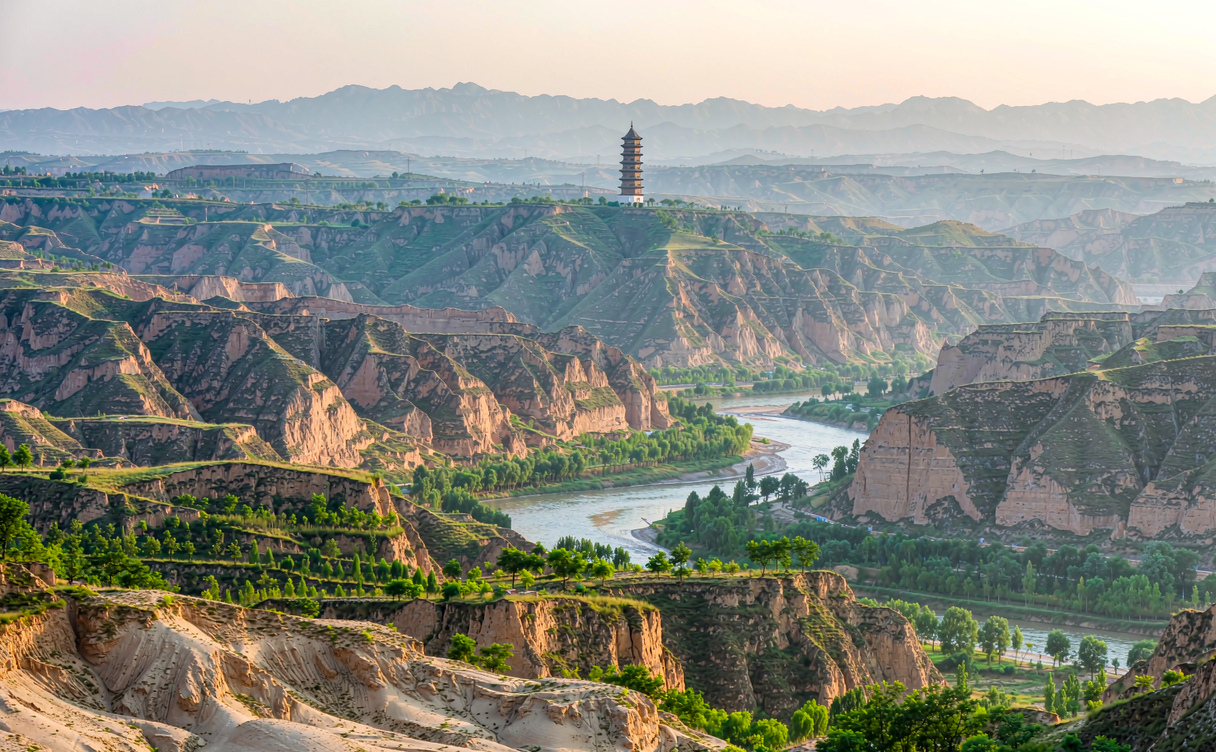
May, June, September and the first three weeks of October. Datong sits at 1,400 m and is genuinely cold from November to March — we have stood on the Yungang cliff in December and watched people in down coats photograph a 1,500-year-old Buddha. July and August are warm and wet; the loess hills go green, which surprises people who expect dust. October 1–7 is a national holiday and every site on this list triples in size; we refuse to publish it.
What most people get wrong
They spend three days in Pingyao and one in Datong. Reverse it. Datong has the two hardest things to see anywhere in China and only needs two days; Pingyao is lovely but comfortable in one and a half. And do not add Xi’an to this trip as a day trip from Taiyuan — it is six hours each way by rail and the whole point of this route is that it stays inside one province.
Once you have walked the Yingxian pagoda and the Hanging Temple in the same week, extend the trip inward rather than outward — the small temples between Datong and Taiyuan reward people who rent a car and keep no schedule.
If this is your first visit, our China travel guide for first-timers covers the payment apps and rail passes that make cities like this easy, and our Pingyao ancient town guide goes deeper on the wall circuit if you want to know which of the six gates to photograph from.