

We have travelled with four teenagers across this country over eight years — our own and other people’s — and the thing we have learned is that China is one of the better large countries to do it in, for a reason nobody advertises: the infrastructure is built for families, it is just not built for families from abroad, and the gap between those two facts is where most parents give up.
For background on what makes the sites interesting rather than merely big, the Chan Buddhist tradition is a short read that explains why so many of these temples look plain from outside and extraordinary from inside.
The high-speed rail is quiet, punctual to the minute, and lets a 14-year-old watch a 3-hour train journey without a single complaint. The food arrives fast and cheap and is rarely more spicy than a teenager already tolerates at home. The attractions are laid out with signage in the same characters a Chinese teenager reads. What fails is the small stuff — the toilet situation, the queueing, the fact that nobody at a small town entrance will speak enough English to sell you a ticket. This guide is about that gap.
For a fuller background on how families are usually routed, start with our China family travel guide, which covers the pricier, softer end of the same question. This piece is about the teen-specific decisions.
The first honest trade-off: scale
China is enormous and teens react to scale in two ways. Some go still and quiet in front of the Great Wall or the Terracotta Army — genuinely awed, the way they would not be at a monument at home. Others go restless within twenty minutes. The difference is almost never interest level. It is whether the site has something to move through, walk along, or climb.
So the rule we use when routing a China travel with teens itinerary is simple: for every temple or museum, put one thing on the list that is physical, loud, or strange. A cave. A fortress. A market. A night market. A mountain. The ratio matters more than the individual sight.
What actually worked for teenagers
Ranked by how many separate teens we have seen light up, across Beijing, Xi’an, Chengdu, Guilin and the water towns.
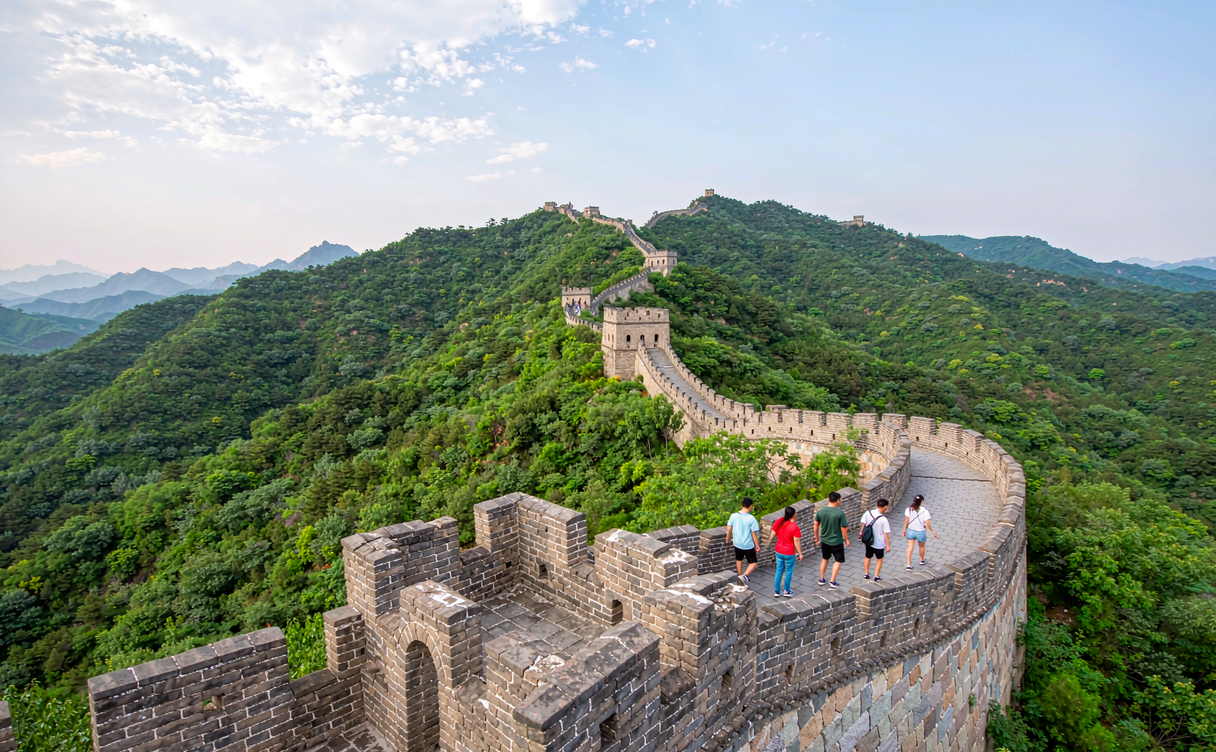
The Great Wall at Jinshanling or Mutianyu. Not Badaling, which is a car park with a wall attached. At Mutianyu there is a cable car, a toboggan, and an 8-kilometre stretch of restored ramparts you can walk for two hours with nobody behind you. Teens run it. We have never had a single negative report, and we have had teens who refused to stop.
The Terracotta Army, before any other archaeology. It is one hole in the ground with eight thousand men standing in it, and the lane around Pit 3 is short enough that a bored teen cannot fake boredom. Go at 8 a.m. on a weekday. Allow three hours and take the audio guide — the story of how the pits were found by a farmer drilling a well in 1974 does more work than the site plaques.
Giant pandas in Chengdu. The Chengdu Research Base opens at 7:30 and the pandas are awake and eating before 9:30. Ninety percent of visitors arrive later and see sleeping animals, which teens find funny for about ninety seconds. Set the alarm.
A Sichuan hotpot, once, as an event. Not every meal. One dinner where the family orders 毛肚 (tripe), 鸭肠 (duck intestine) and 老肉片, and where the teen discovers they like it. It costs ¥90–¥140 a head in Chengdu and becomes a memory.
Kayaking or a bamboo raft in the Li River. Between Guilin and Yangshuo, the river is flat, warm, and safe. A half-day raft is ¥200–¥300 for the boat and the teen is in the water or on the edge within ten minutes.
A night market with a scramble. Sanya’s first market, Xi’an’s 回民街, Chengdu’s 锦里 — the visual noise is the appeal. Teens photograph it more than any temple.
Book the Mutianyu cable car and toboggan online the night before and arrive before 8:30 — the wall is the one place on a China trip where a queue ruins the day permanently.
What we cut from every family itinerary now
Museums the teens will not remember in five years, at the cost of a full afternoon each. The 中国国家博物馆 in Beijing is superb and we still send adults there; with a 15-year-old we now swap it for a morning at the 798 art district, where the scale is the same but there is a café on every corner. We also cut the second big city when the trip is under nine days, and we cut anything that requires a 5:00 a.m. alarm twice in one week.
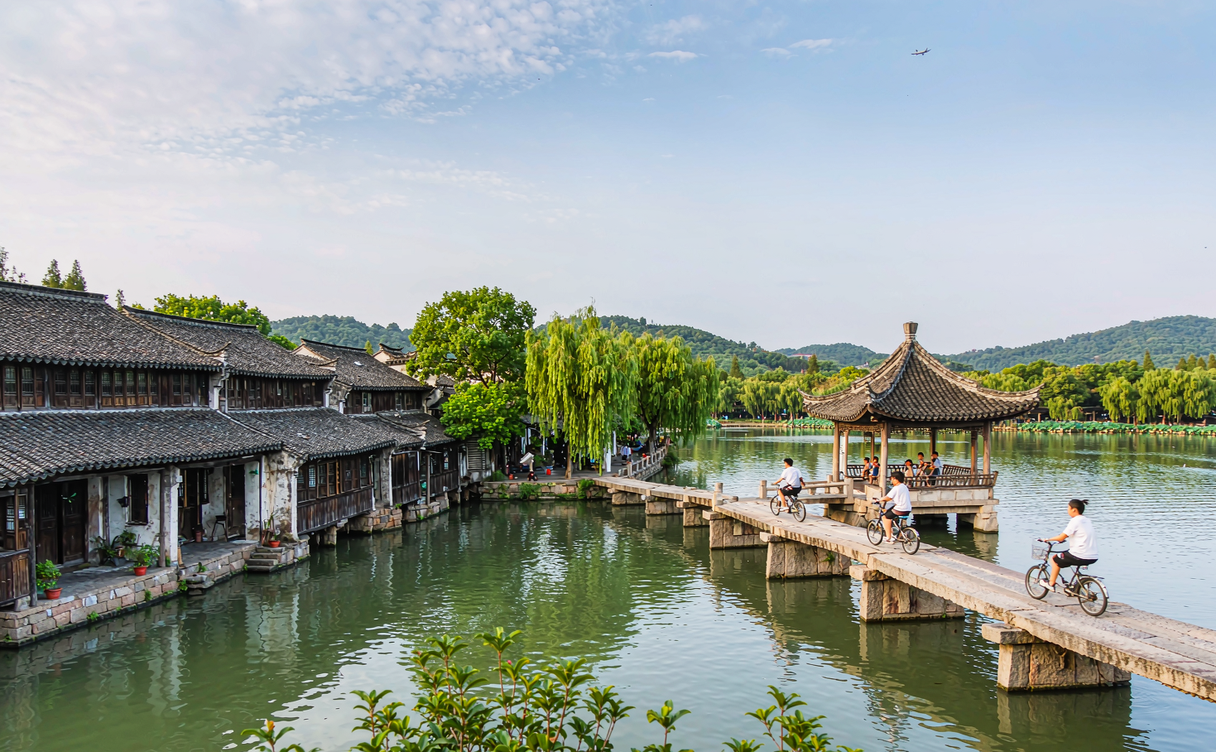
The other cut is the water towns at the top of most parent lists. Wuzhen and Zhouzhuang are beautiful and they are also slow, flat and uniform — a teen does better in one afternoon at 同里 (Tongli) on a bicycle than a full day in a reconstructed canal town.
How to move around with a teenager
Rail is the whole argument. A Beijing–Shanghai second-class seat is ¥553 and 4 hours 30; the train has a dining car, power at every seat, and staff who will bring tea. Book through the official rail app with a passport, or through any agency that asks for the passport number at the time of booking — do not leave it to the day, because the windows open 15 days ahead and Beijing–Shanghai sells out inside a day in July.
Flying is cheaper than people expect if you book internally two to four weeks out — Beijing to Chengdu was ¥900 in the last spring we checked, under two hours. Luggage is the catch: budget airlines charge for checked bags and Chinese domestic flights allow 20 kg on full-service carriers.
For the mechanics — passport validity, the visa question, which apps work when the mobile data drops — our China high-speed train guide for foreigners is the piece parents ask for most, and our China travel safety tips roundup covers the medical and insurance side with more calm than we can manage here.
The ten-day shape we recommend
Days 1–3 Beijing. Tiananmen and the Forbidden City in the morning; 798 or the 三里屯 nightlife area in the evening. Mutianyu on day two. Jinshanling only if your teens are serious walkers — it is a 10-kilometre raw restore with no rail access.
Days 4–5 Xi’an. City wall bike ride (¥45 for a bike, 13.7 km all the way round), the Terracotta Army, the Muslim Quarter at dusk, a Dumpling banquet.
Days 6–7 Chengdu. Panda base at 7:30, then 宽窄巷子, then a day south to Leshan for the Giant Buddha — a car is essential, ¥500–¥700 round trip, and the teen will enjoy the boat trip more than the 700 steps.
Days 8–9 Guilin and Yangshuo. A cruiser to Yangshuo, rafting, then the 十里画廊 cycling road. Stay two nights in Yangshuo so the last morning is free.
Day 10 back to Guangzhou or Guilin for the flight out.
That is one long train haul (Xi’an to Chengdu, 4.5 hours) and very little else. It works.
Talking about the places
A small thing that pays off repeatedly: tell the teens what they are about to stand in front of, in one sentence, the night before. “Eight thousand clay soldiers, made in 200 BCE, meant to guard a dead emperor’s tomb.” Then they are not bored, they are checking something off. We hand a paper map with the sites ticked off in ink; phones die and maps do not.
Also — and this is free — let the teen choose one meal and one evening per trip. Fourteen-year-olds have an extraordinary capacity to remember the one thing they picked.
Practicalities that prevent the blow-ups
Toilets. The good news is that China built toilets at every major attraction in the last decade and youth hostels, stations and malls all have them. The bad news is a signage gap. Carry tissues.
Food. Tell them now that street noodles are ¥10–¥15 and hotpot is ¥70–¥100 a head, so the budget conversation happens in advance. Bring one familiar snack for the first two days while they adjust to 凉皮 and 油条.
Height and dose. Attractions are measured in steps. The Forbidden City is 8,000 steps in one day; pair it with nothing. The Leshan Buddha’s staircase is another 700.
SIMs. Buy an eSIM before you land and give the teen their own data plan — the single quietest hour of any family trip we have run came from handing a phone over to a child who wanted their own maps.
Pick one activity per day that the teenager chooses and one that the parents choose, and the whole trip stops being a negotiation — it becomes just a schedule with three inputs.
Final word
China with teenagers is a good trip, not a compromised one. The country is visually rich enough that even a sulky 15-year-old looks up, and the transport gets them there intact. We would go back tomorrow with all four of them.
If you want the family angle on pricing, room-sharing and how to handle a 2-a.m. flight with a tired teen, read our China travel with kids family guide before you book anything.