

Yesanpo sits deep in the Taihang Mountains in Laishui County, Baoding, Hebei, about 160 kilometers southwest of central Beijing and a short hop north of the Baoding plain. It is not a single mountain or a single temple. Yesanpo is a cluster of gorges, a river corridor, a cave system and a handful of cable-car viewpoints that locals run as one connected scenic area. The first time we walked the floor of Bai Li Xia we understood the appeal immediately: the walls close in to shoulder width, the stream talks the whole way, and the air cools by several degrees within ten minutes of passing through the gate. This Yesanpo guide covers the Bai Li Xia gorge trail, the rafting and cable car add-ons, the steeper Adventure Canyon routes, realistic ticket and opening-hour numbers, how to get to Yesanpo from Beijing, and the Yesanpo hiking trail difficulty, which is considerably more strenuous than the photos suggest.
The layout of the scenic area
Yesanpo is spread over several kilometers rather than one compact compound, so the first thing to understand is the geography. The main gate for Bai Li Xia is out on the valley road, the Ju Machuan river village with the rafting pontoons and the cable car sits a few kilometers downstream, and the Adventure Canyon and the Yugu Cave entrance are a further shuttle ride away. A sightseeing shuttle runs between the gates and is normally included in your admission. Plan on a full day if you want the gorge plus one or two of the other zones, and two days if you intend to hike properly. Most visitors also pair the trip with the wider region, and the Baoding travel guide is the best companion read for the cities around it.
Bai Li Xia gorge trails
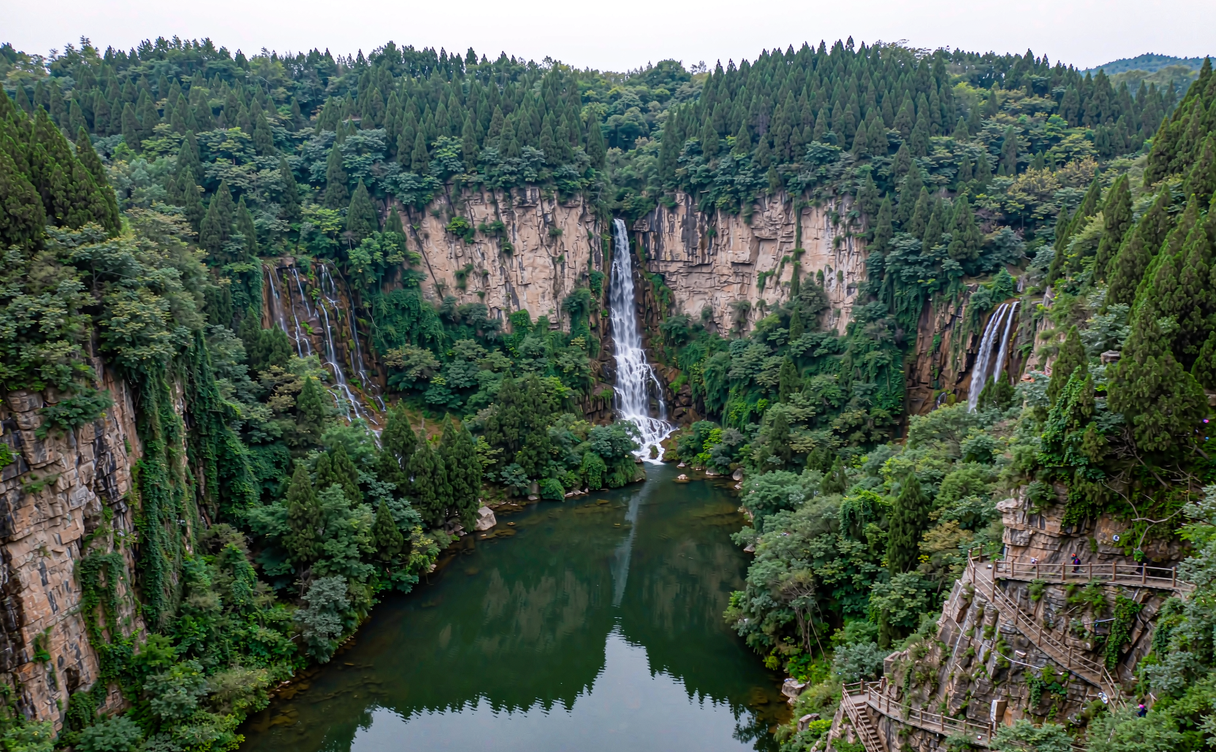
Bai Li Xia means a hundred-mile gorge, and the formation really is that long; the developed trail you actually walk is roughly 9 to 11 kilometers end to end and closes in to passages barely three meters wide in places. The route naturally divides into two parts. The lower section follows the river on a wide boardwalk and sand path, gentle underfoot, with waterfalls, a small glass-floored viewing platform bolted to the cliff and a few pools you can see but not touch. The upper section turns into wooden stairs, steep switchbacks and one or two iron-rung ladders that make people nervous in the humid months. Allow about two hours for the lower walk alone, or three and a half to four and a half hours for the full loop with photo stops. There is a cable car at the far end that can lift you back up and save some of the climb, though most hikers prefer to walk down.
Yesanpo hiking trail difficulty
Grading honestly matters more here than at most Chinese scenic spots, because the signage does not warn you. Easy: the lower Bai Li Xia boardwalk, roughly two hours, flat with a few hundred stairs total, suitable for families with young children. Moderate: the full Bai Li Xia loop, around 800 meters of cumulative climb with the ladder sections, doable for anyone who walks regularly and it is the single most popular Yesanpo hike for good reason. Strenuous: the upper canyon and Adventure Canyon, where the gradient is continuous, the ledges are wet and the handrails are sparse; assume four to five hours and a good level of fitness. Note that the gorge floor is permanently shaded, so it feels colder than the valley road, and rain turns the stone stairs into a slipway. The China hiking treks guide grades the rest of the country by the same logic if you want to compare Yesanpo with longer treks elsewhere.
Start the Bai Li Xia loop when the gate opens and you will have the boardwalk almost to yourself for the first hour.
Rafting and cable car
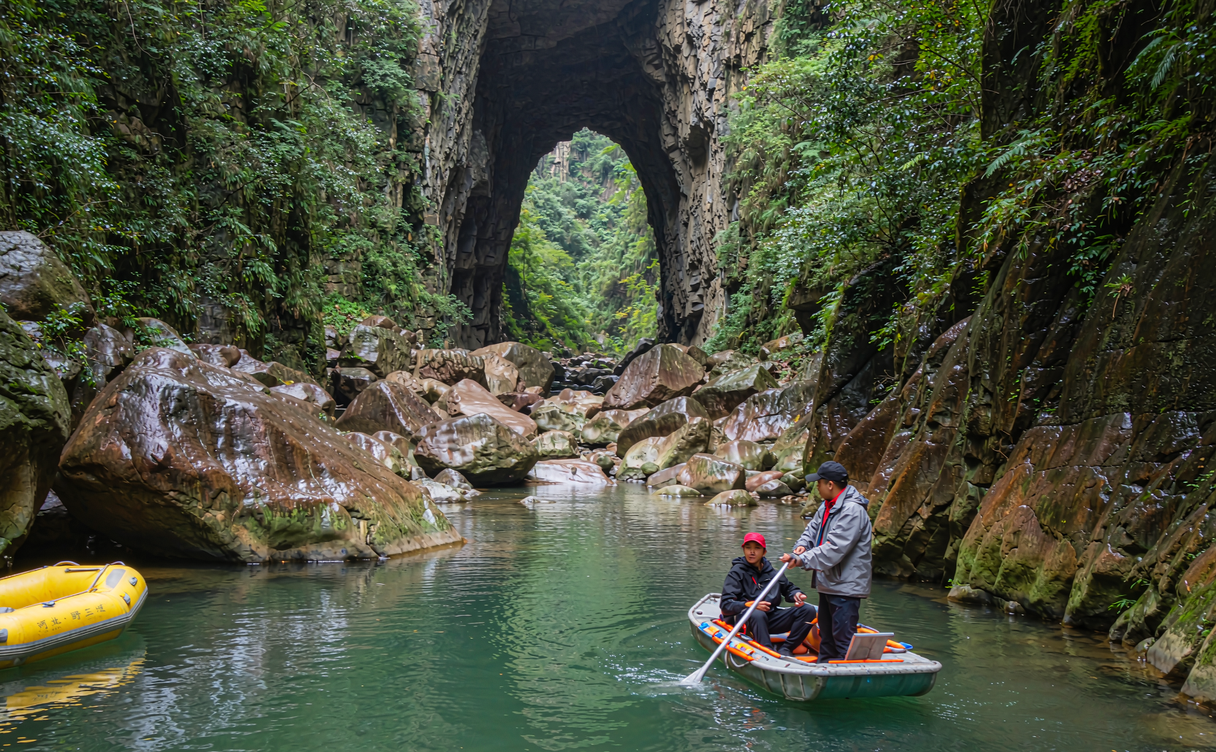
The Yesanpo rafting and cable car pair is the soft-adventure half of the visit. The raft is an inflatable boat that runs maybe forty minutes down a shallow, fast stretch of the Ju Machuan under the cliff walls; life jackets are mandatory and the ride is genuinely wet, so bring a dry bag, a waterproof phone pouch and a full change of clothes in a sealed bag. It is the single thing visitors talk about afterwards. The cable car crosses the valley on cables and drops you on a hillside terrace with a broad view of the gorge mouth and the ridge behind it; the ascent alone costs less than the round trip and gives the same view for half the price. Both run roughly from April to October and stop in strong wind.
Adventure Canyon and Yugu Cave
Adventure Canyon, also known locally as the Feilong gorge, is the rougher sibling of Bai Li Xia: narrower in places, wetter, with more ladders, chains and short scramble sections through a pine and birch hillside. It is where we send travelers who told us they wanted something harder than a boardwalk walk. Allow three to four hours. The Yugu Cave nearby is a limestone cavern with a staged light show and a stream running through it, plus the curious spring that gives the place its name; inside it stays around 15 degrees Celsius all year, which makes it a welcome refuge in August. Both are easier than they look, but both involve long stair runs.
How to get to Yesanpo from Beijing
Driving is the easiest option. From central Beijing take the G6 Jingzang corridor out through Yanqing and then the mountain road southwest into Laishui, or the Jingkun route down the west side of the capital; either way expect about 170 kilometers and three to three and a half hours on a clear Sunday, longer on a summer holiday morning. Car hire in Beijing is straightforward, and the Beijing first-time travel guide covers the local driving rules and the registration paperwork foreign visitors need.
Without a car, two routes work. Long-distance buses depart Beijing for Yesanpo several times a day from the western bus terminals, roughly three hours and around CNY 80. Or take the high-speed train from Beijing West to Baoding East, about forty minutes and CNY 50 to 60 in second class, then a connecting coach or private transfer north of two and a half hours. A handful of slower trains also stop at Yesanpo station on the Beijing to Baotou line out of Beijing Railway Station, which is cheap and scenic but unpredictable. For anyone who wants both a hike and a longer northern route, the Chengde Mountain Resort guide makes a natural second stop on a Hebei loop.
Tickets, hours and what it costs
Admission to Bai Li Xia runs around CNY 115 in the peak season from April to October and drops to roughly CNY 90 in winter, with the Adventure Canyon and the cave sold either separately or as a multi-zone combo in the CNY 180 to 215 range. The shuttle between zones is included. The cable car is about CNY 60 one way and around CNY 100 round trip, and rafting tickets start near CNY 70 per person and rise on summer weekends. Gates generally open at 7:30 or 8:00 and the last sightseeing shuttle leaves around 16:00, so an afternoon arrival quietly costs you half the park. Budget CNY 300 to 450 per person for a well-run day by car, less if you take the train and bus.
Book your train to Baoding East and a seat on the morning coach the night before, because July and August weekends sell out by noon.
Where to stay
Accommodation clusters in the Ju Machuan riverside village, where family farmhouse inns (the local nongjiayuan) run CNY 120 to 260 a night in summer and closer to CNY 80 to 150 out of season, with simple rooms, decent food and sometimes a river terrace. A handful of small resort hotels closer to the Bai Li Xia gate charge CNY 400 to 700 in July and August. Book two weeks ahead for any summer weekend; the village fills with Beijing families on Friday evenings and the good river-view rooms go first. If you are building a longer itinerary, see the best things to do in China for how this fits a two-week route.
Best time to visit Yesanpo
The best time to visit Yesanpo depends on what you came for. June through September is the summer escape season: Beijing bakes at 33 degrees Celsius while the shaded gorge floor sits near 22, and the water is high enough for rafting. July and August are the busiest and the most humid, with afternoon thunderstorms that sometimes close the upper ladders. September and October are our recommendation for most travelers, when the air clears, the hills turn gold and red, the days run a comfortable 15 to 22 degrees Celsius and the trails reopen after the summer floods. Avoid the October 1 to 7 National Day week if you can, and expect some zones, the rafting and the upper trails to shut from December through February.
Practical tips for foreign visitors
Bring your passport: hotels must register it and some bus counters ask for it. Payment is mostly digital, so have Alipay or WeChat Pay set up before you arrive or carry at least a few hundred RMB in cash for the rafting pontoons and small inns. Download an offline map before you leave the city, because mobile signal thins in the gorge. Wear shoes with real grip, take a rain shell even in August, and carry water, snacks and a change of shirt when you book rafting. Check the weather the night before and never plan the upper Adventure Canyon route after heavy rain. If you have a spare afternoon, the old Ming-dynasty wall country runs through the same ridges; a stretch of the Great Wall and the Zijingguan Pass sit within Laishui County itself, and the UNESCO World Heritage listing for the Great Wall of China is worth reading first, because the stonework here is far rougher than the restored towers near Beijing; the Shanhaiguan guide covers the best known pass if you are looping back east.
Fit Yesanpo into a longer Hebei loop and the gorge days will make the rest of the trip feel inevitable.