

At the northeastern tip of Hebei, the Ming Great Wall finally runs out of mountain and marches straight into the Bohai Sea. We’ve taken travelers to Shanhaiguan who had already walked the Wall at Badaling and Mutianyu, and the sight of stone ramparts ending in the surf still stopped them cold. This is the “First Pass Under Heaven” (天下第一关), the eastern anchor of the Ming defensive line, and a Shanhaiguan Great Wall guide has to explain both the military history and the strange beauty of a fortress by the ocean.
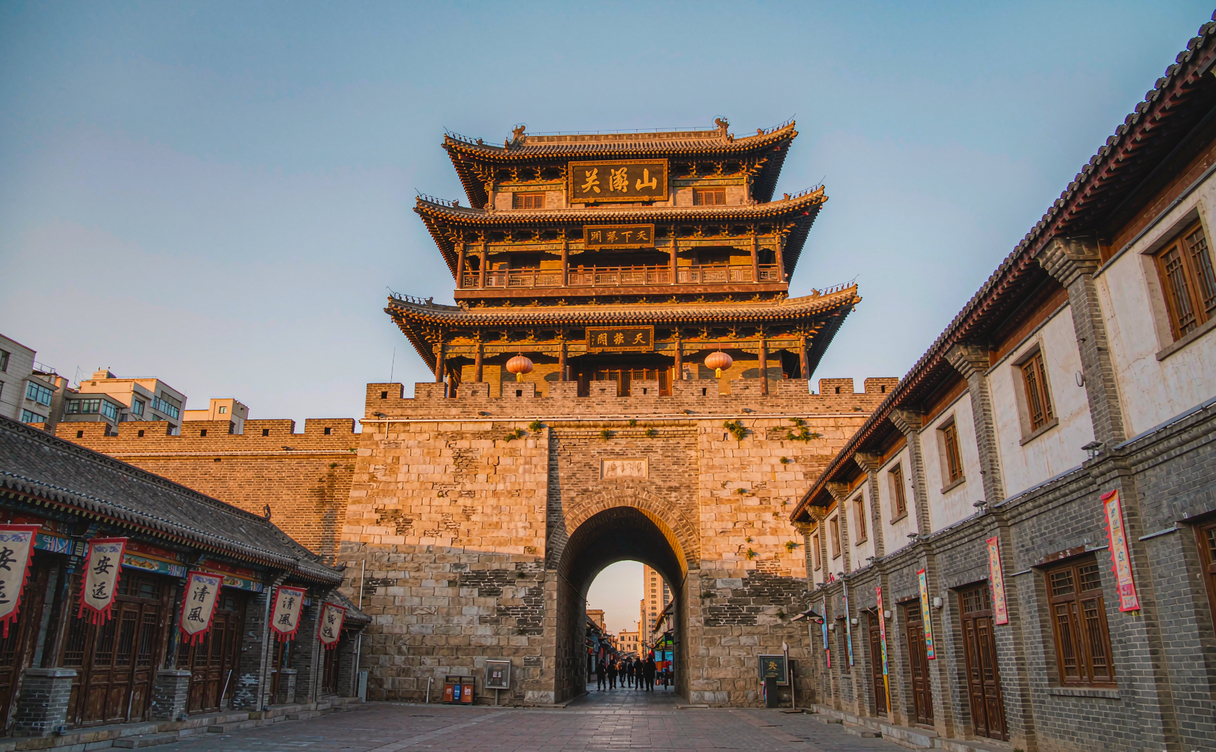
Shanhaiguan (山海关) sits inside today’s city of Qinhuangdao, about 300 kilometers east of Beijing. The name means “Mountain-and-Sea Pass,” and that is the whole point: it is the one place where the Wall could be sealed between a range of hills on one side and the sea on the other, closing the last gap on the northern frontier. The core fortress was laid out in 1381 by the Ming general Xu Da, and the great gate tower still carries a massive wooden plaque reading “天下第一关.”
Shanhaiguan history
The Shanhaiguan history is the history of the Wall’s eastern end. For the Ming dynasty this was the front line against the rising Manchu state to the northeast, and the pass was garrisoned year-round. In 1644 the defender Wu Sangui let Qing forces through the gate, a decision that reshaped Chinese history and ended the Ming. Later, in the late nineteenth and early twentieth centuries, the pass saw foreign troops and the new rail line that followed the coast. What survives today is a rectangular walled town with four gates, the imposing eastern tower, and — a short distance south — the Wall’s dramatic plunge into the water.
That seaside terminus is the Old Dragon Head (老龙头). The Shanhaiguan Old Dragon Head is the nickname for the section of Wall that juts into the Bohai Sea on a stone platform, “the dragon’s head drinking the ocean.” The original Ming structure was damaged in the early 1900s and rebuilt in the 1980s, but standing on the deck where battlements meet breaking waves is still a genuine thrill. We time our groups for late afternoon here, because the low sun turns the spray gold and the tour buses have gone.
How to get there
A Shanhaiguan to Beijing trip is quick by high-speed rail. Trains leave Beijing’s stations for Shanhaiguan Station in about two to two and a half hours, with second-class fares around ¥100–140. From Tianjin the trip is shorter, roughly an hour and a half, which makes the pass an easy add-on to a Tianjin travel guide route. Once at Shanhaiguan Station, the old town gate is a ten-minute taxi ride (¥10–15), and Old Dragon Head is another twenty minutes south by taxi or local bus 25. The wider region is covered in the Qinhuangdao and Beidaihe travel guide, which we recommend if you want to combine the Wall with a beach stay. Travelers coming from the capital can also follow the Beijing first-time travel guide and add Shanhaiguan as a day or overnight run.
Things to do at Shanhaiguan
Things to do at Shanhaiguan split into four sites, each with its own ticket. The “First Pass” gate tower is the heart of the old town — climb it for the view down the restored main street and the replica cannon emplacements. Old Dragon Head is the seaside showstopper described above. A few kilometers north, Jiaoshan (角山) is the first mountain section of the Wall as it climbs from the plain, and it is our favorite for a real hike away from the crowds. And on the town’s eastern edge stands the Mengjiangnu Temple, built around the legend of the woman who wept the Wall into collapse mourning her husband — a folktale stop that balances the martial tone with something human.
For a longer walk, the Chengde travel guide can be paired with Shanhaiguan on a multi-day Hebei circuit, though the two are a few hours apart by road. Most visitors, though, are happy with the pass plus the nearby beaches.
Tickets and budget
The “First Pass” tower costs about ¥40. Old Dragon Head is about ¥50. Jiaoshan runs around ¥30, and a combined ticket covering the main Wall sites is sold for roughly ¥100–120 in peak season. The Mengjiangnu Temple is a modest ¥25. Budget ¥150–250 per person for a full day covering two or three sites plus local transport. If you want to stay over, the best hotels in Beijing are too far for a dawn start, so we suggest a night in Qinhuangdao or Beidaihe (¥200–400), or the best hotels in Tianjin if you are approaching from that side.
Best time to visit
The best time to visit Shanhaiguan is May through October, with September and October our top pick for cool, clear weather and thinner crowds. Summer (July–August) is warm and good for pairing the pass with a swim at Beidaihe, but it is also peak domestic-tourist season and the gate tower gets busy. Winter is cold, windswept, and sometimes icy on the sea wall, yet the fortress against grey waves is atmospheric and nearly empty — a good choice for photographers who don’t mind the chill. We avoid the May Day and National Day holiday weeks entirely; the old town street becomes a slow-moving crowd those days.
Insider tips we give every group
Go to Old Dragon Head for the last two hours before sunset; the light and the smaller crowds are worth planning the day around. Do Jiaoshan instead of the busy gate if you actually want to walk untouched Wall — the climb from the Jiaoshan parking area to the ridge takes about forty minutes and links to a restored stretch you can have almost alone. Wear a windbreaker even in late spring; the sea breeze off the Bohai is sharper than the inland forecast suggests. And give yourself half a day at the old town rather than rushing the single tower — the rebuilt Ming street, the small museums, and the food stalls selling 浑锅 (a local hotpot) and 四条包 (steamed buns) are part of the place.
For background on the pass’s place in the Wall’s story, the Wikipedia entry on Shanhai Pass is a solid starting point, though nothing replaces standing on the dragon’s head as a wave breaks under the ramparts.
Inside the old town and around the pass
The walled town behind the gate is worth a slow walk. The main east–west street is flanked by rebuilt Ming-style shops, and at its center stands a small drum tower (钟鼓楼) you can climb for a rooftop view of the rectangular fortress plan — the classic Chinese layout with a barbican (瓮城) doubling the defenses at each gate. Just south of the wall, Yansai Lake (燕塞湖) fills a narrow valley with green water backed by Wall-crested hills; a short boat ride there makes an easy half-day add-on after the fortifications. Food around the pass is hearty northern fare: try the local hundun (浑锅), a briny one-pot seafood and meat hotpot that reflects the coastal setting, or the sweet 山海关大樱桃 cherries in early summer. The town is compact and walkable, so once you are through the gate you rarely need transport until you head out to Old Dragon Head.
Getting there by rail, in practice
Most of our groups take the high-speed train from Beijing South to Shanhaiguan Station, a ride of roughly two hours that costs ¥100–140 in second class and leaves you a short taxi hop from the old town. If you would rather come from the coast, the same line runs through Qinhuangdao, and a local bus or taxi from Beidaihe takes under an hour. Buy tickets a day ahead on the 12306 app during peak season, because the Beijing–Shanhaiguan carriages fill on summer weekends. From the station, agree the fare with the taxi driver or use a ride app; the old town gate is about ¥12, and Old Dragon Head about ¥35.
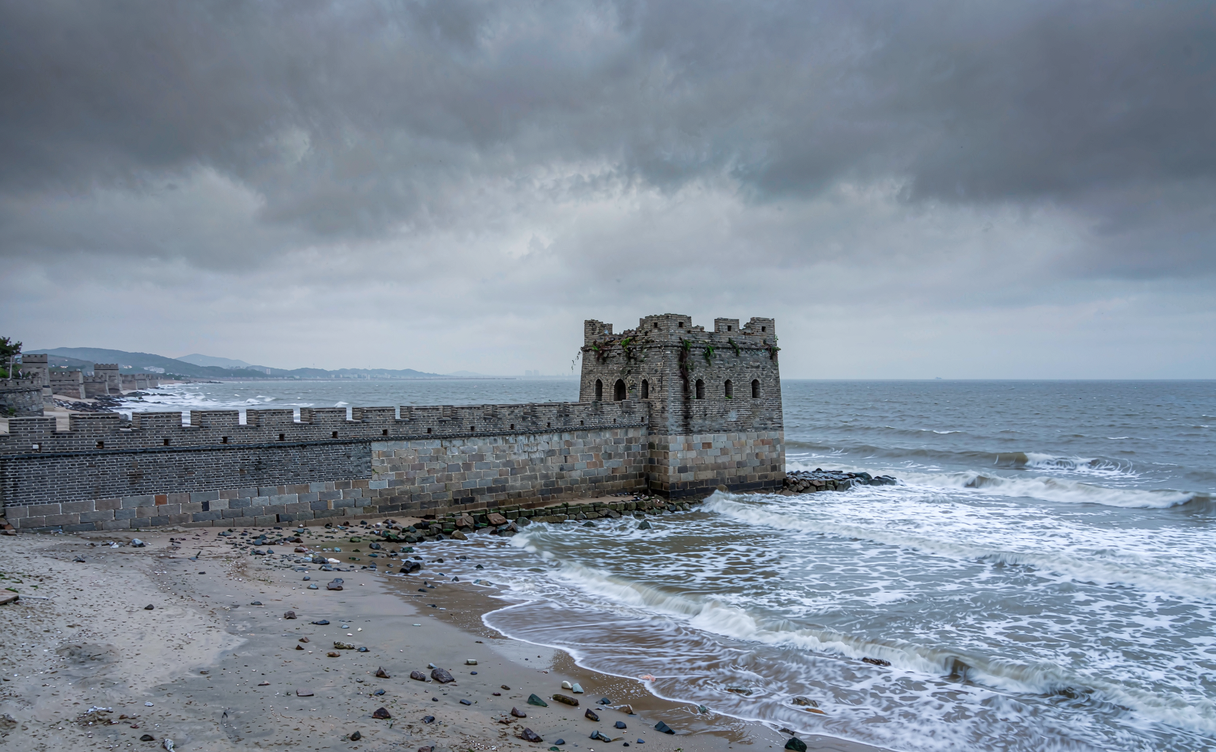
Reach Old Dragon Head two hours before sunset for the best light and smallest crowds.
Hike Jiaoshan for quiet, restored Wall instead of the busy gate tower.
Pack a windbreaker; the Bohai sea breeze is sharper than the inland forecast.