

Few art forms announce “China” as instantly as the painted face, the high vibrato, and the crash of percussion that is Peking Opera. We’ve taken first-time travelers in Beijing to a performance who expected a museum piece and came out buzzing, because live jingju is loud, physical, and oddly funny. This Peking Opera China guide tells you what you are actually watching, where to see it, and how to book without overpaying.
Peking Opera (京剧, jingju) was inscribed on the UNESCO Representative List of Intangible Cultural Heritage in 2010, recognized as a living synthesis of music, vocal art, dance, and martial performance. That listing matters because it signals how completely the form distills Chinese theatrical tradition — but the best way to understand it is to sit in a darkened theatre and let it wash over you.
Peking Opera history and makeup
The Peking Opera history and makeup are inseparable, because the face is the script. The form took shape in Beijing in the late 1700s, when the Four Anhui Troupes (四大徽班) arrived in 1790 for the Qianlong Emperor’s eightieth birthday and blended their tunes with Hubei “Han” melodies, local Beijing speech, and older styles like Kunqu. By the mid-1800s it had hardened into the art we know, dominated by stars such as Mei Lanfang.
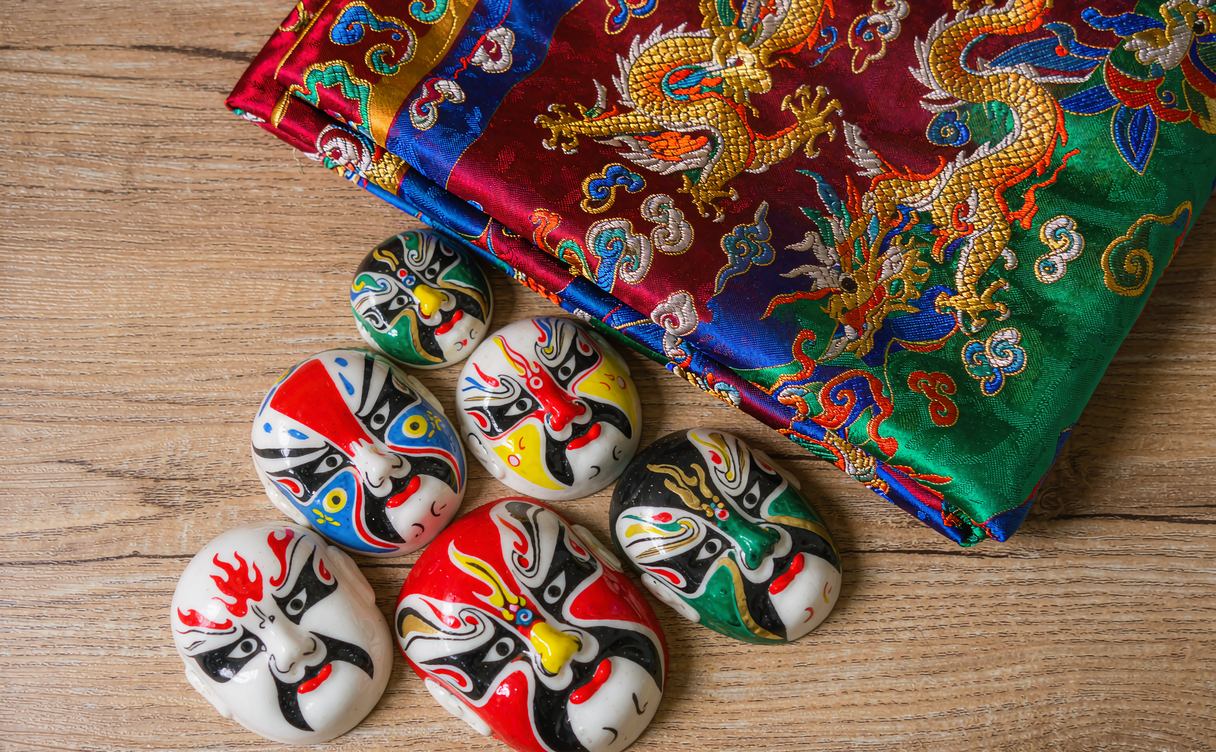
The painted-face makeup (脸谱) is a code. Red signals loyalty and courage (the god-general Guan Yu), white signals cunning or treachery (the warlord Cao Cao), black signals uprightness or hot temper (the judge Bao Zheng, the general Zhang Fei), and blue or green marks a wild or impulsive character. A performer can spend two hours being painted before a single note is sung. Costumes, too, are rank-coded: the embroidery, the footwear, the headdress plumes all tell you who a character is before they speak.
The grammar of a performance
A show rests on four skills: 唱 (singing), 念 (recitation), 做 (acting and mime), and 打 (combat and acrobatics). Roles fall into four types — 生 (sheng, male leads), 旦 (dan, female roles), 净 (jing, the painted-face warriors and officials), and 丑 (chou, the clowns, marked by a dab of white on the nose). If you learn nothing else, learn those four words; they unlock what is happening on stage.
Peking Opera vs Kunqu
Travelers often confuse the two. Peking Opera vs Kunqu is a study in age and tempo. Kunqu is the elder, roughly 600 years old, born near Kunshan and inscribed by UNESCO back in 2001 as a “Masterpiece.” It is lyrical, slow, and literary, favoring long arias. Peking Opera is younger, faster, and broader in appeal, folding in acrobatics, clowning, and a thunderous percussion section. Our rule of thumb: if you want poetry, see Kunqu; if you want spectacle you can follow without speaking Chinese, see jingju.
Where to watch Peking Opera in Beijing
The short answer to where to watch Peking Opera in Beijing is: several dedicated theatres, each with a different feel. The Beijing first-time travel guide maps them all, but here is the practical shortlist.
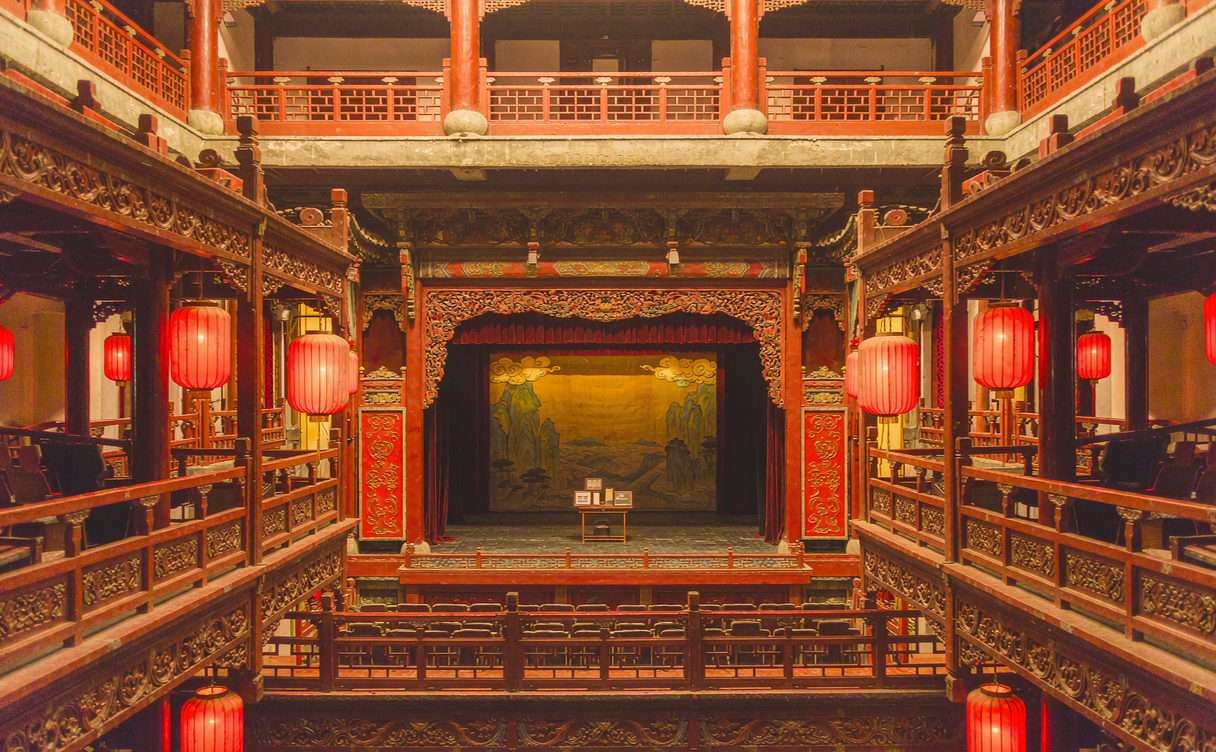
The Liyuan Theatre (梨园剧场), inside the Qianmen Hotel, is the most tourist-friendly: excerpts with English surtitles, a tea tray at your seat, and a program built for newcomers. The Chang’an Grand Theatre (长安大戏院), near Jianguomen, stages fuller productions with strong surtitle support and is where serious locals go. The Mei Lanfang Theatre (梅兰芳大剧院), named for the great dan actor, offers high-quality casts and a handsome modern hall. For atmosphere, the Zhengyici Theatre (正乙祠戏楼) is a wooden playhouse from 1712 — intimate, historic, and magical if you can catch a show there. The Lao She Teahouse (老舍茶馆) serves short, accessible excerpts with tea, ideal for travelers with limited time.
Best Peking Opera shows China
For a first show, pick pieces that read visually. The best Peking Opera shows China offers to non-Chinese speakers include “Crossroads” (三岔口), a near-wordless inn fight in the dark that is pure slapstick acrobatics; “Drunken Beauty” (贵妃醉酒), a slow, gorgeous solo for a dan; and “Farewell My Concubine” (霸王别姬), the tragic duel of love and defeat. These turn up constantly on excerpt programs and need no translation to land. Full-length classics like “The Empty Fort Strategy” (空城计) reward those who stay for the whole arc.
Peking Opera ticket booking
Peking Opera ticket booking is easy if you plan a few days ahead. Major venues sell through their own websites and through the Damai (大麦) platform; hotels and the best hotels in Beijing concierges can also secure seats. Expect to pay about ¥180–380 at the Liyuan Theatre, ¥100–800 at Chang’an, and up to ¥1,000 for premium seats at the Mei Lanfang or the National Centre for the Performing Arts. Weekend nights sell out first, so book midweek shows early. Always confirm that surtitles (字幕) are offered if you do not read Chinese — most major houses provide them on side screens.
A Peking Opera guide for tourists
This Peking Opera guide for tourists boils down to three tips. First, choose an excerpt program (折子戏) over a full-length opera on your first night — two hours of highlights is plenty. Second, arrive twenty minutes early to watch the orchestra pit (the 武场 percussion and 文场 strings) warm up; the musicians are as thrilling as the actors. Third, don’t worry about “getting” every story — let the color, rhythm, and physical comedy carry you, and read the one-line synopsis in the program first.
Beyond Beijing
Jingju is not only a Beijing art. Shanghai has its own fine tradition and venues, detailed in the Shanghai first-time travel guide, and you can pair a show with the discipline of the China kung fu and tai chi guide to see how martial and theatrical training overlap. In the northwest, the Xi’an travel guide occasionally lists regional opera nights, and the China festivals guide notes that Spring Festival and the Mid-Autumn period bring special gala performances in the big cities.
Best time and insider notes
Performances run year-round, but the cultural season from September to November is richest, with the top troupes in residence. Spring Festival brings festive specials. For a quieter, more authentic evening, skip the teahouse variety shows and go to Chang’an or Mei Lanfang on a weeknight. And if you are curious about the craft, some theatres offer pre-show makeup demonstrations where you can watch a dancer being transformed into a 旦 role — a behind-the-scenes moment our travelers remember as much as the performance itself.
For authoritative background on the art form’s heritage status, see the UNESCO Intangible Heritage listing for Peking Opera.
Reading the roles and the orchestra
The four role types split further into subtypes worth knowing before you sit down. Among 生 (sheng), the elderly statesman is 老生 (laosheng) and the young hero is 小生 (xiaosheng). Among 旦 (dan), the upright married woman is 青衣 (qingyi) and the vivacious girl is 花旦 (huadan). The 净, also called 花脸 (hualian), are the painted-face warriors whose masks carry the boldest colors, while the 丑 (chou) clown breaks tension with comic asides aimed straight at the audience. The music has two halves: the 文场 (civil ensemble) of string and wind that carries the arias, and the 武场 (martial percussion) of gongs and drums that drives the combat. A useful habit for newcomers is to watch the conductor’s drum — the 板鼓 player sets every entrance, and once you notice it the whole performance clicks into focus. Modern history also gave jingju the 样板戏 (model operas) of the 1960s and 70s, such as “The Red Lantern” (红灯记); you will sometimes see them revived alongside the classics.
Etiquette is simple: clap after a particularly fine aria or a clean tumble, not between every phrase, and feel free to slip out at intermission if you came for a taste rather than the full evening.
Pick an excerpt program with English surtitles for your first Peking Opera night.
Book weeknight seats at Chang’an or Mei Lanfang for a more authentic show.
Arrive twenty minutes early to watch the percussion orchestra tune up in the pit.