

The Chengde Mountain Resort is, quite simply, the largest royal garden ever built in China, and in our experience it is the most under-rated day or two you can add to a Beijing trip. Spread across 5.6 square kilometres of hills, lakes and grassland at the foot of the Yanshan range in Hebei Province, it was the summer seat of the Qing emperors from 1703 to 1792 — a place where Kangxi and Qianlong escaped Beijing’s heat and received Mongol, Tibetan and Uygur envoys. We’ve sent clients there who expected a palace and found instead a small landscape kingdom, and almost all of them wished they’d budgeted a second day. This guide covers the Chengde Mountain Resort tickets, how to get to Chengde, the things to do inside the resort, and where it fits in a Chengde itinerary.
What the Resort Actually Is
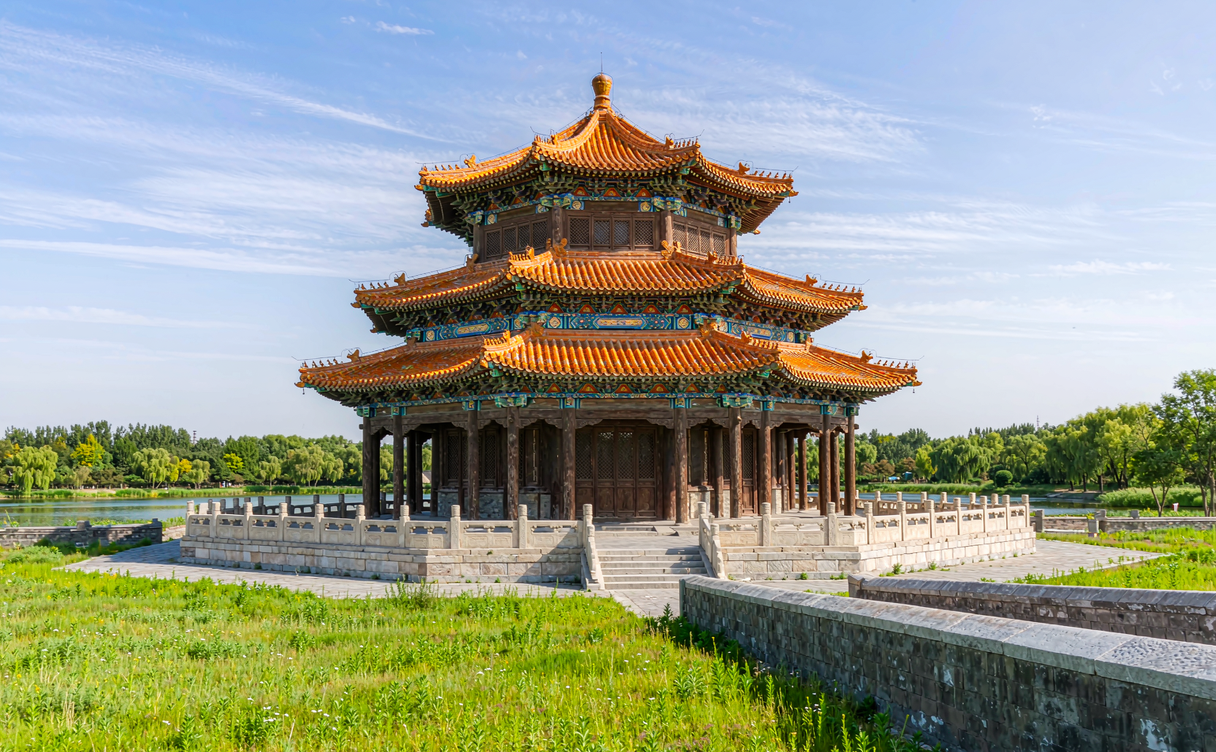
Unlike the enclosed Forbidden City, the Mountain Resort is a miniature empire. The Qing court compressed China’s geography into one walled park: southern lakes and pavilions evoke the Yangtze gardens, open plains recall the Mongolian steppe, and wooded mountains stand in for the frontier. About 70% of the area is mountainous forest, reached by a one-way sightseeing road along the ridge with pull-off viewpoints over the whole compound and the temple skyline beyond the wall.
The resort is only half the story. Ringing the old city outside the resort wall are the Chengde UNESCO sites — the “Eight Outer Temples” (外八庙), a set of monumental monasteries built to honour the empire’s frontier peoples. The most famous, Putuo Zongchengzhimiao, is a deliberate copy of the Potala Palace and is nicknamed the “Little Potala.” Together the resort and temples were inscribed by UNESCO in 1994.
How to Get to Chengde
Chengde sits about 230 km northeast of Beijing. The easy modern answer is the high-speed rail:
- Beijing → Chengde South (承德南). High-speed G trains from Beijing Chaoyang or Beijing North run roughly 1 to 1.5 hours and cost about ¥80–150 (US$11–21) in second class. This is what we book for nearly every client.
- Older conventional rail still exists but takes 4+ hours; not worth it.
- By car / private transfer. A chartered drive from Beijing runs 3 to 4 hours via the expressway and costs roughly ¥800–1,200 one way; useful only if you’re stringing Chengde into a wider Hebei road trip.
From Chengde South station a taxi to the resort’s main (south) gate is about 20–30 minutes and ¥30–50. The city itself is compact and walkable once you’re at the gates. If you’re building from a Beijing base, our Beijing first-time travel guide explains how to slot Chengde in as a single overnight, and the Beijing hutongs walking guide is the perfect low-key counterpoint the day you return.
Chengde Mountain Resort Tickets
Tickets are seasonal and split into zones, so read the board before you buy:
- Through ticket (peak, Apr 1–Oct 31): about ¥145 (US$20), covering the main resort and most halls.
- Through ticket (off-season, Nov 1–Mar 31): about ¥90.
- Mountain-area shuttle: included on the through ticket in practice, but the sightseeing bus circling the ridge is a separate ¥50 add-on many visitors take — it’s the only practical way to see the mountain section.
- Outer Temples: each sold separately — Putuo Zongchengzhimiao about ¥80, Puning Temple (with its giant wooden Guanyin) about ¥80, Xumi Fushou about ¥80. A combined resort-plus-temples pass exists in peak season for roughly ¥280 and saves money if you’ll see three or more.
Buy at the south gate; foreign visitors pay the same rate and need their passport for the rail leg, not the gate. We tell clients to arrive early — the resort is huge, and a late start means you’ll skip the mountain road before it closes mid-afternoon.
Things to Do Inside the Resort
The things to do Chengde Resort visitors rate highest are spread across three zones:
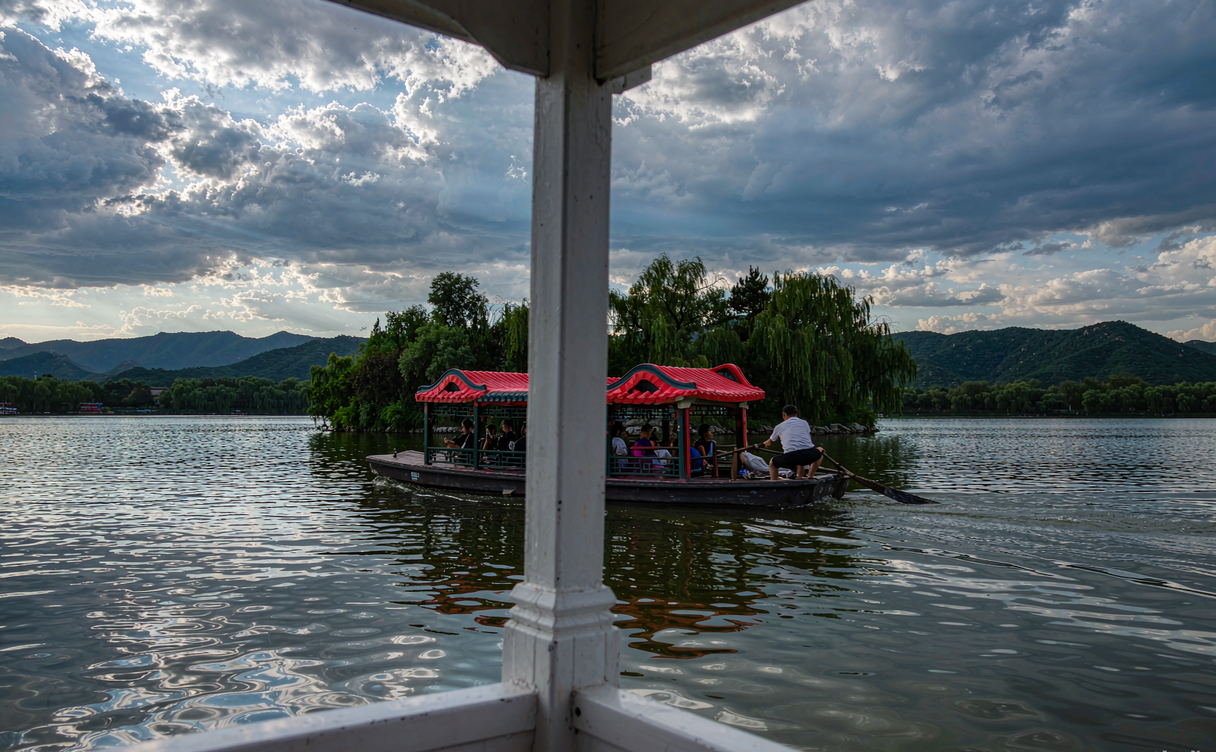
- Lake District. A network of connected ponds, bridges and islands modelled on Jiangnan gardens. The “Misty Rain Pavilion” (烟雨楼) is the postcard shot, best in early morning haze. Rent nothing — just walk the causeways.
- Plain Area. Open grassland with replica Mongolian and Tibetan camps where the emperors held hunts and audiences. Flat, easy, and good for a picnic stretch.
- Mountain Area. The silent majority of the park. Take the shuttle to the ridge and walk the short trails to pavilions overlooking the entire compound and the temple roofs beyond the wall — this is the view that justifies the trip.
Allow at least half a day for the lakes and plains, and another two to three hours if you do the mountain loop. The resort alone rarely fills a full day, which is why we pair it with one or two Outer Temples.
Best Time to Visit Chengde
The best time to visit Chengde splits into two good windows. Summer (June–August) is the original point of the place: while Beijing bakes at 35°C, Chengde sits 4–6°C cooler thanks to the elevation and tree cover, and the lakes are green. Autumn (September–October) is our favourite — crisp, golden, and far less crowded, with the mountain forest turning red and yellow. Spring is windy and dusty; deep winter is beautiful but cold and with reduced opening hours. Either summer or early autumn gives you the resort at its best.
A Chengde Itinerary That Works
A clean Chengde itinerary looks like this:
- Day 1 morning: high-speed train from Beijing, drop bags, enter the resort via the south gate, do the lake and plain districts.
- Day 1 afternoon: mountain-area shuttle and ridge viewpoints.
- Day 2 morning: Putuo Zongchengzhimiao (Little Potala) and Puning Temple.
- Day 2 afternoon: train back to Beijing, or continue north to the Great Wall at a quieter section — our Great Wall of China guide maps the less-crowded options within reach.
If you want the resort framed alongside China’s other inscribed landmarks, our China UNESCO World Heritage guide places Chengde in the national context, and the best hotels in Chengde covers where to stay within walking distance of the gates.
Food and Practical Tips
Chengde’s old town, just outside the south gate, has solid Hebei noodles, roasted chestnuts and lamb skewers at local prices (¥20–40 a meal). The resort has water and snack stalls but no real restaurants inside, so eat before you enter. Wear good shoes — the mountain trails are real paths, not promenades — and carry water; the resort is deceptively large. The Chengde travel guide has deeper hotel and transport detail if you want to linger.
Why It’s Worth the Detour
In our experience travellers who skip Chengde because it’s “just a garden” miss one of the clearest windows into how the Qing court imagined and governed its frontiers. The resort is landscape as statecraft, and the Outer Temples are diplomacy in brick and gold. For the effort of one train ride and one overnight, you get a UNESCO site most foreign visitors never reach.
For the official inscription and the full list of component monuments, see the UNESCO World Heritage entry for the Chengde Mountain Resort and its Outlying Temples.