

Why Xiqiao Mountain Earns a Stop in Foshan
Most visitors to the Guangzhou–Foshan sprawl never look up at the green dome 20 km south of the city, and that is their loss. Xiqiao Mountain (西樵山) in Nanhai, Foshan, is a dormant volcano topped by a 61.9-meter Nanhai Guanyin bronze statue and cut by dozens of waterfalls and cave streams. We route travelers here when they want a half-day of forest and faith without leaving the Pearl River Delta’s transport web. This Xiqiao Mountain guide reflects the trips we have run from Guangzhou: the bus up, the waterfall steps, and the giant statue that dominates every photo.
The mountain is compact — its highest peak, Daqing Feng, is about 344 meters — but it is dense with 72 named peaks, 36 caves, and 28 waterfalls fed by spring rainfall. In our experience it is the most refreshing green break between Canton and the coast, and the kung-fu heritage of the nearby town (Huang Feihong’s birthplace) adds a cultural layer most day-trippers miss.
How to Visit Xiqiao Mountain
The mountain sits inside the city of Foshan, so access is simple:
- Metro — take the Guangfo Line to Nanhai Guanyin or transfer to a Foshan bus toward Xiqiao; from central Guangzhou it is about 60–80 minutes total.
- Taxi or ride-app — from Guangzhou about 1 hour, ¥90–140; from Foshan city center 30–40 minutes, ¥40–70.
- Intercity bus — direct tourist buses run on weekends from Guangzhou’s main stations.
There is a sightseeing bus that loops the summit road (¥20), and we put clients on it for the first ride up, then let them walk the waterfall trails down. If you are building a Guangdong food trip around this, our Guangzhou dim sum guide is the natural bookend to the day.
Things to Do at Xiqiao Mountain
“Things to do at Xiqiao Mountain” splits into three themes: the statue, the waterfalls, and the old cave culture.
- Nanhai Guanyin Cultural Park — the 61.9 m bronze Kwan-yin on a lotus pedestal, one of the tallest Guanyin statues in the world, with a six-meter-tall standing hall below. Allow 60–90 minutes; the plaza faces east, so morning light is best.
- Baie Cave (白云洞) — the historic scholarly retreat with carved cliffs, old academies, and a spring-fed pool. Quiet and shaded, our favorite calm corner.
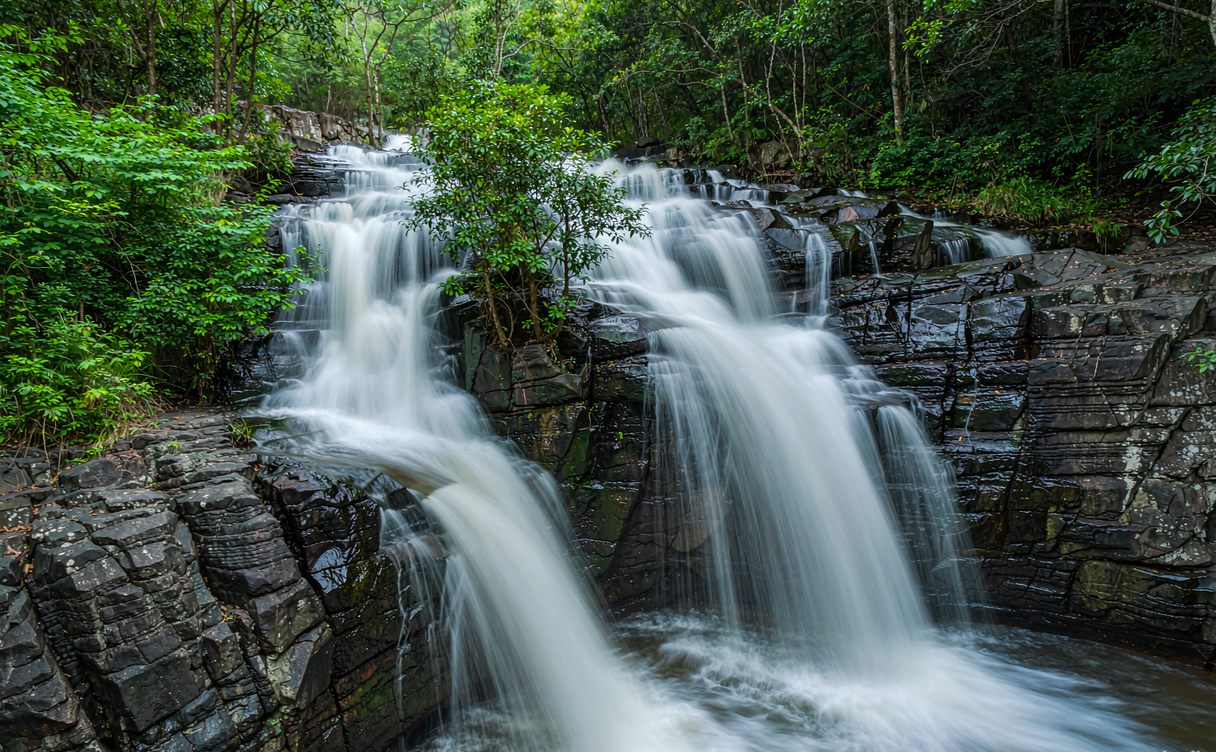
- Feiliu Qianchi (飞流千尺) waterfall — a long stair flight beside a falling stream; after rain it roars, and the steps are the best workout on the mountain.
- Shiyan Rock (石燕岩) — an ancient underwater quarry you view from a platform; eerie and photogenic.
- Volcano crater lake — the enclosed Tianhu (天湖) with paddle boats and a flat walk, good for families with small kids.
We tell clients to pick the statue plus one waterfall and one cave; the mountain is walkable but the summit road is long if you try to foot it all.
Xiqiao Mountain Tickets and What It Costs
The 2026 rates we quote:
- Xiqiao Mountain tickets: ¥55–70 for the main mountain; the Guanyin Cultural Park is included in most combined tickets, with a separate ¥20–30 add-on at peak season if sold apart.
- Sightseeing bus: ¥20 for the summit loop, worth it for the first ascent.
- Tianhu paddle boats: ¥30–50 per boat.
- Parking: ¥10–20.
Buy at the gate or the park app; carry cash because foreign-card payment on the app is unreliable. The waterfalls and caves are covered by the main ticket, so there is no drip-feed of extra gates like at some bigger peaks. For a proper meal afterward, our Guangzhou food guide covers Foshan and Canton kitchens better than the gate snacks.
Best Time to Visit Xiqiao Mountain
The best time to visit Xiqiao Mountain is March to May and October to November, when the delta humidity eases and the gardens bloom. The waterfalls are strongest from April to September, right after the plum rains and typhoon drizzle, so we send photographers then — but warn them to come at open and watch the afternoon storm radar. We skip the National Day week (early October) and Labor Day (early May), when the statue plaza crowds badly. Winter is mild and empty, good for a quiet walk.
Where to Stay and What to Book
Xiqiao works as a day trip from Guangzhou or Foshan, but if you want the mountain at first light, Nanhai has hotels at ¥250–450 per night and Foshan’s core is a short hop north. For the next leg of a delta tour, the best hotels in Shenzhen cover the coastal stop, and the Xiamen seafood guide is the eastern seafood plan. A completely different landscape waits in our Guilin travel guide if you trade the delta for karst.
Everything is bookable on arrival: tickets at the gate, buses on demand, no reservations needed for the statue. We pre-book only a Nanhai hotel for families who want sunrise. ## A Sample Day Trip and the Kung-Fu Link
We usually run Xiqiao as a relaxed day out of Guangzhou or Foshan:
- 9:00 a.m. — arrive, take the sightseeing bus to the Guanyin Cultural Park, spend 60–90 minutes at the statue and the lower hall.
- 10:30–12:00 — walk down to Baie Cave for shade and old academies, then loop to Feiliu Qianchi if knees allow.
- Afternoon — drop into Xiqiao town for the Huang Feihong hometown museum (黄飞鸿故里), a short taxi ride that adds the kung-fu heritage most visitors miss, then train or taxi back.
The martial-arts connection is real: the town is the birthplace of the folk hero Huang Feihong, and the museum shows the southern-style lion dance and boxing that grew up here. We pair it with the mountain because the two tell you more about local identity than either alone.
Tips, Safety and Weather
The summit bus spares the long road, but the waterfall stairs are genuinely steep, so we put clients in proper shoes rather than sandals. At the Guanyin plaza, dress modestly and follow the incense etiquette — a small offering at the official stall is enough. The mountain is safe and well railed; the only hazard is the delta heat, so we start at open and finish before the noon sun. Crowds peak on the statue plaza during the two big holiday weeks, and the Tianhu boats get busy on summer weekends. Our Guangzhou food guide is the meal plan for afterward, since Foshan’s Cantonese kitchens are a short ride north. For a longer stay, the mountain’s southern foot has a few temple vegetarian restaurants where a set lunch runs ¥30–50 and the monks’ recipes are genuinely good — we send clients there instead of the gate stalls. The sightseeing bus runs until 5 p.m., but the last climb to the statue closes at 4:30, so do not arrive after 2 p.m. if the statue is your priority. We also remind clients to carry a light rain shell in the wet season, because the waterfall spray and sudden delta showers can soak a half-day plan faster than most expect.
The mountain’s volcanic and Buddhist identity is explained well on the Guanyin (Wikipedia) page, which covers the deity the Nanhai statue honors.