

Xiamen seafood is the reason many travelers extend their Fujian trip by an extra day, and in our experience the city’s coastal position gives it a catch you simply do not find inland. We have sent food-focused visitors here who came for the islands and stayed for the oysters, and this guide covers exactly where to go, what to pay, and how to order without getting lost in translation. If you are assembling a Xiamen food guide before you fly, think of seafood as the spine of the trip rather than a single dinner.
Why Xiamen’s seafood is different
Xiamen sits at the mouth of the Jiulong River where fresh and salt water mix, which means a short menu of local specialties: razor clams, mud crabs, oyster omelets, and the small silver fish called “roof fish.” The cooking leans on the broader Min cuisine of Fujian, which favors clear broths, light steaming, and a gentle sweetness that lets the ingredient speak. If you want the context before you sit down, our Fujian Min cuisine guide explains the regional flavors that shape every plate here, from the peppery dipping sauce to the restraint with oil.
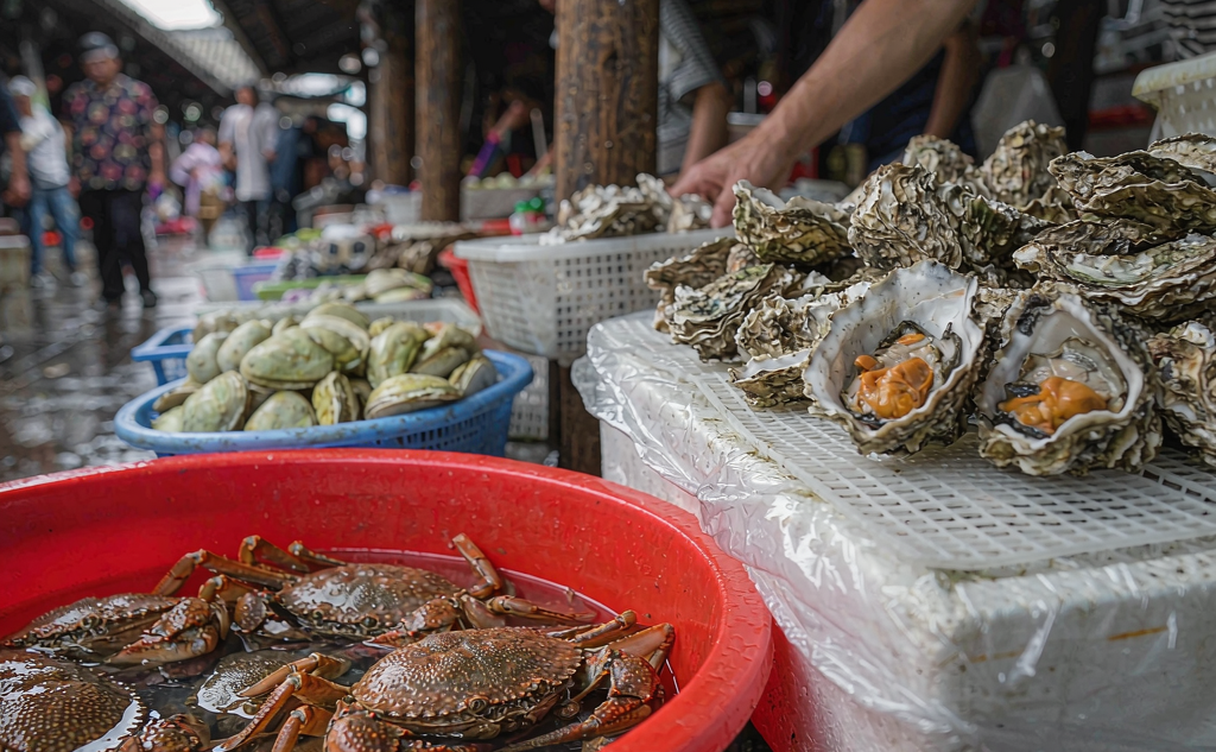
The island habit also matters. Xiamen is built on a peninsula and a scattering of islets, so fishing is woven into daily life in a way that a landlocked city cannot match. The result is a market culture where the “catch of the morning” is not a slogan but the literal plan. We have watched travelers pick a crab at nine and eat it at ten, and that distance from boat to bowl is the whole point of coming here.
Where to eat: the markets vs. the restaurants
The most authentic experience is the Eighth Market (Bashi, 第八市场), a wet market near the old port where you buy live seafood by weight and take it to a neighboring stall or restaurant to be cooked for a small fee, usually RMB 10 to 20 per dish. Expect to pay roughly RMB 60 to 120 per jin (about 500g) for prawns, RMB 40 to 80 for locally farmed fish, and RMB 30 to 60 for clams and mussels, depending on the season and the tide. The trick is to agree the price per jin before the scale goes down, and to watch the vendor zero the scale in front of you.
For a sit-down meal with English-friendly menus, head to the restaurants along Zhongshan Road pedestrian street or the clusters in Zengcuoan, a former fishing village turned food strip near the beach. A solid seafood dinner for two runs RMB 200 to 400. The best seafood in Xiamen, in our book, is the stuff you pick out wriggling and watch get cooked, so budget one market morning during your stay and save the restaurant strips for a rainy evening.
Getting to Xiamen and getting around
Xiamen Gaoqi International Airport has direct flights from major Chinese cities and a few regional international routes. From the airport, the BRT rapid bus and the growing metro (Lines 1 and 2) reach the city center in 30 to 50 minutes. Within the city, buses and the metro cover most seafood spots, but the Eighth Market is easiest on foot from Zhongshan Road, a ten-minute walk through the old commercial core.
The island of Gulangyu, Xiamen’s car-free UNESCO-listed islet, is reached by ferry from the International Cruise Center; foot passengers pay about RMB 35 round trip, and you must book a timed slot online or at the port. Our Xiamen travel guide lays out the ferry booking step by step, because it confuses a lot of first-timers who arrive at the wrong terminal and miss their slot. Build the ferry into your day rather than treating it as a throwaway crossing.
What to order
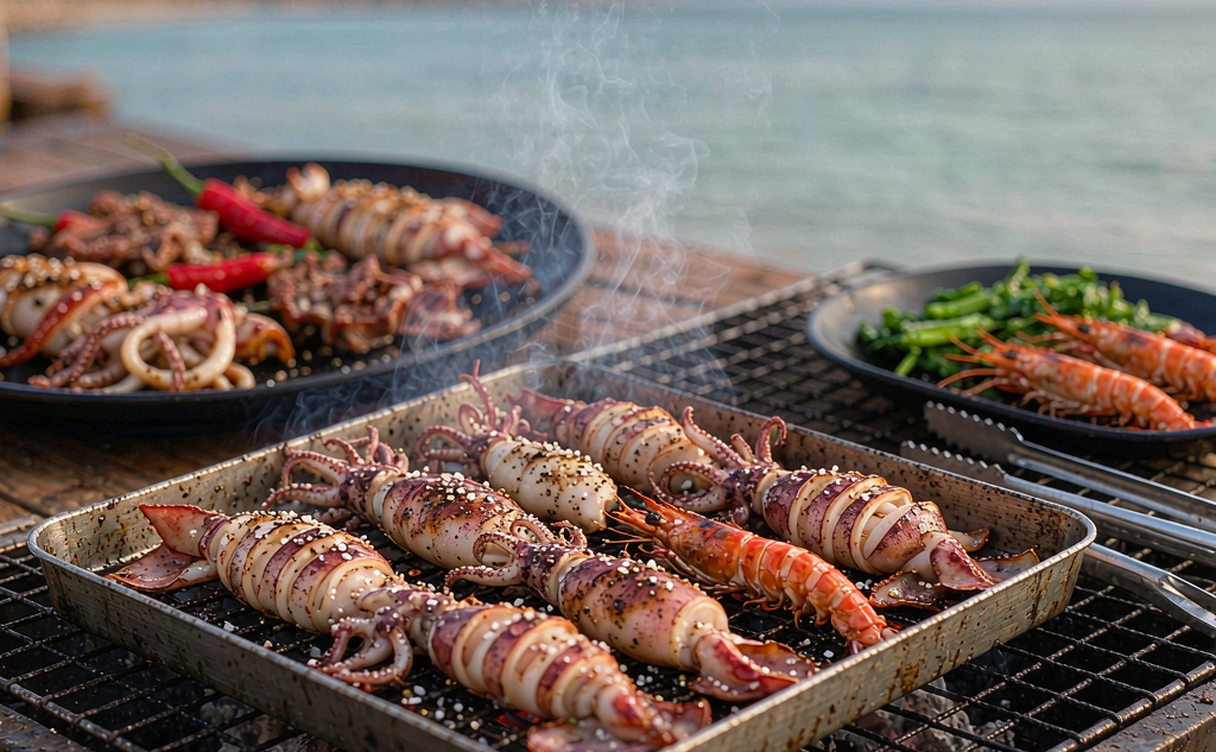
These are the things to eat in Xiamen that regulars come back for, and most are simple enough that pointing works when words fail:
- Oyster omelet (蚵仔煎), eggs, sweet potato starch, and fresh oysters, pan-fried and served with a tangy sauce. Around RMB 25 to 40.
- Razor clams with garlic, steamed and topped with vermicelli and garlic; RMB 50 to 90 a plate.
- Steamed mud crab, in autumn the roe is rich; RMB 80 to 150 depending on size.
- Seaweed and fish ball soup, a light Min-style broth, usually RMB 20 to 35.
- Pepper shrimp, wok-tossed with green peppers; RMB 60 to 100.
- Braised sea cucumber, a banquet-style dish if you want to push the budget; RMB 120 to 200.
We always tell travelers to point at what looks good if the menu defeats them, and to ask “duoshao qian” (how much) before the cooking fee is added. A Xiamen seafood restaurant worth its salt will show you the live price board first, and will not flinch when you photograph it.
Seasons and timing
Spring and autumn are the most comfortable months, with the Xiamen article on Wikipedia noting the city’s mild subtropical climate and typhoon season peaking in July and August. We steer visitors away from the height of summer, when heat and storms disrupt both ferries and appetites, and toward April to May or September to November, when the tables spill onto the pavement and the oysters are at their plumpest.
The run-up to Chinese New Year (late January or February) is festive but crowded; book restaurants ahead if you are traveling then. Weekday lunches at the Eighth Market are calmer than weekend evenings, which is when local families claim the cooking stalls.
Ordering like a local
The language gap is smaller than it looks once you learn a handful of phrases. Pointing at the live tank and saying the name of the dish gets you most of the way, and most stallholders in the Eighth Market understand a thumb-up for “yes, that one.” Carry small notes and some coins, because the market system means paying the seafood vendor and then a separate cook, and cash moves faster even though Alipay and WeChat Pay are accepted at most stalls now. We have found that writing the total weight and price on your phone and showing it to the vendor removes almost every disagreement before it starts. If a price feels off, walking to the next stall is normal and expected, not rude.
A note on the islands and the wider table
A Xiamen food guide would be incomplete without Gulangyu, where the seafood is pricier and more tourist-oriented but the setting is unbeatable. For the quieter, cheaper eats, stay on the main island and treat Gulangyu as a half-day walk; the islet’s car-free lanes are best enjoyed on foot with a shared plate of clams. The city’s snacks, peanut soup and fried oysters among them, deserve their own evening stroll along the shore.
For travelers building a wider eating itinerary across the province and beyond, a dedicated China food tour guide can string Xiamen together with other food cities into one route, balancing coastal plates against inland ones so the trip never repeats itself.
Xiamen rewards a loose plan: a market morning, a beach sunset, and a long dinner where someone else does the peeling.
Whenever we send guests to the coast, we remind them that the best meals are the ones negotiated one live crab at a time, and the payment apps make the market easy once you know them.