

When people plan a trip around the Yangtze middle reaches, the obvious draws are the river and the famous towers, but the quiet gem that locals in Hubei actually treasure is Guiyuan Temple Wuhan, a working Buddhist monastery in the Hanyang district where the incense smell and the sound of wooden fish drums still set the rhythm of the day. We have sent dozens of first-time visitors here over the years, and almost all of them tell us afterward that it was the calmest two hours of their Wuhan stay, a gentle counterpoint to the city’s famously loud, fast street life. This guide walks through what the temple is, what you will see inside, what it costs, how to reach it, and when the light and the crowds are kindest, so you can fold it into a broader Wuhan travel guide plan without guessing at the details.
The name Guiyuan means “return to the origin,” and the temple was founded in 1658 during the early Qing dynasty, credited to the monk Baoguang with support from a local official named Sun Yaoting. Unlike the imperially sponsored monasteries you find farther north, Guiyuan grew as a place of study and daily practice rather than ceremony for the court, which is part of why its atmosphere feels unhurried even on busy weekends. The layout follows the classic south Chinese Buddhist plan, with halls arranged along a central axis and the famous Arhat Hall set off to one side, and the whole compound is wrapped in courtyard walls that mute the traffic of the surrounding streets. For a visitor, the effect is immediate: you step through the mountain gate and the city noise drops by half within a few paces.
The single reason most travelers make the trip is the Arhat Hall, home to a collection of 500 painted luohan statues, the disciples of the Buddha rendered as a crowd of individually carved, gold-lacquered clay figures that climb the walls in tiers. No two faces are alike. Some are laughing, some are stern, a few are caught mid-argument, and the craftsmanship is detailed enough that you can spend twenty minutes just reading the expressions. The hall is built in a rare circular floor plan with multiple concentric aisles, so the statues surround you on every side, and the long-standing local tradition is to pick a starting point and count the figures one by one, letting the number you land on suggest a small fortune or a personality reading for the year ahead. We once arranged this for a group of skeptics who rolled their eyes at the idea and then spent forty minutes absorbed in the counting, which tells you something about the room’s quiet pull. Photography inside the Arhat Hall is generally discouraged to protect the lacquer and the devotion of people counting, so plan to absorb it rather than shoot it.
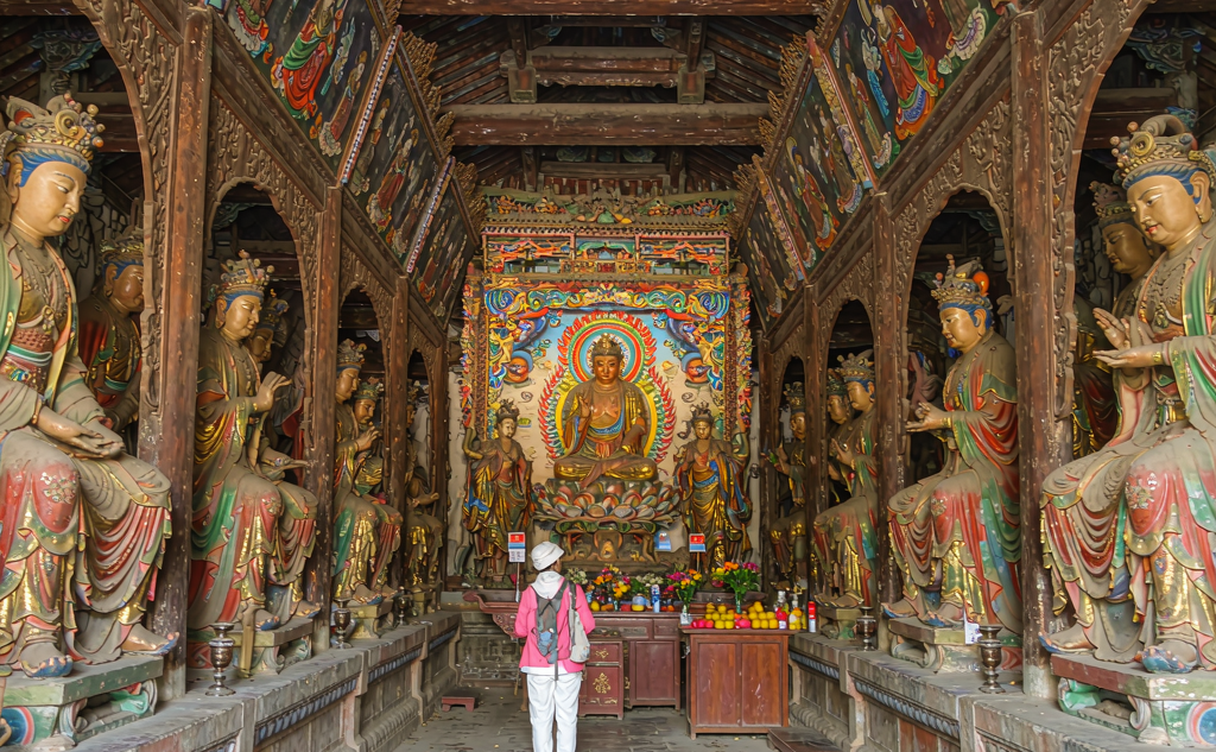
Beyond the Arhat Hall, the main axis holds the Hall of Heavenly Kings at the entrance, the Great Buddha Hall, or Daxiongbaodian, where the central Sakyamuni statue sits beneath a carved caisson ceiling, and a multi-story Scripture Pavilion that houses Buddhist texts and a famous stone stele bearing a copy of the Diamond Sutra. The gardens between the halls are small but carefully kept, with old ginkgo and podocarpus trees, lotus pools in summer, and a vegetarian restaurant where the monks and the kitchen staff serve simple set meals to visitors who want to eat the way the community does. The vegetarian “goose” made from tofu and mushrooms is a local legend, and the small shops near the side gate sell prayer beads, incense, and printed fortunes that make easy, meaningful souvenirs to carry home.
For practical planning, Wuhan Guiyuan Temple tickets are straightforward and cheap by international standards. The standard entry runs about RMB 10 per person, and the Arhat Hall, which is the main attraction, is included in that ticket at most times of year, though during the Lunar New Year peak some years a small separate fee has applied, so carry a little cash just in case the gate attendant asks. Opening hours are typically 8:00 in the morning to around 17:00 in the afternoon, with the last entry about an hour before closing, and the vegetarian restaurant keeps shorter hours that end around lunchtime. There is no timed entry and no online reservation system that foreign visitors need to worry about; you simply arrive, pay at the window, and walk in. We advise arriving before 10:00 if you want the Arhat Hall to yourself, because tour groups from the nearby cruise terminals and domestic travel buses tend to arrive late morning and fill the narrow aisles, making the slow count impossible.
Getting to the temple is easy once you understand Wuhan’s three-town layout. The monastery sits in Hanyang, on the west bank of the Yangtze, and the closest metro stop is Zhongjiacun on Line 4, about a ten to fifteen minute walk through quiet residential streets from the exit. If you are staying in Hankou or Wuchang, take the metro across the river rather than a taxi during rush hour, because the bridges back up badly; the cross-river ride by metro is fast and air-conditioned, and you avoid the worst of Wuhan’s legendary traffic. For those asking how to get to Wuhan in the first place, the city is one of China’s great rail hubs, with Tianhe International Airport handling domestic and some international flights, and three major railway stations, Hankou, Wuchang, and Wuhan, that connect to the national high-speed network. Our China high-speed train guide for foreigners explains how to buy those tickets on the right platform with a foreign passport, which is the piece most first-timers stumble over. From any of the three stations, a metro ride of twenty to fifty minutes, depending on which town you start in, puts you within walking distance of the temple gate.
Timing shapes the experience more than most visitors expect. The best time to visit Wuhan for comfort is spring, from March through May, when the humidity has not yet peaked and the ginkgo and flowering trees in the temple courtyards are at their greenest, or autumn, from September through early November, when the air is clear and the light through the hall windows is warm and low. Summer is brutally hot and sticky, often above 35 degrees Celsius with heavy humidity, and while the halls stay shaded, the walk from the metro and the queues at the gate are uncomfortable, so if you must come in July or August, go at opening time and carry water. Winter is cold but quiet, and the temple in bare-branch January has a stripped, contemplative feel that photographers like. Whatever the season, weekdays beat weekends, and early morning beats midday for both light and space, which is true of almost every temple in the country but especially here where the aisles are narrow.
Once you have done the temple, the question becomes what else fills the day, because things to do in Wuhan are denser than the city’s reputation suggests. The Hanyang side alone has the Guiyuan complex, the nearby Wuhan Zoo if you travel with children, and a short metro ride to the Yangtze riverbank for the famous ferry crossing to Wuchang. Across the water, the Wuhan Yellow Crane Tower guide covers the most famous of the city’s landmarks, a rebuilt pavilion with river views and poetry carved into every railing, while our Wuhan East Lake guide maps the cycling paths and gardens of the huge lake that locals treat as a weekend escape. And no Wuhan day is complete without eating, so our Wuhan food guide points you to the hot dry noodles, the duck and lotus root soup, and the riverside barbecue that the city is proud of. We usually tell people to pair Guiyuan with one landmark and one meal, which keeps the day relaxed rather than a checklist march across three towns.
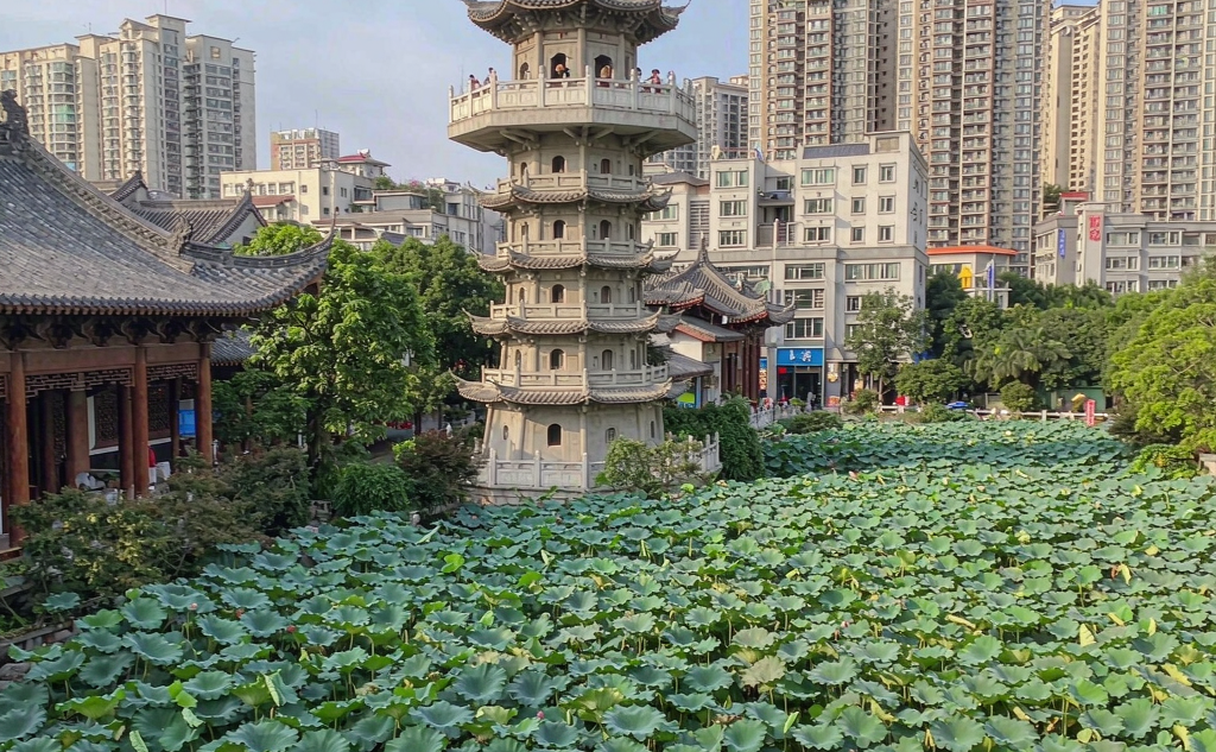
The monastery’s place in the wider Buddhist world is worth a line if you like context. Guiyuan is counted among the four great Zen temples of Hubei and has been a site of renewal and rebuilding across the centuries, especially after wartime damage in the twentieth century, and the current structures largely reflect careful restoration carried out from the 1980s onward. The Wikipedia entry on Guiyuan Temple summarizes the lineage and the architectural notes if you want the scholarly frame before you go, and it is a helpful read on a train ride in. For first-time travelers to the country more broadly, our China travel guide for first-timers covers the passport registration, payment apps, and etiquette basics that make a temple visit like this smooth rather than stressful, and we recommend reading it before you fly.
A few small tips close the loop. Dress modestly: shoulders and knees covered are respectful and also practical given the amount of bowing and sitting locals do in the halls. Bring small change for incense and the donation boxes, because the attendants may not break large notes and card readers are not always at the side stalls. If you want the vegetarian meal, aim for before 11:30, as the kitchen sells out and the line forms early, and the set menu runs roughly RMB 15 to RMB 30 depending on how many dishes you take. Give yourself at least ninety minutes, not the forty you might budget, because the Arhat Hall alone rewards slow counting, and the gardens are best absorbed at a wander rather than a march to the exit.
Guiyuan Temple Wuhan is not the loudest item on any itinerary, but it may be the one you remember most fondly. It is cheap, it is central, it is genuinely alive as a place of worship, and it offers a kind of stillness that the rest of the city, for all its energy, rarely does. Fold it into a morning, eat well after, and let Hubei’s quieter side set the tone for the louder days that follow.