

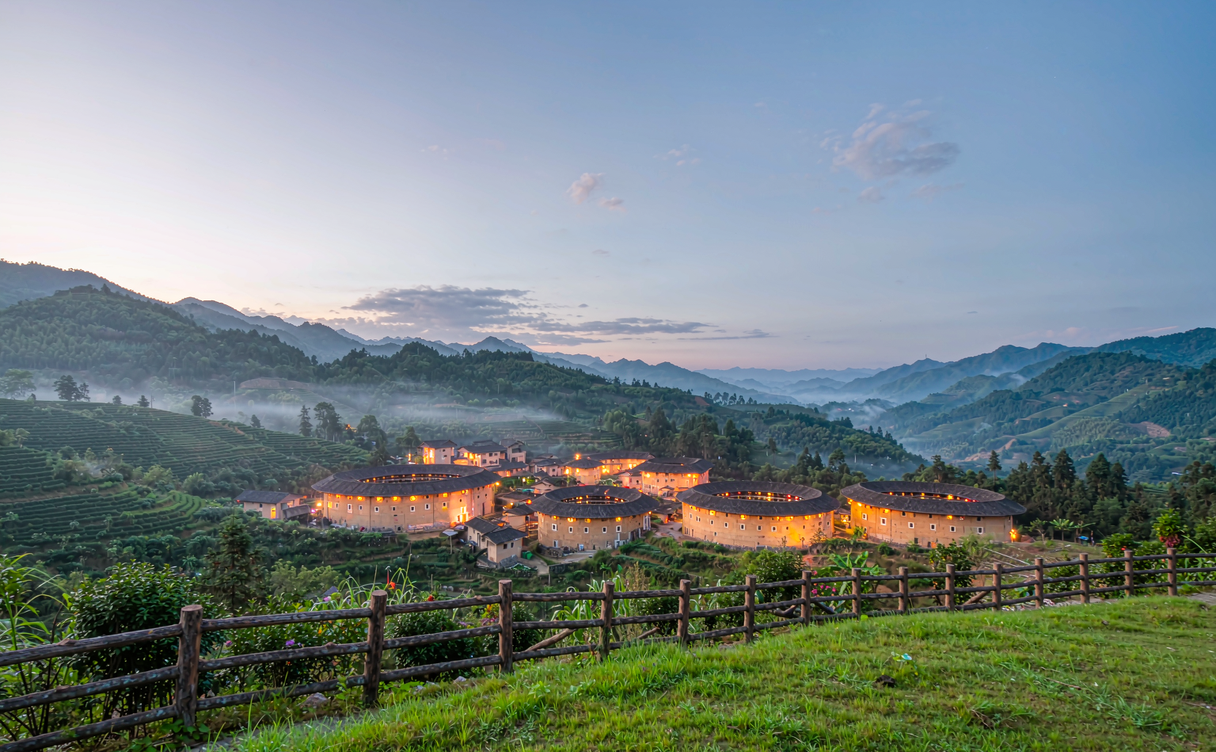
Perched on a terraced hillside in Shuyang Town, Nanjing County, Zhangzhou, the Tianluokeng Tulou cluster is the most photographed earthen settlement in Fujian and one of the clearest expressions of Hakka clan architecture anywhere in China. Stand on the opposite ridge at dawn and you see what locals call the “four dishes and one soup” (四菜一汤): one square building ringed by four round ones, arranged like a banquet set on a hillside table. We first brought travelers here in 2019, and on our last visit the early-morning mist drifting between the rammed-earth walls was the kind of scene people talk about for years. This guide walks through exactly what to expect, what it costs in real money, and how to fold the Fujian Tianluokeng stop into a wider southern-Fujian trip without wasting a day in transit.
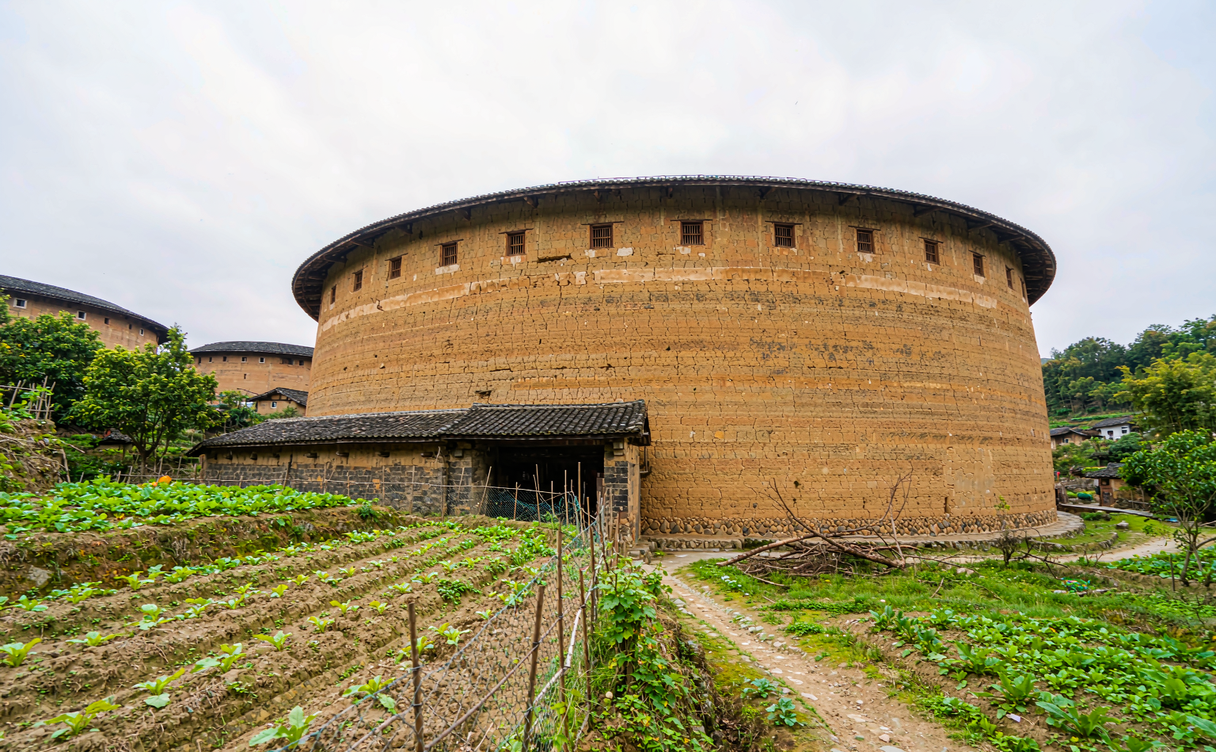
The cluster belongs to the broader Fujian Tulou property inscribed by UNESCO in 2008, though Tianluokeng is one of several groups scattered across Nanjing, Hua’an, and Yongding counties. The five buildings each carry a name and a founding story. Ruiyun Lou (瑞云楼), the oldest round house, was completed in 1693 under the Qing Kangxi emperor. Hechang Lou (和昌楼) and Zhenchang Lou (振昌楼) followed in later Qing decades, then Buxing Lou (步云楼), the square building at the center, and finally an oval house that rounds out the famous composition. Hakka and Minnan lineages built them as defensive clan homes: outer walls of rammed earth up to three meters thick at the base, a single iron-clad gate, and rooms stacked two or three tiers around a central ancestral hall where the whole lineage met, married, and mourned.
Things to do at Tianluokeng Tulou
Most day-trippers spend two to three hours, but we usually book an overnight so travelers can feel the village after the buses leave. The observation deck across the valley is the money shot; arrive before 9 a.m. to beat tour groups rolling in from Xiamen and Zhangzhou. Back inside the ring, the things to do at Tianluokeng Tulou include climbing to the upper timber galleries of a round house, watching villagers spread tea leaves and rice on the central court to dry, and joining a Hakka-style dinner in a family-run homestay. A twenty-minute drive downhill reaches Yuchang Lou, the so-called “zigzag building” whose leaning timber columns have stood crooked for more than three centuries without collapsing, and Taxia Village with its riverside clan pagodas reflected in a slow canal. For the full earthen-architecture map across the province, our separate Fujian tulou villages write-up lays out every cluster worth the drive from Xiamen.
Best time to visit Tianluokeng
The best time to visit Tianluokeng is late March to May and again in October and November. Spring lays terraced green tea bushes across the slopes and keeps daytime temperatures in a comfortable 18 to 25°C range; autumn is dry and clear, the best window for photography. We steer travelers away from July and August, when Fujian’s typhoon season can close mountain roads and the humidity turns the climb sweaty. For precise month-by-month weather and crowd notes across the country, our best time to visit China page breaks it down by region so you can time the trip around clear skies. Winter is cold but nearly empty, and the empty-village atmosphere appeals to photographers who hate crowds; just pack a warm layer because the earth walls shed heat fast after sunset.
How to get to Tianluokeng
Knowing how to get to Tianluokeng saves a half-day of confusion. The nearest high-speed rail station is Nanjing County (南靖站), reached from Xiamen North in about 35 to 50 minutes on a bullet train; second class costs roughly ¥35 to 55, about $5 to 8. From the station, local buses and shared taxis cover the remaining 60 to 90 minutes up into Shuyang. Many travelers instead hire a car from Xiamen for ¥400 to 600 (around $55 to 85) round trip, which also lets them add Yuchang Lou and Taxia in a single loop. Foreigners planning rail legs should skim our China high-speed train guide for foreigners before booking, because station names in pinyin can trip up first-time visitors. Tickets for the Nanjing Tulou scenic area, which bundles Tianluokeng, Yuchang, and Taxia, run about ¥90 to 100 ($13 to 14) per person, with village homestays from ¥150 to 300 ($21 to 42) a night including dinner.
Eating and staying
Hakka food here is hearty and cheap. A set dinner of stuffed tofu (酿豆腐), braised pork with preserved mustard greens, and free-range chicken runs ¥60 to 90 ($8 to 13) per person. For a wider culinary frame, our Fujian Min cuisine guide lists the coastal and mountain dishes worth chasing across the province. Staying overnight means you can walk the upper path to the viewpoint at blue hour, when the square house’s windows glow and the round walls fade into shadow. Guesthouses inside the ring are basic but clean; book ahead in October when the autumn light draws serious photographers, and confirm whether your room has its own bathroom before you pay.
The four dishes and one soup
The Tianluokeng four dishes one soup layout is no accident. Feng shui masters of the Qing era arranged the square Buxing Lou at the center with four round houses at the corners, balancing earth (square) and heaven (round) elements. Locals joke that the square building is the rice bowl and the four rounds are the side dishes. On our last visit a village elder explained that each ring housed a different branch of the same clan, so the geometry also kept peace between families. It is the clearest example of tulou planning you will see, which is why we send first-timers here before the more remote Yongding clusters farther west, where the roads get rougher and the English signage thinner.
Why travel with us
We’ve sent travelers there on everything from quick Xiamen day trips to week-long Fujian loops, and the feedback stays consistent: go early, stay late, eat with the family. The earthen walls hold the day’s heat, so evenings on the upper gallery with a thermos of tea are the real reward. A local English-speaking guide at the entrance costs about ¥200 to 300 ($28 to 42) and explains the clan history that brings the walls to life far better than any plaque. Bring some cash for small homestay extras, because a few villages still run on cash and WeChat only, and wear shoes with grip for the stone paths, which get slick after rain.
Practical tips
Drones are restricted near the cluster, so ask your guesthouse before flying, and cell coverage is decent on the ridge but patchy inside the thick lower walls. Pack a light rain shell even in spring, because mountain weather turns fast and the exposed viewpoint gets windy. If you want a calm seaward add-on after the mountains, the Gulangyu Island day trip from Xiamen pairs naturally with a few days in the city.
Getting the most from your visit
A guided half-day beats wandering lost, and combining the cluster with a morning of planning helps your dates land in clear season. We’ve sent travelers there in every month except deep winter, and the sweet spot is always the shoulder weeks of April and late October, when the tour buses thin out and the light turns gold over the terraces.
For background on the broader heritage listing, see the UNESCO Fujian Tulou World Heritage page.