

Six kilometers from the county seat of Shexian, in Huangshan City, the Tangyue Archway Group stands as the finest surviving row of imperial memorial gates in the old Huizhou heartland of Anhui. Seven stone archways march in a straight line along a single axis, each one erected by imperial order to honor a member of the Bao clan for filial piety, chastity, loyalty, or righteousness. We first walked this corridor with a small group in 2018, and on our last visit the late-afternoon light raking across the carved beams made the sanctioned virtues of the Qing court feel almost legible. This guide explains what the Tangyue Archway Group actually commemorates, what it costs, and how to pair it with the nearby villages that complete the Huizhou picture.
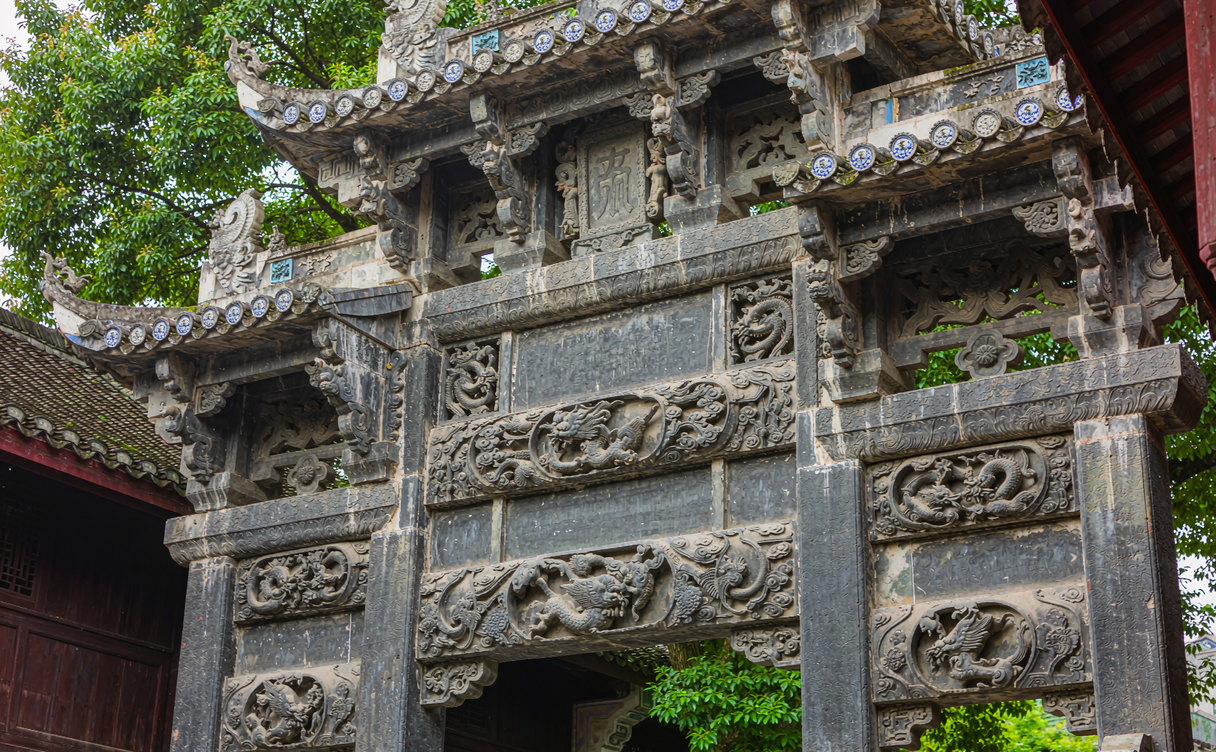
Huizhou architecture is easy to recognize once you have seen it: whitewashed walls, dark tiled roofs, and the distinctive horse-head gable (马头墙) that steps down in tiers along the ridge. The Tangyue archways were raised between the Ming and Qing dynasties, funded by the wealthy Bao merchant family who made their fortune in salt and timber and spent it on Confucian respectability. Unlike a single triumphal gate, this group reads as a timeline — move from one end to the other and you move through generations of approved behavior, each stone slab a government-stamped certificate set in granite. The craftsmanship sits at the top of Anhui stonework, with dense relief panels of dragons, cranes, and scenes from loyal-official lore that repay a slow walk and a good guide.
Things to do at Tangyue Archways
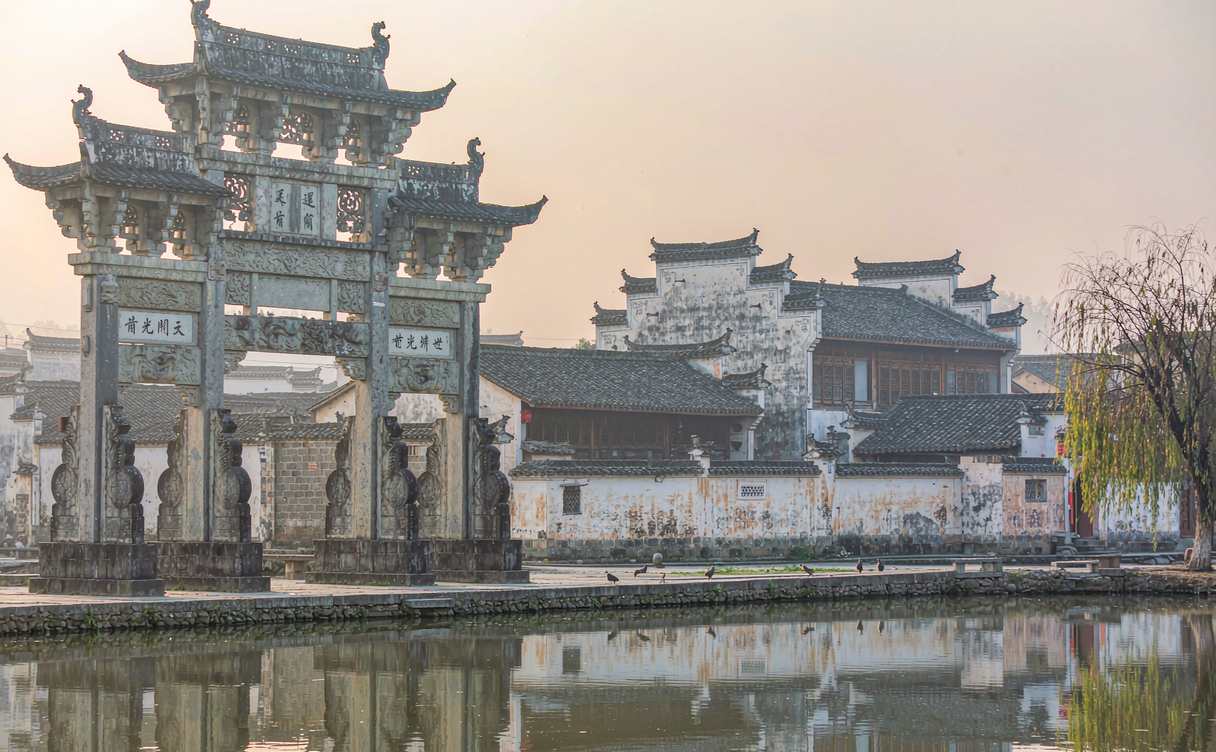
The things to do at Tangyue Archways begin with simply reading the row in order, ideally with a guide who can translate the vertical inscription on each beam. Just beside the gates, Bao’s Family Garden (鲍家花园) holds one of China’s largest private bonsai collections, with twisted pines and miniature landscapes that take an hour on their own. We usually tell travelers to allow half a day for the archways plus garden, then walk the short lane into Tangyue village itself to see the ancestral hall and the old merchant residences with their carved doorways. Photography is best from the low angle at the south end, where all seven gates line up in a single frame. For a deeper dive into the wider region’s old towns, our Shexian travel guide maps the county’s lesser-known stops and the best order to visit them by car.
Best time to visit Tangyue
The best time to visit Tangyue is April and May, when the surrounding fields turn gold with rapeseed and the air is mild, and again in October, when the autumn light is clean and the tourist buses from Huangshan thin out. Our best time to visit China page notes that the Yangtze delta enjoys long, comfortable shoulders in spring and autumn, which suits Huizhou perfectly. We avoid the wet July peak and the freezing January fog, when the stone drains slowly and the lanes get slick. If you catch the April bloom, arrive at the archways by 8 a.m. to have the row to yourself before the coach tours roll in from Tunxi.
How to get to Tangyue
Figuring out how to get to Tangyue is straightforward once you anchor on Shexian. The nearest high-speed station is Shexian North (歙县北), about 30 minutes by rail from Huangshan North, with second-class fares around ¥15 to 25 (roughly $2 to 4). A taxi from Shexian North to the archway ticket gate runs ¥20 to 30 ($3 to 4) and takes ten minutes. Travelers coming by car from Huangshan city (Tunxi) cover the 30-kilometer drive in under an hour. Foreigners piecing the rail together should read our China high-speed train guide for foreigners first, because the Huangshan area has three stations with similar names and missing the right one costs an hour. Combined entry to the archways and Bao’s Garden is about ¥100 ($14) per person; a local English guide costs ¥200 to 300 ($28 to 42) for a half-day.
Eating and staying
Huizhou cooking is the older, subtler cousin of the better-known Anhui styles, built on cured hams, bamboo shoots, and river fish. A solid lunch of stinky tofu, braised pork with dried vegetables, and a bamboo-shoot soup runs ¥50 to 80 ($7 to 11) per person in Shexian town. For the full picture of the province’s table, our Anhui Hui cuisine guide lists the dishes worth ordering by name. Most visitors stay in Huangshan city or in the villages and visit Tangyue as a half-day loop, which is what we arrange for first-timers so they can also catch sunrise on Huangshan itself without backtracking across the county.
Beyond the gates themselves, the Tangyue experience rewards slow looking. The relief panels on the central beams were cut by Huizhou stone masters whose guilds also worked the clan halls of Xidi and Hongcun, and the same chisel language shows in the worn dragons and the ranked officials carved in low relief. We tell travelers to crouch at the base of the chastity gates, where the fine lines are least eroded by weather, and to compare the Ming slab at the north end with the later Qing slabs, because the shift in carving depth tracks the family’s rising salt fortune. A patient hour here beats a rushed photo run, and the on-site keepers, who are usually Bao descendants, will point out the one beam repaired with old stones after a Qing flood. The lane behind the row also holds a small carving workshop where you can watch a apprentice cut a miniature gate, a good place to understand why Huizhou stonework was traded across the empire.
Why Tangyue matters
The Tangyue archways Huizhou story is really a story about how merchant families bought respectability. The Bao clan’s salt wealth funded not just the gates but schools, bridges, and granaries, and the archways were the visible receipt of state approval. On our last visit the on-site keeper pointed out that the central gate was rebuilt after a Qing flood using the original stones, a small detail that shows how carefully the village guards its honors. If you want to understand the culture that also built the famous villages nearby, pair this with Xidi and Hongcun, both of which share the same horse-head roofs and clan halls and make an easy same-day extension from Tangyue.
Practical tips
Wear flat shoes; the lane between the gates is cobbled and uneven. Bring a zoom lens if you care about the relief carvings, because the upper panels are best read from a distance. The site is exposed, so a sun hat in summer and a windbreaker in spring make the walk pleasant, and mornings are noticeably quieter than after-lunch arrivals. Tangyue, Anhui is compact, so most visitors pair the stop with Shexian town for lunch before the afternoon light fades.
Getting the most from your visit
A guide turns a row of stones into a story, and we’ve sent travelers there who left talking about the Bao clan for days. The sweet spot is a weekday in April or October, when the light is right and the coaches are elsewhere. Allow the garden its full hour; it is the quiet half of the visit that most day-trippers rush past on the way back to the gate.
For the broader context of memorial gate architecture in China, see the Wikipedia entry on paifang.