

The Shengsi Islands sit at the mouth of the Yangtze, the easternmost county of Zhejiang and a scatter of more than four hundred islets governed from Zhoushan. Most travelers land on Sijiao Island (泗礁岛), where the county town, the ferries, and the best beaches cluster, then island-hop onward to Gouqi for the famous green village and the mossy cliff temple. We first ran a small group here in 2021, and on our last visit a fisherman on Gouqi handed us still-twitching crabs straight off the boat for a ¥60 ($8) dinner. This guide covers what the Shengsi Islands actually offer, what it costs, and how to reach this windy edge of the East China Sea without missing the last ferry home.
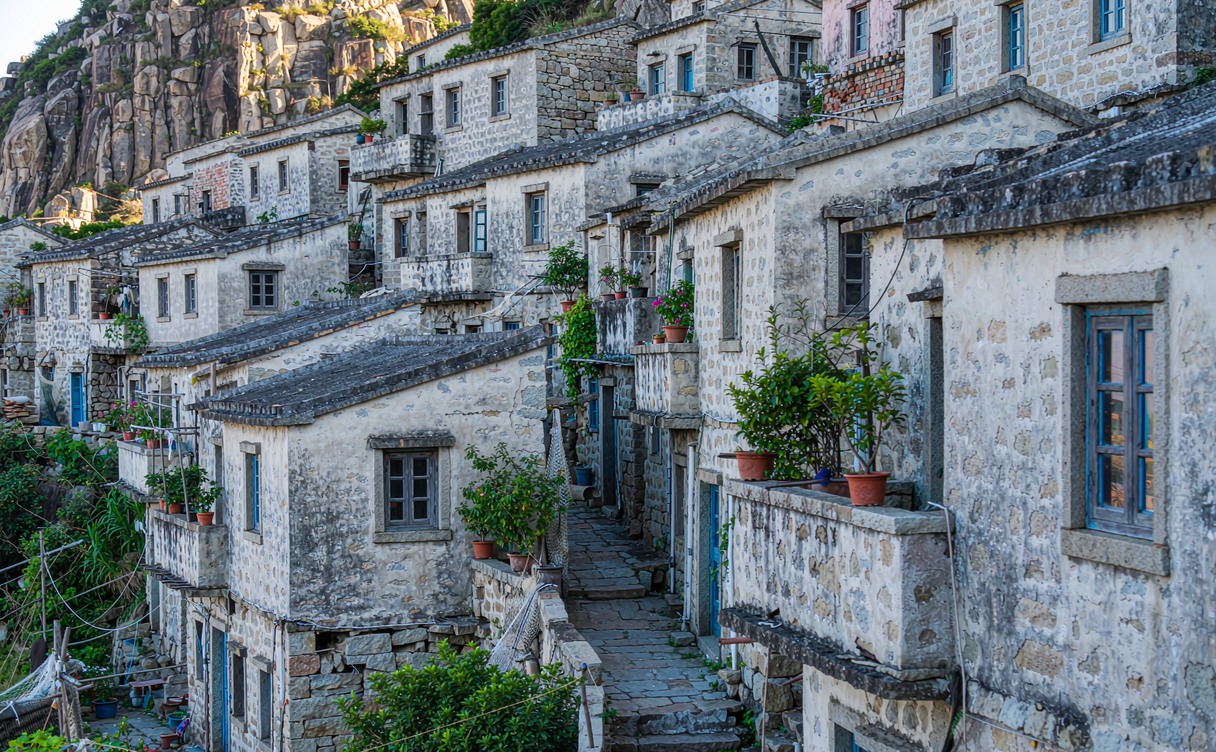
Zhoushan is China’s largest archipelago, and Shengsi is its wild, seaward fringe where the Yangtze silt finally thins and the water turns a cleaner blue. The main draws are simple: long sandy beaches, working fishing villages, and the strange beauty of settlements half-reclaimed by nature. On Gouqi Island the abandoned hillside hamlet of Houtouwan has been swallowed by creeping vines, a ghost town that photographs like a fairy tale and draws the most determined visitors. The pace is slow on purpose; this is a place to eat seafood, watch the light move across the water, and do very little else, which is exactly why we send travelers here to decompress after the cities.
Things to do at Shengsi Islands
The things to do at Shengsi Islands start on the sand. Jihu Beach (基湖沙滩) on Sijiao is the busiest, a wide arc of clean sand with showers, chairs, and a ¥25 to 40 ($3 to 6) entry in summer; the quieter Nanchangtu Beach sits a short bus ride away. In the fishing village of Tian’ao, the houses are painted with giant murals of nets, boats, and fish, a folk-art project that turns the lanes into an open-air gallery. These Shengsi fishing villages each keep their own rhythm, from the painted houses of Tian’ao to the vine-swallowed lanes of Gouqi’s green village, and that variety is the real draw once you leave the beaches. We usually book a half-day boat trip to Gouqi for the green village and the cliffside Dagong Miao temple, whose roof is wrapped in moss and ferns after decades with no keeper. Climb the Sijiao lighthouse at the island’s eastern tip for sunset, and if you time September you can catch the Shengsi fishing festival, when the fleet comes home decorated and the harbors fill with steaming woks.

Best time to visit Shengsi
The best time to visit Shengsi is May through October, with a soft spot for September, when the heat drops, the sea is warm, and the fishing festival brings the islands alive. Our best time to visit China page flags the east coast as a summer-and-early-autumn destination, and Shengsi fits that exactly; the beaches are swimmable from late June to early September. We keep travelers away from December through February, when northerly gales cancel ferries for days and the guesthouses shut. Spring (April to May) is calm and cheap, with wildflowers on the headlands, though the water is still brisk for swimming.
How to get to Shengsi Islands
Knowing how to get to Shengsi Islands saves real grief, because sailings are weather-dependent. Most visitors take a ferry from Shanghai: boats leave from the Nanpu Bridge terminal and the Wusongkou port, reaching Sijiao in four to five hours, with fares around ¥120 to 200 ($17 to 28) one way depending on the class. You can also sail from Zhoushan’s Shenjiamen pier in about two hours, or take a through-bus from Shanghai that includes the ferry transfer. Foreigners should read our China ferry and island hopping guide before booking, because sailings shift with the wind and you must build a buffer day into any plan. Once on Sijiao, local ferries to Gouqi take 40 to 90 minutes and cost ¥30 to 50 ($4 to 7); guesthouses run ¥200 to 500 ($28 to 70) a night, more in August.
Eating and staying
Seafood is the point. A harborside dinner of steamed yellow croaker, stir-fried clams, and a plate of the local ribbonfish runs ¥80 to 150 ($11 to 21) for two, and the morning fish market on Sijiao is the best show in town. For the wider regional table, our Zhejiang cuisine guide explains the Hangzhou-and-Ningbo dishes worth chasing on the mainland. Stay on Sijiao for convenience, or sleep on Gouqi if the green village is your priority; either way book ahead in July and August, when Shanghai families flood the islands and the better rooms sell out a week in advance.
Why we keep sending people
The Shengsi Islands Zhoushan relationship is what makes the trip logistically sane: you can anchor on Zhoushan, the transport hub, and treat Shengsi as a two-night spur rather than a committed expedition. On our last visit a local host explained that the islands’ name literally points to the open sea, and that sense of the edge of the map is the draw. We’ve sent travelers there who came for a beach and left talking about the green village for a month; it is the kind of place that over-delivers on a single good day.
Moving around the islands is part of the charm. Sijiao has local buses that loop the beaches and the county town for a flat ¥2 to 5 ($0.30 to 0.70), and rented e-bikes let you reach the headland lighthouse without a guide. On Gouqi the scale is smaller and most travelers walk or hire a village pickup for the green-village run, which costs ¥30 to 50 ($4 to 7) shared. We pre-book the Gouqi boat through the guesthouse because the public sailing fills by mid-morning in season, and a private skiff buys you the empty hour at Houtouwan that the tour groups miss. The islands reward a loose plan; we’ve sent travelers there who built a whole day around the morning fish market and a single beach, and that restraint is the right instinct because Shengsi is not a checklist. Pack a dry bag for the boat, since spray is constant, and keep a paper map, because signal drops between islets and the translation apps stall exactly when you need them most.
Practical tips
Build a weather buffer day, because a gale can strand you an extra night, and carry cash because the smallest islands still run partly on paper money. Pack motion-sickness tablets for the crossing; the Yangtze mouth is choppy even in calm weather. A light windbreaker is essential year-round, as the East China Sea breeze bites even in June.
Getting the most from your visit
A private boat for the Gouqi day trip beats the public ferry for photographers, and we’ve sent travelers there who caught the green village at the one empty hour before noon. The sweet spot is a weekday in September, when the festival energy is up but the school-holiday crowds are down. Allow two nights minimum; a single day trip from Shanghai is possible but rushed and leaves no margin for canceled sailings.
For a factual overview of the county and its geography, see the Wikipedia entry on the Shengsi Islands.