

Taiyuan sits in a bowl of loess hills at the heart of Shanxi, a province that cooks with wheat, vinegar and patience. On our last visit, a driver took us to a basement noodle shop at 7 a.m. where the cook was already shaving ribbons of dough straight into boiling water with a curved steel blade. That single motion, repeated thousands of times a day across the city, is the heart of this Taiyuan food guide. We have sent travelers here for years, and the food never stops surprising people who arrive expecting northern China to be plain.
Why Taiyuan tastes like nowhere else
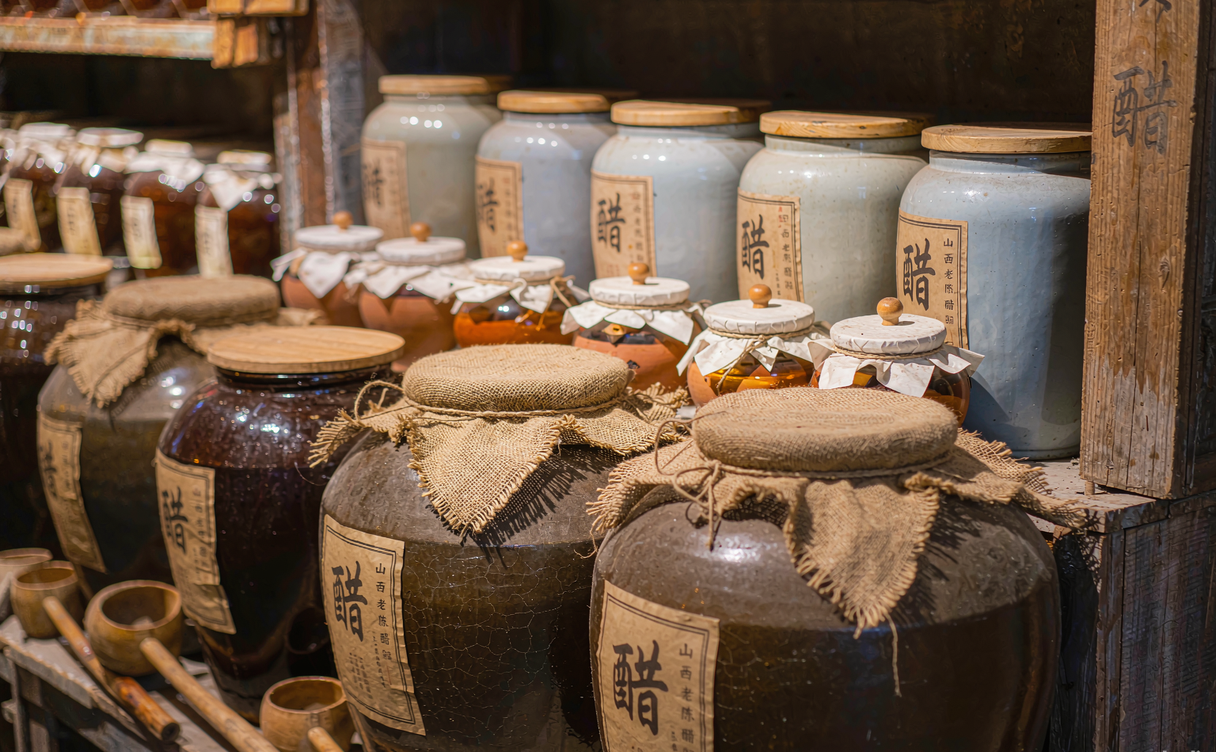
Shanxi is the vinegar capital of China, and Taiyuan is its headquarters. The local aged vinegar, Shanxi Lao Chen Cuo (山西老陈醋), is dark, mellow and sharp, fermented for years rather than months. Locals drink a spoon of it with meals the way others drink tea. That sour backbone runs through almost everything the city eats, from noodles to cold appetizers to the braised pork that anchors a banquet.
What to eat in Taiyuan is therefore a noodle question first and a vinegar question second, with the two impossible to separate. The province claims more than fifty distinct noodle shapes, and Taiyuan cooks most of them. If you are planning a wider food journey, this city is the place to learn the grammar of northern wheat before moving on to Sichuan or Canton.
The noodles you must try
Taiyuan noodles take more than fifty forms, from shaved ribbons to pinched pellets, and the cook’s hand decides the texture of each. Knife-cut noodles (刀削面, daoxiaomian) are the icon: a cook peels ribbons of dough directly into the pot, and they come out flat, chewy and perfect for catching sauce. A bowl costs RMB 12 to 18 (USD 2 to 3). Hand-pulled noodles (拉面) appear at halal stalls across the city, often served in clear beef broth. Cat’s ear (猫耳朵, mao’erduo) are tiny pinched pellets tossed with vegetables, and oat-flour rolls (莜面栲栳栳, youmian kaolaolao) are steamed, rolled cylinders dipped in a savory sauce. Tengu noodles (剔尖, tijian) are scraped from a board into the pot and have a soft, slippery bite.
For the regional framing, our Shanxi noodles and vinegar guide explains the shapes and the fermentation behind them in more depth. We send that page to travelers who want to cook at home after the trip, because the vocabulary makes ordering far less intimidating.
Vinegar: the local obsession
Taiyuan vinegar is not a condiment so much as an ingredient and a drink. The best comes from Qingxu County (清徐) on the city’s southern edge, where family workshops have aged mash in ceramic urns for generations. A good bottle of aged vinegar runs RMB 25 to 60 (USD 3 to 8) at the shops near Food Street, and the six-year and ten-year vintages make excellent gifts. We have watched travelers taste a straight shot and flinch, then order a second once the sweetness behind the sour settles in.
The single best way to understand it is to visit a tasting room and try three ages side by side. The young vinegar is bright and hot; the old is round, almost soy-sauce deep, with a molasses finish. We build that tasting into our Taiyuan day trips because it reframes every noodle bowl that follows, and it is the moment most travelers start to get Shanxi.
Night market eats and street food
Taiyuan’s evening food scene centers on Liu Lane (柳巷) and the rebuilt Food Street (食品街), a pedestrian strip of stalls and small restaurants. Here you will find wantuo (碗托), a firm buckwheat jelly sliced and dressed with vinegar and chili for RMB 8 to 12 (USD 1 to 2). You will find roujiamo-style wheat pockets, grilled mutton skewers (羊肉串), and sweet fried cakes. The atmosphere is local and noisy in the best way, and prices are low enough that you can graze across ten stalls for under RMB 80 (USD 11).
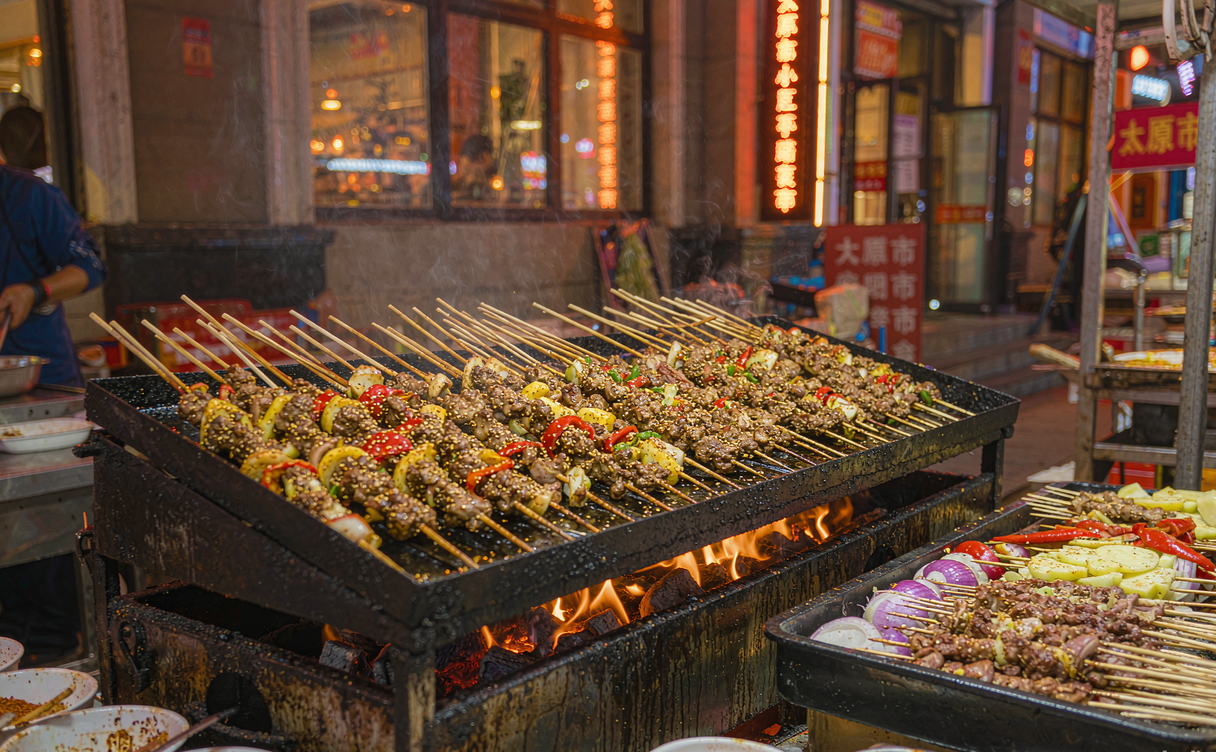
Best restaurants in Taiyuan for a traveler are often the ones with the longest local queues, not the brightest signs. We look for shops where the dough is made on site and the vinegar urns are visible, because those two signals predict a good meal better than any review app, and they mark the places locals actually return to.
A dish worth waking up for
Taiyuan has one breakfast that surprises every visitor: tounao (头脑), a warm stew of mutton, rice wine, lotus root and Chinese yam, created by the scholar Fu Shan as a restorative for his mother. It is eaten in winter mornings, usually with a fried dough stick, and it tastes nothing like the rest of Shanxi food. A bowl is RMB 15 to 25 (USD 2 to 3). We warn travelers it is an acquired taste, then watch most of them come back for it on the second day.
Alongside it, guoyou rou (过油肉), a velvety stir-fry of pork with wood-ear fungus and scallions, is the dish we order at nearly every sit-down dinner. It is the quiet classic of Taiyuan cuisine, and a good version costs RMB 38 to 58 (USD 5 to 8). Together the two dishes show the range of the local table, from restorative broth to wok-seared comfort.
Best seasons and timing
Spring, April to May, and autumn, September to October, are the comfortable windows; summer is warm and winter is brutally cold but rewarding for hot noodle soups and tounao. We always confirm the season before scheduling, because Shanxi’s winters are long and the night markets thin out when the temperature drops, which changes both the food and the mood of the streets.
Getting there
Taiyuan is a major high-speed rail hub. From Beijing it is about 3 hours; from Xi’an roughly 3 hours; from Datong about 2.5 hours. If you are arriving from another region, our China high-speed train guide for foreigners covers tickets and seat classes. Taiyuan Wusu Airport (TYN) has flights across China, and the city makes an easy stop on a Shanxi loop that includes the Yungang Grottoes near Datong, where the noodles and the Buddhist caves make a strong pairing.
What we tell first-timers
Eat where the dough is fresh, drink the vinegar, and do not rush the noodles. A Taiyuan meal is cheap by design and generous by habit, and the best versions come from shops that have been doing one thing for decades. We steer clients away from the generic mall food courts and toward the hole-in-the-wall counters where a single cook runs the whole show, because that focus is what produces the cleanest bowls.
A sample eating day
We suggest this rhythm to newcomers. Breakfast: a bowl of tounao and a fried dough stick in a winter morning. Late morning: a tasting of three vinegars in Qingxu or a shop near Food Street. Lunch: knife-cut noodles with braised pork. Afternoon: walk Liu Lane and snack on wantuo and skewers. Dinner: guoyou rou and a cat’s ear noodle plate at a local counter. It is filling but never precious, and it shows the city’s range in a single day.
Background and authority
For the history behind Shanxi’s grain and trade, the Wikipedia entry on Taiyuan gives a clear, neutral overview of the city’s role as a merchant and vinegar center, useful context before you eat.
Final bites
Taiyuan is not a flashy food city, and that is exactly its strength. It rewards attention: the difference between a three-year and a ten-year vinegar, between a shaved noodle and a scraped one, between a tourist stall and a local counter. Learn those small things here and the rest of northern China starts to make sense, and you leave with a palate most visitors never develop.