

Perched on the far eastern tip of the Shandong Peninsula, Weihai is the kind of Chinese seaside city where the morning catch lands before most travelers have finished breakfast. On our last visit in late September, we walked the International Seafood Market at 6 a.m. and watched fishing boats unload mackerel, sea cucumbers and razor clams still slick with Yellow Sea brine. This Weihai food guide is built from those trips and from the notes of the hundreds of travelers we have sent along the coast each year, and it is meant to be practical rather than poetic.
Why Weihai eats differently
Weihai’s kitchen sits at a crossroads. To the north and east is the open Yellow Sea; to the cultural west is the broader Shandong tradition of Lu cuisine, China’s oldest regional style. What makes what to eat in Weihai a distinct question is the Korean layer. Weihai is the Chinese city closest by sea to the Korean peninsula, and for decades it has hosted one of the country’s largest Korean communities. The result is a coastal menu threaded with Korean barbecue, cold noodles and kimchi that you will not find inland in Shandong.
The seafood at the core of the plate
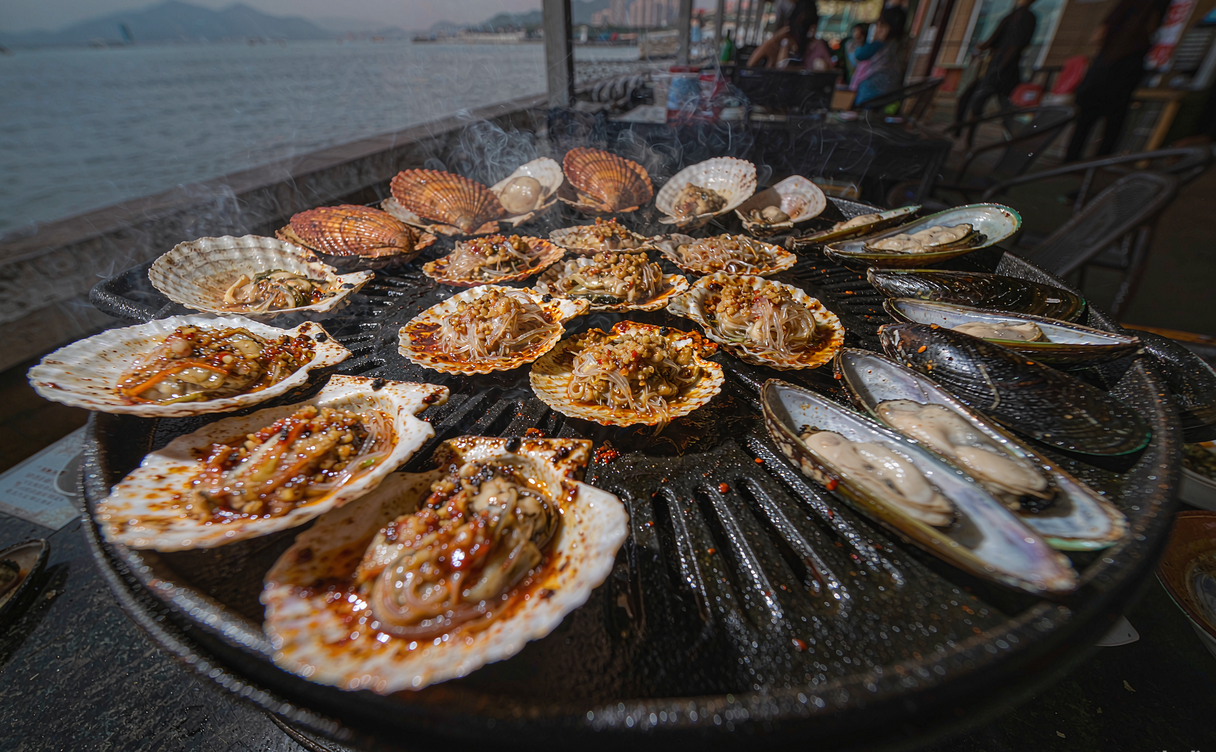
Ask any local and they will tell you the same thing: the local seafood is defined by freshness, not sauce. The signature catches are mackerel (鲅鱼, the fish behind the famous mackerel dumplings 鲅鱼水饺), sea cucumber (海参), abalone (鲍鱼), scallops (扇贝), oysters (海蛎子) and the prized sea intestine (海肠), a chewy, umami-rich ribbon that turns sweet when flash-fried with leeks. In spring you will also see sea urchin and limpets on the smaller stalls.
Prices are gentle compared with Beijing or Shanghai. At a harbor-side stall you can buy live scallops for RMB 6 to 10 each and have a nearby restaurant process them for a RMB 10 to 20 cooking fee. A full seafood dinner for two, with beer, rarely tops RMB 260 (about USD 36). Upscale hotels charge RMB 180 to 300 (USD 25 to 42) per person, but the honest value is at the open-air seafood squares near Huancui District, where the tanks sit on the floor and the prices are written on a board.
We have sent travelers to the night seafood market behind Weihai Station and to the small restaurants on the Liugong Island (刘公岛) causeway, where owners point at the tank and quote the day’s price. That direct, tank-to-table style is the purest expression of Weihai coastal cuisine, and it is the habit we try to teach every first-time visitor.
The Korean side of the table
The Korean district, centered on Hanlefang (韩乐坊) in Huancui, is where the city’s second culinary identity lives. Here you will find samgyeopsal (grilled pork belly), bibimbap, naengmyeon (cold buckwheat noodles) and endless little dishes of kimchi and pickled vegetables. A Korean barbecue set for one runs RMB 90 to 160 (USD 12 to 22); add a bottle of soju or a local Tsingtao and the bill stays under RMB 200. The cold noodles are a revelation in summer, served in an iced broth with pear slices and a poached egg.
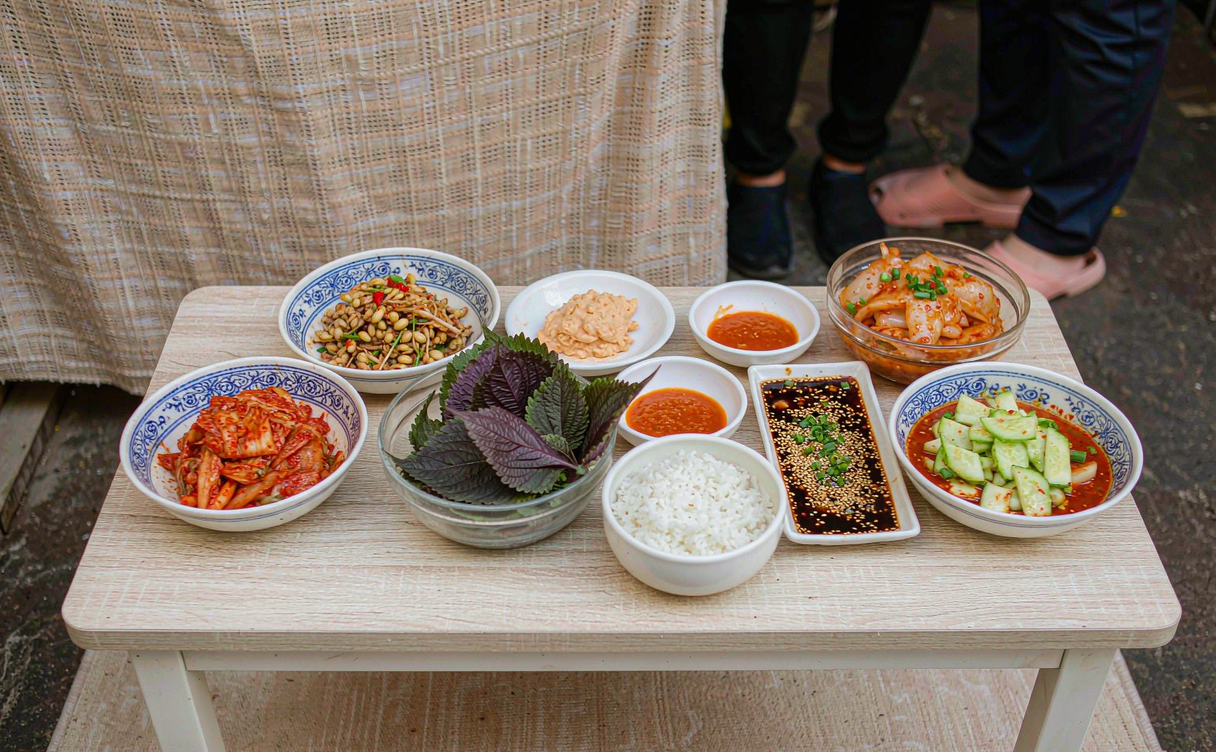
For travelers who want both worlds in one day, we suggest starting with a Korean breakfast of cold noodles and finishing with a late seafood hotpot. That rhythm is exactly what our small-group trips build into the itinerary, because it lets you taste the two cuisines without repeating yourself.
Dishes we tell every client to try
Beyond the headline items, a few plates define a real Weihai meal. Mackerel dumplings are springy and sweet, never fishy when fresh, about RMB 30 (USD 4) a steamer. Sea intestine with chives is the local show-off dish, RMB 68 to 98 (USD 9 to 14). Braised sea cucumber in scallion sauce is the banquet standard, RMB 120 to 200 (USD 17 to 28) by size. Oyster omelets and grilled squid skewers fill the night markets for a few RMB each. Do not skip the seaweed jelly (海菜凉粉), a cold, savory summer snack that costs almost nothing and tastes like the sea distilled.
The best food in Weihai, in our view, is rarely one famous restaurant but a habit: arrive early, buy what is moving, eat it within the hour. That discipline is what separates a good meal from a great one on this coast, and it is the single tip our returning travelers repeat most.
Best food seasons and how to time your trip
The best window for a reader here is September through November. After the summer crowds leave, the waters cool and the shellfish fatten; mackerel and squid peak, and dock prices drop. Late April to June is the second-best stretch, when sea cucumber and abalone are plump and the weather is mild. Summer, July to August, is lively but hot, and prices rise with the tourist tide. Winter is quiet and very cold, but the indoor hotpot and barbecue scene is at its coziest.
Getting there and getting around
Weihai is easy to reach. The high-speed rail from Qingdao takes about 1.5 to 2 hours, and from Beijing roughly 4.5 hours. We suggest pairing it with Qingdao’s seafood scene on a single Shandong coastal loop, because the two cities complement each other neatly. For ticketing and onboard food, our China high-speed train guide for foreigners walks through booking and seat classes.
Weihai Dashuibo Airport (WEH) has seasonal flights from Seoul and major Chinese hubs, and ferries to Incheon have historically linked the two coasts. Within the city, Didi and local buses reach every market; for the outer islands, ferries run from the port near the railway station, and we can arrange a boat transfer as part of a custom plan.
Where we send first-time visitors
For a first Weihai restaurants stop, we point people to the International Seafood Market food court, where you buy from vendors and eat at attached tables. For Korean food, Hanlefang after dark is unbeatable. For a sit-down splurge, the seaside hotels on the ring road serve clean, gently braised Lu-style plates with an ocean view. We avoid any place that will not show live tanks and a printed price list, because that transparency is the best protection against a bad meal.
A sample eating day
We often suggest this rhythm to newcomers. Breakfast: a bowl of seafood wontons and a Korean cold noodle at Hanlefang. Late morning: walk the International Seafood Market and buy scallops and oysters to be cooked. Lunch: the cooked seafood plus a plate of mackerel dumplings. Afternoon: coffee by the coast and a rest. Dinner: a barbecue set or a seafood hotpot, depending on the season. It is simple, repeatable and genuinely local, and it covers the range of Weihai restaurants without a single wasted meal.
Safety, sourcing and a note on background
We only recommend restaurants that display live tanks and clear pricing, a practice the local tourism board encourages. For background on the region’s fishing and port history, the Wikipedia entry on Weihai is a useful, neutral starting point.
Final bites
Weihai rewards the curious. Order the sea intestine even if it sounds odd, try the mackerel dumplings, and save room for a Korean cold noodle bowl at midnight. The city is small enough to feel local and seafood-rich enough to justify the trip, and it remains one of the best-value coastal food destinations we send people to in eastern China. Checking the season before you book is wise, and our trip planners can confirm the catch calendar with you.