

Jinan, the provincial capital of Shandong, calls itself the Spring City (泉城) because the Baotu Spring and dozens of smaller springs bubble up through the old town center. That water is not just pretty; it is the reason Jinan’s cooking tastes the way it does. Jinan sits at the heart of Lu cuisine (鲁菜), the oldest of China’s eight great regional kitchens, and the city’s tables lean on clear broths, spring-water tofu, and a restraint that surprises travelers used to louder northern flavors. We first ate our way through Jinan on a winter trip in 2020, and on our last visit a vendor at the breakfast lane pressed a still-warm baobing rice set into our hands before we’d finished ordering. This guide lists what to eat in Jinan, where to sit down, and what it costs.
Lu cuisine splits into branches, and the Jinan school is the one built on stock and knife work rather than heavy sauce. The signature dish is sweet-and-sour carp (糖醋鲤鱼), fried whole and lacquered in a bright vinegar glaze, best ordered at a old-name restaurant where the fish is live from the spring ponds. Another classic is braised intestines (九转大肠), a patient sweet-savory dish that rewards the curious, and cream soup with cattail (奶汤蒲菜), a delicate spring-water broth with the tender core of the reed. Our Shandong Lu cuisine guide explains the kitchen’s rules in full, but Jinan is where you taste them at the source, because the city trained the cooks who carried the style across China.
What to eat in Jinan
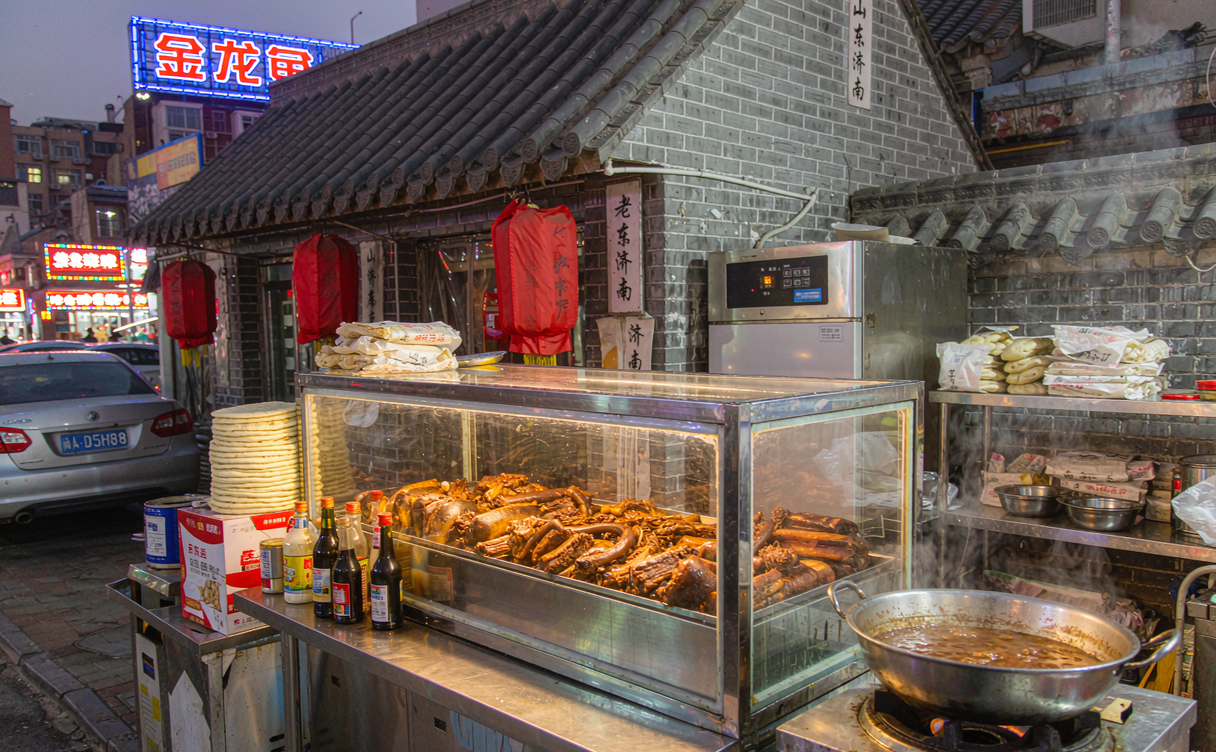
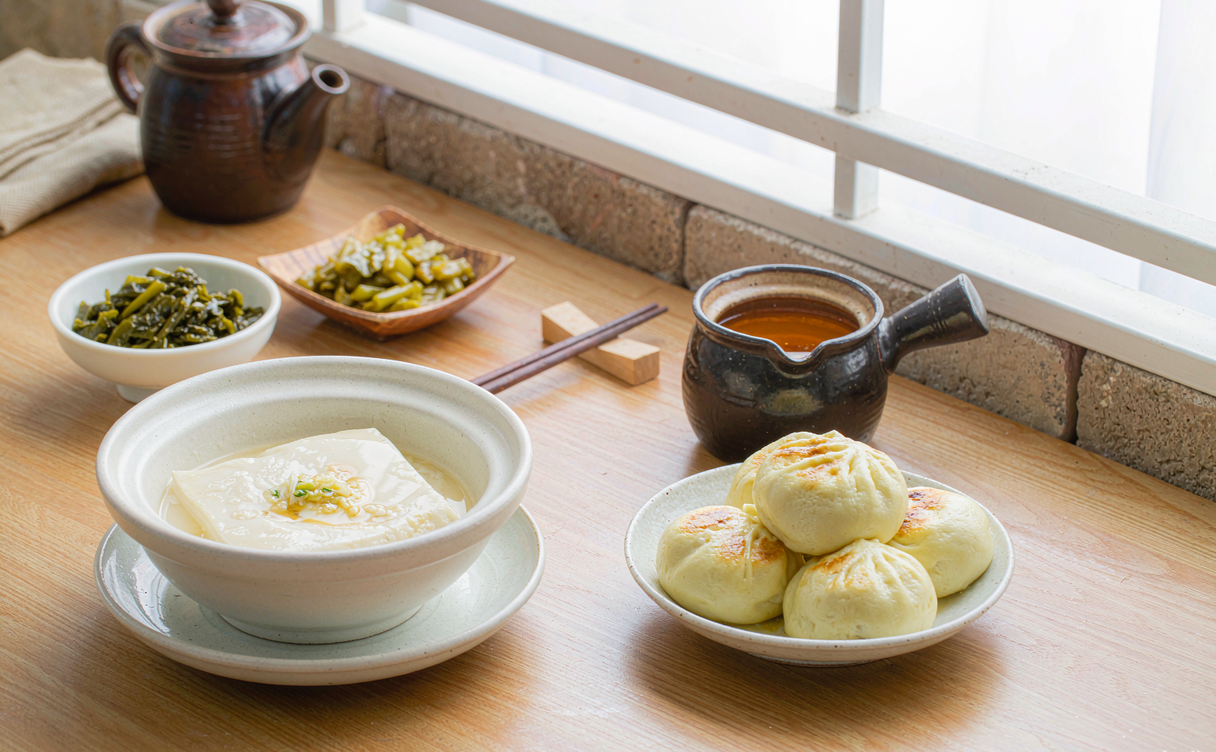
Start with the Jinan Lu cuisine staples, then drop to the streets. Baobing — the braised-pork (把子肉) rice counters — is the city’s everyday food: a slab of pork belly braised in soy and spice, sliced onto rice with a ladle of the dark broth and a pickled vegetable on the side, eaten standing at a counter for ¥15 to 30 ($2 to 4). Spring-water tofu (泉水豆腐) is silken and sweet, served cold with a little scallion oil, and the local millet porridge (小米粥) is the comfort breakfast. At the upscale end, a Lu banquet of carp, intestines, cattail soup, and a braised sea cucumber runs ¥120 to 250 ($17 to 35) per person. We steer first-timers to one old-name dining room and one street lane, because the contrast is the whole education, and Jinan rewards the traveler who does both in a single day.
Jinan restaurants we use
The best food in Jinan hides behind modest facades. Yanxitang (燕喜堂) is the heritage name for a refined Lu set meal, while Jufengde (聚丰德) is the reliable old brand for carp and cattail soup at fair prices. For breakfast, Caobao Baozi (草包包子) near the old city sells steamed parcels by the basket from ¥10 ($1.50), and the lanes around Furong Street crowd with stalls selling grilled squid, shaobing flatbreads, and sweet fermented glutinous drinks. On our last visit we booked a traveler into a small family restaurant off Quancheng Road where the chef’s cattail soup alone justified the trip; we name a short list of Jinan restaurants in our planning notes so clients skip the tourist traps around the springs.
One dish worth chasing on its own is the spring-water baobing contrast. The braised-pork counters vary hugely by the age of their master stock; the best stalls have simmered the same soy base for years, and the depth shows in the first bite. We send travelers to compare a heritage-room carp with a street baobing in the same morning, because the pairing is the clearest lesson in how Jinan balances banquet and everyday at the one table. Order the pork with an extra ladle of broth over the rice and a sour vegetable to cut the fat, and you have a ¥20 ($3) meal that rivals plates ten times the price.
Best time for Jinan spring city food
The best food in Jinan tracks the seasons, and spring is the peak. The best time to visit Jinan for eating is April and May, when the springs run fullest after the snowmelt and the cattail is tender, and again in September and October for the fat autumn carp and cooler nights made for broths. Our best time to visit China page puts the north in the spring-and-autumn camp, and Jinan follows it; summer is hot and the broths lose their appeal, while deep winter is bracing but perfect for a hot intestine braise. Time a morning at Baotu Spring with a late breakfast lane, and the city’s nickname starts to make culinary sense.
A Jinan food tour framework
For travelers who want structure, our China food tour guide sketches how to string Shandong into a wider eating route, but Jinan stands alone as a one-day crash course. We build the day as a spring walk, a heritage lunch, an afternoon tofu snack, and a street dinner, with a local guide who translates the menu and stops you ordering three braised dishes by mistake. We’ve sent travelers there who arrived skeptical of “bland northern food” and left converted by a single bowl of cattail soup; Jinan’s subtlety is the whole point, and it needs a patient mouth to land.
Vegetarians are not forgotten. The spring-water tofu and the cattail soup are both meat-free by tradition, and the breakfast lanes sell steamed buns with chive or mushroom fillings for ¥6 to 10 ($1 to 1.50). Ask the heritage restaurants to build a Lu vegetable plate of braised gluten, lily bulb, and bamboo shoot in clear stock, and you get the kitchen’s restraint without the seafood. We’ve sent plant-based travelers there who ate very well by leaning on the tofu and the broths, which is rare for a northern Chinese city and a real point in Jinan’s favor. Save room across the day rather than one big sitting; Jinan’s courses are light and the joy is in the spacing, not the volume.
Practical tips
Carry small cash for the breakfast lanes, because the best stalls often don’t take foreign cards, and arrive at heritage restaurants before 6 p.m. or book, because the old names fill with locals at dinner. Ask for the spring-water tofu cold, not stir-fried, the first time, so you taste the water. A light walk after the carp is wise; the dish is richer than it looks.
Getting the most from your visit
A guided food day beats guessing from photos, and we’ve sent travelers there who covered four styles in one walk with a guide who knew every vendor. The sweet spot is a weekday in April or October, when the springs are full and the lines at Caobao Baozi are short. Allow two meals minimum — one heritage, one street — because Jinan’s range only shows when you do both, and the baobing counter at 8 a.m. is non-negotiable.
For the culinary background of the regional kitchen, see the Wikipedia entry on Lu cuisine.