

Taibai Mountain rises in the heart of the Qinling range, the great east–west spine that divides northern and southern China. At 3,767 meters, it is the highest peak in Shaanxi province and one of the most rewarding high-mountain day hikes reachable from Xi’an in a single trip. Snow lingers on the summit well into late spring, and on clear mornings you can stand above a rolling sea of clouds with alpine meadows and glacial lakes at your feet.
This Taibai Mountain guide walks through the hiking routes, what to do at the top, when to go, and how to get there from Xi’an. It is written for fit travelers who want a taste of the Himalayas’ foothills without leaving central China.
Why Taibai Mountain Matters
The Qinling mountains are more than scenery. They form a climatic and ecological boundary: to the north lies the loess plateau and a drier, wheat-growing north; to the south, the lush, rice-growing basin of the Han River. Taibai Mountain, the range’s highest point, has been a site of Taoist retreat and imperial ceremony for over two thousand years. Poets of the Tang dynasty climbed or wrote about it, and its name appears in classical Chinese landscape tradition.
The mountain also protects a remarkable range of vegetation zones, from warm broadleaf forest at the base to cold alpine tundra near the summit. In a single climb you pass through several climate bands, which makes Taibai Mountain hiking feel like traveling from the subtropics to the Arctic in one day.
Geographic background on the Qinling range and its role in China’s geography is detailed on Wikipedia’s Qinling page. To pair your climb with the province’s headline sights, our Xi’an travel guide covers the city you will likely launch from.
Things to Do at Taibai Mountain
Most visitors enter through the Taibai Mountain National Forest Park on the north side, near the town of Tangyu, famous for its hot springs. From the gate, the experience splits into two styles.
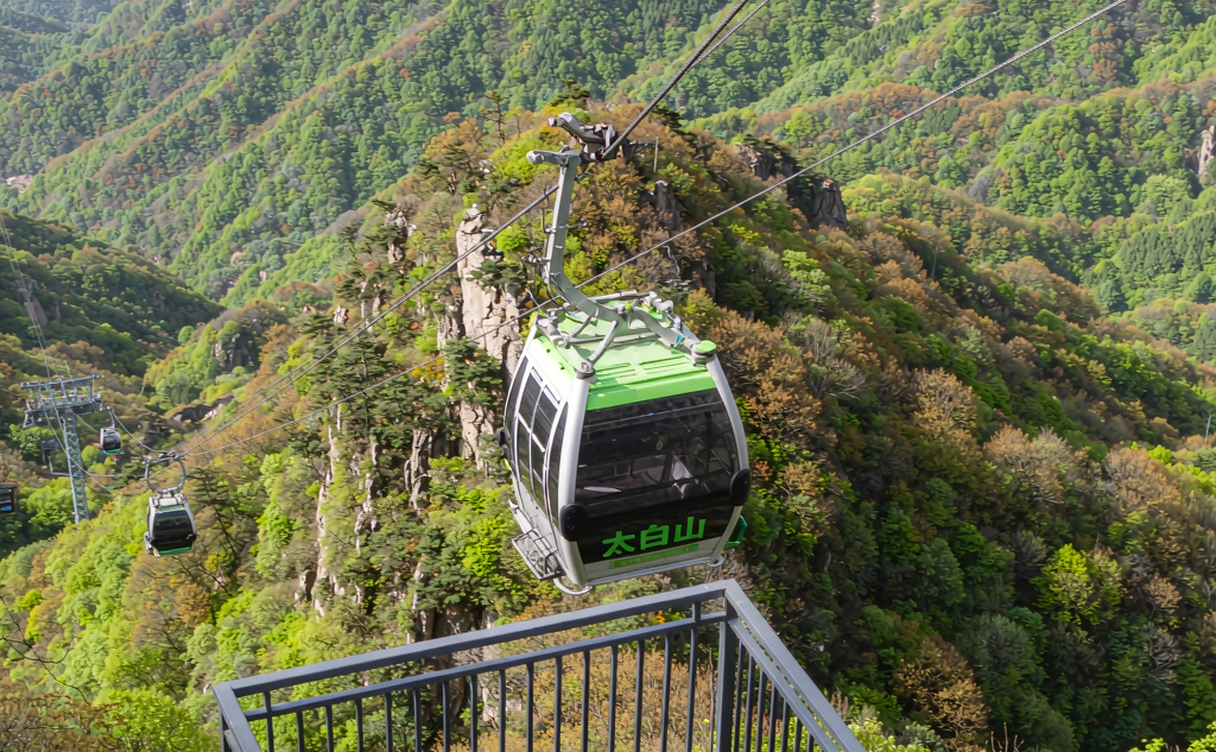
- Cable car and boardwalk: two cable sections lift you past the steep lower forest to high meadows, cutting the hardest climbing while keeping the views. This is the standard choice for a day trip.
- Serious hiking: fit trekkers can walk from the lower trails to the summit, passing the Cloud River Fairyland pools, the Heavenly Gate, and finally the Taibai Dawn Light platform.
- Summit lakes: near the top sit small glacial pools such as the Dayehai and Eighth Fairies lakes, frozen well into May.
- Hot springs at Tangyu: after the descent, soak in mineral pools that have drawn bathers for centuries.
For a different kind of Shaanxi peak experience, the Huashan Mountain guide describes the famously vertiginous sacred mountain east of Xi’an, and our China hiking treks guide lists multi-day routes across the country.

Best Time to Visit Taibai Mountain
Timing makes or breaks a Taibai trip. The mountain is officially open from roughly April to October, and even in summer the summit can drop near freezing at night.
- May to June: snow begins to melt, wildflowers carpet the meadows, and crowds are moderate.
- July to August: warmest and busiest, with the clearest chance of a sea-of-clouds sunrise; book accommodation early.
- September to October: crisp autumn colors and thin crowds, but early snow can close the upper trails.
- Winter (November–March): closed to casual visitors because of ice and extreme cold.
Because the weather shifts fast above 3,000 meters, bring layers even in July. Our best time to visit China overview helps you slot Taibai into a wider Shaanxi and beyond itinerary.
How to Get to Taibai Mountain
The mountain lies about 110 km west of Xi’an. The usual approach is to reach the north entrance at Tangyu, in Mei County.
1. Take a high-speed train from Xi’an North to Baoji or a long-distance bus toward Taibai County, then a local taxi to the park gate.
2. Many travelers join a private car or tour from Xi’an, which is simplest if you do not speak Chinese, since rural bus connections are infrequent.
3. Within the park, shuttle buses connect the entrance to the lower cable car station.
Foreign visitors should review our China high-speed train guide for foreigners for booking tips, and carry your passport for tickets and any overnight stays. If you are combining the climb with history, the Xi’an Terracotta Warriors visit guide explains how to see the army in a single morning before heading to the hills.
Climbing Routes in Detail
Two styles of day shape a Taibai visit. The easier route rides the lower cable car from Tangyu to the mid-mountain station, then a second lift toward the high meadows, leaving a boardwalk stroll to the glacial lakes; this is the right choice for most foreign visitors and keeps the hard climbing to a few hundred stone steps. The committed alternative walks the whole way from the gate, passing the Cloud River Fairyland pools, the Heavenly Gate notch, and the Taibai Dawn Light platform before the summit ridge. Allow six to eight hours for the full walk and start before sunrise. Either way, the descent returns you to Tangyu, where the hot-spring hotels sit within a few minutes of the car park.
Flora, Fauna, and the Cloud Sea
The climb is a vertical tour of climate zones. Below 1,500 meters, warm oak and pine forest gives way to birch and rhododendron thickets, then to alpine meadows speckled with summer wildflowers. Above 3,000 meters the plants shrink to cushion-shaped tundra survivors, and on clear nights the temperature can fall below freezing even in July. The mountain’s famous draw is the sea of clouds: after rain followed by a calm, clear dawn, the valleys fill with a rolling white ocean and the peaks stand like islands. Arrive the evening before and sleep low, then rise at 4 a.m. for the best chance at that view from the upper boardwalk.
Where to Stay
Most visitors commute from Xi’an, but staying closer saves the long drive and protects an early start. Tangyu town at the foot of the mountain has hot-spring resorts ranging from simple guesthouses to larger hotels with private pools; a soak here after the climb is the local tradition. Inside the park, basic lodges near the upper stations exist for hikers attempting a pre-dawn summit, but they are sparse and should be booked ahead in summer. If you prefer city comforts, Xi’an’s endless hotel stock and its night markets make a fine bookend to a mountain day.
What to Pack and Expect
Taibai is not a technical climb, but the altitude and weather deserve respect.
- Layers and a windproof jacket: the summit is 15–20°C colder than Xi’an.
- Sturdy shoes: boardwalks help, but side trails are rocky and slippery when wet.
- Water and snacks: prices rise with elevation, and the upper stations have limited food.
- Cash: card readers fail at high altitude; small notes smooth the way.
Acclimatize slowly if you are coming straight from sea level, and turn back if you feel dizzy or short of breath. The mountain rewards those who listen to their bodies.
A Suggested One-Day Plan
Catch an early bus or car from Xi’an, reach the park by mid-morning, ride the cable cars to the high meadows, and walk the boardwalk toward the summit lakes. Descend by late afternoon and soak in the Tangyu hot springs before returning to the city. Ambitious hikers can start before dawn to catch sunrise above the clouds.
Final Thoughts
Taibai Mountain packs a surprising amount into a single day: ecological zones, Taoist history, high-altitude drama, and a hot-spring reward. It is the most accessible way for foreign visitors to feel the roof of central China.
One More Note on Respect
Treat the summit and its small temples with quiet courtesy. This is a living sacred landscape for many Chinese visitors, and a calm demeanor keeps the experience good for everyone on the trail.