

Summer Palace Beijing is the one imperial garden I tell every first-time visitor to put at the top of their list. Spread across 290 hectares in the city’s northwest (Haidian District), it pairs a 60-meter Longevity Hill with the enormous Kunming Lake, and it is the largest surviving imperial garden in the world — a UNESCO site since 1998. I’ve walked it in January slush and in July heat, and it never feels the same twice. This guide covers what it actually costs in 2026, the route that skips the worst crowds, how to get there on the subway, and the boat rides worth your money.
Key Takeaways
– Entry runs ¥30 (peak) / ¥20 (off-peak) for the garden, or ¥60 / ¥50 for a combo ticket that includes the inner halls.
– Take Subway Line 4 to Beigongmen (North Gate) to walk the park in reverse and dodge the tour groups.
– The North Gate → Suzhou Street → Longevity Hill → Long Corridor → Marble Boat → boat to Nanhu Island → Seventeen-Arch Bridge → East Gate loop takes about 3–4 hours.
– Kunming Lake ferries cost ¥30–40 one-way per person; pedal and electric boats rent for roughly ¥60–200 per hour.
– Arrive at opening (6:00 peak / 6:30 off-peak) for empty pathways and the best morning light on the water.
Tickets & Opening Hours (2026)
The Summer Palace uses a two-tier system, and the difference matters. The garden ticket gets you into the grounds — the lake, the hill, the Long Corridor, the outdoor scenery. The combo (or “through”) ticket adds the walled “gardens within the garden”: the Tower of Buddhist Incense, Dehe Garden (the grand theater), Suzhou Street, and the Summer Palace Museum.
| Ticket | Peak (Apr 1–Oct 31) | Off-peak (Nov 1–Mar 31) |
|---|---|---|
| Garden (entry) | ¥30 | ¥20 |
| Combo (all inner halls) | ¥60 | ¥50 |
| Dehe Garden only | ¥5 | ¥5 |
| Tower of Buddhist Incense | ¥10 | ¥10 |
| Suzhou Street | ¥10 | ¥10 |
| Summer Palace Museum | ¥20 | ¥20 |
My honest take: buy the combo ticket. The Tower of Buddhist Incense alone is the visual heart of the whole place, and paying à la carte at four separate gates ends up costing more and wastes time in line. If you only want a lakeside stroll and a photo of the Marble Boat from outside, the garden ticket is enough.
Opening hours shift with the season:
- Peak: park 6:00–20:00 (last entry 19:00); inner halls 8:00–18:00.
- Off-peak: park 6:30–19:00 (last entry 18:00); inner halls 8:30–17:00.
- The inner halls close on Mondays (except public holidays), so don’t plan a combo-heavy visit for a Monday.
Children under 1.2 m enter free, and students with a valid ID get half price on the garden and combo tickets. I’ve seen travelers aged 60+ waved through free with a passport at the gate, but policies change — verify on the official English site before you rely on it: Summer Palace official site. You can buy at the gate or book ahead through the official WeChat account; for a weekend in spring or autumn, booking ahead is the smart move.
Building your Beijing plan? Our Beijing 3-Day Itinerary slots the Summer Palace into day two alongside the other essentials.
How to Get There
The park has six gates, but two matter for visitors.
North Palace Gate (Beigongmen / 北宫门) — Take Subway Line 4 to Beigongmen Station, Exit D. The gate is about 100 meters away, a two-minute walk. This is my default arrival point because it feeds you straight into the crowd-free back half of the garden.
East Palace Gate (Donggongmen / 东宫门) — Take Subway Line 4 to Xiyuan Station, then walk roughly 10–15 minutes northeast. This is the “official” imperial entrance and the start of the classic route, but it’s also where every bus tour unloads at 9 a.m.
A taxi or rideshare (DiDi) will drop you at either gate, but Beijing traffic around Haidian in the morning is unpredictable. The subway is faster and drops you closer. If you’re connecting from the Forbidden City guide, budget 40–50 minutes by subway (Line 1 to Line 4 via Xidan, or a direct DiDi across town).
The Route That Actually Works
Most visitors enter at the East Gate and immediately collide with tour groups at the Hall of Benevolence and Longevity. I do the opposite. Here’s the loop I’ve walked a dozen times:
- Enter North Palace Gate. Climb briefly into the wooded back hill.
- Suzhou Street — a replica Qing-era canal market along a narrow waterway. It opens at 8:00 and is nearly empty before 9:30.
- Four Great Regions (Sida Bushu) — the Tibetan-style stupa cluster on the hill’s north slope. Skip the climb if you’re short on time; view it from below.
- Longevity Hill central axis — work up through the Cloud-Dispelling Gate to the Tower of Buddhist Incense (Foxiang Ge). This three-story tower is the postcard shot, and the staircase up rewards you with the full lake spread.
- Descend the front of the hill to the Long Corridor — 728 meters of covered walkway, painted ceiling to floor.
- Marble Boat (Qingyan Fang) — the famous stone “ship” at the lake’s northwest edge.
- Boat to Nanhu Island, then walk the Seventeen-Arch Bridge back to the east shore.
- Exit East Palace Gate, past the administrative courtyards (Renshou Hall, Yulan Hall).
Budget 3–4 hours for this. Add an hour if you linger on a boat or explore the Summer Palace Museum.
One morning last October, I arrived at the North Gate right at the 6:30 off-peak opening. The Long Corridor was empty, the lake was flat silver, and a small group was doing tai chi near the water’s edge with no one else around. By 10 a.m. the same corridor was a slow-moving river of tour flags. That two-hour window is the real secret of the place.
Kunming Lake & the Boats
Kunming Lake covers roughly three-quarters of the park, so you’ll want to be on or beside the water at some point. Two options:
Ferry boats (大船). These run fixed routes and charge ¥30–40 per person one-way — for example, the Marble Boat to Nanhu Island run is ¥40, and the shorter hops (Nanhu Island to Jade Belt Bridge) are ¥30. This is the budget play and the one I recommend for solo travelers. Boats run roughly 8:30–16:30 and stop earlier in winter.
Rental boats. Pedal boats and row boats run about ¥60–120 per hour depending on size (4–6 seats). The six-seat electric “antique” boats — the ones that look like little Qing pavilions — go for roughly ¥120–200 per hour and need a cash deposit (often ¥400–600). They’re fun for a family but pricey; split between four people it’s reasonable.
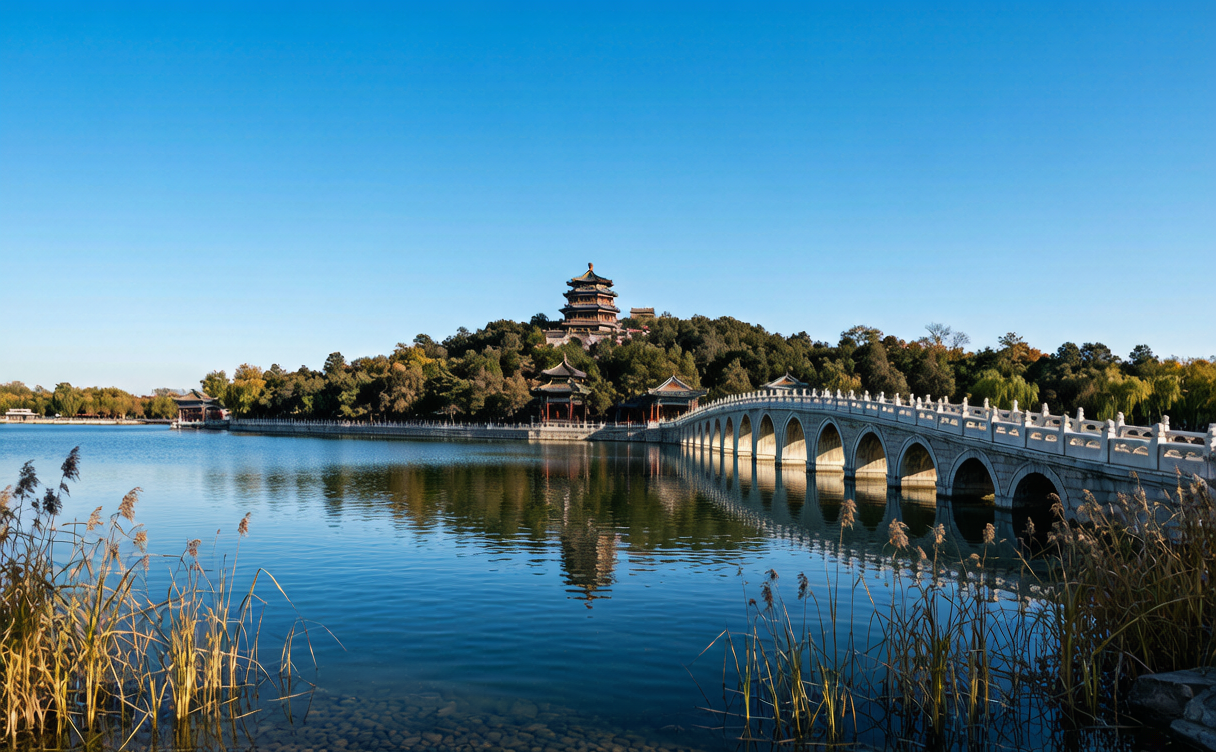
On a July visit, my friend Sarah and I rented a four-seat pedal boat near the Eight Directions Pavilion dock for ¥60 an hour. We paddled out toward Nanhu Island, and the Tower of Buddhist Incense mirrored perfectly in the still water — then a tour ferry’s wake rocked us sideways and we both laughed. Rentals are cheapest and quietest on a weekday morning; by 2 p.m. on a weekend the docks can have a 40-minute queue.
Want more lake time? See how the Summer Palace compares with other stops in our Things to Do in Beijing roundup.
What Not to Miss
The Long Corridor (Changlang). At 728 meters with more than 14,000 painted panels, it’s the longest painted corridor in any Chinese garden. The ceiling scenes retell Romance of the Three Kingdoms and Journey to the West. Walk slowly and look up — that’s where the detail is.
Tower of Buddhist Incense (Foxiang Ge). Sits dead center on Longevity Hill. The climb is short but steep; the balcony view over Kunming Lake is the single best photo in the park.
The Marble Boat. A 36-meter “ship” built from marble and wood, a quiet jab at the navy funds Empress Dowager Cixi diverted to rebuild the garden in 1888. You can’t board it, but the lakeside bench nearby is a fine rest spot.
Seventeen-Arch Bridge. Connects the east shore to Nanhu Island. Each arch frames the hill differently; at sunset the bronze ox statue at the bridge’s northern foot catches the last light.
Suzhou Street. Best early. The shops are mostly closed stalls now, but the canal setting is unique in Beijing.
West Causeway (Xidi). A lesser-known dike modeled on Hangzhou’s West Lake, with six bridges including the humpbacked Jade Belt Bridge. Almost no tourists walk it — go here if you want quiet.
Insider Tips From Someone Who’s Been Burned
Go early, always. The park opens at 6:00 (peak) or 6:30 (off-peak). The first two hours belong to joggers and photographers, not tours.
Pack water and a snack. The in-park restaurants (Tingliguan, the Marble Boat café) are decent but priced for a captive audience. There are drinking-water refill points near the main gates.
Wear real shoes. It’s a big loop with real hills. I once wore dress shoes for a “quick look” and regretted every step of the Marble Boat-to-East-Gate walk.
Monday closes the inner halls. Plan combo visits for Tuesday–Sunday.
Winter is underrated. Off-peak tickets are ¥20, crowds vanish, and if the lake freezes (some years) the scale of the empty garden is striking. Just dress for it.
Combine it smartly. The Summer Palace is a half-day, not a full one. Pair it with the Great Wall Beijing day trip on a different day, or follow it with the Beijing first-time travel guide route through the hutongs.
Where It Fits in Your Trip
If you’re using our Beijing 3-Day Itinerary, the Summer Palace lands on day two, after a Forbidden City morning and before an evening in the old lanes. Spring (April–May) and autumn (September–October) are the easiest times to enjoy it — see the best time to visit China for the broader picture. Summer brings lotus blooms on the lake but also heat and domestic crowds; winter is cold but empty.
Final Word
The Summer Palace rewards a slow morning more than any other site in Beijing. Buy the combo ticket, enter at the North Gate before the tours arrive, walk the hill, float the lake, and save the East Gate courtyards for when your feet need a flat finish. It’s imperial China at its most relaxed — and at ¥30 to get in, one of the best values in the city.
Ready to plan the rest? Start with our Beijing First-Time Travel Guide and build your days around the spots that fit your pace.