

Our Shengzhou travel guide starts about 110 kilometers southeast of Hangzhou, in the rolling hill country where China’s most popular regional opera was born and where some of Zhejiang’s finest green tea is still plucked by hand every spring. On our last visit we spent three nights in the county seat and used it as a base for Chongren ancient town, the tea terraces above Ganlin, and the national Yue Opera Museum. If you have worked through our Hangzhou travel guide and want the quieter, deeper version of the province, Shengzhou is exactly that.
Why Shengzhou Earned a Spot on Our List
Most foreign travelers have never heard of Shengzhou, yet every fan of Yue Opera (Yueju) owes it a visit. The art form was born here in 1906, when farmers in the villages around Ganlin township began staging sung stories on makeshift stages. Today the county calls itself the homeland of Yue Opera, and it backs that claim with a purpose-built museum that holds costumes, recorded arias, and the original village performance sites you can still walk out to.
We have sent travelers here who wanted culture without the ticket lines of Hangzhou and Suzhou, and the feedback is always the same: the pace is gentle, the food is local, and nobody is trying to sell you a postcard. For people building a broader jiangnan-7-day-itinerary, Shengzhou slots in nicely between Shaoxing and the mountain counties of Lishui.
Things to Do in Shengzhou
The single best stop is the Yue Opera Museum (Yueju Yishu Bowuguan). It is the only national-level museum dedicated to the art form in China, and entry is free. Allow two hours. Upstairs you can pull on a headset and listen to different roles (dan, sheng, laosheng) performed by the greats. On our last visit a small troupe was rehearsing in the atrium, and the staff let us watch for free.
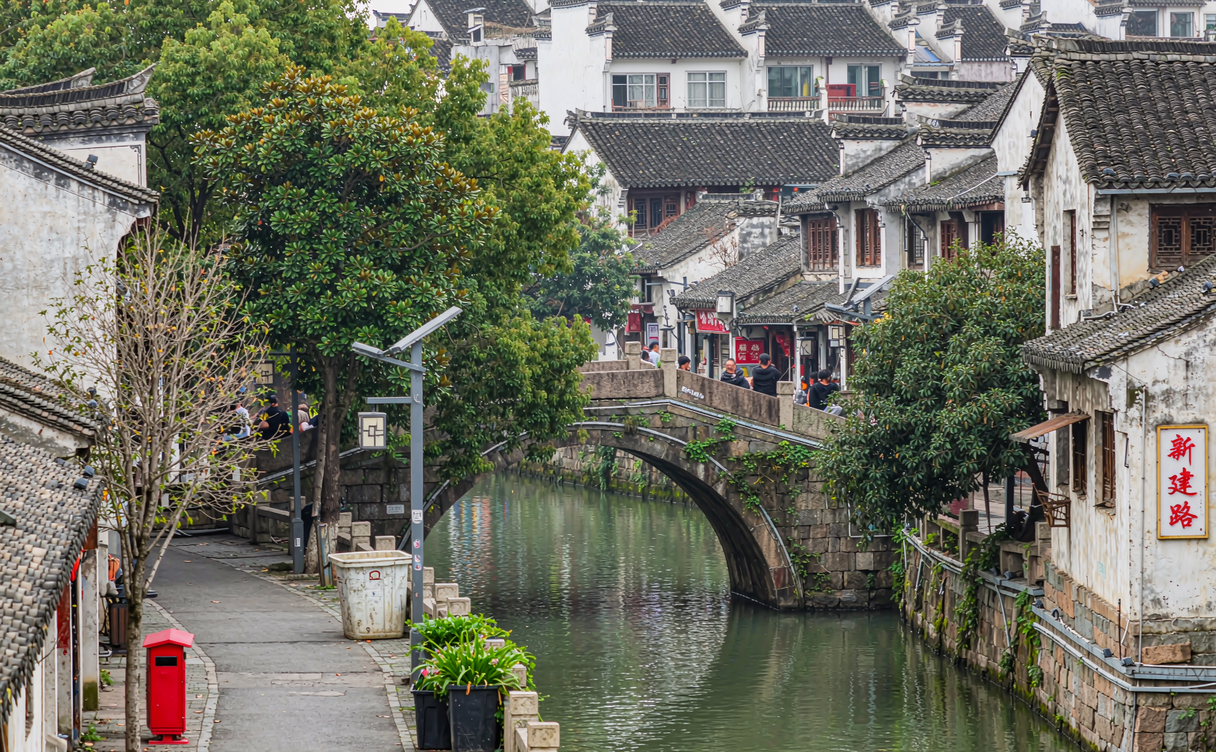
Chongren ancient town sits about 10 kilometers from the county seat. Unlike the restored water towns that charge ¥80 to ¥120 just to walk in, Chongren is a living village of Ming and Qing residences and connected ancestral halls, free to wander. The standout is the cluster of brick-and-timber homes along the main lane, where old women still dry greens on the flagstones. Go early; by midday the school buses arrive.
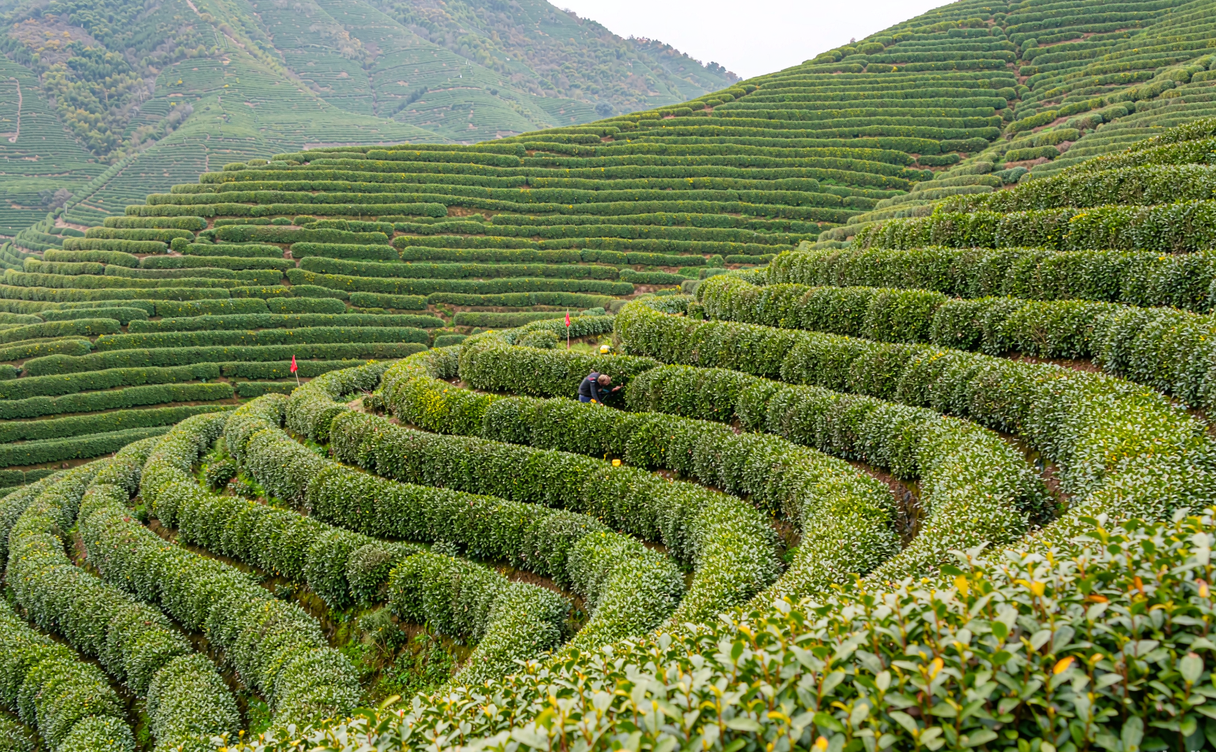
For tea, drive up to the plantations above Ganlin in March or April. Shengzhou produces more than 6,000 tons of green tea a year, much of it the twisted “pearl” style and flat “Yuexiang” leaf. Small family workshops will let you taste for nothing and sell a vacuum-sealed 250-gram tin for ¥60 to ¥140 depending on grade. We have arranged private tastings through the county tea market, where wholesale lots change hands before dawn.
The old town core of Shengzhou itself has a walkable riverfront and a night-food street where Shengzhou xiaolongbao (steamed buns, about ¥12 for a basket of eight) and zhaimian noodles (¥15 a bowl) are the local pride. Pair that with the county’s rice cakes and you have a cheap, happy evening.
Best Time to Visit Shengzhou
The clearest answer to “best time to visit Shengzhou” is late March to mid-April, when the tea is being picked and the county holds its Yue Opera festival with open-air performances. Temperatures sit around 15 to 22 Celsius, and the hills are green without being humid.
Autumn, from October to early November, is our second pick. The rice terraces turn gold, the opera houses run their indoor season, and the air is dry and cool. Summer (late June to August) is hot and sticky, with highs near 35 Celsius and the plum-rain season in July; we generally steer travelers away from it. Winter is cold but uncrowded, and the museums are heated.
How to Get to Shengzhou
High-speed rail changed everything here. The Shengzhou-Xinchang station opened on the Hangzhou-Taizhou line in 2022, and from Hangzhou East you can now reach it in about 60 to 75 minutes, second-class ¥54 to ¥65. From the station a taxi to the county seat takes 20 minutes and costs roughly ¥30 to ¥40; ride-hailing apps work reliably.
If you are coming from Shanghai, take the G-train to Hangzhou East and transfer; total time is about 2.5 hours with a 20-minute connection. From Shaoxing it is a short 25-minute hop, which is why our shaoxing-travel-guide readers often add Shengzhou as a half-day or overnight side trip. Getting around the county itself needs a car or a patient bus; we book a local driver for about ¥300 a day.
The broader logistics of trains, apps, and where to buy tickets are covered in our china-high-speed-train-guide-foreigners, which we hand every first-time visitor.
Where to Eat and What It Costs
Shengzhou food is hearty Jiangnan cooking, not delicate banquet fare. A filling bowl of zhaimian with pork and bamboo is ¥15 to ¥20. A proper dinner for two with river fish, greens, and a pot of local tea runs ¥120 to ¥180. The zhejiang-cuisine-guide maps the flavor families across the province if you want the context.
Hotels are a bargain. A clean business hotel in the county seat is ¥220 to ¥350 a night; a renovated guesthouse inside Chongren starts around ¥400 with breakfast. We book these for clients through domestic platforms and confirm by phone, because English listings are thin.
A Note on Bookability
Everything here is open and walk-in friendly as of this writing. The Yue Opera Museum does not require reservations for individuals, though groups of ten or more should email ahead. Tea workshops are informal; you simply show up in season. The one thing to reserve is a driver, because rental desks at the station are limited and rural signage is in Chinese only.
Planning Around the Seasons
If you only have one full day, do the museum in the morning, eat in the old town at noon, and spend the afternoon in Chongren. With two days, add a tea-plantation morning and a slow dinner. Three days lets you see a live opera performance, which we rate as the single most memorable thing in town.
For timing across the whole region, our best-time-to-visit-china piece explains the plum rains and the national holiday crowds you will want to dodge.
A Realistic Shengzhou Budget
To put hard numbers on a trip we arranged last spring: two nights at a county-seat business hotel came to ¥620, the round-trip second-class rail from Hangzhou was ¥120 for two people, a local driver for one day was ¥300, museum entry was free, and meals for two ran about ¥520 across three days. Tea purchases are the wildcard; one client went home with ¥900 of spring pearl tea, another with none. All in, a comfortable independent visit costs roughly ¥1,600 to ¥2,200 per couple for three days, not counting souvenirs. Add ¥80 to ¥150 if you want the hands-on throwing class at the celadon-style studio we use. We think that is strong value for a culturally rich corner of Zhejiang that most foreign visitors never reach, and it is why we keep building Shengzhou into longer Jiangnan routes rather than selling it as a standalone stop.
Ready to plan your trip? Tell us your travel dates and we will sketch a Shengzhou stop that fits your Zhejiang route.
What We Tell First-Time Visitors
Carry cash for the village stalls; some do not take foreign cards. Download a translation app before you arrive, because English is rare outside the museum. And book your train ticket a week out during the April festival, when seats sell fast.
Want a driver and a tea tasting arranged? Reach out and we will lock in a local guide who speaks some English.
The Bottom Line
Shengzhou will not wow you with scale. What it gives is authenticity: a real opera tradition, real tea country, and a county that has not been theme-parked. We keep sending people here precisely because it feels like the Zhejiang that locals actually live in.
Thinking of pairing this with Shaoxing or Hangzhou? Send us your draft plan and we will tighten the routing.