

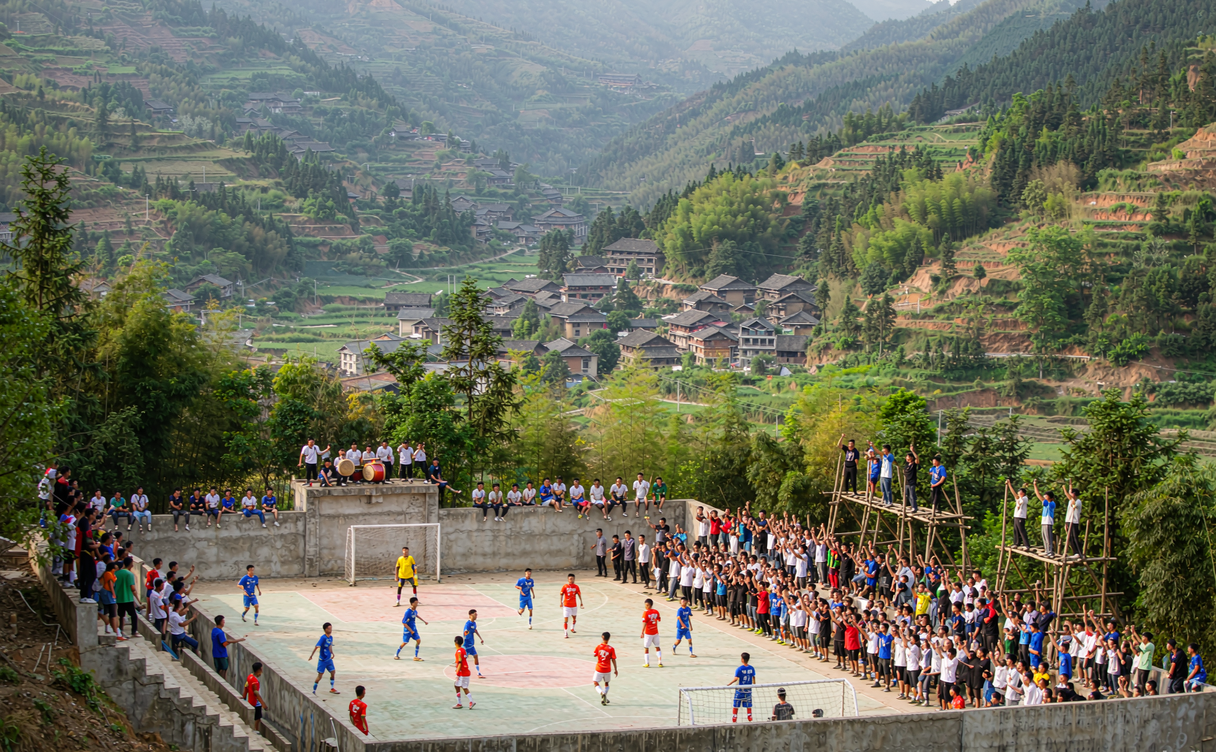
Our Rongjiang travel guide is built from trips we have arranged for readers who wanted to see the grassroots football phenomenon that turned a quiet county in southeast Guizhou into a national talking point. Rongjiang (榕江), a small county town in Qiandongnan Miao and Dong Autonomous Prefecture, became famous in 2023 as the home of the “Village Super League” (村超, Cun Chao), where amateur teams from nearby Miao, Dong, Shui, and Yao villages play in front of roaring crowds on summer nights. But the county is far more than a football story. It sits on the Duliu River where the Liping, Gulou, and Duliu waterways meet, and it is ringed by some of the most intact Miao and Dong ethnic villages in Guizhou. We have sent travelers there who came for one match and stayed for the terraced rice fields, the drum-tower architecture, and the riverside night markets.
Why Rongjiang Earned a Place on the Map
Rongjiang is the kind of place that most China itineraries skip, and that is exactly why it rewards the curious. The county seat is compact and walkable, with a riverside promenade, a lively evening food street, and a stadium that on match nights feels like the center of the football world. The “things to do in Rongjiang Guizhou” list is short but dense: watch a Cun Chao match, eat grilled fish by the river, visit the nearby Dong drum-tower villages, and explore Miao terraced settlements that have changed little in generations. For travelers building a wider route, we usually pair Rongjiang with our Guizhou 7-day itinerary so the football town slots naturally between the bigger ethnic-village stops.
The football itself is the hook. The Village Super League is not a professional league; it is a summer tournament of village teams, many featuring local farmers, shopkeepers, and returnees, playing on a modest county stadium pitch. The stands fill with thousands of spectators, the sidelines fill with ethnic drum performances, and the whole event is free to attend, though you should arrive early. We tell travelers to treat a match as a cultural event first and a sporting one second.
Best Time to Visit Rongjiang and How to Get There
The best time to visit Rongjiang is from May through October. The Cun Chao season runs roughly May to August, with the liveliest atmosphere on weekend evenings, so if the football is your goal, plan around a Saturday night in those months. Spring (April to early June) brings green terraces and comfortable temperatures around 18–26°C, while autumn (September to October) offers clear skies and harvest scenes. Winters are mild but damp, with daytime highs near 10–14°C, and the football season is paused.
How to get to Rongjiang is easier than many expect. The county has its own high-speed rail station, Rongjiang Railway Station, on the Guiyang–Guangzhou line, with frequent trains from Guiyang (about 1.5–2 hours, ¥80–130 second class) and from Guangzhou (around 3.5–4.5 hours, ¥220–320). For travelers arriving from other provinces, flying into Guiyang Longdongbao International Airport and then taking the train is the most reliable route. From the station, the stadium and town center are a short taxi ride (¥10–20) or a 20-minute walk. Local buses and shared vans reach the surrounding villages, but if you want to combine Rongjiang with the famous Miao and Dong settlements nearby, our Xijiang Miao Village guide and our Zhaoxing Dong Village guide explain the connecting routes in detail.
Ready to add Rongjiang to your Guizhou route? Our travel designers can build a customized itinerary that pairs the Village Super League with nearby ethnic villages and the province’s top waterfalls. Contact us today to start planning your trip.
Things to Do in Rongjiang: Football, Villages, and River Life
The first stop is always the Rongjiang County Stadium on a match night. Gates usually open two to three hours before kickoff, and the pre-match show of Dong grand song and Miao lusheng dance is as memorable as the football. Bring cash for snacks and a light jacket even in summer, since evenings by the river cool quickly. Entry is free, but seating is first-come, and the best atmosphere is in the standing terraces behind the goal.
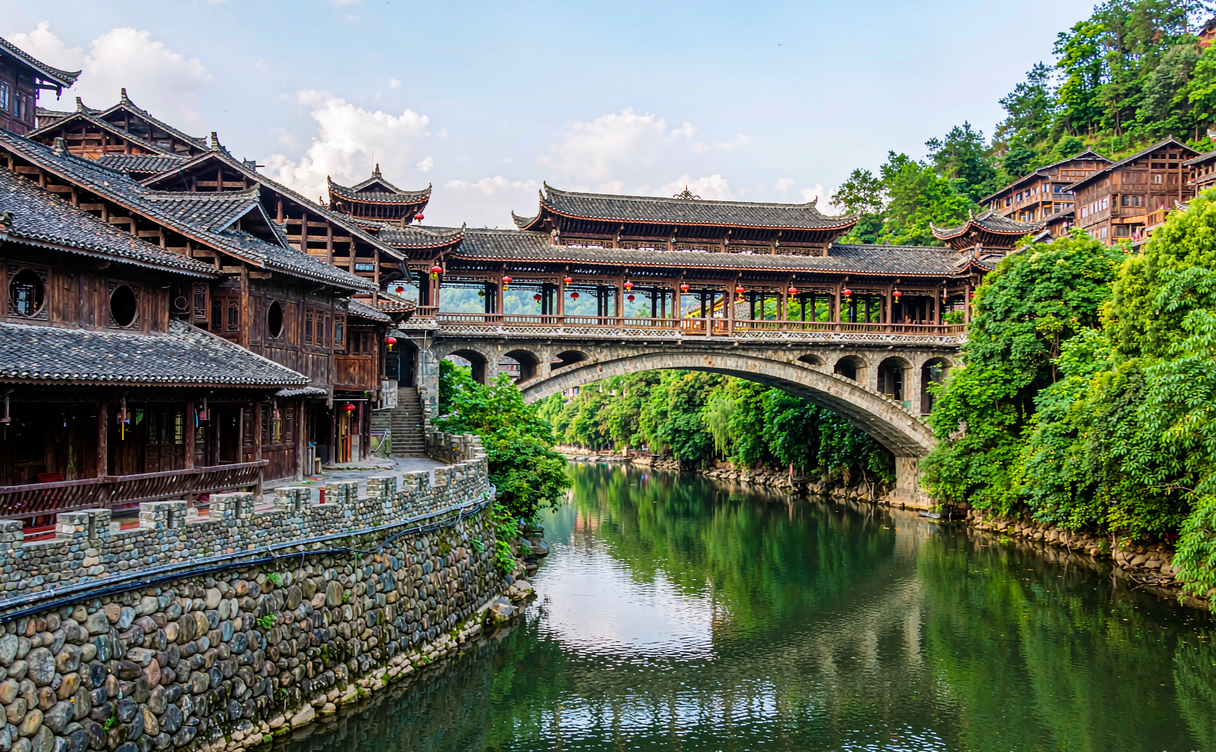
Beyond football, the Rongjiang Miao and Dong culture is the real depth of the place. Within an hour of the county seat you can reach Dong villages built around towering drum towers and covered wind-and-rain bridges, where women still weave indigo-dyed cloth and smoke-cure pork over open hearths. The Miao settlements higher in the hills show terraced fields and silver-heavy festival dress. We recommend hiring a local guide through your guesthouse for half a day (¥150–250) to reach villages that are not on the bus line. If your route continues west, our Huangguoshu Waterfall guide covers the province’s signature cascade, an easy add-on from Guiyang.
Food in Rongjiang is river-driven and smoky. Try the grilled Duliu River fish (酸汤鱼 adjacent styles, ¥40–80 per person for a shared hotpot), sticky rice wrapped in leaves, and the sour soups that define Qiandongnan cooking. The evening food street near the river promenade is where locals eat; expect to spend ¥30–60 per person for a filling meal. Vegetarian options are limited but available at the noodle stalls. A practical tip from our routes: match nights draw big crowds to the food street, so eat early or pick a stall a few blocks back from the stadium for shorter waits and lower prices.
Planning Tips, Where to Stay, and Getting Around
For first-time visitors, stay in the county seat within walking distance of the stadium and the riverside food street. Mid-range hotels (¥180–350 per night) cluster around the station and the main square; book ahead for weekend match nights in summer, when rooms can sell out. Budget hostels and guesthouses (¥80–150) are basic but clean. If you want quieter surroundings, a village homestay an hour out offers drum-tower views and home cooking, though you will need your own transport or a pre-arranged pickup.
Getting around is easiest with a mix of Didi-style ride apps, local taxis, and the occasional shared van. We always advise travelers to download a China rail app and a translation tool before arrival, and our 2026 China high-speed rail guide walks through booking trains as a foreign visitor step by step. For timing your whole trip, our best time to visit China overview helps you weigh Rongjiang against other regions by season.
Want a Rongjiang football-and-villages trip without the planning headache? We can arrange trains, village guides, and match-night accommodation in one booking. Reach out and we will tailor the route to your dates.
A Note on Responsible and Comfortable Travel
Rongjiang is welcoming but small, and the infrastructure is still catching up to its fame. Carry small cash, expect limited English at the station, and build buffer time into transfers. The football season is the busy period, so if you prefer empty villages and cool walks, aim for April or September instead. The county’s cultural wealth is best appreciated slowly, with respect for the villages you visit and the performers who make match nights so special. A little patience and a few phrases of Mandarin go a long way here, and the warmth you get in return is part of what makes the trip memorable.
For background on the broader region’s heritage, the Guizhou entry on Wikipedia gives a solid overview of the province’s ethnic geography and terrain, useful context before you go.
Planning a full Guizhou adventure around Rongjiang? Subscribe to our China travel newsletter for seasonal tips, new village routes, and match-season alerts delivered straight to your inbox.
Rongjiang proves that the best China stories are often found off the headline trail. Whether you come for the Village Super League or the quiet drum towers of the surrounding villages, this Rongjiang travel guide is your starting point for a trip that blends sport, culture, and river-town calm into something genuinely memorable.