

Qingzhou is the city in Shandong that quietly outlived its own fame. For thirteen centuries it was the seat of a prefecture that governed most of central Shandong, and for a while it was a capital of China; today it is a county-level city under Weifang with about a million people, a couple of million tourists a year, and a reconstructed old town that is real enough to live in. This Qingzhou travel guide comes out of two visits, one in May and one in October, and my argument in it is simple: Qingzhou is the best one-night stop on a Shandong loop that almost everyone routes past.
How to get to Qingzhou
The easy answer to how to get to Qingzhou is by train, because Qingzhou sits on the old Jinan-to-Qingdao railway and both the high-speed and conventional services stop. Qingzhou North (青州北) is roughly 1 to 1.5 hours from Jinan East and about an hour from Qingdao North, with second class fare in the RMB 60 to 110 band from Jinan and RMB 50 to 90 from Qingdao. From Beijing or Shanghai you will change at Jinan or Nanjing and come in through Jinan anyway.
Qingzhou is 150 kilometers from Jinan and 180 kilometers from Qingdao, so if you are driving a Shandong loop the roads are straightforward and the traffic is manageable outside the holiday weeks. Weifang, the prefecture city that administers Qingzhou, is only 30 kilometers south and has the bigger airport and a slightly shabbier centre. My tip: take the train in and out and use a shared taxi inside the county.
Take the train to Qingzhou North, get a taxi to the old town, and give it one proper night. If you try to squeeze Qingzhou between Jinan and Qufu in a half day, you will see a gate and a car park and nothing else.
The Qingzhou ancient city, and what is real in it
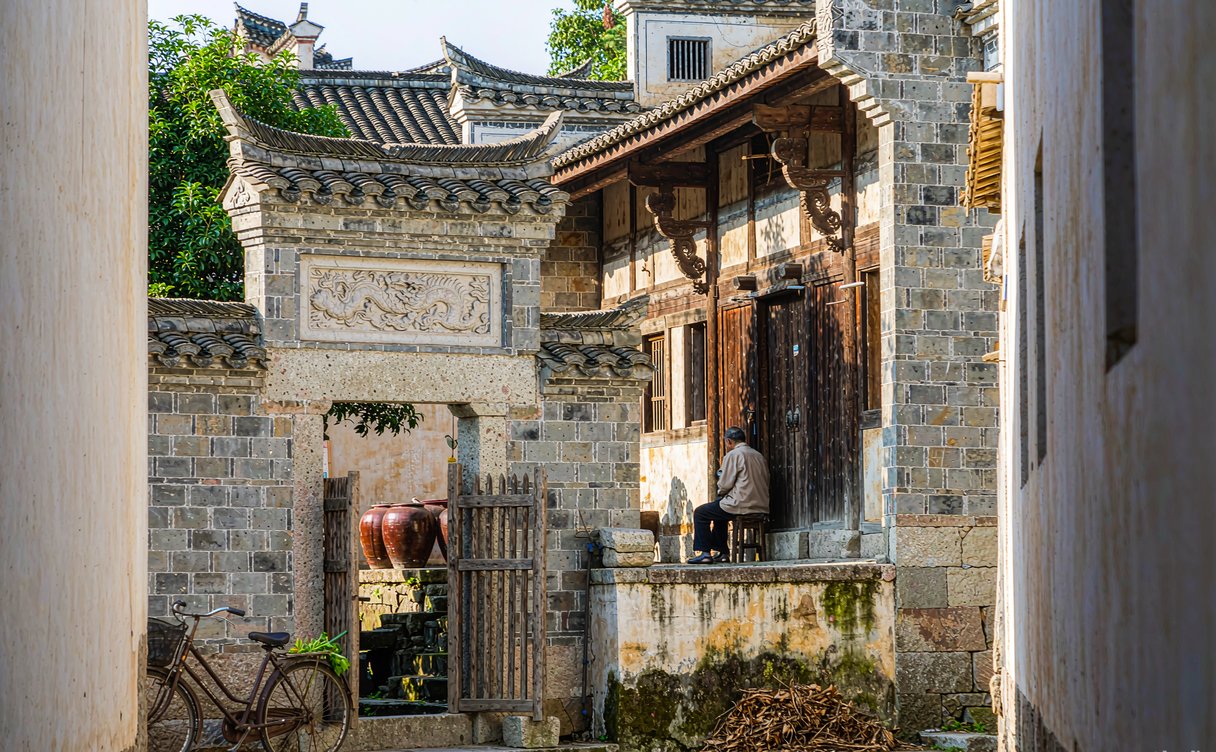
The old town along the 南阳河 runs for about a kilometre and a half, and the honest thing to say upfront is that much of the built fabric was rebuilt in the 2000s rather than preserved from the Ming. What saves it is that people moved back in. There are still households on the side alleys, washlines above the courtyards, and a woman selling fritters from a wok at 5:30 in the morning on the road behind the 偶园.
Start at the south gate and walk north. Along the way you pass the Hengwang Palace, the former residence of the Ming-era Prince of Heng, whose collapsing roof and empty courtyards make it the most atmospheric ruin in the old town. Ouyuan Garden is the other ticketed stop, a small Ming garden built around a rockery and four trees that locals list as the four oddities: odd pines, odd stones, odd water and odd trees. It is small, it takes fifty minutes, and it is the best garden in Shandong outside the provincial capital’s holdings.
Qingzhou Shandong history, briefly
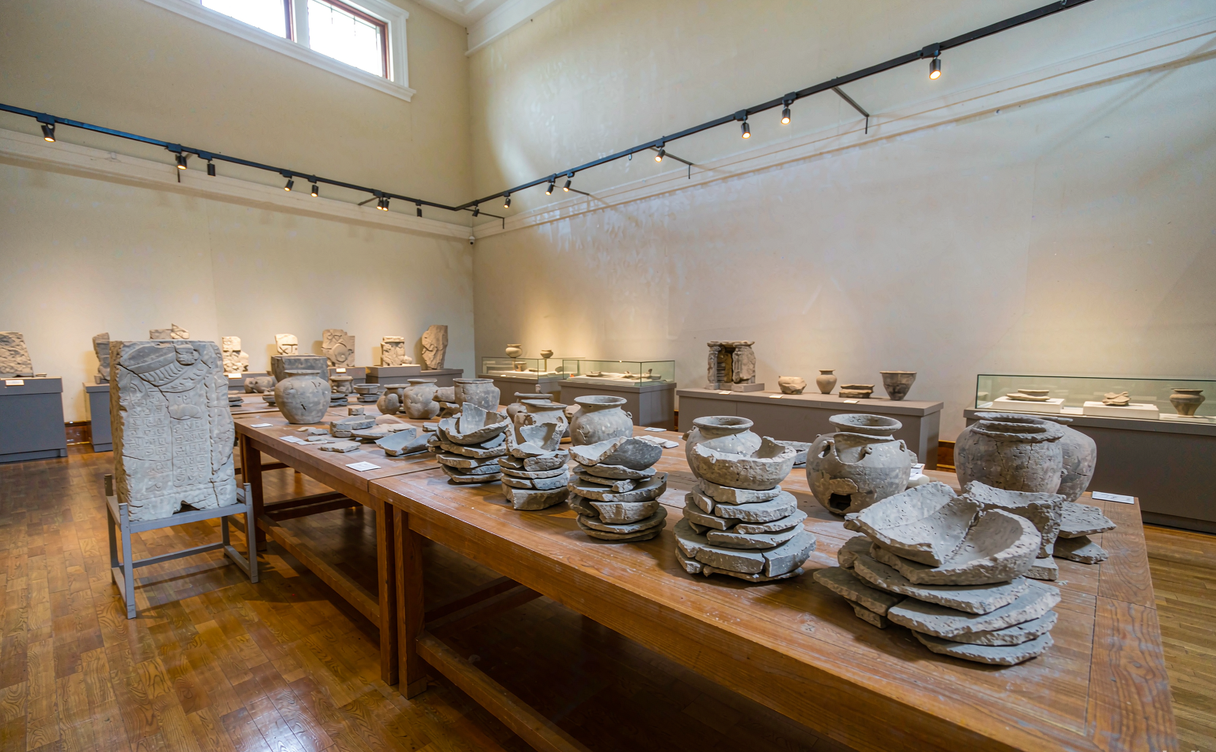
A short version of Qingzhou Shandong history explains the rest of the visit. Understanding why this place mattered changes how you walk through it. Qingzhou served as a capital under the Northern Wei, was a northern frontier administrative centre through the Tang and Song, and became the administrative heart of the region as 青州府 under the Qing, when the city wall, the examination halls and the official residences clustered around what is now the old town. The Longxing Temple site, discovered in the 1990s outside the city, turned out to hold hundreds of painted stone Buddhist figures buried during a deed of dedication, and they are now the reason Qingzhou has a proper museum at all.
That museum is the stop I would put second on any Qingzhou itinerary, right after the garden. The Qingzhou Museum on the west side of the old town is a prefectural museum with real depth: the Longxing Buddhist statues, Han dynasty tomb figures, and a Ming-era documents collection. Admission is free with ID and it is air conditioned, which in July is worth the price of the entry alone. Give it ninety minutes.
Things to do in Qingzhou, part two: Cloud Gate Mountain and the view over the plain
By things to do in Qingzhou I mean the mountain, because the ancient city you have already walked takes an hour.
North of the centre, Yunmen Mountain rises a modest 486 meters and gives you the clearest sense of why this was a frontier town: from the top you see the flat grey-green expanse of central Shandong running to the horizon with the old city wall below you. The climb is about 40 minutes up the paved switchbacks, the ride-and-hike combination costs about RMB 60 in combination, and the path out leads to a small cave with a seasonal “gate” in the rock that locals photograph endlessly.
Go in the morning because the cloud that gives the mountain its name tends to sit on the summit after rain. Bring water, because the shops at the top are priced for visitors, and wear shoes with grip; the steps are worn slick in places.
Eating in Qingzhou
Shandong food is the underrated half of the province’s reputation, and Qingzhou eats it in a less performative way than Jinan. Look for the sesame flatbread baked in a clay oven, the lamb soup with white pepper that the shops serve from five in the morning, and the fried dough rings sold by weight from baskets. In the old town, the snack alleys cluster near the north end and a filling plate costs RMB 12 to 25.
Two things to buy rather than eat: the honey peaches that Shandong grows around here in August, and the sesame cake from the old bakeries that has been making the same round loaf for nobody knows how long. If you are continuing into the prefecture, our Weifang travel guide covers the kite-festival side of the same city administration, and the two towns are close enough that a day split between them works.
A Qingzhou itinerary that fits a Shandong loop
Two nights, and here is the shape of the Qingzhou itinerary I used. Day one, arrive early afternoon, check in near the old town, museum for ninety minutes, Ouyuan as the light goes, dinner in the snack lane and a walk along the river where the wall is lit. Day two, Cloud Gate Mountain at 8am, back down for lunch, the old town alleys properly in the afternoon, and the Longxing excavation site if you have a third day.
Then out. East to Qingdao is the obvious next leg and only an hour by train; north to Jinan is the other; south to Qufu for Confucius is about 2.5 hours and worth doing properly. Our Shandong 7-day itinerary puts these five places in a working order, and if you only have one extra day in the province I would spend it on Qufu and read our Qufu travel guide first.
If Mount Tai is on the list, note that it sits between Jinan and Qufu and takes a full day of its own; the Mount Tai in Shandong guide will tell you whether to climb for the sunrise or take the cable car down, and the UNESCO Mount Tai World Heritage listing is worth a look before you commit to the night hike. Qingzhou fits neatly before either, as a low-stress night with a museum and a garden.
Where to stay and what to watch out for
Stay inside or immediately around the old town if you want to walk to anything; the courtyards converted into guesthouses along the main old-town street run RMB 150 to 260 a double in shoulder season and RMB 200 to 340 in October. The fringe hotels near the train station are cheaper and useless after dark, because the old town is the whole point.
Follow this Qingzhou itinerary in two nights and you will cover the museum, the garden, the mountain and the old town lanes without a single rushed morning. Stay inside the walls, come outside the May and October peaks, and the city gives up its whole Qingzhou Shandong history in one walk.
Two practical warnings. First, the old town gets crowded on weekend afternoons from May to October, and the Ouyuan ticket queue at 10am on a Saturday is genuinely unpleasant; go early or at 4pm. Second, do not trust a taxi driver who offers to take you to a “government-priced” jewellery or calligraphy shop; the drivers here are unusually persistent and the markup is enormous. Use DiDi or walk.
Add Qingzhou to a Shandong loop as the night you stop moving, between Jinan and Qufu or between Jinan and Qingdao. Come in spring or autumn, stay inside the old town, and the history will read properly instead of through a stone gate.
I have started recommending Qingzhou to people who think they are going to Shandong for a beach and a mountain, and the reaction is always the same: they did not expect the old town to be empty at seven in the morning or the museum to be this good. That surprise is the whole reason to put it on the list.