

Every Hainan itinerary runs along the coast, and every Hainan itinerary misses the point. Two hours inland from the beaches sits Wuzhishan, the only mountain city on the island, holding the highest peak in Hainan at 1,867 meters and the working capital of the Li and Miao autonomous prefecture. It rains here when it is dry on the shore, the air is ten degrees cooler, and the Li people have lived in these valleys for something like three thousand years. This Wuzhishan travel guide is built for the traveller who has already done Sanya and wants to know what the middle of the island is for.
How to get to Wuzhishan
There is no airport, which is the single fact that keeps most visitors away and the single reason to go. That is also the honest answer to how to get to Wuzhishan: you come by train or by road, and the rail is the better of the two. Wuzhishan Railway Station sits on the island’s ring line, roughly an hour from Haikou East and between 50 minutes and 1.5 hours from Sanya, with second class fares around RMB 40 to 75. Buses from Sanya’s bus terminal run the 65 kilometers in about 1.5 hours for RMB 30 to 45, and the road climbs the whole way, which is worth knowing if you get carsick.
By car, Haikou to Wuzhishan is roughly 220 kilometers and 3 hours, Sanya to Wuzhishan about 1.5 to 2 hours. If you want a driver for a day in the rain forest, hire in the city and agree the price in the morning rather than at the gate, where the tour operators quote in yuan and sometimes for the wrong group size.
Get off the coastal loop and take the train inland to Wuzhishan for one night. It is the cheapest way to see the other Hainan: mountains, mist and a minority culture that most beach itineraries never touch.
When to come
Hainan’s coast is busy from November through April and sweltering from June to September. Wuzhishan runs on its own schedule, cooler and wetter. The dry, comfortable window here is December to March, when daytime highs sit around 20 to 24°C and the mountain sky is clear in the morning; April and May are warm and hazy; and the real rain arrives from June through October, sometimes in short violent afternoon downpours that clear by seven.
If your dates are flexible, come for the Li and Miao New Year around the lunar third day of the third month, usually late March or early April, when the villages put on the bamboo-pole dance and the mountain rice wine comes out. Since Hainan’s official tourism calendar is thin on detail, China Daily’s Hainan travel coverage is a reasonable cross-check, but for the prefecture festival dates the local board in town is more reliable than anything online. Our Hainan 7-day itinerary puts the mountain in the middle of the loop rather than at the end, which is how I would do it.
Wuzhi Mountain Hainan, and the rainforest park
Wuzhi Mountain Hainan is the peak itself, and it is the reason the city carries the name; the forest park is the practical way up its lower slopes.
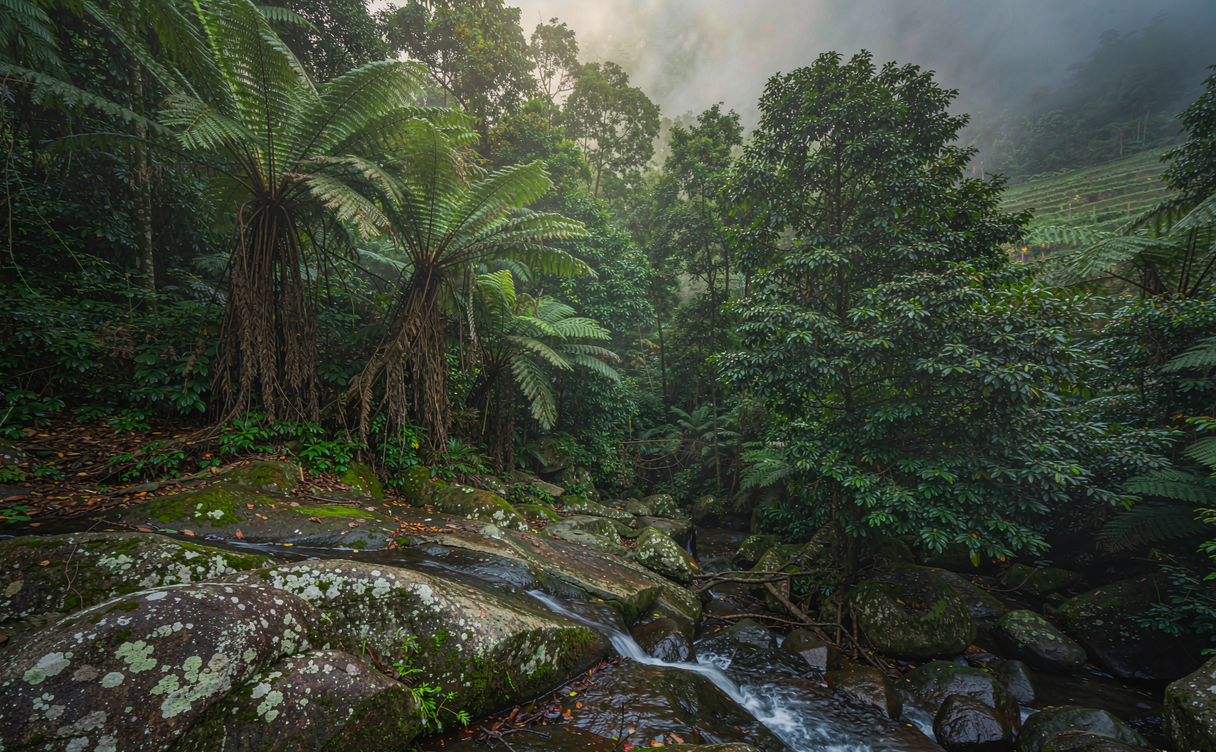
The mountain itself is a massif whose five ridges look, from the right angle, like a hand splayed against the sky, and it is the reason the city carries the name. The 五指山 National Forest Park covers the lower and middle slopes and is the practical place to walk: a boardwalk of roughly 7 kilometers through tropical rainforest, moss-covered trunks, streams and lianas, with the fog closing in around you every twenty minutes.
Entry is around RMB 40 to 50, and there is a sightseeing bus plus an optional cable car that skips the first, least interesting climb. My advice is to take the bus up, walk down, and start at 8am. By 11 the tour buses from Sanya arrive and the boardwalk becomes a queue. The altitude gain from the gate to 800 meters is modest but the temperature drops, and I have been properly soaked here in thirty minutes walking through a cloud that had nowhere better to be.
Li minority culture Hainan, and why it matters
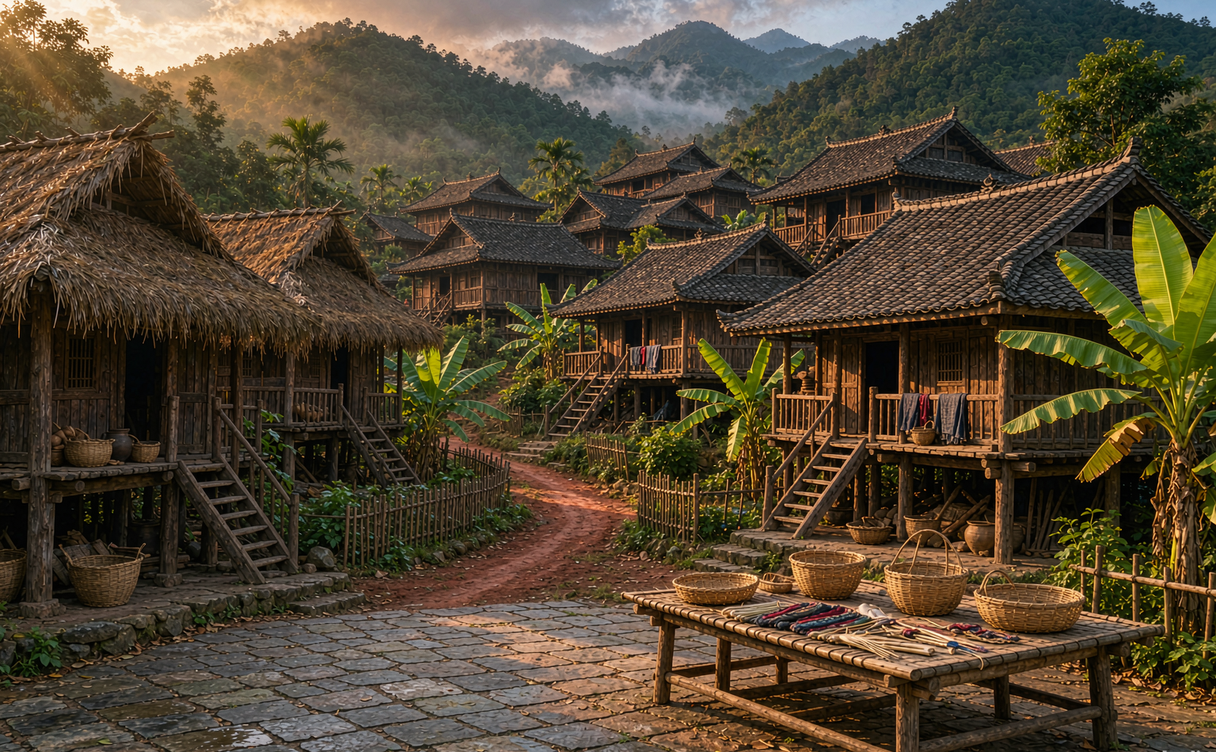
You cannot separate Li minority culture Hainan from the mountain, and the reason to leave the coast is the people. The Li are the oldest documented population of the island, and the prefecture around Wuzhishan is where their craft survives daily rather than as a stage show. 黎锦, the Li brocade woven on a wooden loom with a bamboo frame, is one of the oldest continuing textile traditions in China, and you will see it in the market as well as in the shops.
Go to a working village rather than the designed culture parks. The valleys south of town and the settlements up the road toward Shuiman have families still weaving, still colouring thread with plant matter, still keeping the boat-shaped houses in the older quarters. Ask before photographing people, and expect that the thing you will remember is not the weaving but the sound: the loom going thwack-thwack in a room with the door open to the rain.
Things to do in Wuzhishan beyond the mountain
For things to do in Wuzhishan beyond the forest boardwalk, four things hold a full day. The first is the city’s own market at dawn, where the mountain vegetables, bamboo shoots and wild greens from the slopes are sold by the kilo and the tea is served hot in plastic cups by people who will not mind you standing there.
The second is the Hainan Tropical Rainforest National Park visitor centre just outside town, which explains the ecosystem well enough to make the boardwalk make sense. The third is a drive west toward Bawangling, the reserve where the Hainan gibbon, the most endangered primate in China, still calls; the dawn and dusk chorus is the reason to be up at five, and a guide is worth the money. The fourth is simply climbing above the cloud line on a clear morning and watching the islands of forest below you turn green-white and green again.
A Wuzhishan itinerary
Two nights, three at most. Day one: train in from Sanya or Haikou, drop the bag, market at dawn if you arrived late the day before, an afternoon in the city’s Li cultural hall, and an early dinner of mountain greens. Day two: the national forest park at 8am with the boardwalk and the cloud, a village in the afternoon, brocade and rice wine, and a hot spring-style bath in the evening. Day three: Bawangling at dawn for the gibbons, back for a late lunch, then south to the coast.
If you are sequencing the whole island, the order I would use is Haikou, Wuzhishan, then a coastal stage. Our Haikou travel guide covers the north as a starting point and the culture there is coconut and Hainanese dialect rather than mountain minority. In the other direction, our Wanning travel guide picks up the coastal road east with its surf and its coffee, which is the natural next leg if you ran the loop clockwise.
Where to stay and what to eat
Wuzhishan is small and the room stock is limited, so book the night before. Clean mid-range doubles in the city run RMB 160 to 280; the garden guesthouses near the forest park gate cost the same and save you an hour of driving at dawn; the village homestays down the valley were rebuilt after the storms and are worth it if you want the sound of rain on a tin roof. Avoid the top-end hotel on the hill unless you want the view badly, because the fog comes in and takes it away for hours.
Food here is the Hainan pantry rather than Hainan restaurant cooking. Look for the rice noodles in broth at breakfast, the 清补凉 dessert of beans, coconut and ice in the afternoon, and any menu with 山兰 rice, a dark glutinous grain the Li have grown on these slopes for centuries. For the island-wide picture of what to order, our Hainan cuisine guide explains the Wenchang chicken, the Jiaji duck and the coast-versus-mountain split, and I would read it before you arrive because the menus are short and the wording is thinner.
Swap one beach night for a night in Wuzhishan and you will understand Hainan instead of just queueing on sand. Come between December and March, walk the rainforest at 8am, and buy the brocade from the woman who wove it.
Build this Wuzhishan itinerary around one mountain night and one long rainforest walk, and book the room early because the stock is tiny. Then judge Hainan by the middle of the island instead of the shoreline you came for.
Two warnings that matter. Do not drive the mountain road in a heavy shower without knowing the route; the switchbacks are narrow and the guardrails are optimistic. And do not dress for the beach when you step out of the train here, because the mountain city keeps a real winter and a foreign traveller in shorts in February will be cold for the first time in months.