

Qingyuan sits just north of Guangzhou, close enough for a day trip but rich enough to deserve two or three. The city is wrapped in some of the most unusual karst scenery in Guangdong, where hundreds of slender peaks rise straight out of the rice fields. Add the rushing rivers that make it a rafting hub, and the hot springs that close a day on the water, and you have a compact outdoor destination within easy reach of the delta. This Qingyuan travel guide covers the Yingxi peak forest, the rafting runs, and the spring resorts that round out the trip.
It is written for foreign travellers based in or passing through Guangdong who want nature without a long haul flight. Qingyuan is developed enough to be comfortable and wild enough to feel like an escape.
How to get to Qingyuan from Guangzhou
The high speed train from Guangzhou reaches Qingyuan in about 30 to 40 minutes, with departures through the day, which makes it one of the easiest nature escapes from the city. From the station, buses and taxis reach the outlying peaks and rafting sites in under an hour. If you are building a Guangdong route, our Guangzhou travel guide covers the hub you will likely start from, and our Foshan travel guide adds a nearby city worth a stop on the way north.
A rented car gives the most freedom, since the best sights are scattered across the countryside rather than clustered in one town. The roads are good and signposted, and parking at the peak forest and rafting bases is straightforward. Trains plus local taxis also work if you prefer not to drive.
The Yingxi peak forest corridor
The Yingxi peak forest corridor is the headline sight, a broad valley where more than a thousand karst hills stand in neat rows like petrified teeth. You can drive or cycle slowly along the country lanes, stopping at villages and paddies that sit directly beneath the cliffs. The light in the early morning, when mist settles between the peaks, is the time photographers wait for.
Unlike the boat tours of Guilin, Yingxi is best taken at ground level. Walk a village path, watch water buffalo in the fields, and climb one of the small peaks for a view across the whole forest. It is calm, unscripted and one of the more pleasant things to do in Qingyuan for travellers who like landscape without queues.
Nearby, the Tianzi Mountain and the Huashan serrated peaks offer short climbs and cable car options if you want elevation without a full hike. Our China hiking treks guide covers longer routes elsewhere, but Qingyuan suits gentle half day walks where you are back at a hot spring by dusk.
River rafting and the wet season
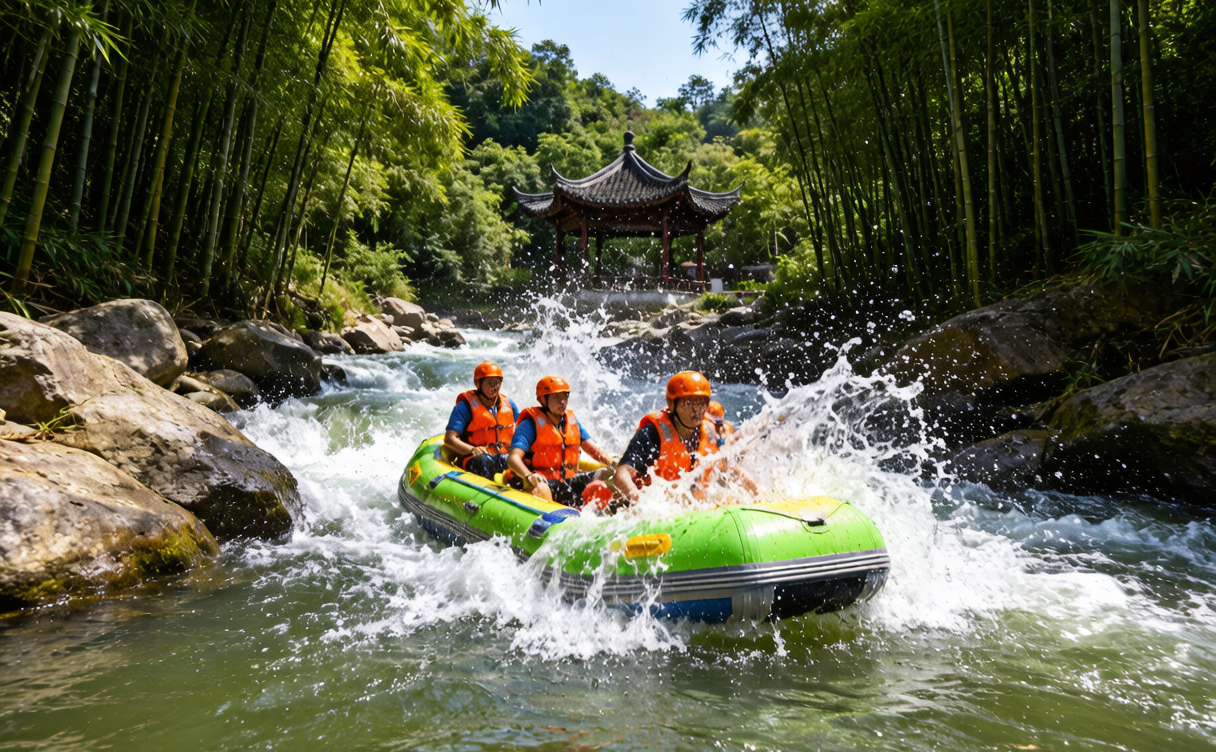
Qingyuan is known across Guangdong as a rafting destination, and a Qingyuan rafting day trip is the reason many domestic visitors come in summer. The Beijiang and its tributaries drop through wooded gorges, and several outfits run measured stretches with guides, life jackets and fixed start and finish points. The Hurrican Gorge and the Huangteng Gorge runs are the most established, with graded rapids and a bus back to the base.
Rafting is seasonal and weather dependent, so check conditions before you commit. The runs open roughly from late spring through early autumn, with the strongest flow after rain. It is a good option for travellers who want an active day, though it is less suited to very young children on the bigger rapids. Bring quick dry clothes and a waterproof bag for your phone.
If you prefer calm water, the Beijiang also supports slow boat trips past villages and cliffs, a gentler way to see the same karst from the river. Either way, the water is the thread that ties Qingyuan’s scenery together.
Hot springs and where to stay
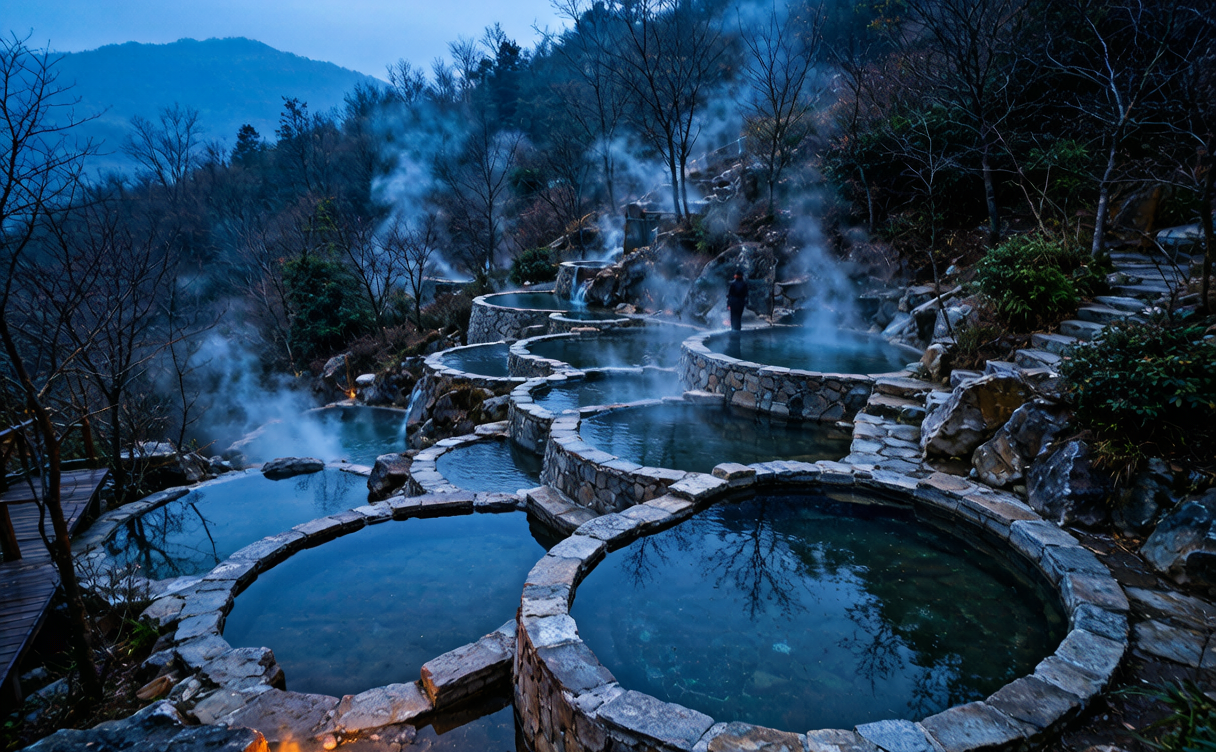
After a day on the peaks or the rapids, the Qingyuan hot springs resort clusters make a natural end to the trip. The valleys north of the city hold several spring hotels where outdoor pools sit among bamboo and rock, fed by mineral water that stays warm through winter. A evening soak under the stars, then a simple hotpot dinner, is the local rhythm.
Most visitors stay either in Qingyuan city, which has the best transport and hotels, or at one of the spring resorts for a quieter night. The peak forest has a few guesthouses for early risers who want mist over the fields. Our China hot springs resorts guide lists other spring areas across the country if you want to compare regions.
Food and a sample plan
Qingyuan eats from the river and the farm. Beijiang fish steamed with ginger, free range chicken cooked in a clay pot, and river shrimp flash fried with salt are local standards. The surrounding villages also grow taro and leaf vegetables that turn up in simple home style stir fries. The city’s night market does a lively trade in skewers and rice noodles, and the spring resorts usually include a hearty breakfast before a day on the water.
A practical two day plan works like this. Day one takes the train up, rents a car, and drives the Yingxi corridor in the afternoon light. Day two does a rafting run or a river boat in the morning, soaks at a hot spring resort in the late afternoon, and returns to Guangzhou for dinner. That leaves the trip compact but full.
For regional context on the landscape, the UNESCO world heritage list documents the South China karst at https://whc.unesco.org/en/list/1248/, which helps explain the kind of terrain that produces Qingyuan’s peaks. The karst province described there extends into Guangdong’s northern hills.
When to visit
Late spring through early autumn is best for rafting, with warm weather and full rivers. Autumn and winter are cooler and clearer, ideal for the peak forest and the hot springs without summer crowds. Avoid the first week of May and October, when domestic holidays clog the roads north of Guangzhou. Weekdays are noticeably quieter than weekends year round.
Practical notes
Mobile payment runs daily life here, and foreign cards seldom work with local apps, so carry cash for small stalls, rafting bases and entrance fees. English is limited outside the city, so a translation app smooths restaurant and ticket desk encounters. Buses reach the main sights but run loosely, which is why many visitors rent a car or join a booked transfer.
If you want to extend the karst theme northward, our Danxiashan Shaoguan guide covers the red rock landscapes of nearby Shaoguan, and our China summer destinations guide lists cooler highland escapes if the Guangdong heat gets heavy. Qingyuan pairs well with either as a natural next step.
Qingyuan will not test your endurance, and it does not try to. What it offers is accessible nature: peaks you can walk to, rivers you can ride, and springs you can sink into, all within an hour of one of China’s biggest cities. For travellers who want the outdoors without leaving Guangdong, it is one of the easiest wins on the map.