

Jincheng sits in the southeast of Shanxi, pressed up against the Taihang Mountains that divide the province from the plains of Hebei and Henan. It is a city most foreign travellers have never heard of, which is exactly why it rewards a visit. The area pairs two very different draws: the grand walled residence of Huangcheng Xiangfu, a fortress built by a Qing dynasty imperial tutor, and the cliff roads and ridge scenery of the Taihang range. This Jincheng travel guide covers the castle, the mountain roads, and the old villages that sit between them.
It is written for visitors who already plan to be in Shanxi and want somewhere less trampled than the famous towns. Jincheng asks for a little effort to reach, but it returns that effort with history you can walk through and mountains you can stand on the edge of.
How to get to Jincheng Shanxi
The high speed train from Taiyuan reaches Jincheng in about two hours, and services also connect from Luoyang across the border in Henan. The city is the usual base, with the sights spread through the surrounding counties rather than inside town. If you are building a Shanxi route, our Taiyuan travel guide covers the provincial capital you will likely pass through, and our Luoyang travel guide adds a historic city just to the south that pairs naturally with a Jincheng stop.
A rented car is close to essential here. The castle, the cliff roads and the villages are spread across mountain counties with limited public transport, and the drives themselves are part of the experience. The highways are good, but the final stretches to the ridges are winding and slow, so build extra time into the day.
Huangcheng Xiangfu and the castle
The Huangcheng Xiangfu visit is the city’s headline sight, and it deserves a half day on its own. The compound is a walled residence built across two hills by the Chen family, most famous for Chen Tingjing, a scholar who tutored the Kangxi Emperor. Unlike the open courtyards of Pingyao, this is a defensive warren of stone towers, narrow lanes and a small castle keep, built to protect a powerful family rather than to impress with scale alone.
You can walk the outer walls for a view over the river valley, then descend into the warren of family halls, study rooms and the double story Point Cloud Pavilion that still dominates the skyline. The on site museum explains the family’s rise through the imperial exam system, which is the key to understanding why such a fortress sits in a Shanxi valley. It is one of the more unusual things to do in Jincheng, and far quieter than the headline sights of central Shanxi.
For context on the region’s older architecture, our Pingyao ancient town guide explains the walled town tradition, and our Wang family courtyard Shanxi guide covers another grand residence that makes a good comparison with Huangcheng Xiangfu.
The Taihang cliffs and Wangmangling
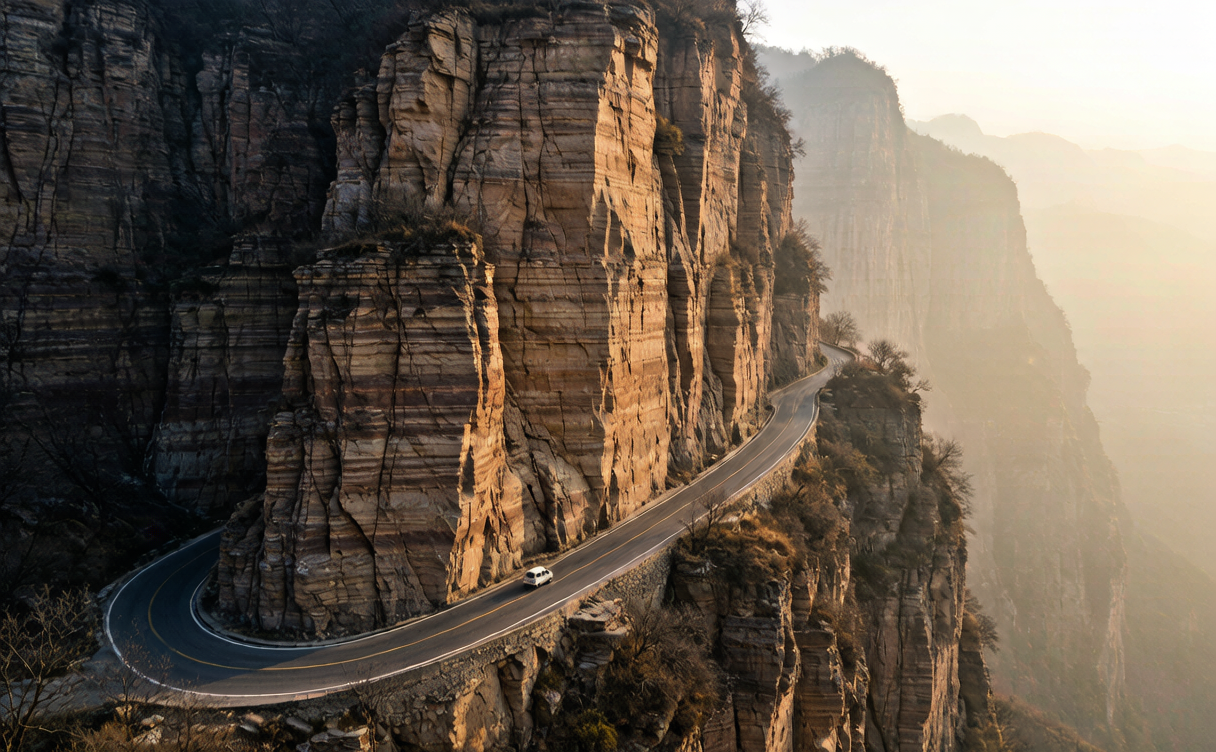
The other half of Jincheng is vertical. The Taihang range rises sharply west of the city, and the Wangmangling area holds the highest ridge in the range with views that drop away into cloud. The Wangmangling Taihang scenery is best reached by the cable car or the mountain road that hairpins up the face, and on a clear day you can see three provinces from the top.
The cliff roads themselves are a draw. Cut into the rock and threaded along the edges of gorges, they are narrow, dramatic and not for nervous passengers. The nearby Guoliang style routes, where a village tunnel was carved by hand through the mountain, show the same spirit of building where building seemed impossible. Our Guoliang village Taihang guide covers the most famous of these tunnels, which sits within a manageable drive if you want to add it to the same trip.
Hiking here ranges from short ridge walks to longer ridge traverses. Multi day routes through other ranges are covered in dedicated trekking guides, but Jincheng suits day walks that end with a descent back to a village guesthouse. The air is cool even in summer, which makes the Taihang a welcome break from the Shanxi heat.
Ancient villages and where to stay
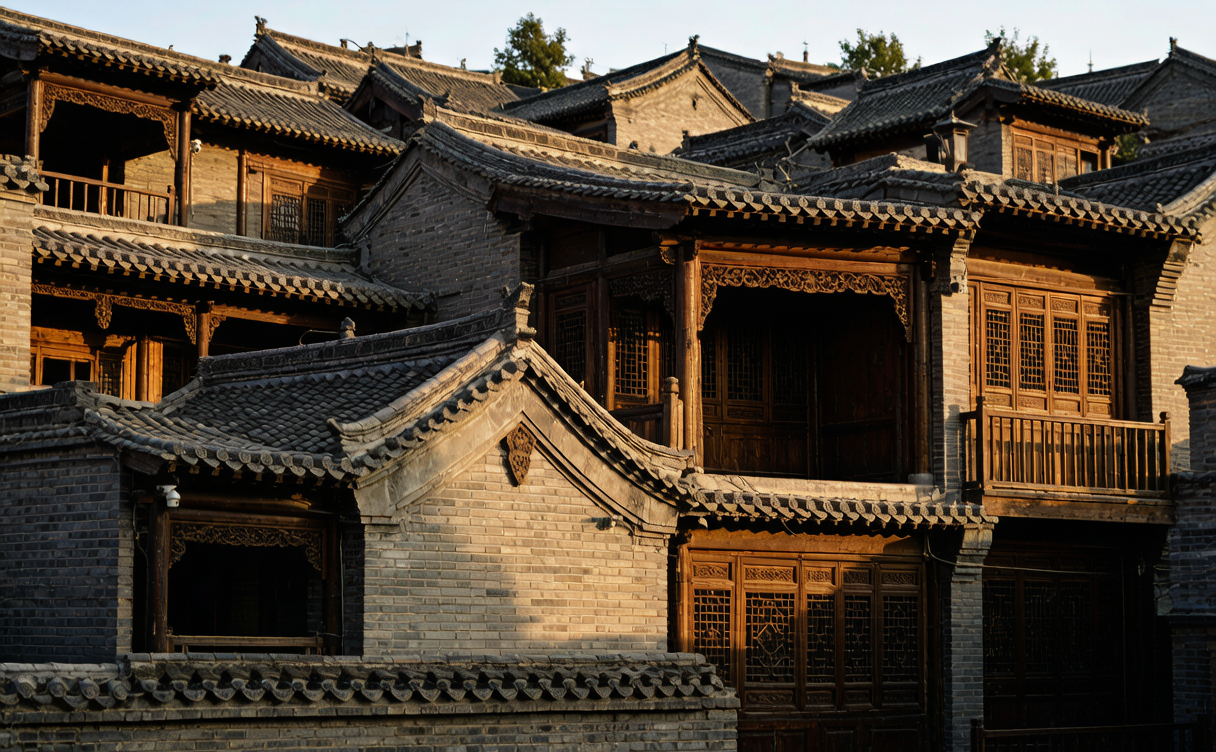
Between the castle and the cliffs lie the Jincheng ancient villages, stone built hamlets that have changed little in generations. Many sit in valleys threaded by small rivers, with gate towers, old wells and courtyards of carved brick. They are lived in rather than restored as museums, which gives them a texture the bigger sites lack.
Most visitors base themselves in Jincheng city, which has the best hotels and transport, and make day trips out. A few guesthouses in the mountain counties offer a quieter night and an early start on the ridges. Either works, though the castle and the cliffs really need a car to combine in one trip.
For wider context on the kind of landscape you are standing in, the UNESCO world heritage list includes mountain and cultural sites at https://whc.unesco.org/en/list/438/, which helps frame how the Taihang region fits into China’s recorded human history. The listings there describe the long settlement of northern China’s highlands.
A sample three day plan
Day one is travel from Taiyuan or Luoyang and an afternoon at Huangcheng Xiangfu. Day two drives the Taihang roads to Wangmangling, with the cable car and a ridge walk, plus an optional Guoliang tunnel side trip. Day three visits a couple of the stone villages before the train back north or south.
That pace keeps the driving manageable and leaves the evenings free for Shanxi noodles and a slow look at the castle walls lit at night. Jincheng is not a place to rush.
When to visit
Autumn is the standout season, with clear air and the Taihang slopes turning red and gold. Spring brings blossoms and cool walking weather. Summer is mild in the mountains but hot in the city, so plan ridge days and castle mornings. Winter is cold and sometimes snowbound on the higher roads, which close for safety, so check conditions before a mountain day.
Practical notes
Mobile payment runs daily life here, and foreign cards seldom work with local apps, so carry cash for tolls, small stalls and entrance fees. English is limited outside the city, so a translation app helps at ticket desks and village guesthouses. The mountain roads demand care and a confident driver, and fuel up before leaving the city because stations thin out in the counties.
If you want a trip that stays clear of the main tourist lines, our China off the beaten path guide lists other remote regions that see few foreign visitors and pair well with a Shanxi loop. Jincheng fits that brief better than almost anywhere in the north.
Jincheng will not appear on most first time China itineraries, and that is its strength. It offers a castle you can almost have to yourself, mountain roads that test your nerve, and villages where the pace has barely changed. For travellers who have done the famous towns and want the deeper Shanxi, this is where the map rewards a second look.