

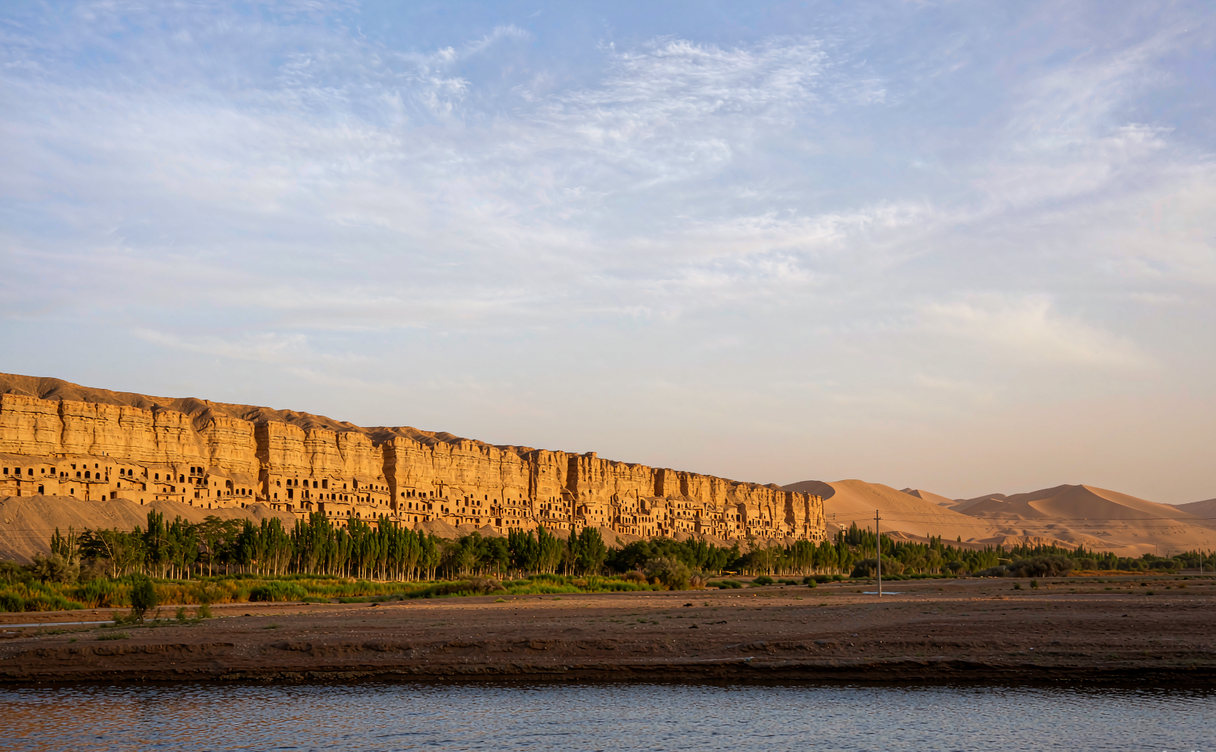
The Mogao Caves sit about 25 km southeast of Dunhuang, cut into a cliff where the Singing Sand Dunes meet the Dachuan River. In our experience this is the single most moving stop on the old Silk Road, and the way you plan your visit matters more here than at almost any other attraction in China. This Mogao Caves guide covers tickets, the cave-rotation system, the best season, and how to pair the grottoes with the rest of a northwest China trip.
Why the Mogao Caves Matter
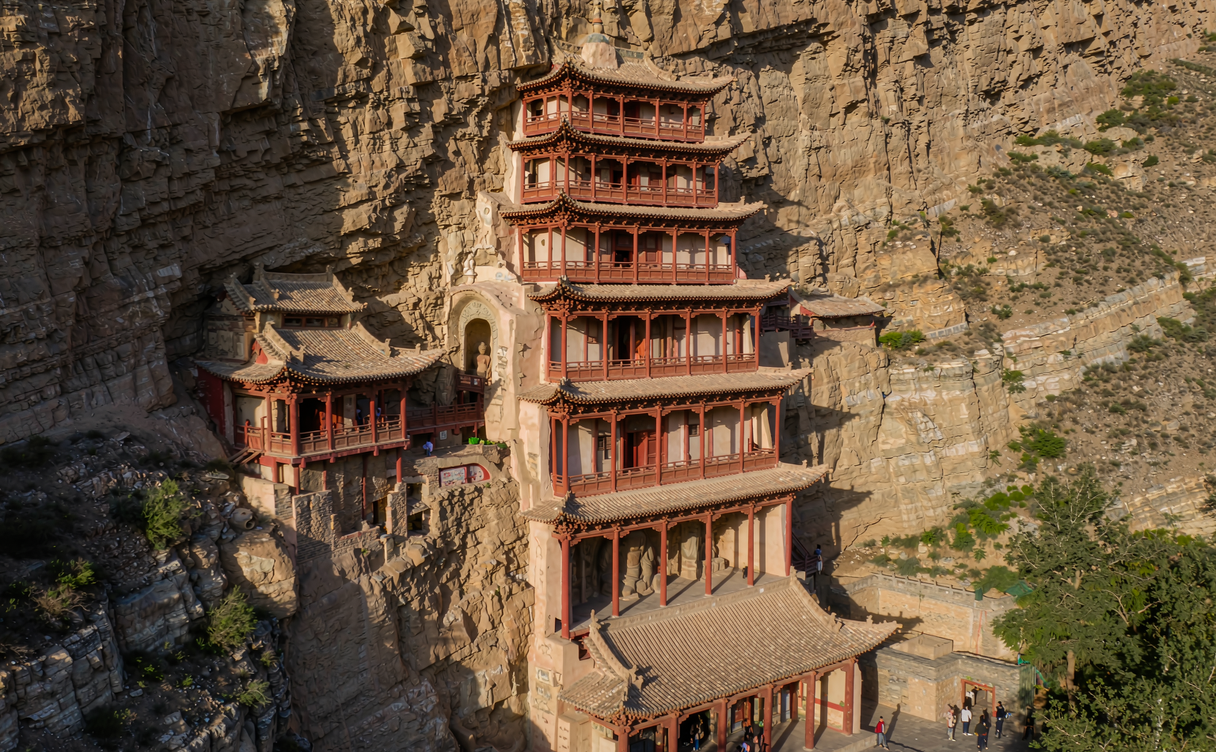
Work on the site began in 366 AD, when a monk named Yuezun is said to have seen a vision of a thousand Buddhas and carved the first chamber. Over the next thousand years, pilgrims, merchants, and local rulers sponsored more than 700 caves, of which 492 still hold wall paintings and statues. The art spans the Northern Wei, Sui, Tang, Five Dynasties, Song, Xia, and Yuan periods, so walking the cliff is like flipping through a millennium of Chinese, Central Asian, and Buddhist visual history in one place.
The cave we call the “Library Cave” changed everything in 1900, when the Taoist caretaker Wang Yuanlu found a sealed chamber holding some 50,000 manuscripts in Chinese, Tibetan, Sanskrit, and other languages. Most of that treasure now sits in collections from London to Paris, but the painted caves themselves remain in Dunhuang, and the Mogao Caves history is recognized by UNESCO as a World Heritage Site. We tell travelers this up front because the emotional weight of the place is part of the visit.
How to Visit the Mogao Caves
This is the part most first-timers get wrong. You cannot simply buy a ticket and wander in. To protect the fragile pigments from humidity and breath, the administration opens only a rotating selection of about 8 to 12 caves per day, and every visitor enters with a licensed guide in a small group. The real visit starts 12 km away at the Digital Exhibition Center, where you watch two short films — one on the site’s history and one projected onto a replica cave dome — before boarding a shuttle to the cliff.
In our experience the digital films are not filler; they explain iconography you would otherwise miss, and the replica cave lets you see details up close that the dim, crowded real caves do not allow. Book the A-class ticket online through the official Dunhuang Mogao Caves reservation platform before you arrive, especially from May through October. Same-day tickets at the gate are limited and often sold out by mid-morning.
Getting to Dunhuang
Dunhuang sits at the western end of Gansu, far from China’s eastern hubs. The fastest route is to fly: there are direct flights in season from Xi’an, Lanzhou, Chengdu, and Beijing, and the small Dunhuang Airport is 13 km from town, a 20-minute taxi for about RMB 40. The romantic option is the overnight train, including the tourist-oriented “Dunhuang Dream” branded service from Lanzhou and Xi’an, though standard hard and soft sleepers on the Lanzhou–Dunhuang line are the reliable everyday choice.
Once in town, a taxi to the Digital Center costs roughly RMB 30 to 40, and the shuttle from the center to the caves is included in your ticket. Many travelers also combine the site with the nearby Crescent Lake and Singing Sand Dunes, which are only a short drive from the city center and make an easy half-day together. If you want a broader Silk Road frame, our great wall of china guide helps you sequence the northwest with the northeast sections.
Best Time to Visit
The best time to visit Mogao Caves is spring (April to early June) and autumn (September to early October). Summer brings 35°C-plus heat and the largest crowds, while winter is brutally cold and quiet but offers the lowest prices and shortest queues. Dust storms are possible in March and April, and they can close the outdoor shuttle route, so we advise flexibility in those months.
A practical note on light: the caves are lit only by your guide’s flashlight, so the quality of your experience does not depend on sunshine. What matters more is crowd size, because a packed group means you spend more time shuffling than looking. We generally send travelers mid-week rather than weekends, when domestic tour buses thin out.
Mogao Caves Tickets and Prices
As of the 2025 season, the standard A-class ticket is RMB 238 and includes the two films, the shuttle, and entry to the rotating caves plus the preserved Suite of Cave 96 (the giant exterior Buddha niche) and Cave 148. The B-class ticket, RMB 100, drops the films and covers only a smaller set of caves — we do not recommend it for a first visit. There is also an in-depth “professional” ticket (around RMB 368) that adds several rarely opened caves; it requires booking well ahead and a minimum group, and is worth it only for serious art historians.
Students with a valid ID get roughly half price, and children under 1.4 m enter free with a paying adult. Photography inside the caves is strictly forbidden — flash and even camera sensors are considered a preservation risk — so leave the phone in your pocket and buy the official photo book at the exit shop if you want images. Budget another RMB 50 to 80 for that, and consider the on-site museum, which is included and shows recovered artifacts and a full-scale replica of the Library Cave.
Practical Tips From the Ground
Bring a light layer even in summer; the Digital Center and caves are cooled and shaded, and the wind off the dunes is dry. Wear comfortable shoes — there is more walking than the “you just ride a shuttle” assumption suggests. Arrive at the Digital Center at least 40 minutes before your timed slot; latecomers may lose the film and be reassigned to a later group.
We’ve sent travelers there who regretted rushing the on-site research museum, which explains the conservation work and the pigment chemistry better than any blog. If your schedule allows a second day, the nearby Yadan National Geopark and the ruined fort at Yumen Pass round out the Silk Road story, though both are a long drive and best done with a private car.
When you plan meals around the visit, Dunhuang’s local noodle and lamb dishes are the easy win, but if you want a deeper food detour, our Chengdu food guide shows how a Sichuan stop fits a longer China route. And for a softer, greener contrast to the desert, the Guilin travel guide is a natural pairing on the way east.
Where to Stay
Dunhuang town is compact, and most visitors stay near the main drag of Yangguan Road, where mid-range hotels run RMB 300 to 600 a night in season. Book early for the October National Day holiday, when rooms near the caves triple in price and sell out weeks ahead. If your trip leans coastal instead, a Dalian stop offers a completely different pace after the desert.