

The Longmen Grottoes sit 13 km south of Luoyang, where the Yi River squeezes through a gap in the limestone hills and the cliffs on both banks were carved into a forest of Buddhas. In our experience this is the easiest of China’s great Buddhist cave sites to reach and the best one to pair with a normal city trip, because Luoyang has fast trains and good hotels. This Longmen Grottoes guide covers the layout, ticket strategy, the best season, and how to build a Luoyang stop into a broader China route.
What Makes Longmen Special
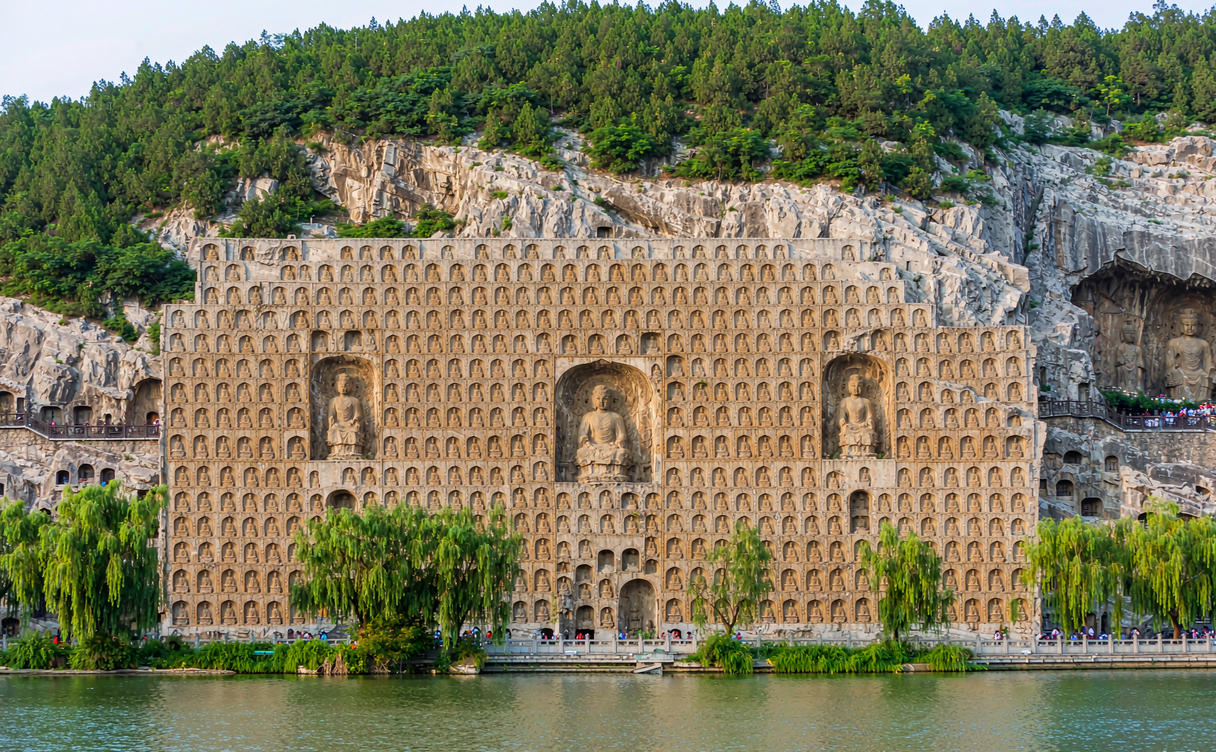
Carving began here in 493 AD, when the Northern Wei court moved its capital to Luoyang and started cutting caves into the west bank. Work continued under the Tang dynasty, especially during the reign of Empress Wu Zetian, who is linked to the giant Vairocana Buddha at the heart of the site. Across the two cliffs and the river between them, there are more than 2,300 caves and niches holding roughly 110,000 Buddhist statues, ranging from a 17-meter seated Buddha down to figures no larger than a thumb.
The Longmen Grottoes history is recognized by UNESCO as a World Heritage Site, and unlike some remote cave temples, the carvings here are dense and close enough that you can read the craftsmanship without a guide’s flashlight. We tell travelers this because it changes how you plan: Longmen is a half-day walk, not a full expedition, which makes it ideal for first-time visitors to China.
How to Visit the Longmen Grottoes
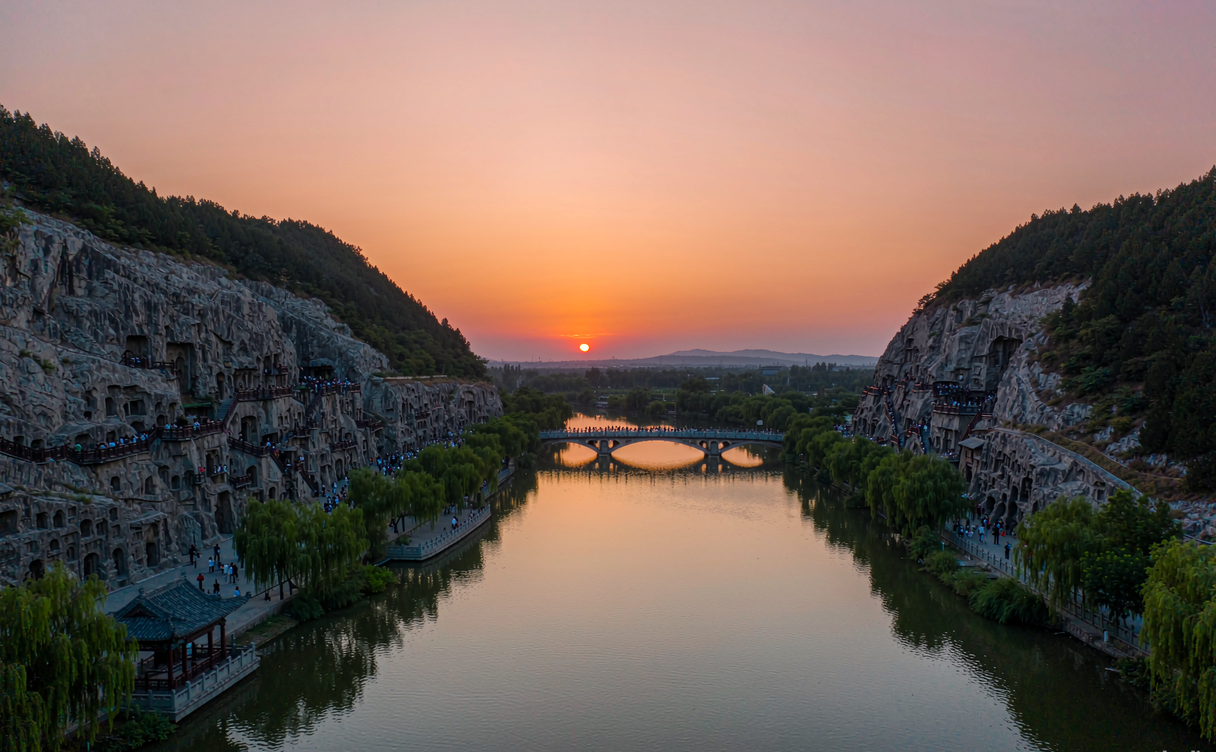
The site is linear, and the standard route is simple. You enter near the east end, cross the river on the bridge, and walk the west bank from the north caves southward to the Vairocana cluster at the Fengxian Temple, then double back. Most of the famous statues are on the west cliff, so that is where you should spend the bulk of your time.
In our experience the smart move is to arrive at opening (usually 8:00 am in summer, 8:30 in winter) and walk the west bank first, before the tour groups from Zhengzhou and Xi’an arrive around 10:30. A licensed English audio guide costs about RMB 30 at the gate, and we recommend it; the on-site signage is thin, and the stories behind individual donors and dynasties are what turn a rock wall into a narrative. Expect two to three hours for a relaxed visit, plus another 30 minutes if you also explore the east bank’s smaller caves.
Getting to Luoyang
Luoyang is far better connected than most travelers expect. The city sits on the high-speed rail line between Xi’an and Zhengzhou, and the Luoyang Longmen Station is itself a few minutes by car from the grottoes — a taxi from the station runs about RMB 20 to 30. From Xi’an, the train takes roughly 1.5 hours; from Zhengzhou, about 40 minutes; from Beijing, around 3.5 to 4 hours.
If you fly, Luoyang Beijiao Airport has limited routes, so most international travelers connect through Xi’an or Zhengzhou and take the train. Once at the site, local bus 53 and 60 also stop near the entrance for about RMB 1.5, though with luggage a taxi is simpler. We’ve sent travelers who tried to do Longmen as a day trip from Xi’an, and it works well — train in, grottoes, late train back — but staying one night lets you add the White Horse Temple and the Luoyang Museum the next morning.
One logistics note: the Luoyang Longmen Station car queue can back up at holiday peak, so budget 30 extra minutes and have your hotel’s Chinese name ready for the driver. The station area itself has little to do, so most travelers head straight to the caves or the city rather than lingering, which keeps the day tight and low-stress.
Best Time to Visit
The best time to visit Longmen Grottoes is spring (April to May) and autumn (September to October), when the Yi River is full enough to reflect the cliffs and the weather is mild. Summer is hot and crowded; winter is cold but quiet, and the pale stone against a grey sky photographs beautifully with few people in frame.
A practical point: most of the walk is outdoors with little shade, so a hat and water matter in summer, and the bridges get slick after rain. We generally avoid the week of the May Day and National Day holidays, when the narrow cliff paths become a slow shuffle. Mid-week visits are noticeably calmer than weekends.
Longmen Grottoes Tickets and Prices
The standard peak-season ticket is RMB 90 (March to November) and the off-season ticket is RMB 60 (December to February); both include the full west and east banks. Children under 1.4 m and seniors over 60 with valid ID enter free, and students pay half. There is no separate “cave rotation” system like at Mogao, so your ticket simply opens the whole site during daylight hours.
Book through the official Longmen Grottoes WeChat mini-program or the major Chinese travel apps to skip the on-site queue, especially in autumn. Photography is allowed in the open air, but the few enclosed caves and the conservation zones forbid flash. Budget RMB 20 for the audio guide and consider the small museum near the exit, which explains the Tang sculpting workshops.
Pairing Longmen With More of China
Luoyang is a natural hub. The nearby White Horse Temple, said to be China’s first Buddhist monastery, is a 40-minute drive and pairs well thematically. For a broader cultural frame, our great wall of china guide helps you add northern sections if you are coming from Beijing, and the Chengdu food guide shows how a Sichuan detour fits a west-bound train route.
Practical Tips
Wear good walking shoes — the path is paved but long, and the steps at the north end are uneven. Carry water, and if you visit in summer, start early to beat both heat and crowds. The site closes roughly at 6:00 pm in summer and 5:00 pm in winter, but the light is best for photography in the first two hours after opening, when the sun hits the west cliff.
We’ve noticed that travelers who rush Longmen in under 90 minutes leave disappointed, because the detail is in the small niches, not just the big Buddha. Slow down at the Medicine Buddha cave and the Ten Thousand Buddha cave, where the repetition of tiny figures is the point. After the visit, the Luoyang night market near the old city is the place to recover with a bowl of water-ban (shui xi) and grilled lamb, both local staples that cost under RMB 40 a head. For a coastal contrast after the temples, the Guilin travel guide adds karst scenery for a southern finish.