

Vegetarian food in China is not a dietary afterthought — it is an old, refined tradition tied to Buddhism and the monastic kitchens that fed monks for fifteen hundred years. In our experience, the best plant-based meals we have put in front of travelers were not in hipster cafés but in temple restaurants and the shops that grew up around them. This China vegetarian Buddhist cuisine guide explains what the food actually is, where to find it, and how to order without confusion.
What Buddhist Vegetarian Food Really Is
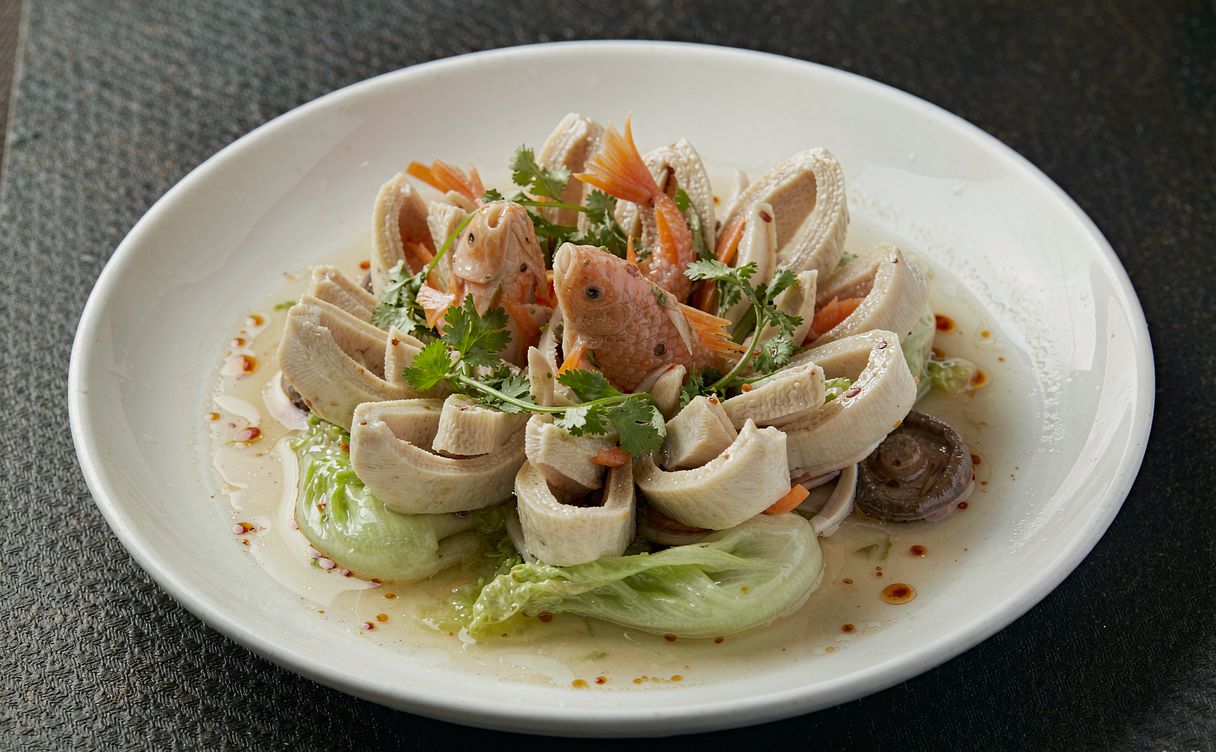
Chinese temple vegetarian food, or su zhai, follows the Buddhist rule of no killing, which means no meat, poultry, or fish, and in stricter temples no garlic, onion, leek, or strong alliums either. What surprises newcomers is the skill of the cooking. Monasteries developed a whole repertoire of Buddhist vegetarian dishes built on tofu, gluten (sometimes called “wheat meat”), mushrooms, lotus root, bamboo, and a dozen kinds of soy product.
The signature move is the mock-meat centerpiece — pieces of pressed gluten or tofu skin shaped, colored, and fried to mimic roast duck, braised pork, or fish fillet, complete with a “skin” of soy and a maple-glazed sheen. None of it fools a carnivore for long once you bite in, but the point is not deception; it is respect for the form of a festive meal without the killing. We’ve watched skeptical travelers clean their plates and ask for the recipe. The broader Buddhist cuisine tradition spans Asia, but the Chinese temple kitchen is where it reached its most elaborate.
Where to Eat Vegetarian in China
The easiest places to find real temple cooking are the cities with active monastic sites. Hangzhou’s Lingyin Temple runs a canteen where monks and visitors queue together for simple, cheap sets. Shanghai’s Jade Buddha Temple and the restaurants near the Jing’an Temple serve more elaborate banquets. In Beijing, the Fangshan restaurant inside Beihai Park grew out of imperial vegetarian kitchens and is a reliable, if tourist-priced, introduction.
For a broader sweep, our Shanghai Benbang cuisine guide shows where local-style restaurants sit alongside temple options, and the Fujian Min cuisine guide covers the southeast, where Buddhist vegetarian culture runs deep around the older temple towns of Fuzhou. Both regions show how a temple meal differs from everyday home cooking.
A Typical Temple Meal
Expect sets rather than à la carte at working monasteries. At Lingyin or similar sites you might pay RMB 20 to 40 for a tray of rice, two vegetable dishes, a tofu item, and a bowl of clear soup — eaten in silence, with your own chopsticks, and no leftovers encouraged. The banquet style at commercial temple restaurants is different: a fixed menu of eight to twelve dishes running RMB 150 to 400 per person, often including showpiece mock-meat centerpieces.
Chinese temple vegetarian food rewards slow eating. The flavors are gentle — light soy, sesame, fermented bamboo, a touch of sugar — so the texture work carries the dish. We advise travelers to order one “meat” imitation and several honest vegetable plates rather than a table full of fakes, which can taste samey by course six.
One memorable example is the vegetarian feast served during the Buddha’s Birthday at larger southern temples, where the menu runs to a dozen courses — braised “eel” of yam, lion’s-head “meatballs” of mashed taro, and a clear soup thickened with tremella fungus. These banquets are often booked weeks ahead and cost RMB 200 to 500 a head, but they show the cuisine at its most inventive and are worth planning a trip around if your dates line up.
Vegetarian Restaurant Tips for China
A few practical notes save confusion. The Chinese word su (素) means vegetarian, but in ordinary restaurants it can still mean “fried with a little meat broth,” so at a non-temple place say wo chi su, bu yao rou (I eat vegetarian, no meat) and, if strict, bu yao dahui (no animal fat). Look for the character 斋 (zhai) on a sign, which signals Buddhist vegetarian specifically. Apps like HappyCow list urban options, but the best finds are the canteens attached to active temples, which rarely appear in English.
If you want a structured start, our China vegetarian and vegan food guide maps city-by-city options beyond the temples, useful if you are vegetarian for health rather than religion. Timing matters too: the best time to visit China overlaps with major Buddhist festivals, when temple kitchens open special holiday sets.
Signature Dishes Worth Seeking
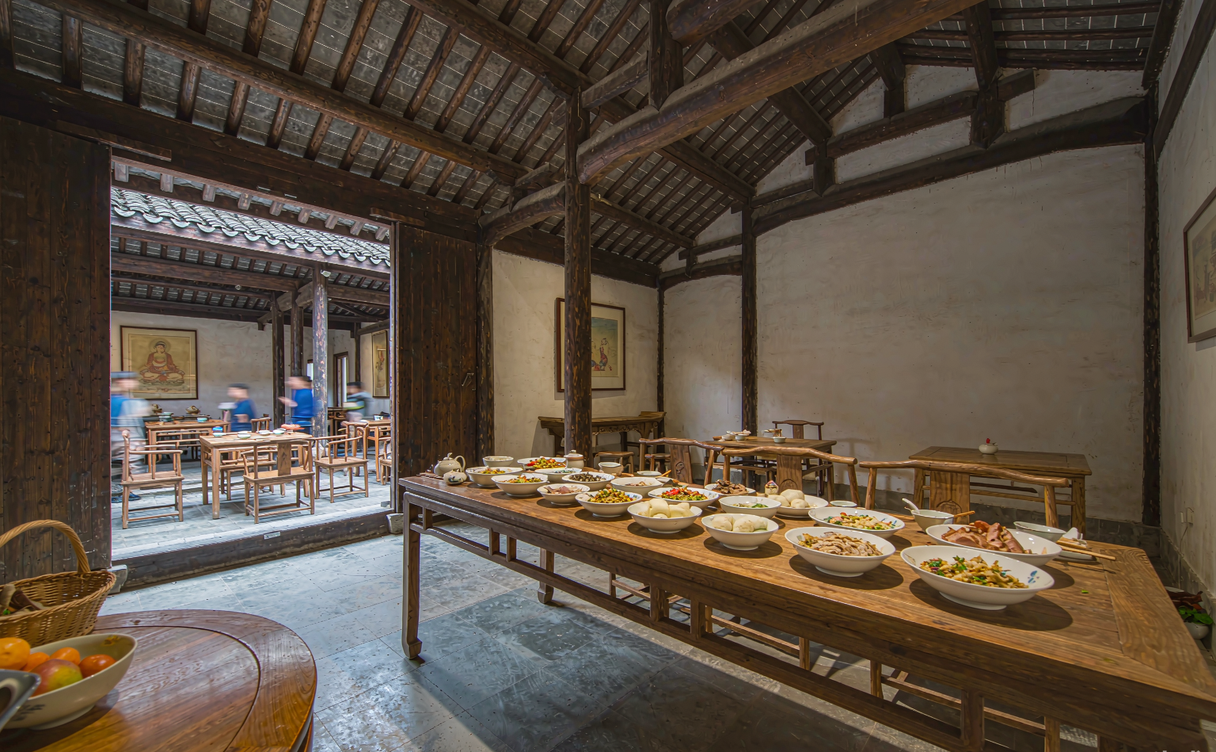
A few preparations show up again and again and are worth ordering when you see them. Kao fu is spongy baked wheat gluten braised in a dark, almost meaty sauce — a Shanghai and Hangzhou staple. Niang doufu stuffs tofu skins or mushrooms with a minced vegetable and glutinous-rice filling, then steams or fries them. At festival banquets you may meet su ya (“vegetarian duck”), a rolled sheet of tofu skin glazed to a lacquered finish, or su yu (“vegetarian fish”) molded from mashed taro and colored with seaweed. None taste like the animal original, but each is a small lesson in how Chinese kitchens think about texture.
Regional accents matter. Around Mount Wutai in Shanxi the cooking is plain and noodle-heavy; in Jiangnan it is sweeter and more delicate; in Guangdong the temple kitchens lean on mock goose and clear vegetarian stocks. We’ve found that asking the server “what is your house specialty?” (you shenme tese?) yields better results than ordering from a picture menu, because the best dishes are often untranslated.
Etiquette and What to Expect
At a working monastery, eat what you take and leave the table clean; some temples ask guests to help rinse trays. Photography of the food is usually fine in commercial restaurants but awkward in a monk’s canteen, so ask first. Alcohol is off the table at religious sites, and loud conversation is discouraged. We’ve sent travelers who expected “healthy salad” and got “deep-fried gluten in sweet sauce” instead — both are authentic, and neither is what a Western vegetarian menu promises.
Beyond the Temple
Temple cuisine has leaked into the mainstream. Many city hotpot chains now offer a full vegetarian broth and mock-meat platter, and upscale “zen” restaurants in Chengdu, Hangzhou, and Suzhou serve refined su zhai in elegant rooms for RMB 200 to 500 a head. These are not strictly Buddhist — wine may be on the menu — but they carry the technique forward. For travelers who want the real thing, though, the canteen line behind a temple gate is where the tradition lives. The Dongbei northeast cuisine guide is less obviously vegetarian, but even in the meat-heavy northeast you will find Buddhist canteens in the older temple towns.